Reviewed by Tatsuo Takada (owner-chef, Oku-Akasaka Sushi Tanji)
Part of The Tokyo Sushi Guide Updated Reading time about 6 minutes See the menu →
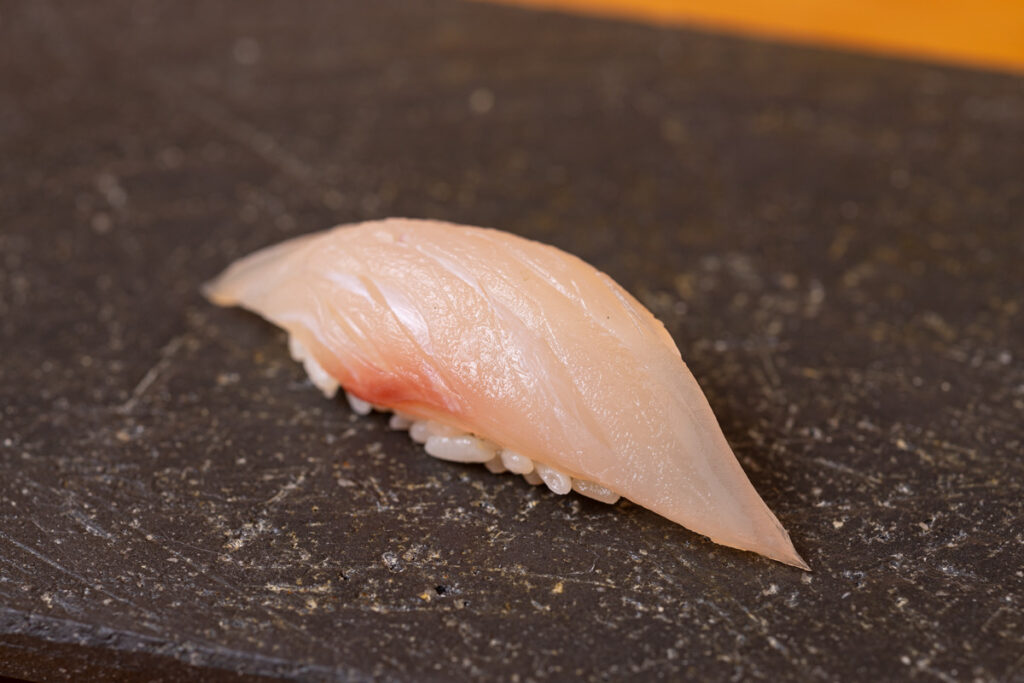
Nojime, neuro-shime, the Tsumoto method of thorough bloodletting. When a sushi counter speaks about buying fish, these three come before the name of any fishing ground. What is done in the hours or days between a fish’s last moment and its arrival at the shop turns the same fish from the same sea into something else. This article follows that sequence in order, then looks at what has changed by the time a piece reaches your mouth.
In short
Tanji buys its fish directly from artisans who practise the Tsumoto method of thorough bloodletting. The fish are dispatched at the brain and along the spinal nerve, cleared of blood to the last capillary by water pressure, gilled and gutted, wrapped under vacuum and sent to us chilled rather than frozen. Only tuna and sea urchin follow a different route.
What you will learn
- What nojime, neuro-shime and bloodletting each bring to a stop as well as what they leave behind
- Why drawing blood out with water pressure bears on both odour and keeping quality
- How arriving gilled, gutted, vacuum-wrapped and chilled changes the work once the box is opened
- Why a fish cleared of blood can be rested for longer
- Why tuna and sea urchin alone come by a different route
- Where this process shows in the finish at a July counter
Whose hands the fish passes through
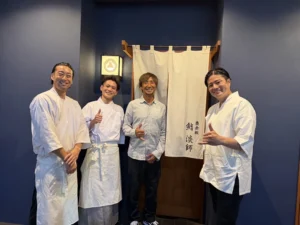
At Tanji the fish comes to us directly from the artisans who practise the Tsumoto method of thorough bloodletting: the practitioner who devised it, along with a small number of others who have mastered it to a high standard. Fish dispatched and bled by those hands travel from the coast to the counter. Our chef, Tatsuo Takada, also received two-star recognition in the Tsumoto method in October 2026, and is listed on the official website, tsumotoshiki.com, among the practitioners recognised at two stars and above.
A short route is itself part of the work. How many hands a fish has passed through, how long it spent in transit, shows plainly in the flesh. When it comes from someone whose timing, whose place, whose method we know, our own decisions about what to do next can be that much finer.
- DispatchingNojime then neuro-shime, carried out the moment the fish is landed.
- PreparingBlood drawn out under water pressure, with gills and viscera removed.
- SendingWrapped under vacuum, sent direct under refrigeration rather than frozen.
- RestingAged at the shop, the moment judged species by species.
What nojime and neuro-shime bring to a stop
Nojime, a single spike to the brain, is the first move of ike-shime (the practice of ending a live fish cleanly). It kills the fish at once and spares it the struggle that drains its strength. A fish packed into ice while still alive thrashes as it suffers; its temperature rises and lactic acid gathers in the flesh. Cloudy flesh with a slack texture is often decided at this stage.
Neuro-shime follows. A fine wire is passed along the spine to destroy the nerve and the onset of rigor mortis is delayed. The longer that delay runs, the softer the fish is when it leaves the port. What gives rise to umami is not spent on thrashing or stiffening: it stays where it is.
What the thorough bloodletting actually does
The Tsumoto method opens a cut towards the tail and drives water into the blood vessels under pressure. Even once the heart has stopped, pressure reaches the finest capillaries. It pushes out the dark blood line along the backbone as well as blood held deeper within the flesh.
Blood is the main source of a fishy smell. It oxidises as time passes and turns into odour. Where no blood remains, the hours before any smell rises stretch out, so the number of days the fish can be rested tends to grow with them. Bloodletting keeps a fish fresh while also making ageing possible.
| Step | What it does | How it shows in a piece |
|---|---|---|
| Nojime | Ends the fish at once, sparing it the exhaustion of struggle | Flesh stays clear, with its bite intact |
| Neuro-shime | Destroys the spinal nerve so rigor mortis is slower to begin | Arrives as soft as it was before stiffening |
| Bloodletting | Water pressure clears blood from the finest vessels | No smell of blood; time enough to rest the fish |
| Preparing | Gills and viscera taken away | Fewer starting points for spoilage, a gentler decline |
Sealed under vacuum, sent chilled
Gills and viscera spoil faster than the rest of a fish. They carry digestive enzymes as well as bacteria, whose influence spreads into the flesh if they are left in place. Taking them out on the spot, once the fish has been dispatched and bled, removes the starting point of decay itself.
From there the fish is wrapped under vacuum and sent chilled. The vacuum keeps oxygen at bay along with drying. It is not frozen because ice crystals rupture the cells between freezing and thawing, letting the moisture that holds the umami run away with them. By the time the box is opened most of the preparation is done, which leaves us free to spend our attention on the resting time and on the measure of salt or vinegar.
Why a fish cleared of blood can rest longer
Ageing is the fish’s own enzymes breaking down its flesh a little at a time. As that proceeds, inosinic acid together with free amino acids, the substances behind umami, increase. The same hours are also hours in which odour develops. Where blood or viscera remain, the smell arrives ahead of the umami.
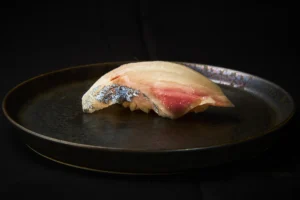
One reason the Tsumoto method has spread so widely is that it changed how this time can be used. When the number of days available opens up, the right moment can be chosen for each species: white-fleshed fish once their firmness has eased, hikarimono (silver-skinned fish) after only a short rest. Onto those judgements the Edomae repertoire is layered, the curing, the marinades, the nikiri (a glaze of reduced soy brushed over each piece). The thinking behind the work at this Oku-Akasaka counter rests in the same place, classical Edomae technique laid over ageing.
Why tuna and sea urchin come by another route
This process suits fish whose character grows when they are dispatched and bled: white-fleshed fish, silver-skinned fish, the blue-backed ones. Tuna and sea urchin arrive by a different route.
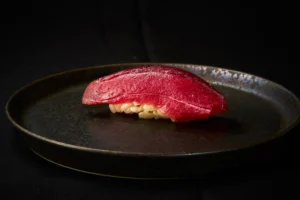
A tuna is one large body, broken down at the port or at the market, reaching the shop through the eye of an intermediate wholesaler. The scale of the handling is simply different, for bleeding as much as for chilling. Sea urchin is the part held within the shell, so there is no dispatching to speak of. It comes packed into its box where it was gathered, chosen on the colour of the grains, their scent, the way they hold their shape. The same word, sourcing, asks us to look at quite different things.
Where it shows at the counter in July
In Tokyo in July the white-fleshed fish firm up: makogarei (marbled sole) and suzuki (sea bass). Fat comes on in aji (horse mackerel) as well as shima-aji (striped jack). Later in the month shinko (the youngest gizzard shad) begins to appear at market. Summer is also the season in which fish turn quickly, so it is when careful dispatching and bloodletting tell most plainly.
The difference stays with you after you swallow. Once the sweetness has come out under the teeth, what remains in the mouth is either umami or the smell of blood. There is no need to decide in a hurry. By the second or third piece, most people notice it as a clarity in the finish.
Frequently asked questions
What is the Tsumoto method of thorough bloodletting?
It is a way of preparing fish in which water is driven into the blood vessels under pressure, pushing out even the blood left in the finest capillaries. It is combined with nojime and neuro-shime; the gills and viscera are removed, the fish is sealed under vacuum and then held chilled. With no blood remaining, a fishy smell is slow to rise, so the number of days the fish can be rested tends to grow.
How does ike-shime differ from neuro-shime?
Ike-shime is the whole practice of ending a live fish at once and drawing off its blood, with nojime, the spike to the brain, as its first move. Neuro-shime destroys the nerve within the spine so that rigor mortis is slower to begin. Their aims differ, so in most cases the two are carried out one after the other.
How many days is a bled fish rested for?
There is no fixed number. It shifts with the species, the size, the season, the state of the flesh on the day. Silver-skinned fish are usually given a short rest, white-fleshed and larger fish a longer one. Rather than setting the days in advance, the moment is judged by watching the moisture and the spring of the flesh.
Can you tell the difference if you are not used to eating sushi?
There is no need to feel any pressure. Rather than trying to spot it, let your attention settle on the finish after you swallow. Where blood remains, a faintly metallic note lingers behind the sweetness. Whether it clears away cleanly is a useful guide.
From the guide to the counter
Taste it at our eight-seat counter in Oku-Akasaka.
Classic Edomae craft with careful modern aging – served piece by piece, with English guidance for overseas guests.
Reserve at Sushi Tanji Explore The Tokyo Sushi Guide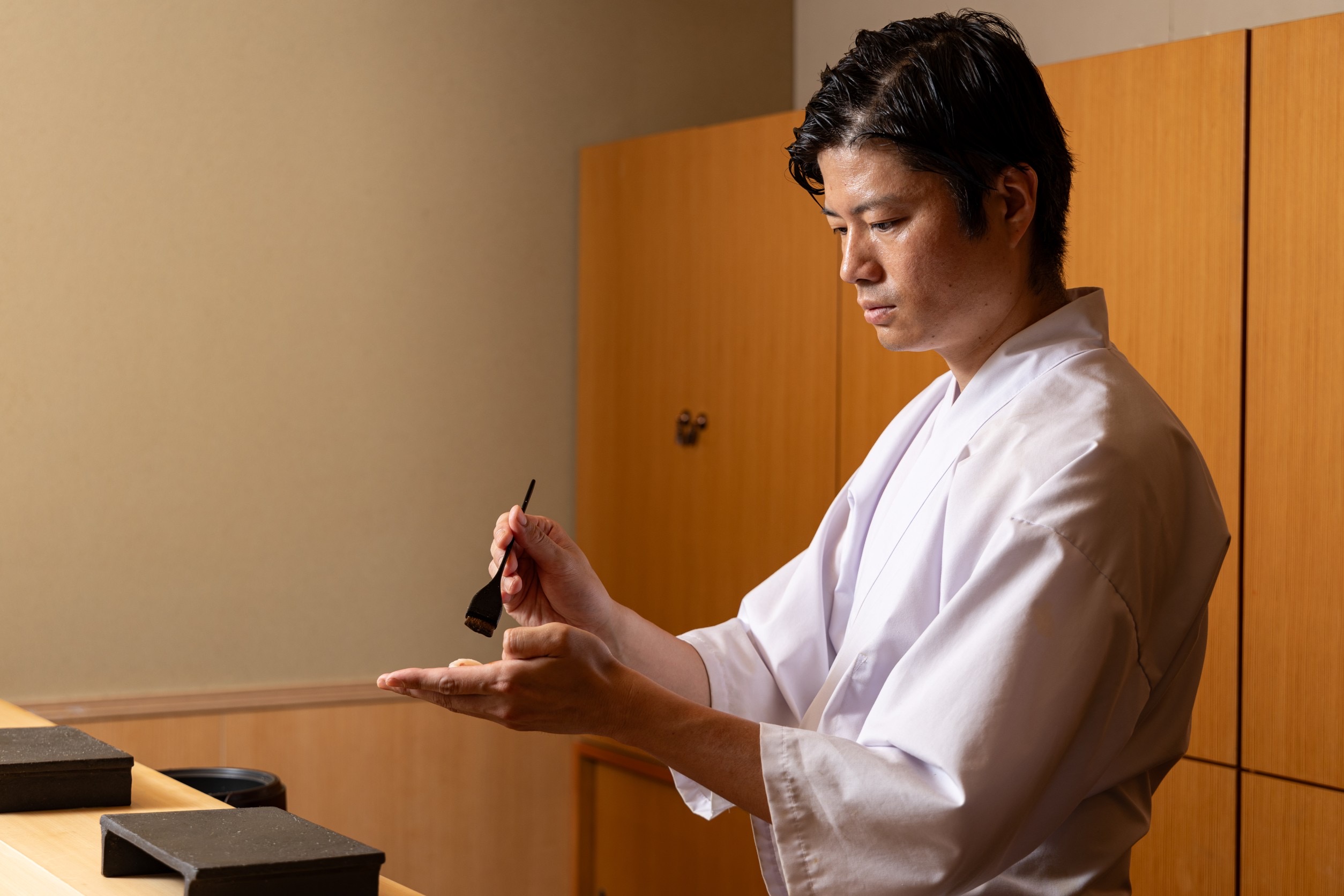
Reviewed by
Tatsuo TakadaHead chef and owner of Sushi Tanji. Trained in the Edomae tradition and rooted in Kyushu, he leads the eight-seat omakase counter in Oku-Akasaka, Tokyo, and reviews The Tokyo Sushi Guide.