Reviewed by Tatsuo Takada (owner-chef, Oku-Akasaka Sushi Tanji)
Part of The Tokyo Sushi Guide Updated Reading time about 6 minutes See the menu →
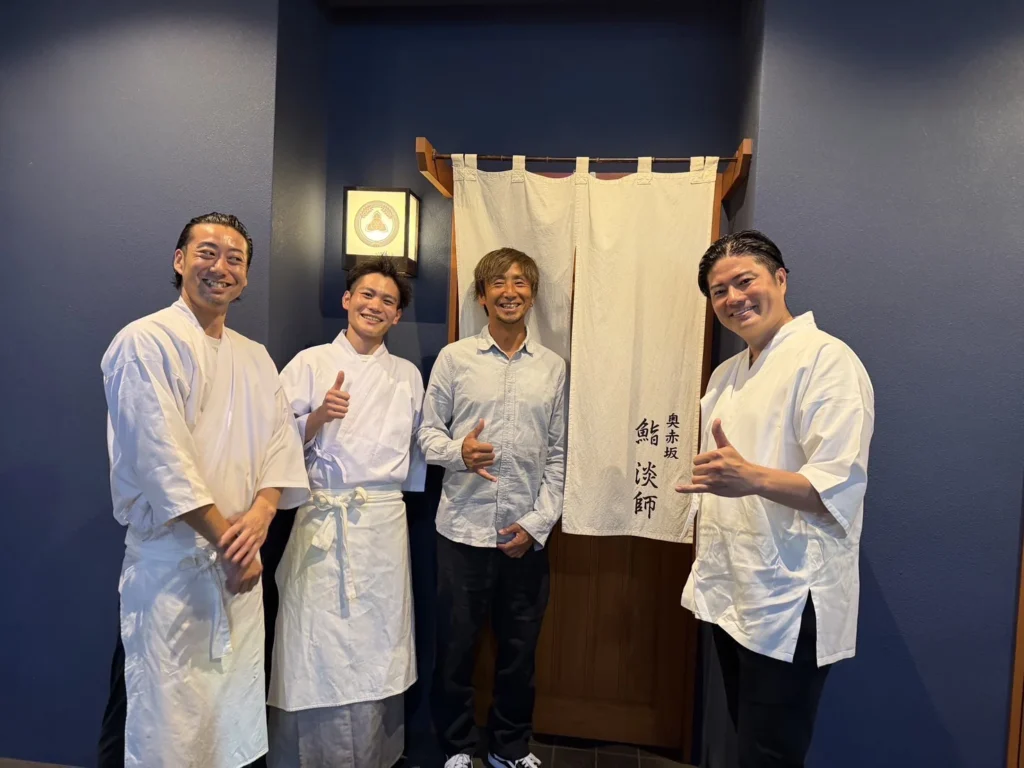
Tsumoto-shiki is a method of drawing blood from a fish using water pressure from a hose. On 8 August 2026, the chef who stands behind our eight-seat counter in Oku-Akasaka began a course of instruction in it at Toyosu Market. This article looks at what the method actually does to a fish, plus why a chef might choose to learn it himself when skilled specialists at the port are ready to do the work. Familiar Edomae thinking runs alongside.
In short
Since 8 August 2026, the chef of Sushi Tanji has been taking instruction in tsumoto-shiki (the ultimate bleeding method) at Toyosu Market. This is not news of a certification. It is study still under way, undertaken so that the handling of a fish can be understood through his own hands.
What you will learn
- What the three stages of tsumoto-shiki (dispatch, nerve removal, bleeding) do to a fish
- Why the "ultimate bleeding method" relies on water pressure from a hose
- The difference between entrusting handling to a specialist at the port versus learning it yourself
- How bleeding connects to ageing, plus why a fixed number of resting days is difficult to set
- Why August fish reveal differences in handling so readily
8 August 2026: instruction begins at Toyosu
On 8 August 2026, the chef who stands behind our eight-seat counter in Oku-Akasaka began taking instruction in tsumoto-shiki at Toyosu Market. This is not an announcement of certification. It is study still in progress, taken up so that the handling of fish is something he can carry out himself rather than leave entirely to the port or the supplier.
In the world of sushi, dispatching a fish and drawing its blood usually fall to a shitateshi (a specialist who prepares fish at the port) or to a wholesaler at the market. How the fish is then rested, plus when it is finally shaped into sushi, belongs to the chef. Stepping a little across that line means relearning, through the body, the work that happens before a fish reaches the shop. That is what has begun here.
What tsumoto-shiki does to a fish
Tsumoto-shiki is a way of handling the blood and moisture that remain in the flesh after a fish has died, taken in a deliberate order. The best known stage is the one called the “ultimate bleeding method”, in which water pressure from a hose sends water into the artery to push out blood left in the finest vessels. Blood affects both the aroma of the flesh and its colour as time passes, so the first half-hour of handling is understood to shape the days that follow.
- DispatchThe brain of the living fish is dispatched, sparing the flesh the damage that thrashing causes.
- Remove the nerveA fine wire is passed along the spinal cord, slowing the onset of rigor.
- Draw the bloodWater pressure from a hose carries water into the artery, pushing out the blood left in the flesh.
- Prepare and restExcess moisture is drawn off, then the fish is settled at a low temperature.
Why a chef learns it when specialists exist
The work of a shitateshi who specialises in this handling shapes the flavour of sushi profoundly. Why not simply leave it to them? The question is a fair one. A chef still moves his own hands because doing so changes how precisely he can read the fish that arrives. How much blood remains, how firm the flesh has become, how much water appears at the cut. Having worked through the same stages himself, he can gauge in far finer detail how the fish before him has been treated.
Sushi is the final destination of a fish caught by a fisherman, appraised by a wholesaler, prepared by a specialist. To know the work that comes before is also to receive it with greater precision.
On learning this at the market
Toyosu is a working floor where auctions and wholesalers move every day. Within a single species the origin varies, as does the size, along with the time elapsed since the fish was dispatched. Taking instruction there means repeating the work on fish actually in circulation rather than on tidy teaching material. On days when things do not go as hoped, the reason can be examined on the spot.
Bleeding is not the goal but the doorway to ageing
Drawing blood and preparing a fish are not ends in themselves. At Sushi Tanji the work rests on a single idea: give each fish the ageing that suits it, judge the moment it tastes best, then serve it. Careful handling is the ground on which that judgement can range more widely. The same spirit runs through our thinking.
The period and temperature that suit ageing differ by species. Even within one species they shift with the season, plus from one individual fish to the next. A uniform guide to the number of days is therefore difficult to set. The better the handling, the wider the range of judgement available.
Why August fish show differences in handling
In August the counter sees shinko (young gizzard shad), tachiuo (scabbardfish), suzuki (sea bass). Summer brings warm water along with warm air, a season in which the hours after dispatch tell readily on flavour. Shinko in particular are small enough to change character within a few days, so the handling a fish receives before arrival becomes the very premise of the work.
It is not something one usually thinks about, yet behind a single piece lie the days between the catch and the counter. What has begun here is not a matter of shortening those days. It is a matter of raising their precision.
Frequently asked questions
What sets a fish handled by tsumoto-shiki apart from an ordinary one?
The amount of blood as well as moisture remaining in the flesh differs. The more thoroughly the blood has been drawn, the less readily an aroma rises during resting, plus the colour of the flesh tends to stay settled. Flavour is never decided by handling alone. The condition of the fish itself joins with the way it is rested afterwards, giving the finished result.
Does this mean the shop is certified in tsumoto-shiki?
No. Instruction began in August 2026 with the learning still under way. This is not news of a certification. What is true is that alongside the specialists who prepare our fish, the chef himself is acquiring the technique of handling.
How long is an aged sushi topping usually rested?
There is no single figure, since it shifts with species, size, season along with the individual fish. Some reach their moment within a few hours; others take a week or more to gather flavour. At an Edomae counter the tendency is to decide the moment of serving by looking at the condition of the day rather than by counting days.
May I ask about bleeding or ageing at the counter?
Please feel at ease. Many guests simply ask, when there is a pause, “how long has this one been rested?” If the moment looks busy, there is no hurry. A question kept for the next lull arrives just as well.
From the guide to the counter
Taste it at our eight-seat counter in Oku-Akasaka.
Classic Edomae craft with careful modern aging – served piece by piece, with English guidance for overseas guests.
Reserve at Sushi Tanji Explore The Tokyo Sushi Guide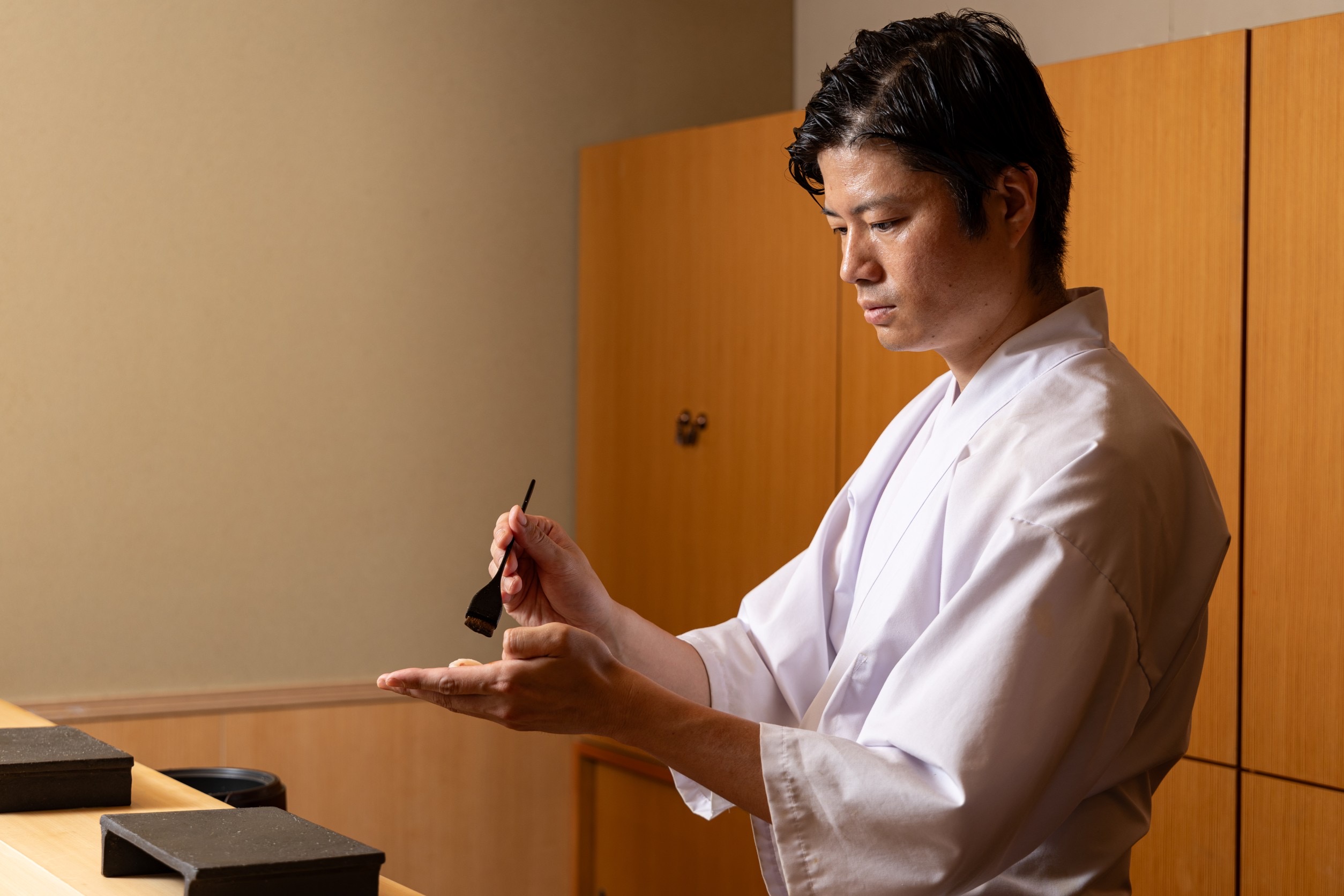
Reviewed by
Tatsuo TakadaHead chef and owner of Sushi Tanji. Trained in the Edomae tradition and rooted in Kyushu, he leads the eight-seat omakase counter in Oku-Akasaka, Tokyo, and reviews The Tokyo Sushi Guide.