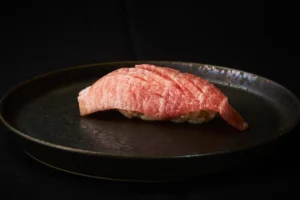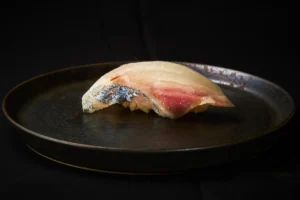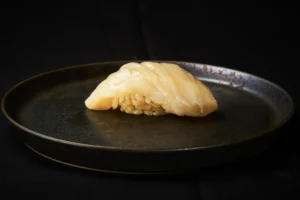

Written by Oku-Akasaka Sushi Tanji, an omakase counter in Akasaka, Tokyo.See the menu →
A bled fish can be rested for longer because blood is where spoilage and off-odours begin. The ultimate bleed of Tsumoto-shiki replaces even the blood held in the fine capillaries deep within the flesh. This piece sets the steps themselves aside in favour of what lies beyond them: why ageing becomes possible at all, plus the difference you recognise the moment a piece meets your palate.
In short
The greatest cause of spoilage in a fish is the blood left in its flesh. Blood feeds bacteria; the iron it carries reacts with fat to raise that familiar fishy note. When the ultimate bleed of Tsumoto-shiki flushes both artery and vein, decline slows enough that a fish can be rested until its savour arrives.
What you will learn
- Why blood gives bacteria a foothold as well as a starting point for oxidation
- The blood that ikejime leaves behind, against the blood that water can carry away
- What longer keeping really means: the room to wait
- How resting differs across white-fleshed, red-fleshed plus silver-backed fish
- The difference a guest can recognise in off-notes, savour, aroma plus finish
What a fish loses when blood remains
Blood left in the flesh carries moisture, iron plus nourishment all at once. For bacteria it is ideal footing, multiplying with every hour the fish sits. The second process is oxidation. When the iron in blood meets fat, that distinctive fishy note rises.
Most of what we call spoilage or odour begins not in the flesh itself but in the blood held within it. Oilier fish tend to react more quickly; in a fish with strong chiai (the dark bloodline muscle) such as summer katsuo (bonito), the difference shows plainly.
Which blood the ultimate bleed actually washes away
Even when ikejime (dispatching the fish while it is alive) empties the larger vessels, blood remains in the capillaries deep in the flesh. Tsumoto-shiki turns the pressure of water on precisely that. The tail is taken off, water is sent through the vessel running beneath the spine, then pressure is applied from the gill side as well, exchanging what remains for clean water. The essential point is that both artery and vein are reached.
The sequence itself, from the brain spike through the nerve to the bleed, was followed step by step in an earlier piece. Anyone wishing to revisit the method will find it through the article index of The Tokyo Sushi Guide. Here we take up what comes afterwards.
Longer keeping is what makes ageing a choice
Ageing is not something that simply happens when a fish is left alone. If spoilage arrives first, the fish is lost before its savour has gathered. Drawing out the blood slows that decline, so the flesh can be given the time it needs to change. The real meaning of longer keeping lies less in the number of days than in the room to wait.
| Type of fish | A guide to resting time | What is happening inside the flesh |
|---|---|---|
| White-fleshed fish such as tai (sea bream) or hirame (flounder) | A few days up to about a week | Moisture settles as savoury compounds increase, bringing the flavour forward |
| Larger red-fleshed fish such as maguro (tuna) | A week to a fortnight, sometimes beyond | Fat settles into the flesh; sharp acidity softens as the aroma draws together |
| Silver-backed fish such as katsuo (bonito) or aji (horse mackerel) | Shorter, from a day to a few days | Oxidation moves quickly; too long a rest thins the aroma that gives them their character |
The span shifts with species, size, the fat a fish is carrying plus its condition on the day. Rather than fixing a number of days in advance, the work of ageing is decided by watching how the flesh firms up and how it smells.
Where the difference reaches the person eating
Whether a fish has been bled can sound like a matter for the kitchen alone, yet it shows most clearly the moment a piece is in the mouth. Four things are easiest to recognise.
- Off-notesNothing metallic lingers once you have swallowed. The palate clears cleanly.
- SavourIt arrives not on the first bite but from the second, spreading deeper. Rested white-fleshed fish shows this shift especially well.
- AromaWhat rises through the nose is the scent of the fish itself, with no fishiness mixed into it.
- FinishOnce the acidity of the shari (seasoned rice) recedes, a little of the fish remains. It leaves room for the next piece.
Bleeding is a means, not an end
A carefully bled fish does not become a fine piece of sushi on its own. Both the bleeding and the preparation are ways of carrying a fish towards the moment it tastes best. Even among madai (red sea bream), one may reach its peak in three days while another rewards a week of waiting.
At Sushi Tanji in Oku-Akasaka, the techniques of Tsumoto-shiki are drawn on without treating the bleed or the preparation as the goal. Each fish is given the ageing that suits it, then served at the moment judged to be its finest.
How to enjoy it at the counter in August
Summer brings warmer water; a fish declines more quickly in it. So in this season the Edomae crafts of curing, marinating plus brushing with nikiri (a sweetened soy glaze) face the same direction as bleeding then resting. Both are ways of bringing a fish to the mouth in good condition.
There is no need to approach any of it with ceremony. When a rested piece arrives, you might take in its aroma once before it meets your palate. Many guests ask how long a piece has been resting; at the counter, conversation tends to begin from a single question like that.
Frequently asked questions
Does bleeding keep a fish from tasting fishy?
Much of that smell comes from iron in the blood left in the flesh reacting with fat. The more thoroughly the blood has gone, the less readily that reaction occurs, so the aroma tends towards clarity. Handling along with storage also play their part, so bleeding alone does not settle the question.
If a fish has been bled, can it be aged for a long time?
Not quite. Bleeding slows the pace of spoilage, yet some fish improve with rest while others show their character best when eaten soon. Silver-backed fish such as katsuo or aji tend towards the shorter end; white-fleshed fish along with larger red-fleshed fish towards the longer.
Is ageing better than freshness?
They are not opposites. Some fish are prized for the bite they have straight from the water; others gather savour over several days. At an Edomae counter the approach is to judge, fish by fish, when each one is at its best.
How does bleeding differ from shinkeijime?
Shinkeijime destroys the nerve along the spine to delay the onset of rigor; bleeding removes the blood left in the flesh. Their aims differ, so in most cases they are combined in sequence: the brain spike first, then the nerve, then the bleed.
From the guide to the counter
Taste it at our eight-seat counter in Oku-Akasaka.
Classic Edomae craft with careful modern aging – served piece by piece, with English guidance for overseas guests.
Reserve at Sushi Tanji Explore The Tokyo Sushi Guide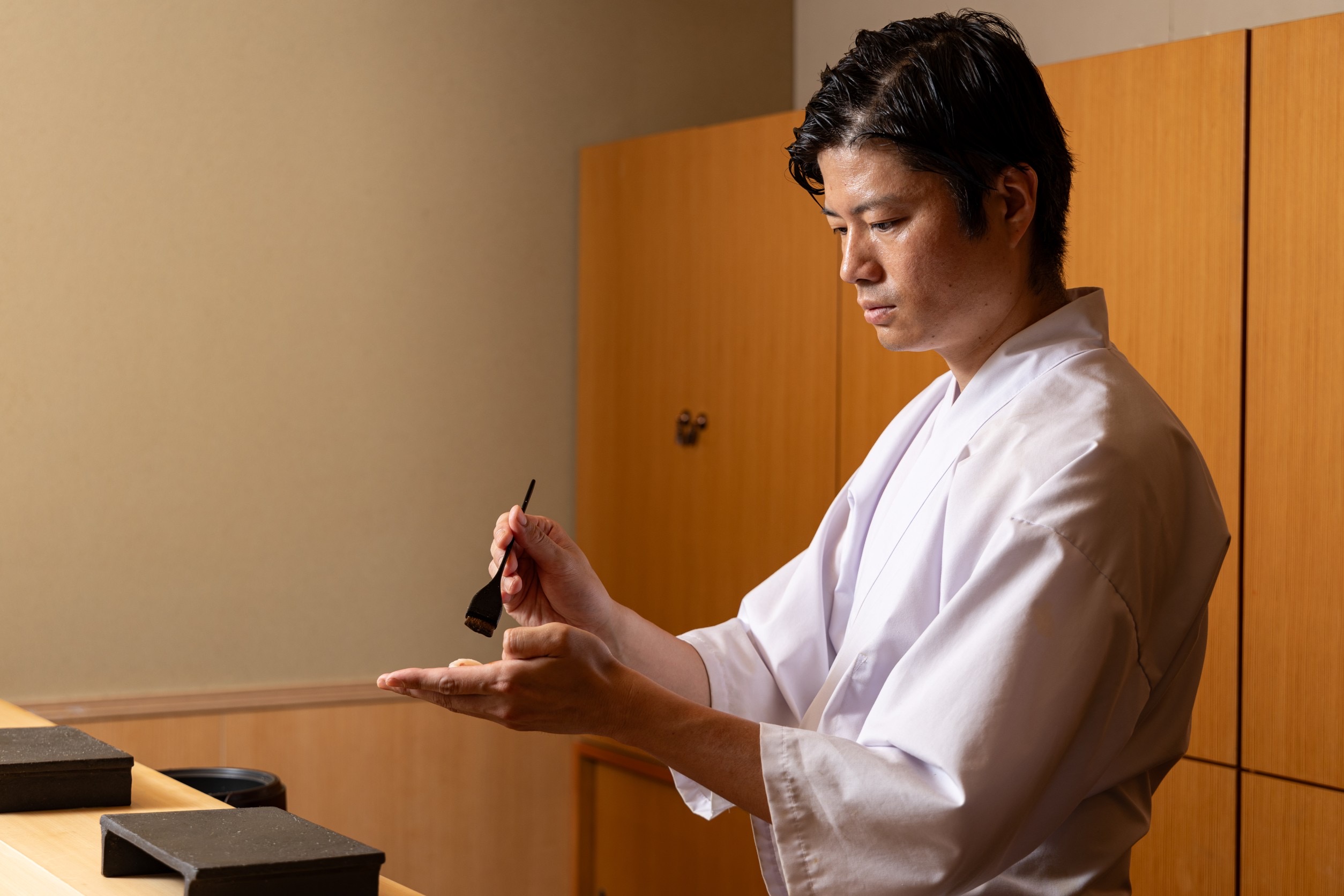
Reviewed by
Tatsuo TakadaHead chef and owner of Sushi Tanji. Trained in the Edomae tradition and rooted in Kyushu, he leads the eight-seat omakase counter in Oku-Akasaka, Tokyo, and reviews The Tokyo Sushi Guide.