

Written by Oku-Akasaka Sushi Tanji, an omakase counter in Akasaka, Tokyo.See the menu →
The same root of hon-wasabi, the fresh rhizome grated at the counter, can taste quite different depending on where it meets the grater and how it is worked. The end where the leaves grew against the tip of the root, skin left on against skin pared away, the speed of the hand along with the weight behind it. Each is a choice about flavour. At an Edomae counter, the Tokyo style of sushi, the thinking extends to how much heat belongs with each individual piece. What follows traces where those differences come from, in a form that carries over to grating at home.
In short
Wasabi is at its sharpest at the end where the leaves grew, softening as it runs towards the tip. Grated with the skin left on it gives a deeper aroma alongside a faint bitter edge; peeled, it reads clean on the palate. Small circles on a sharkskin grater, worked just before serving, is the Edomae baseline.
What you will learn
- How heat and sweetness shift between the stem end and the tip
- What changes when the skin stays on rather than being pared away (aroma against bitterness)
- How far to trim the knobs plus the dark patches and how much skin to leave
- Why a sharkskin grater asks for small circles with a light hand
- How long heat and aroma hold, plus why grating happens at the last moment
- How wasabi is judged against the delicate fish of summer
What grating moves: heat, aroma, texture
The heat of wasabi does not exist in the root before it is grated. It appears only when the cells break open, letting the compounds inside meet one another. Which part of the root, which tool, at what speed: each of these becomes flavour directly.
Three things move. The strength of the heat, the way the aroma rises, then the feel of it on the tongue. They are linked, though they do not travel in the same direction. Reach for aroma and bitterness comes closer; clear the palate and the aroma thins. Where a chef chooses to stop is where a house style lives.
Grating from the stem end or from the tip
A root of fresh wasabi differs from top to bottom. The end where the leaves grew tends towards sharper heat, while the heat softens as it runs towards the tip of the root, where sweetness comes through more readily. At Edomae counters it is common to begin at the leaf end, tidying the cut face flat again with each use.
| Part of the root | Heat | Aroma and sweetness | Fish it suits |
|---|---|---|---|
| The end where the leaves grew | Rises sharply | Green and forward | Richer, oilier fish; soy-marinated tuna |
| The middle | Nicely balanced | Round and calm | Much of an omakase course |
| Towards the tip of the root | Gentle | Sweetness comes through | White-fleshed fish, shellfish, quieter flavours |
Roots vary a great deal, though. The water temperature of the stream where it grew along with the thickness of the root both play their part. Some chefs work a root evenly from end to end; others move to a different part of it depending on the fish. House styles differ here, with no single approach standing as the right one.
Skin left on or pared away first
The aroma is at its strongest just beneath the skin. Grated with the skin in place, wasabi carries that green fragrance straight through, along with a pale green colour. In exchange, a note of earth or a faint bitterness may come with it.
Peeled before grating, the heat takes on a cleaner outline with a smoother feel on the tongue. The aroma is more reserved, though it stays out of the way of delicate fish.
In most cases the choice sits between the two. Only the knobs on the surface plus the darkened patches are pared off with the tip of the knife, leaving the skin itself thinly in place. Knobs left on catch against the grater and give uneven particles. At the base of the leaves, only the hard part comes away.
Small circles on sharkskin
A samegawa oroshi, the sharkskin grater used at the counter, has a very fine surface that is also irregular. Where a metal grater cuts through the fibres, sharkskin crushes the cells instead. The finer the particles, the more the heat and aroma rise, with a lighter feel left on the tongue.
- Trim the knobs and dark patchesPare away only the surface knobs along with the darkened areas, using the tip of the knife and leaving the skin thin.
- Level the cut faceTidying the face used before lets the root meet the grater evenly.
- Grate in circlesSlow, small circles with no force behind them. Air works in and the particles come finer.
- Gather it with the flat of the knifeDrawing it lightly into a mound without pressing keeps that soft, airy feel.
Fast, forceful grating builds heat through friction, so the aroma is the first thing to go. Slowly, lightly. This is the one place where an unhurried hand shows in the result.
Why it is grated at the last moment
The heat of grated wasabi climbs, passes its peak within a few minutes, then falls away. The aroma goes sooner still. Grating just before serving lays that brief peak over the piece.
Some counters grate for each piece; others grate enough for several at once, keeping it covered so it does not dry out. Styles differ, though nearly everyone agrees on letting no time pass. Wasabi prepared in advance tastes watery because it is already past that peak.
At home, a root left over keeps well in the refrigerator with the cut face covered by lightly dampened paper. Shaving that face clean again before each use makes a noticeable difference to the aroma.
How wasabi is judged at a summer counter
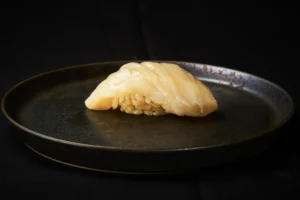
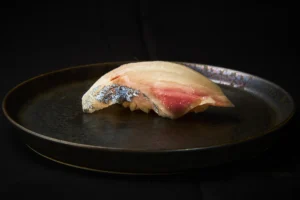
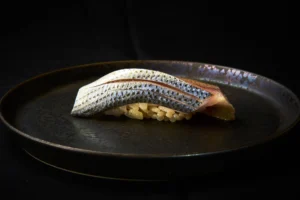
August brings delicate fish to the counter: kisu (Japanese whiting), awabi (abalone), ika (squid). Press wasabi too hard against fish this light and the scent of the fish itself disappears behind it. With richer cuts or with zuke, tuna marinated in soy, the heat cuts through the fat to draw an outline. In nigiri the wasabi sits between the shari (seasoned rice) and the tane, the fish laid on top, partly so the heat arrives in its proper order once the piece is in the mouth.
At a place such as Sushi Tanji, eight seats at a hinoki cypress counter along a back street in the quieter reaches of Akasaka, where classical Edomae technique is paired with patient ageing, each piece is built around the moment that particular fish is at its best. The amount of yakumi, the aromatic seasoning, is adjusted to the flavour of that one piece as well.
Fresh wasabi can be had in any season, yet the difference in grating shows most in summer, when the fish itself turns delicate. In nigiri the quantity has already been judged for you, so the wasabi is often nowhere to be seen on the plate. When a small mound arrives beside sashimi or a roll, the first bite is worth taking as it comes. Ask if you would like more. There is nothing to feel uncertain about.
Frequently asked questions
Is it better to grate wasabi with the skin on?
Leave the skin thin if you are after aroma; peel it if you would rather have clean heat with a smooth texture. The fragrance gathers just beneath the skin, though a little bitterness gathers there too. Paring off only the surface knobs along with the darkened patches, leaving the skin thin, tends to be the easiest to handle.
Which end do you grate first, the stem end or the tip?
Starting at the end where the leaves grew is the usual practice. Heat rises more readily on that side, softening towards the tip, where sweetness is easier to taste. Some chefs begin at the tip when they want gentler heat, so house styles differ.
What if there is no sharkskin grater to hand?
A metal grater with the finest surface you have will stand in. Working slowly in small circles with a light hand keeps the result from turning coarse. The particles will not be as fine as sharkskin gives, though for freshly grated aroma at home it is more than enough.
How long does grated wasabi last?
The aroma begins to fade within a few minutes, with the heat passing its peak at around the same time. Grating only what you need is the shortest path in the end. Keep any remaining root refrigerated with the cut face under dampened paper, shaving that face clean before each use to bring the aroma back.
Is it all right to ask for more wasabi at a sushi restaurant?
Ask for it and it will almost always be brought. The amount in nigiri is judged piece by piece, so mentioning it after a first bite tends to make your meaning clear. There is no need to overthink it.
From the guide to the counter
Taste it at our eight-seat counter in Oku-Akasaka.
Classic Edomae craft with careful modern aging – served piece by piece, with English guidance for overseas guests.
Reserve at Sushi Tanji Explore The Tokyo Sushi Guide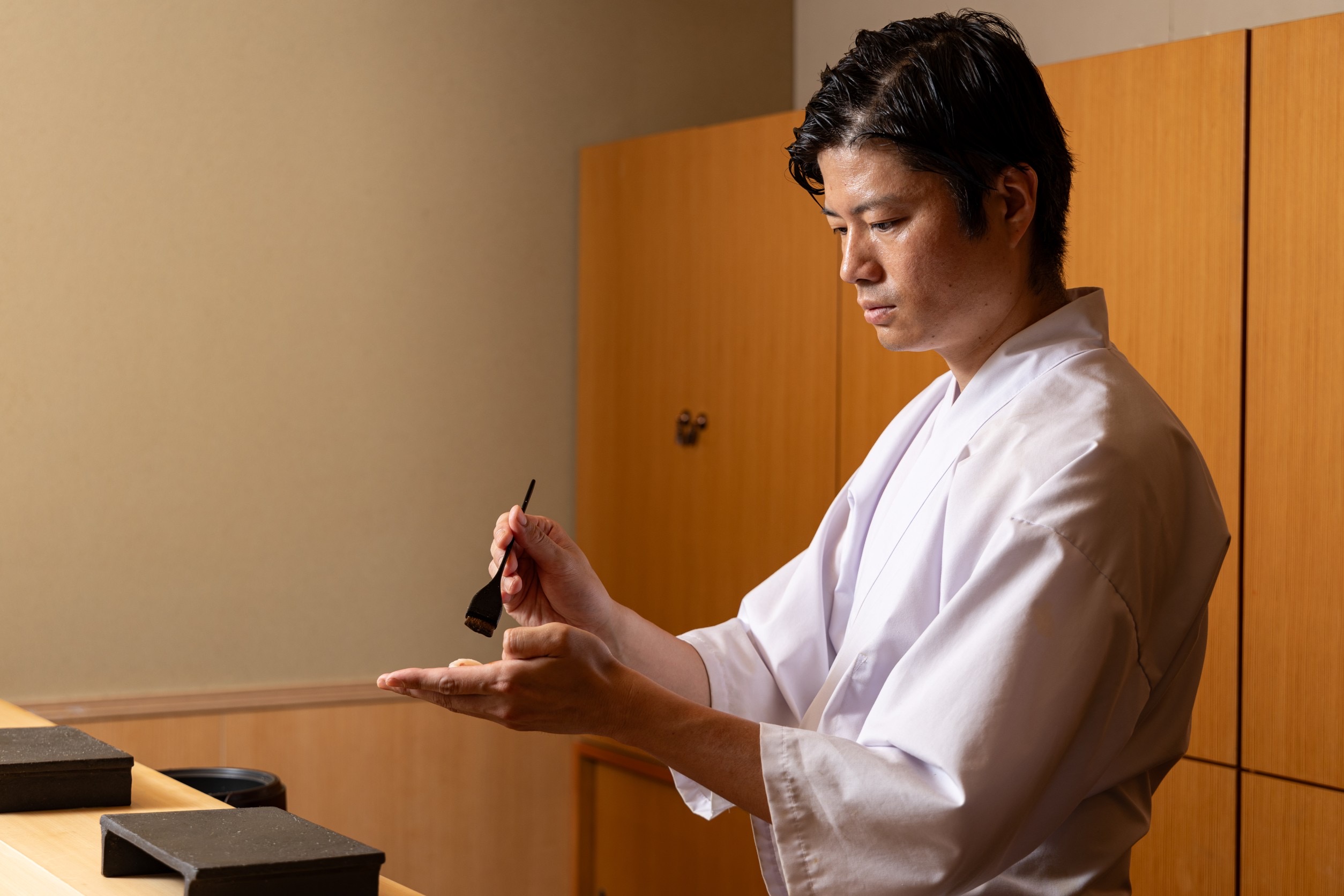
Reviewed by
Tatsuo TakadaHead chef and owner of Sushi Tanji. Trained in the Edomae tradition and rooted in Kyushu, he leads the eight-seat omakase counter in Oku-Akasaka, Tokyo, and reviews The Tokyo Sushi Guide.