Reviewed by Tatsuo Takada (owner-chef, Oku-Akasaka Sushi Tanji)
Part of The Tokyo Sushi Guide Updated Reading time about 6 minutes See the menu →
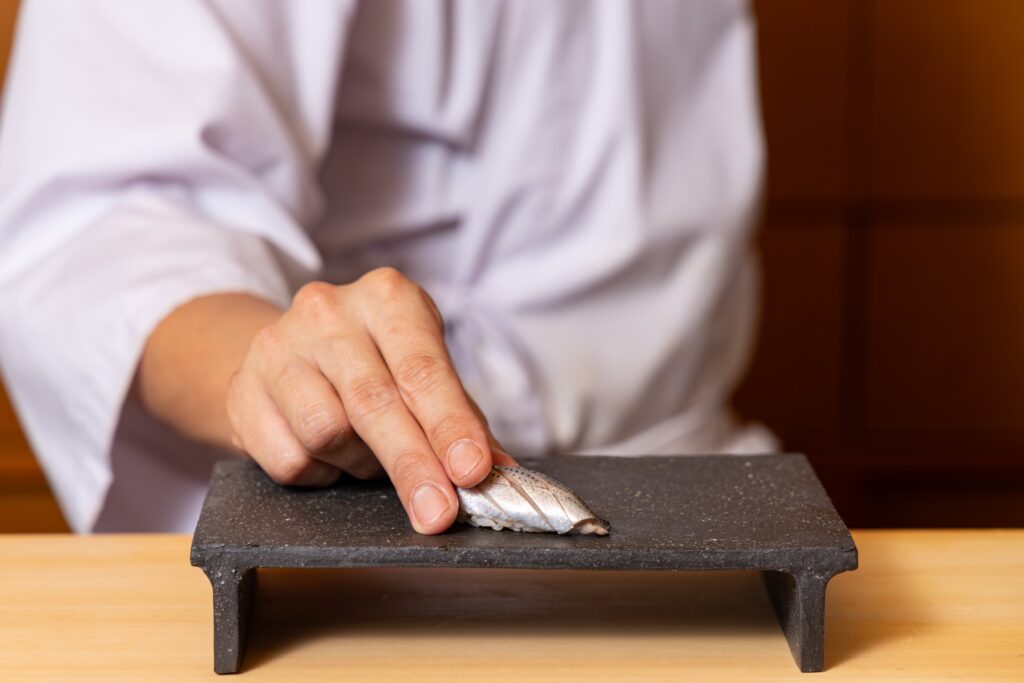
A sushi chef’s work begins with receiving, well before any fish is formed into sushi.A single fish reaches the counter by way of the fisherman who took it from the sea, the broker who chose it at market and the hands that dressed it. This piece follows what the chef standing at the end of that handover is actually judging: curing and ageing, the reading of the right moment, the fish of September and then sake.
In short
A sushi chef’s work is not the forming of fish into sushi. It is receiving, last in a line that runs from fisherman to broker to the one who dresses the fish, then recognising the moment that fish is at its best and serving it then. Curing and ageing are means towards that rather than the point of it.
What you will learn
- The four pairs of hands a single piece passes through: fisherman, broker, the one who dresses the fish and the chef
- Why bleeding and nerve-spiking are means towards ageing rather than ends in themselves
- How the reading of the right moment differs for white-fleshed, red-fleshed and silver-skinned fish
- The fish that begin appearing on the counter in September and how the preparation shifts with them
- A way of treating sake as something that completes the sushi rather than something set alongside it
- How things other than flavour quietly settle whether you would like to return
Three Pairs of Hands Before a Single Piece
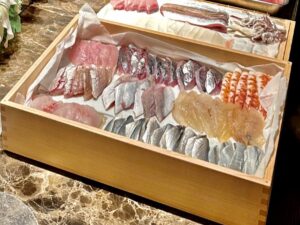
By the time one piece of sushi is set down before you, it has passed through at least three pairs of hands: the fisherman who takes it from the sea, the broker who judges it at market and the person who dispatches and dresses it. The sushi chef stands at the end of that handover. Many would say their own work begins exactly there.
- FishermanHow a fish is caught and handled on deck settles much of the flesh it will offer.
- Market brokerOut of everything laid out that morning, one fish is picked as the right one for the work ahead.
- The one who dresses itBlood and surplus moisture are drawn off so the flesh can hold up to the days it will spend resting.
- Sushi chefTakes the fish as it arrives, deciding how to cut it and when to serve it.
Bleeding and Curing Are Means, Not Ends
Bleeding a fish or spiking its nerve is not the finished form of sushi work. Blood and surplus moisture turn towards muddiness the longer they sit, so drawing them off early is what allows a few days to work in the fish’s favour. The method known as tsumoto-shiki (a system of bleeding a fish and flushing it through with water) exists for that purpose; having applied it is not in itself a promise of flavour. At Sushi Tanji the technique is taken up alongside a judgement made species by species about the right span of time and the right temperature.
The Work of Recognising the Moment
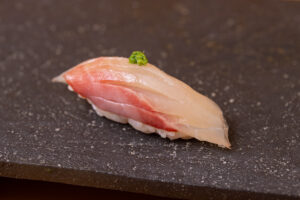
Judging the moment is a reading of the individual fish rather than a table of days. White-fleshed fish tend to give up their savour once a few days have drawn out the moisture. Red-fleshed fish steeped in soy shift in how the seasoning enters, over anything from a few hours to a day. Hikarimono (silver-skinned fish) spend far less time in the cure, with vinegar moving through the flesh in a matter of tens of minutes.
Even within one species the moment drifts with size, with the fat the fish carries, with the temperature of the day. So it is common for chefs to confirm it by hand: how firm the flesh feels at the cut, how the knife travels. Reading where the fish in front of you actually stands is nearer the substance of the work than keeping to a number.
What Comes to the Counter in September
September brings the fish that have come through the summer. The small kohada (gizzard shad) known as shinko in high summer have grown by now into the size that earns the adult name, taking longer in salt and longer in vinegar. Katsuo (skipjack) returning from northern waters carry fat again; sanma (Pacific saury) is sometimes given a light touch of salt or vinegar before it is formed. This is also when salmon roe begins to be cured in soy. As the season moves, the same fish asks to be treated differently.
Sake, Not Set to One Side
There is a way of thinking that declines to treat sake as a drink placed beside the sushi. A piece cured in salt and vinegar calls for a different texture of sake from one brushed with nikiri (a sweetened soy glaze). Bring a sake to each piece in turn and it is often the sushi, rather than the sake, that seems to change. The owner here travels to breweries across the country, choosing bottles with a sense of what the makers are reaching for and of what their region gives them. Bottles that rarely travel far from home are chosen in that same spirit.
Beyond "That Was Delicious"
When the account of a meal stops at “that was delicious”, flavour is all the day leaves behind. A counter, in truth, leaves rather more. The weight of a dish, the warmth of the teacup, the distance to the guest beside you, the timing with which someone speaks to you. None of it is flavour, yet all of it quietly settles whether you would care to come back. That is why some places shape the whole span of an evening, down to the last cup of tea with something sweet.
Work Without an End Point
Sushi technique carries no line marked “this far”. Change the handling at the port and the shape of the ageing changes with it; let a brewery alter how it makes its sake and the pairing moves too. Learning from fishermen, from those who dress the fish, from brewers, becomes part of the work itself. The longer someone has stood at the counter, the more likely they are to say they are not doing what they did last year. If the chef’s work is the last stage of a handover, then the one receiving keeps changing — which is only ordinary.
Frequently asked questions
What is the tsumoto method?
It is a way of drawing blood and surplus moisture out of a fish so that it is less prone to spoiling. The bleeding itself does not decide flavour; it is used to give the fish a body that can withstand the ageing to follow. What shows in the taste is less whether the treatment was carried out than whether the fish was then given the span of time that suits it.
Isn't fish at its best when it is freshest?
It depends on the fish. Oily blue fish and shellfish tend to make their character from the bite they have soon after they are caught, while white- and red-fleshed fish are often felt to be at their richest once a few days have drawn off the moisture. Edomae work has long chosen between freshness and maturity fish by fish.
May I ask at the counter about where the fish is from or how it was prepared?
Please do. Where today’s fish came from and how long it has rested are questions that tend to be easy to answer. Replies may grow short while the hands are moving, though there is no need to hold back.
Does the sushi chef choose the fish personally?
It varies by restaurant. Some chefs go to the market themselves; others leave the choosing to a broker they trust. Either way, how the fish is dressed once it arrives and when it is served remain the chef’s decisions. Seeing to everything alone is difficult, so splitting the choosing from the dressing is an ordinary arrangement.
From the guide to the counter
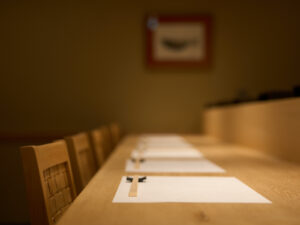
Taste it at our eight-seat counter in Oku-Akasaka.
Classic Edomae craft with careful modern aging – served piece by piece, with English guidance for overseas guests.
Reserve at Sushi Tanji Explore The Tokyo Sushi Guide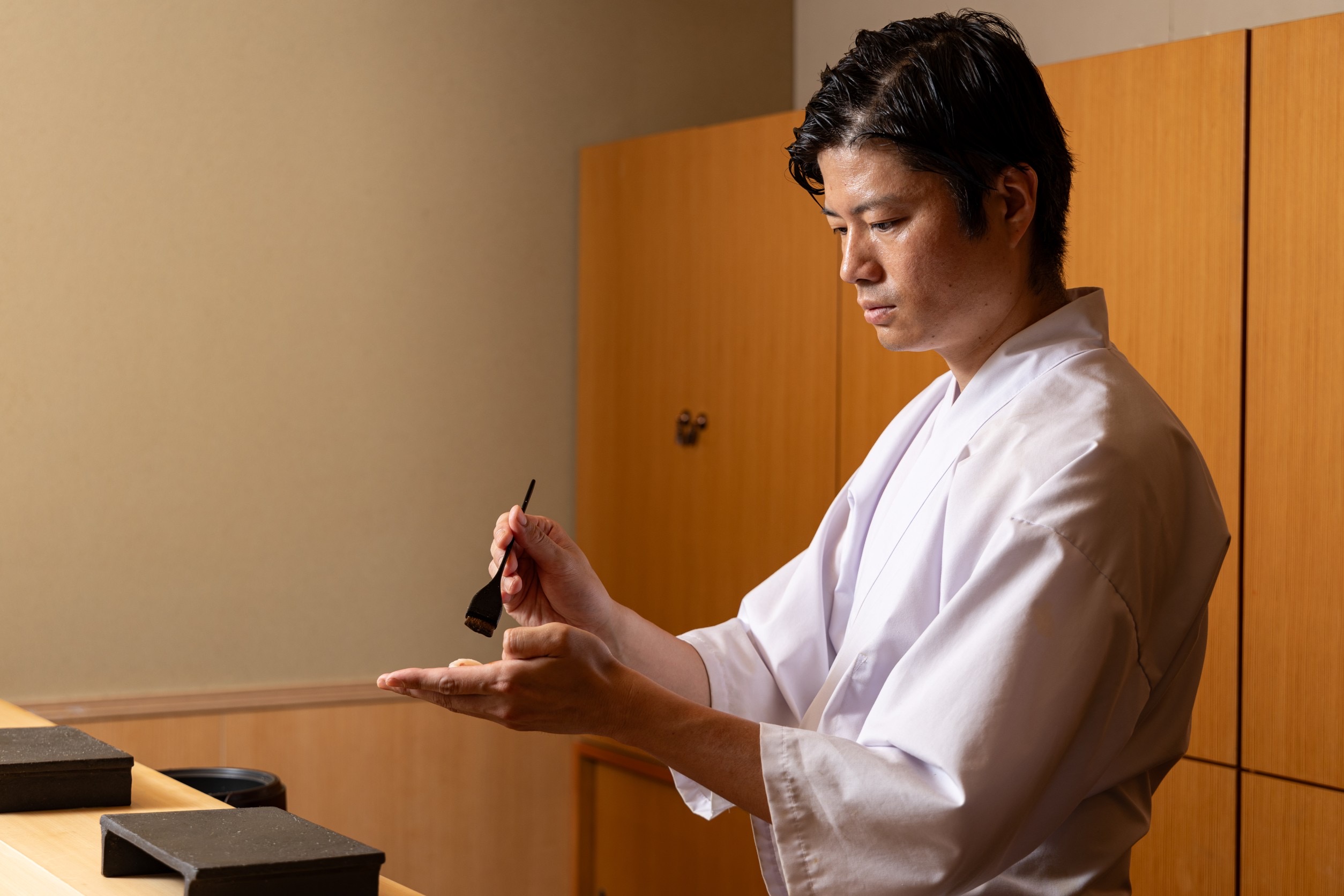
Reviewed by
Tatsuo TakadaHead chef and owner of Sushi Tanji. Trained in the Edomae tradition and rooted in Kyushu, he leads the eight-seat omakase counter in Oku-Akasaka, Tokyo, and reviews The Tokyo Sushi Guide.