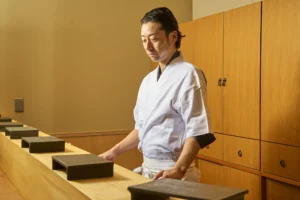
Reviewed by Tatsuo Takada (owner-chef, Oku-Akasaka Sushi Tanji)
Part of The Tokyo Sushi Guide Updated Reading time about 6 minutes See the menu →
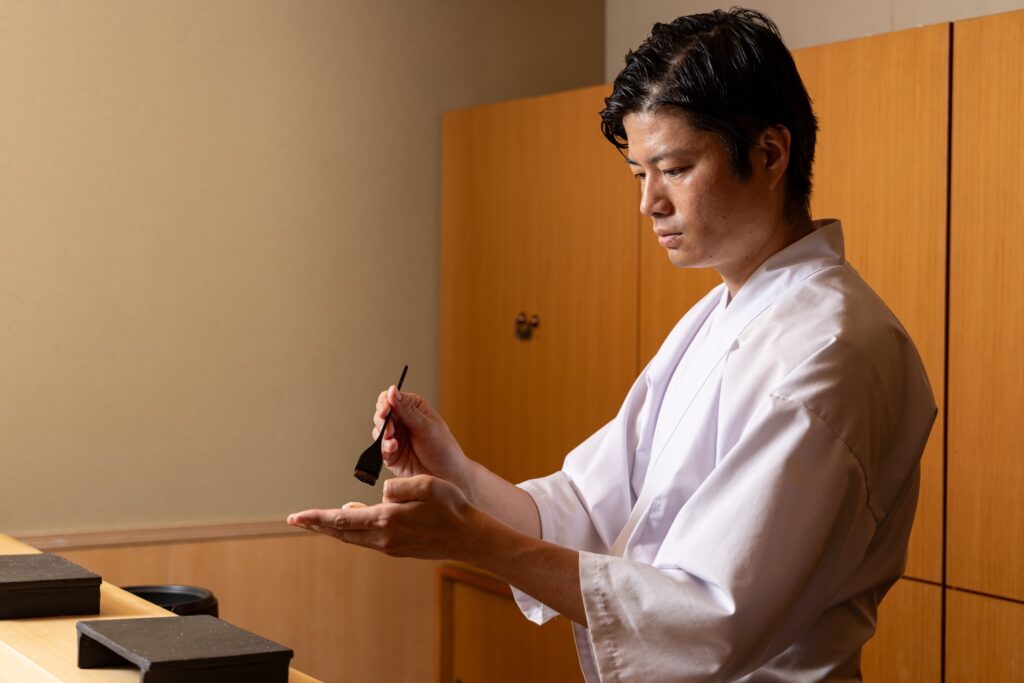
You take your seat, look for the soy sauce dish, then realise there is none. It is a moment nearly every guest passes through on a first visit to an omakase counter, where the meal is left in the chef’s hands. In truth, this small absence expresses the spirit of Edomae sushi, Tokyo’s classical style, more plainly than anything else on the counter. In this article we unfold the work called nikiri (a mellowed, seasoned soy brushed on just before serving), the philosophy of offering each piece as a finished work, then how a guest might most comfortably receive it.
What you will learn
- What nikiri soy sauce is, plus how it differs from the bottle on an ordinary table
- The Edomae idea of serving each piece as a finished work, with no soy sauce dish in sight
- How the finish changes from white fish to lean tuna to sea eel
- A relaxed way to ask for a touch more soy sauce at the counter
- One example of how nikiri meets the seasonal fish of July
It Begins with a Missing Dish
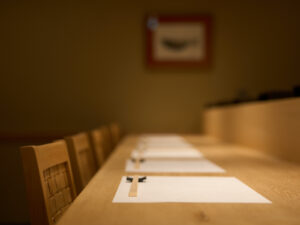
You settle in at the counter. A warm towel arrives, then tea. Your eyes drift across the wood in search of a soy sauce dish that never appears. Most guests on their first omakase visit seem to pass through this very moment. At conveyor-belt shops or the neighbourhood sushi bar, a soy dispenser sits on every table, so a little bewilderment is entirely natural. There is a considered reason behind the absence. Watch the chef’s hands closely: just before a piece is set before you, a small brush glides over it. That single stroke performs the office of the missing dish.
What Nikiri Is
Nikiri is soy sauce blended with sake and mirin, then warmed until the alcohol lifts away: soy sauce made expressly for sushi, you might say. The heat rounds off any sharp edges, leaving something mellow that supports the topping quietly from beneath without veiling its aroma. Every house keeps its own blend; some layer in the savour of katsuobushi (dried bonito) or kombu (kelp). Dipping a piece into ordinary soy sauce invites small mishaps: an overloaded bite, the shari (seasoned rice) loosening into the dish, a flavour that tilts towards the soy itself. Finishing each piece with a single stroke of nikiri is the chef’s way of taking that uncertainty on in advance.
A Philosophy of the Finished Piece
Edomae sushi passes through its classical work of curing, marinating, simmering — all so that the flavour is fully resolved at the moment a piece meets the palate. Nikiri is the last brushstroke in that long sequence. A counter without soy sauce dishes is not a lapse in hospitality but a quiet signal from the chef: the seasoning is already decided. From the warmth of the shari to the balance of its vinegar, each piece is offered as one finished work.
A Finish Chosen for Each Topping
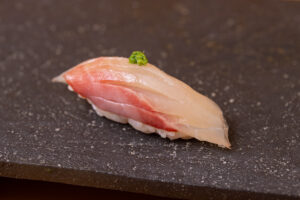
Nikiri is not brushed uniformly over everything that crosses the counter. White fish might receive a pinch of salt with citrus; anago (simmered sea eel) is painted with tsume, a sweetened reduction. The chef chooses a finish for each topping in turn. Watch for a while from your seat and you begin to see that this quiet sorting is itself a kind of menu.
| Topping | A typical finish | The intention |
|---|---|---|
| White fish (sea bream, isaki) | Salt with citrus or a pale brush of nikiri | To draw out a delicate aroma without erasing it |
| Lean tuna, zuke (marinated tuna) | Nikiri or the seasoning of its marinade | To support that iron-tinged savour |
| Anago, hamaguri clam | Tsume, a sweet reduction | To lend lustre with a gentle sweetness |
How Best to Receive It
There is no need for ceremony. The essence is simply to enjoy each piece soon after it is set down, ideally in one bite. A piece brushed with nikiri is already complete as it stands. If the seasoning sits differently with your palate, do tell the chef; most will adjust quietly, perhaps with a lighter pass of the brush from the next piece on. Hands or chopsticks, whichever feels natural. There is no longer any need to glance about for a soy sauce dish.
What July Shows in a Single Stroke
In July the counter fills with the light, fragrant white fish of summer: isaki (chicken grunt) or suzuki (sea bass), their delicate flesh answered by what feels like an ever fainter veil of nikiri. Freshly boiled kuruma-ebi (Japanese tiger prawn) takes a stroke that steadies its sweetness; plump, gently simmered anago receives the deep sheen of tsume. The brush is the same. What it carries changes with every topping. Summer is a fine season for watching this quiet judgement at close range.
A House's Thinking, in One Final Stroke
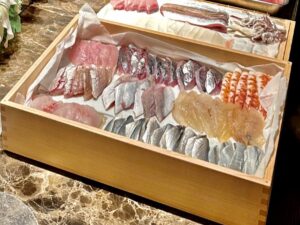
The blend of a nikiri, the weight of its stroke: both carry the thinking of the house. At Sushi Tanji in Tokyo’s Oku-Akasaka, for example, fish is matured through careful ageing to deepen its natural savour, then given Edomae curing or marinating before the final brush completes each piece in its own way. A stroke over aged white fish says something different from a stroke over marinated lean tuna. We touch on this pairing of Edomae craft with ageing in our introduction to the restaurant. Follow the movement of the brush across the counter and the omakase hour deepens by one more degree.
Frequently asked questions
How does nikiri differ from ordinary soy sauce?
Nikiri is soy sauce combined with sake and mirin, then heated so the alcohol cooks away. The result is rounder, mellower. Brushed onto sushi, it never masks the aroma of the topping. Each restaurant keeps its own blend; some deepen theirs with the savour of dashi.
What if I would like soy sauce at a restaurant that sets out no dish?
We would suggest trying the first bite just as it is served, since the piece has already been seasoned, often with nikiri. If it still feels gentle for your taste, a quiet word to the chef is all it takes; most are happy to brush a little more generously.
Is it impolite to add wasabi or soy sauce to a piece already brushed with nikiri?
Not at all, there is no fixed rule against it. That said, each piece is seasoned as a whole, so tasting it first as served lets you meet the balance the chef intended. Share your preference in conversation and it will find its way into the next piece quite naturally.
Should I eat with my hands or with chopsticks?
Either is welcome. Nigiri is shaped with fingers in mind, yet plenty of guests prefer chopsticks. Choose whichever feels natural, just as you would anywhere else. What matters most is enjoying each piece soon after it arrives.
To book a seat at our counter, see reservations on our home page.
From the guide to the counter
Taste it at our eight-seat counter in Oku-Akasaka.
Classic Edomae craft with careful modern aging – served piece by piece, with English guidance for overseas guests.
Reserve at Sushi Tanji Explore The Tokyo Sushi Guide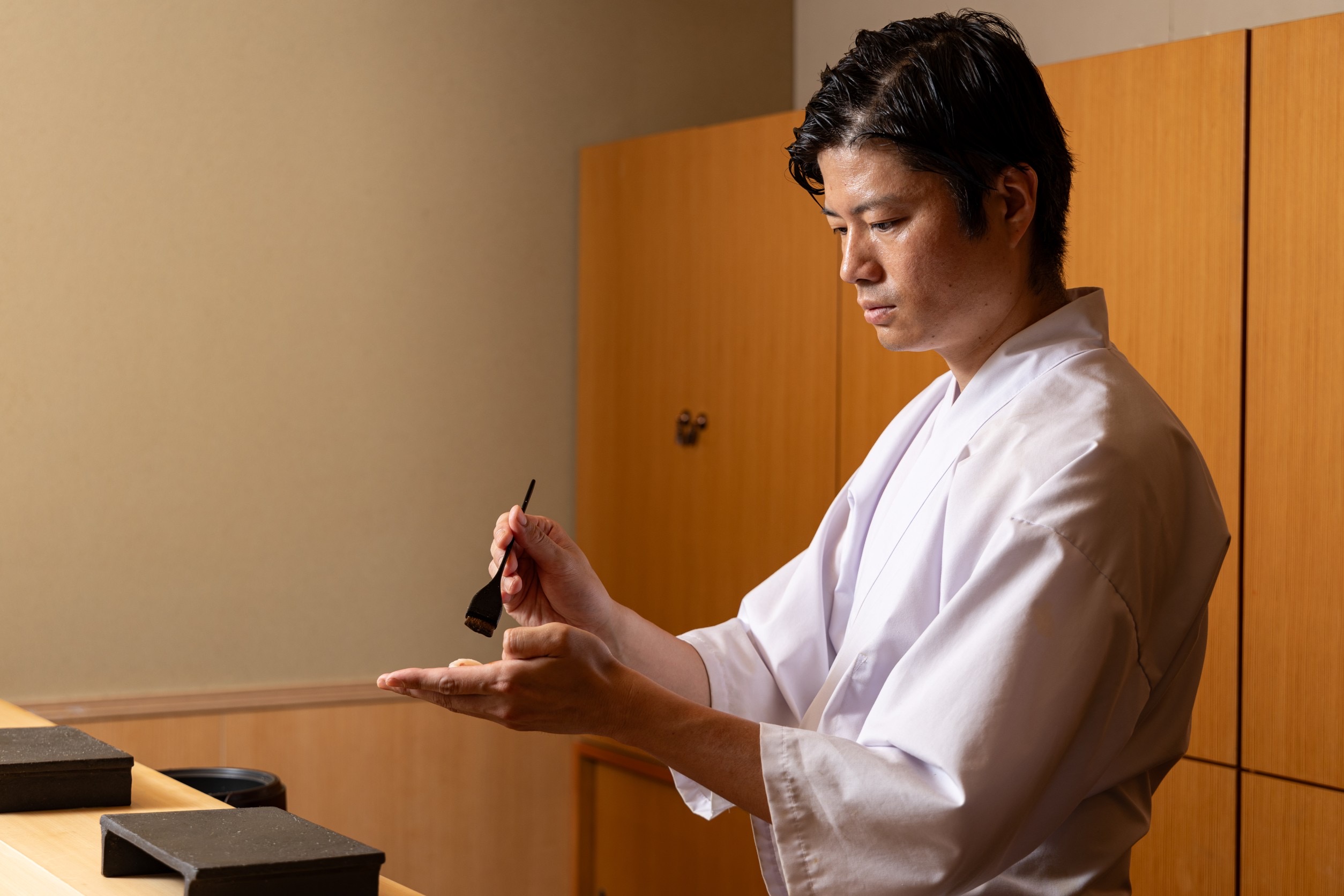
Reviewed by
Tatsuo TakadaHead chef and owner of Sushi Tanji. Trained in the Edomae tradition and rooted in Kyushu, he leads the eight-seat omakase counter in Oku-Akasaka, Tokyo, and reviews The Tokyo Sushi Guide.