Reviewed by Tatsuo Takada (owner-chef, Oku-Akasaka Sushi Tanji)
Part of The Tokyo Sushi Guide Updated Reading time about 7 minutes See the menu →
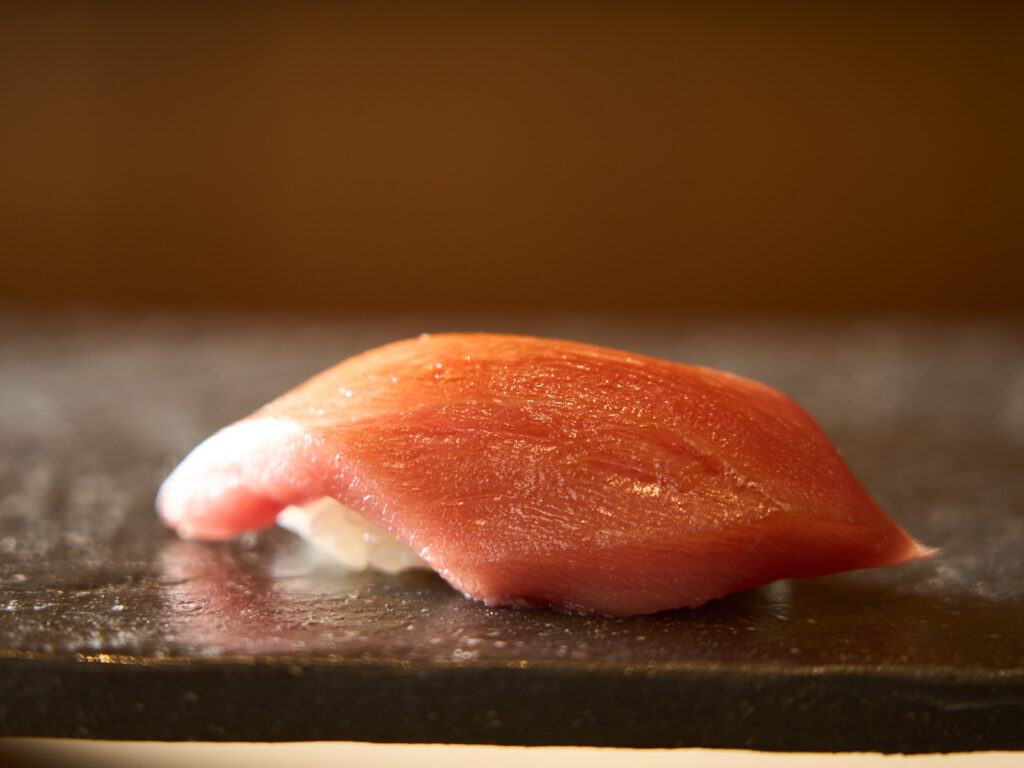
Sit at a Tokyo sushi counter for the first time – the menu will offer you the same fish three ways. Akami, chutoro, otoro: all cut from one bluefin tuna, yet they eat like three different creatures. This guide explains where each cut sits on the fish, how fat reshapes flavour as well as texture, plus why Edomae chefs marinate the lean cut in soy – so when the chef asks which you’d like, you can answer with a smile.
What you will learn
- Akami, chutoro plus otoro are cuts of one bluefin – position on the body decides fat
- Akami tastes of iron with a gentle acidity; chefs judge a whole tuna by it
- Chutoro balances marbling with lean depth – the natural first choice
- Otoro comes in two textures: marbled shimofuri plus rib-striped jabara
- Zuke – soy-marinated akami – is an Edomae classic worth ordering by name
- In July lean cuts shine: summer bluefin runs leaner than winter fish
One Fish, Three Names
Nearly all the tuna served at good Tokyo counters is bluefin – hon-maguro, known in the market as kuro-maguro (black tuna). A single fish can pass 200 kilograms, yet the three names on the menu are not grades of quality so much as addresses on the body. Akami (lean meat) is the deep red muscle running along the spine. Chutoro (medium-fat) comes from the outer belly plus the upper back near the skin. Otoro (fattiest) is the lower belly, richest toward the head.
The proportions are lopsided. Most of a bluefin is akami; true otoro is a narrow band that makes up only a small fraction of the animal, which is why it commands the highest price of the three. At Toyosu market, wholesalers judge a whole fish by cutting a window into the tail – the colour, sheen plus visible fat in that small cross-section predict everything else.
| Cut | Where it sits | Fat | Character |
|---|---|---|---|
| Akami | Deep muscle along the spine | Low | Iron, gentle acidity, clean finish |
| Chutoro | Outer belly; upper back near the skin | Medium | Marbled richness over a lean core |
| Otoro | Lower belly toward the head | High | Melting fat, sweetness, brief on the tongue |
Akami: The Measure of the Tuna
Akami is the cut beginners skip – the one regulars watch for. Its colour runs from cherry to garnet; its flavour is defined by a faint mineral tang from myoglobin, the oxygen-carrying pigment that powers a tuna’s non-stop swimming, backed by a quiet acidity that lifts the vinegared shari (seasoned rice) beneath it. Because there is little fat to blur the picture, akami shows everything: the fish’s condition, the waters it swam, how well the chef has rested the block.
Many chefs will tell you a tuna is judged by its akami, not its toro. Fat flatters; lean meat testifies. This is also the cut where aging speaks most clearly – a block rested for several days loses its metallic edge, then develops a rounder, almost meaty savour as the flesh relaxes.
Chutoro: The Diplomatic Middle
Chutoro is the diplomat. It carries enough marbling to give the sweetness of fat, yet keeps the deep red flavour of the lean meat underneath – which is why it is the piece most first-time visitors remember. It comes from two places: the outer layer of the belly plus a band along the upper back near the skin, sometimes distinguished as se-toro (back toro).
Look closely at a slice on the cutting board. Fine white lines of sinew – suji – run through the flesh, tougher near the tail. Part of the craft is invisible: the chef angles the knife across those lines so each becomes a short thread that dissolves in the mouth rather than a long chew. The same block cut carelessly would eat like string.
Otoro: The Belly at Full Volume
Otoro is the lower belly turned up to full volume – flesh so laced with fat that it fades to pale pink, almost white in places. That fat begins to soften just below body temperature, so a slice starts dissolving the moment it touches the tongue; the flavour arrives as sweetness first, ocean second, then vanishes quickly. It is spectacular precisely because it is brief.
Menus rarely say so, but otoro comes in two textures. Shimofuri (“frost-fall”) is the evenly marbled section behind the pectoral fin, uniform as fresh snowfall. Jabara (“bellows”) lies along the ribs, striped with bands of pure fat between muscle – wilder, richer, divisive. Rarest of all is kama-toro from the collar: one fish yields only a few servings.
Zuke: How Edomae Chefs Perfected Lean Tuna
In the Edo period there was no refrigeration, so tuna reached the sushi stalls with a problem: it spoiled fast. The answer was zuke – “soaked” – akami steeped in soy sauce until the surface cured, buying the stall-keeper days rather than hours. Toro, meanwhile, was nearly worthless; its fat repelled the soy so it turned quickly – old market slang called it neko-matagi, “what even a cat steps over”.
Modern zuke is seasoning, not preservation. The chef bathes a block or slice of akami in a soy blend – often cut with sake plus mirin – for minutes rather than days. The surface deepens to garnet while the texture turns nettori – dense, gently clinging – so the marinade meets the iron of the lean flesh like a chord resolving. Because fat still repels soy, zuke remains akami’s art alone; you will never meet an otoro zuke worth the name.
This is where a counter’s philosophy shows. At Sushi Tanji, an eight-seat counter in a quiet Oku-Akasaka backstreet, the kitchen works squarely in this lineage – Edomae curing plus marinating joined with careful modern aging, each fish judged for its own peak – so how a given block of tuna is served depends on where it stands that day.
Ordering Maguro in July
Bluefin’s famous fat peaks in winter, when the fish feed hard in cold water. A July visit is not a lesser one – it simply shifts the spotlight. Summer tuna tends to run leaner, so this is the season when a well-aged akami or a carefully judged zuke can outshine otoro; more than a few chefs quietly prefer it. Take that as an invitation to order the lean cuts with intent.
- Start with akamiTaste the tuna itself before fat enters the picture – iron, acidity, the state of the aging.
- Move to chutoroThe marbling now reads as an addition rather than the whole story.
- Finish with otoroOne piece at the right moment lands harder than three in a row.
- Ask for zuke by nameWhere the counter offers it, this single word signals genuine curiosity about Edomae craft.
One last piece of counter craft: nigiri usually arrives already brushed with nikiri, the chef’s seasoned soy glaze, so it needs nothing further. If you are dipping sashimi, touch the fish lightly – fatty toro sheds soy sauce anyway, while rice dipped directly will crumble. Eat each piece in one bite while the shari is still at body warmth; maguro, more than most toppings, is served at a deliberate temperature.
Frequently asked questions
What is the difference between akami, chutoro and otoro?
They are three cuts of the same bluefin tuna, separated by fat content. Akami is the lean red muscle along the spine – firm, savoury, faintly mineral. Otoro is the fat-rich lower belly that melts on the tongue. Chutoro sits between the two in both position on the fish plus richness, which makes it the easiest introduction.
Should I dip otoro in soy sauce?
Usually you will not need to. At most counters nigiri arrives brushed with nikiri, a seasoned soy glaze, meaning the piece is already finished. If sashimi comes with a dish of soy sauce, touch only the edge of the fish – otoro’s fat sheds liquid, so heavy dipping simply leaves a salty pool behind.
What does zuke mean on a sushi menu?
Zuke means “soaked”: lean tuna marinated briefly in a soy-based blend, a technique born in the Edo period as preservation. Today it is used purely for flavour – the surface turns deep garnet while the texture becomes dense with a pleasing cling. It is made from akami, since fat repels the marinade.
Is tuna good in Tokyo in July?
Yes, though the emphasis shifts. Bluefin fat peaks in winter, so summer fish run leaner – which favours akami, aged blocks plus zuke rather than showpiece otoro. A good chef adjusts sourcing as well as treatment through the year, so trust the counter’s recommendation over a fixed idea of what to order.
Which tuna cut should a first-timer order?
Order all three as a set if you can, in this sequence: akami, then chutoro, then otoro. Tasting light to rich shows how fat changes the same fish. If you must choose one, chutoro is the safest pleasure – though asking for zuke will earn you an approving nod at most counters.
From the guide to the counter
Taste it at our eight-seat counter in Oku-Akasaka.
Classic Edomae craft with careful modern aging – served piece by piece, with English guidance for overseas guests.
Reserve at Sushi Tanji Explore The Tokyo Sushi Guide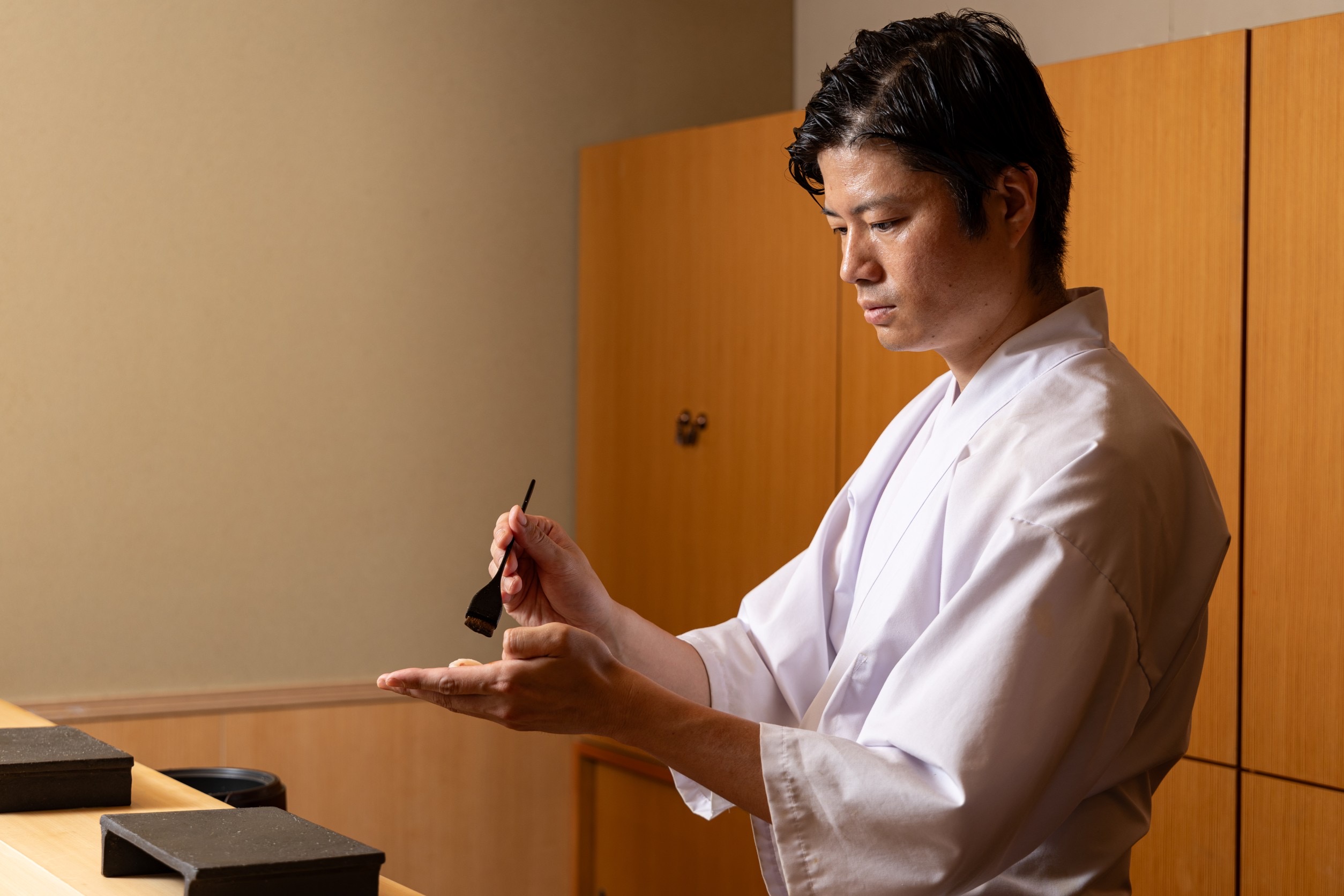
Reviewed by
Tatsuo TakadaHead chef and owner of Sushi Tanji. Trained in the Edomae tradition and rooted in Kyushu, he leads the eight-seat omakase counter in Oku-Akasaka, Tokyo, and reviews The Tokyo Sushi Guide.