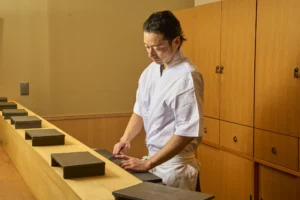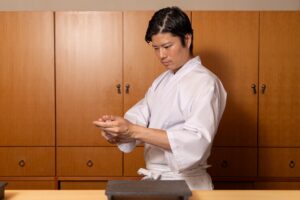


Reviewed by Tatsuo Takada (owner-chef, Oku-Akasaka Sushi Tanji)
Part of The Tokyo Sushi Guide Updated Reading time about 7 minutes See the menu →
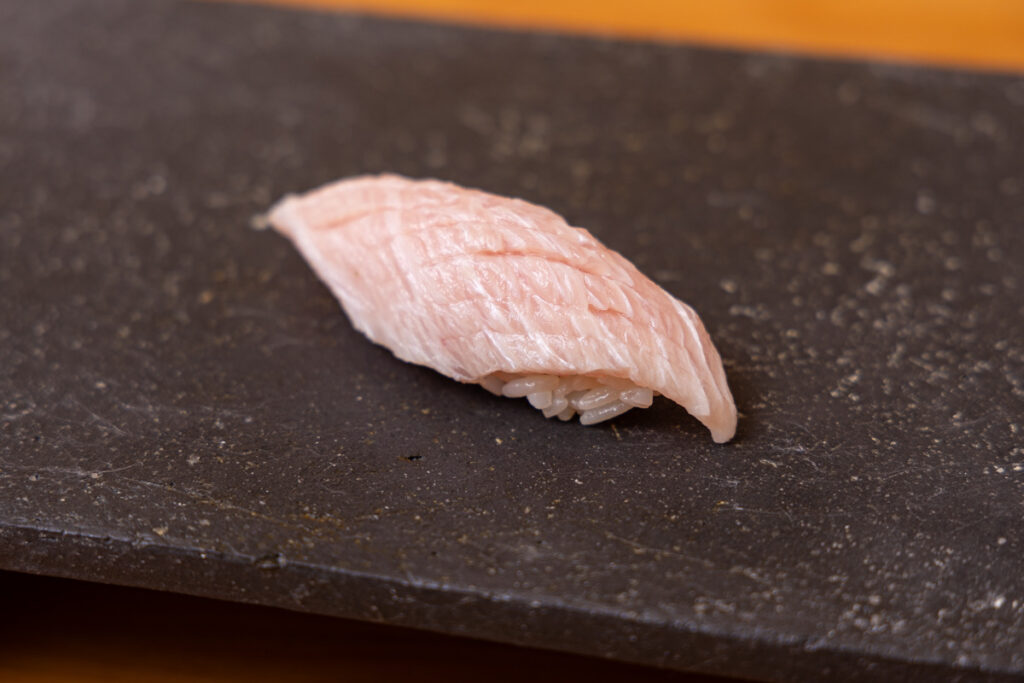
Ask what separates a great Tokyo sushi counter from a merely good one and the answer is a single word: Edomae. It is the style most of the world now pictures when it thinks of sushi, yet its meaning is easy to miss, even for keen enthusiasts. Edomae is not about the freshest possible fish. It is about what a craftsman does to the fish before it ever reaches your hand. This guide explains the tradition, its core techniques, plus how to taste the difference at the counter.
For the techniques themselves, curing, marinating, simmering and ageing, see the four kinds of Edomae work.
What you will learn
- What “Edomae” literally means (and how the style was born)
- Why the best sushi is rarely “fresh” in the naive sense
- The core techniques: curing, marinating, simmering, aging
- Why the rice (shari) is half the craft
- How to recognise Edomae work in front of you
Born in front of Edo Bay
Edomae (江戸前) means “in front of Edo”: the waters of the bay that lapped the old capital we now call Tokyo. In the early 1800s, sushi here was fast food: stalls near the fish market pressed vinegared rice with the morning catch, serving workers who ate standing, two bites, gone.
The catch was magnificent, but there was no refrigeration. So the craft that grew up around Edo Bay was, at its heart, a set of preservation techniques: salting, vinegar-curing, soy-marinating, simmering, smoking. What began as necessity revealed something profound. These techniques did not merely preserve the fish; they made it taste better. Salt drew out water while concentrating flavour. Rest deepened umami. A soy marinade turned lean tuna silken.
The “freshness” misunderstanding
Visitors often assume the finest sushi is the freshest: fish alive an hour ago. For a few shellfish that is true. For most fish it is the opposite: a fish eaten too soon is firm yet mute, its umami still locked away.
Proteins in resting fish gradually break down into amino acids (glutamate, inosinate), the very compounds your tongue reads as depth & savour. A tuna rested properly for days tastes more of itself, not less. The craftsman’s skill lies in judging each fish’s peak: hours for some silver-skinned fish, a week or more for large tuna.
So when a chef tells you a fish was aged, he is not confessing a shortcut. He is telling you the most interesting part of its story.
The core techniques
Six preparations define the classic repertoire. You will meet them, named or unnamed, at every serious counter in Tokyo:
| Technique | What it is | Classic example |
|---|---|---|
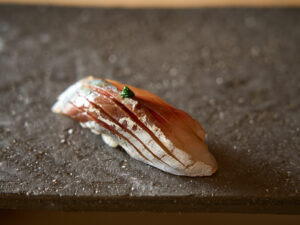
| Sujime (vinegar cure) | Salt first, then a rice-vinegar bath firms the flesh while balancing oiliness | Kohada (gizzard shad): the signature Edomae fish |
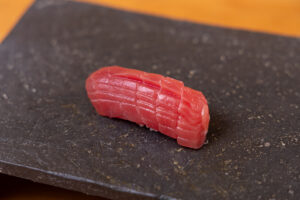
| Zuke (soy marinade) | Lean tuna steeped briefly in seasoned soy until silken & deeply savoury | Akami zuke |
| Nikiri (brushed soy) | A house blend of soy, mirin & dashi brushed on each piece, so no soy dish is needed | Every finished nigiri |
| Ni-mono (simmering) | Gentle simmering in sweetened broth until meltingly tender | Anago (sea eel), hamaguri clam |
| Kobujime (kombu cure) | White fish rested between sheets of kelp, borrowing its deep umami | Flounder, sea bream |
| Jukusei (aging) | Controlled resting, days to weeks, while proteins bloom into umami | Tuna, large white fish |
Each is invisible on the plate. The piece before you looks simple: fish on rice. The days of judgment inside it are the entire difference.
Shari: the other half of sushi
Ask a Tokyo craftsman what matters most and many will answer without hesitation: the rice. Shari is seasoned with vinegar, salt, sometimes a whisper of sugar; classic Edomae houses often use akazu, an amber vinegar aged from sake lees that lends colour plus a rounder depth.
Three things distinguish serious shari:
- TemperatureServed at body warmth, never cold, so it melts against the cool fish.
- StructurePressed to hold together in the hand yet collapse on the tongue. Grains stay distinct.
- SeasoningTuned to the house style: sharper for oily fish traditions, gentler for delicate ones.
Edomae today – tradition meets aging science
Modern Tokyo counters extend the tradition rather than embalm it. Refrigeration removed the necessity, so what survives is the flavour philosophy, now sharpened by technique the Edo craftsmen could only dream of. The most notable is modern jukusei: precise cold-aging of fish, sometimes for weeks, building on methods such as the Tsumoto-style blood-removal process that keeps flesh pristine while umami develops.
At Sushi Tanji, our chef works squarely in this lineage: classic Edomae curing joined with careful modern aging, each fish judged for its own peak. It is one house’s answer to the tradition’s standing question: how do you make this fish the best version of itself?
How to taste the difference
You need no expertise, only attention. At your next counter meal:
Taste before seasoning. An Edomae piece arrives complete; notice it needs nothing.
Follow the kohada. The humble cured shad is the style’s exam piece. The balance of salt, vinegar & fish is the house’s signature in one bite.
Compare tuna states. Where the course offers akami zuke beside otoro, taste how the marinade transforms lean fish into something equally profound.
Ask one question. “How long was this aged?” opens the door to the most interesting conversation at the counter.
Frequently asked questions
Does “Edomae” mean the fish comes from Tokyo Bay?
Not anymore. Today the word names the style: the repertoire of curing, marinating, simmering & aging born beside Edo Bay. Fish now arrives from the best waters across Japan, prepared with those same techniques.
Is aged sushi safe to eat?
Yes, in skilled hands. Professional aging is controlled cold-storage craft: scrupulous hygiene, precise temperature, daily judgment. It is the same discipline behind dry-aged beef, practised by specialists on their own product.
How is Edomae different from other sushi styles?
Osaka’s older tradition presses cured fish onto rice in moulds (oshizushi); many coastal regions celebrate raw local catch with minimal handling. Edomae is Tokyo’s answer: hand-formed nigiri whose fish has been improved through technique before serving.
Where can I experience true Edomae sushi in Tokyo?
Look for a small omakase counter where the chef prepares fish in-house. The menu will mention curing or aging rather than only “fresh.” Sushi Tanji in Oku-Akasaka serves this tradition at an eight-seat counter, with English guidance for overseas guests.
Taste the tradition
Edomae is better eaten than explained.
Cured kohada, silken zuke, carefully aged tuna – served piece by piece at our counter in Oku-Akasaka.
Reserve at Sushi Tanji Read the omakase guide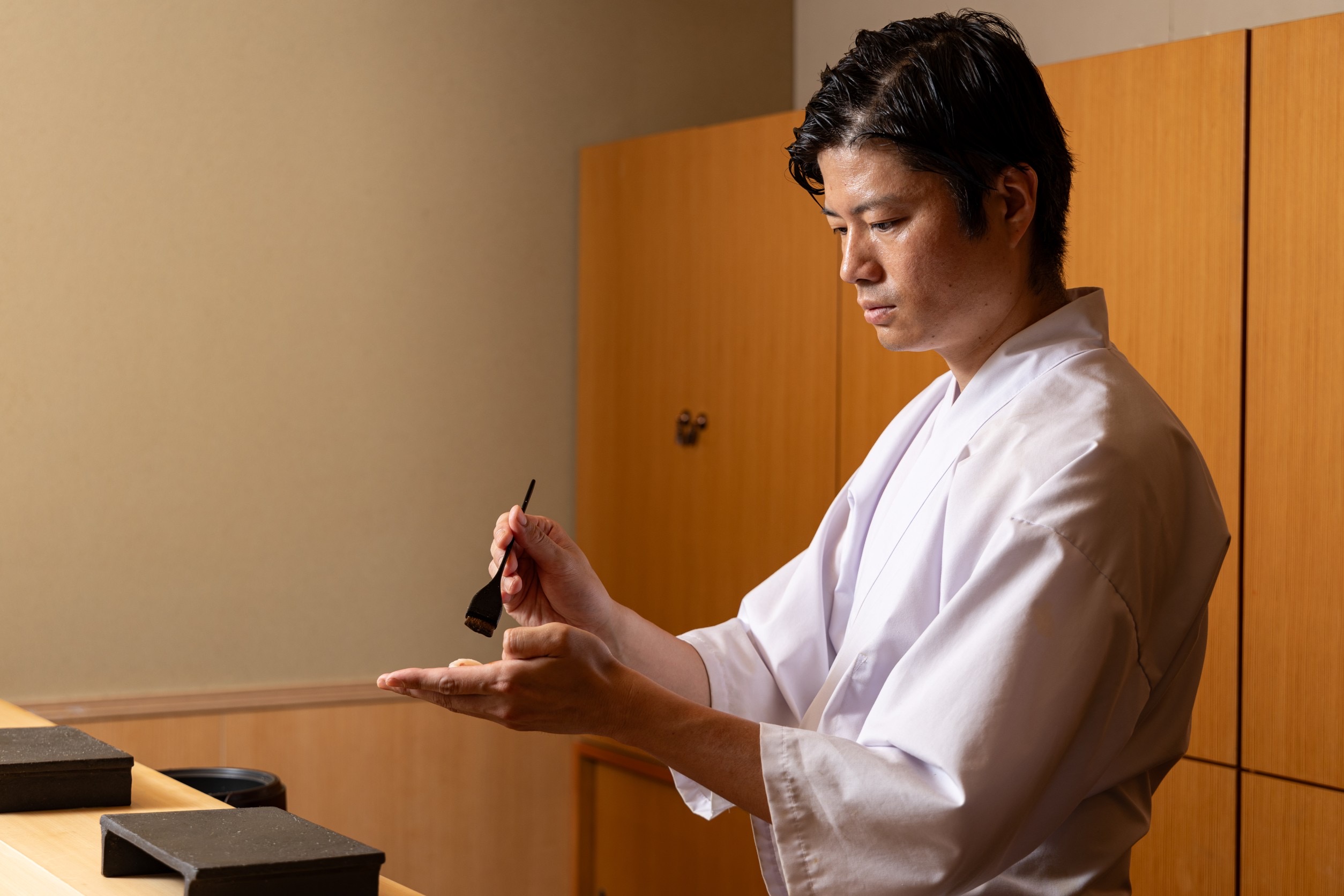
Reviewed by
Tatsuo TakadaTrained in the Edomae tradition, rooted in Kyushu, he leads the eight-seat omakase counter at Sushi Tanji in Oku-Akasaka, Tokyo – the house behind The Tokyo Sushi Guide.