Reviewed by Tatsuo Takada (owner-chef, Oku-Akasaka Sushi Tanji)
Part of The Tokyo Sushi Guide Updated Reading time about 7 minutes See the menu →
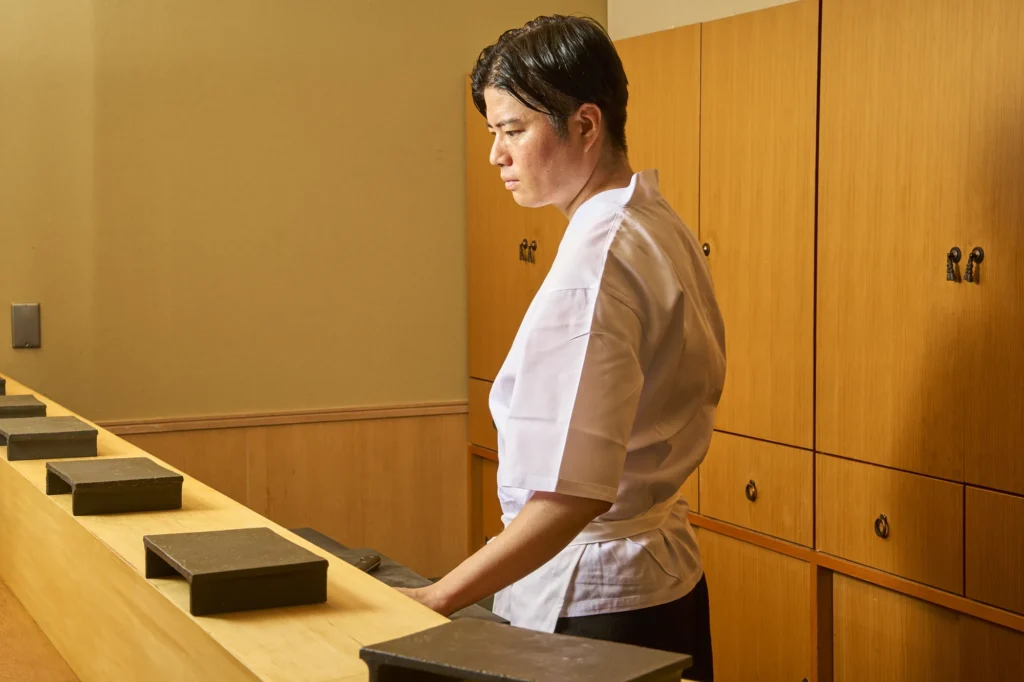
Search the internet for “sushi etiquette” and you will find fifty rules, half of them contradictory, most of them frightening. Here is the truth from behind the counter: a Tokyo sushi chef wants you to relax, eat well, then leave happy. This guide separates the customs that genuinely matter from the myths you can safely ignore, so you can sit down at any counter in Tokyo with quiet confidence.
What you will learn
- The handful of customs chefs actually care about
- Hands or chopsticks: the real answer
- How to enjoy soy sauce, wasabi & gari with ease
- Timing: the one rule that changes everything
- Common myths you can stop worrying about
The etiquette that actually matters
Real sushi etiquette is not a test of knowledge; it is a small set of habits that keep the food at its best while sharing the moment with the people around you. Keep just these few in mind and you will feel welcome at any counter in Japan:
The essentials
- Eat each piece soon after it is served
- Eat nigiri in one bite where you can
- Go easy on the soy sauce
- Skip strong perfume or cologne
- Mention allergies when you book, not at the counter
Best gently avoided
- Letting a piece sit while it dries out
- Drowning the rice in soy sauce
- Rubbing chopsticks together (implies cheap chopsticks)
- Strong fragrance in a small room
- Flash photos of other guests or staff without asking
Notice what is not on the list: using the wrong hand, bowing incorrectly, mispronouncing a fish. Chefs welcome travellers every week; warmth outshines polish every time.
Hands or chopsticks?
Both are correct for nigiri. Eating with fingers is the older Edo tradition, from the days when sushi was street food. Many chefs quietly prefer it, because fingers compress the rice less than chopsticks do. Chopsticks are equally acceptable, always used for sashimi.
If you do use chopsticks, tip the nigiri gently onto its side to pick it up. It holds together better than gripping it upright.
Soy sauce, wasabi & gari
Soy sauce
The single most useful habit: dip the fish, not the rice. Rice absorbs soy sauce like a sponge, overwhelms the seasoning already in the piece, then falls apart in the dish. Tilt the piece so only the topping touches the sauce: a light kiss, not a swim.
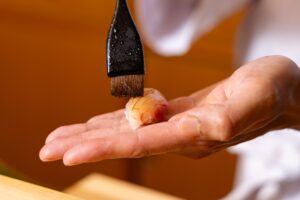
At many omakase counters you will find no soy dish at all. The chef brushes each piece with nikiri (seasoned soy) before serving; the piece arrives complete. Taste first. Reaching for extra seasoning before tasting is the sushi equivalent of salting a dish you have not tried.
Wasabi
The chef has already placed the right amount between fish & rice. Mixing wasabi into your soy sauce is common at casual restaurants. At a fine counter it muddies both flavours, so simply ask for more wasabi on the side if you love heat.
Gari (pickled ginger)
Gari is a palate cleanser between pieces, not a topping. A slice after a rich piece (otoro, uni, anago) resets your tongue for the next flavour. Some guests also use it as a small brush to dab soy onto maki; charming, optional.
Timing – the golden rule
If sushi etiquette had only one rule, it would be this: eat the piece when it is served. Nigiri is engineered around temperature: body-warm rice against cool fish. That contrast fades within a minute. The chef times each piece to your pace; a piece left waiting while you finish an anecdote quietly loses everything it was built to be.
Behaving at the counter
A sushi counter is intimate: eight or ten seats, one craftsman, shared air. A few social notes follow naturally from that:
- Conversation is welcomeAsk about the fish, the season, the wood of the counter. Quiet curiosity is the house currency.
- Photos: food yes, people ask firstPhotographing your plate is fine almost everywhere. For the chef at work, one polite question first.
- Phone on silentCalls step outside; the room is small enough that everyone attends your meeting with you.
- Pace yourself with drinkSake with sushi is wonderful; a counter is not an izakaya. Merry is fine, loud is not.
- The finish“Gochisousama deshita” (“thank you for the feast”) at the end lands beautifully in any accent.
Myths you can ignore
“You must eat omakase in silence.” False. Counters run on conversation. Read the room, but never fear speaking.
“Ordering tamago first tests the chef.” A magazine legend. Order what you enjoy; nobody is grading you.
“You must never ask for more of one piece.” The opposite: an encore request flatters the house.
“Leaving gari means offence.” Gari is a condiment. Eat it or leave it freely.
“Foreigners are judged harshly.” The reverse is true: a visitor who shows the small courtesies above tends to receive the warmest welcome in the room.
Frequently asked questions
Is it rude to ask what a piece of sushi is?
Not at all. It is one of the best questions you can ask. Chefs devote their lives to sourcing; genuine curiosity about the fish is a compliment, never an interruption.
What do I do if I drop a piece?
Smile, apologise lightly, move on. It happens weekly at every counter on earth. The chef will quietly make it right; theatrical embarrassment is the only real mistake available.
Can I leave food I dislike?
Yes, though at an omakase counter a quiet word early (“I struggle with uni”) serves everyone better. The chef simply routes around it. Telling the house at booking time is best of all.
Do these rules apply at conveyor-belt sushi too?
Casual restaurants are genuinely casual: mix wasabi, take your time, relax. The customs in this guide matter most at counters where a chef hands you each piece directly.
Put it into practice
Practice makes delicious.
Our eight-seat counter in Oku-Akasaka welcomes first-timers – English guidance included, anxiety not required.
Reserve at Sushi Tanji Read the omakase guide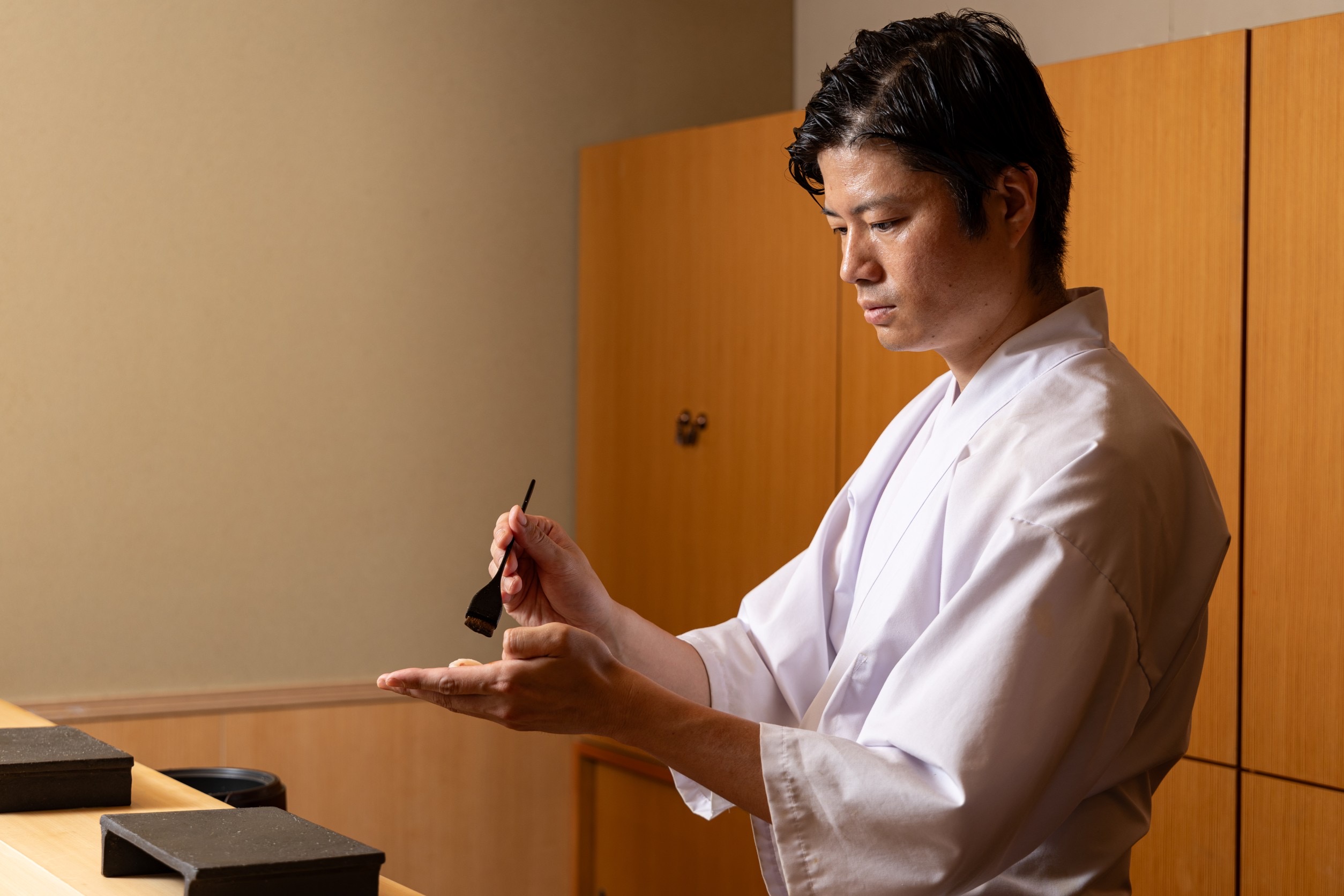
Reviewed by
Tatsuo TakadaTrained in the Edomae tradition, rooted in Kyushu, he leads the eight-seat omakase counter at Sushi Tanji in Oku-Akasaka, Tokyo – the house behind The Tokyo Sushi Guide.