
Reviewed by Tatsuo Takada (owner-chef, Oku-Akasaka Sushi Tanji)
Part of The Tokyo Sushi Guide Updated Reading time about 8 minutes See the menu →
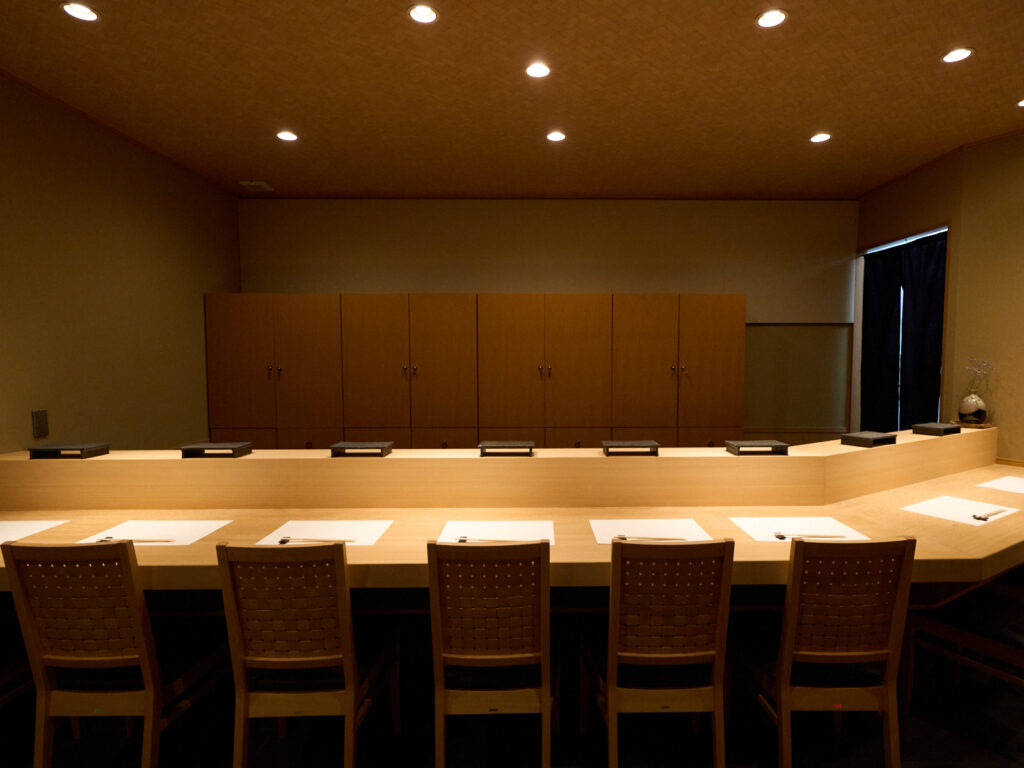
Omakase is the most rewarding way to eat sushi in Tokyo. It is also the most intimidating to book for the first time. This guide explains exactly what omakase means, what it costs, how the meal flows from the first cup of tea to the final piece, plus the small courtesies that will make the chef glad you came. It is written from behind the counter of a Tokyo omakase restaurant, so nothing here is guesswork.
What you will learn
- What “omakase” really means (and what it does not)
- Realistic Tokyo price ranges, from lunch counters to top houses
- How a typical evening unfolds, course by course
- How to reserve, what to wear, when to arrive
- The etiquette that matters (it is less strict than you fear)
What does omakase mean?
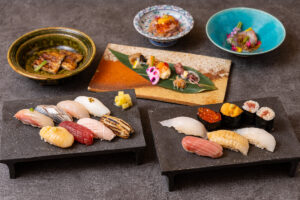
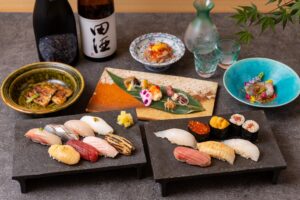
Omakase (お任せ) translates as “I leave it up to you.” Instead of ordering from a menu, you entrust the meal to the chef, who serves a personal sequence of the best fish available that day: piece by piece, made one at a time, handed to you at the moment it tastes best.
It is worth clearing up two common misunderstandings. First, omakase is not a set menu; the sequence flexes with the market, the season, even the pace at which you eat. Second, it is not a performance staged for tourists. Omakase is simply how serious sushi houses in Tokyo have always preferred to serve: the chef reads the room, adjusts each piece to the guest, then quietly watches whether you smiled.
How much does omakase cost in Tokyo?
Prices vary widely with neighbourhood, reputation, plus the grade of seafood a house buys. As a realistic 2026 orientation:
| Experience | Typical price per person | What to expect |
|---|---|---|
| Lunch omakase | ¥5,000 to ¥15,000 | Shorter course, superb value, easier to book |
| Mid-range dinner | ¥15,000 to ¥30,000 | Full course of 15 to 20 pieces with appetisers |
| High-end dinner | ¥30,000 to ¥50,000 | Rare cuts, aged fish, refined pairings |
| Top-tier houses | ¥50,000+ | Legendary counters; reservations are the challenge |
Drinks are usually separate. Most counters welcome a single glass of tea as happily as a full sake pairing, so the drink budget is genuinely yours to decide. Note that many houses charge a cancellation fee within 24 to 72 hours of the seating, because the day’s fish is bought for a known number of guests.
How the meal unfolds, step by step
Every house has its own rhythm, but a Tokyo omakase evening usually moves like this:
- Welcome & a warm towelYou are seated at the counter; tea or a drink order comes first.
- Appetisers (tsumami)A few small seasonal dishes: perhaps steamed abalone or a slice of seared bonito.
- The nigiri sequence beginsLighter white fish first, building toward richer flavours.
- The tuna arcLean akami, then chutoro, then otoro: the emotional centre of Edomae sushi.
- Cured & seared piecesKohada, anago, aburi cuts: where a house shows its technique.
- Uni, ikura & specialtiesThe luxurious mid-finale most guests remember.
- Tamago & soupThe traditional close; tamago is quietly a chef’s signature.
- One more, if you likeStill hungry? It is perfectly normal to ask for a favourite piece again.
Count on roughly two hours. Each piece is meant to be eaten within moments of being placed before you. The rice is body-warm, the seasoning already complete. Everything else in this guide is detail; that one habit is the heart of eating well at a counter.
How to reserve a seat
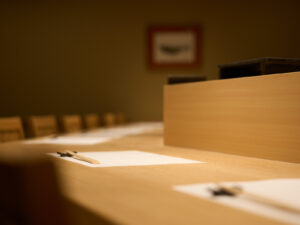
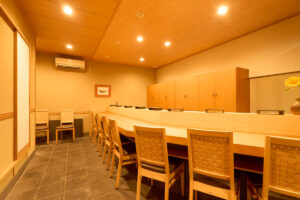
Small counters mean small headcounts. Eight to twelve seats is normal, so booking ahead matters more in Tokyo than in most cities. Three reliable routes:
1. Online reservation platforms
Many houses now take bookings through services such as TableCheck with English interfaces plus instant confirmation. This is the easiest route for overseas visitors. (Sushi Tanji’s reservation page works this way.)
2. Hotel concierge
For houses without online booking, a concierge call in Japanese still opens doors, especially for hard-to-book counters.
3. Direct contact
Some restaurants list a phone number with calling hours. If you call, keep it short: date, time, number of guests, any allergies.
What to wear & when to arrive
Smart casual is right almost everywhere: a collared shirt or a simple dress puts you comfortably inside the range. Two genuinely practical notes:
Skip strong fragrance. Perfume competes with the aroma of the rice, the nori, the wasabi. At a counter seating eight people, everyone shares the air. This is the one dress-code rule chefs privately care about most.
Arrive a few minutes early if you can. An omakase seating often begins together, once the guests have gathered, so a little cushion of time lets you savour the meal from the very first piece. The fish is at its best the moment it reaches you.
Etiquette essentials
The rules are fewer than the internet suggests. These are the ones that actually matter:
Do
- Eat each piece in one bite, soon after it is served
- Use fingers or chopsticks; both are correct for nigiri
- Taste first; the chef has usually seasoned the piece already
- Ask questions; chefs enjoy genuine curiosity
- Tell the chef about allergies in advance
Avoid
- Dipping the rice side into soy sauce (fish side, lightly, if at all)
- Mixing wasabi into your soy sauce at a fine counter
- Strong perfume or cologne
- Letting a piece sit while you finish a story
- Flash photography; ask before photographing the chef
If you remember nothing else: eat promptly, keep soy sauce minimal, enjoy yourself visibly. Eating with genuine appetite honours the counter far more than performing flawless manners ever could.
Talking with the chef
An omakase counter is conversational by design. You are seated a metre from the person feeding you. You do not need Japanese; a smile plus a few honest questions travel far. Reliable openers:
“What fish is this?” · “Where is it from?” · “Is this the best season for it?” · “How long was it aged?”
That last question opens the most interesting door in modern Edomae sushi: many of the finest pieces you will eat are not “fresh” at all but carefully rested for days until the umami peaks. It is a subject our Edomae Sushi guides explore in depth.
Frequently asked questions
Is omakase suitable for a first-time visitor to Japan?
Absolutely. It may be the best first meal in Japan, because no ordering is required. Choose a house that offers English guidance, mention it is your first omakase when booking, then simply follow the chef’s lead.
Can I request more of a piece I loved?
Yes. After the set sequence, asking for an encore of a favourite piece (okawari) is normal, welcomed, quietly flattering to the chef. It is priced per piece.
What if I cannot eat raw fish?
Tell the house when you book. Edomae technique includes many cooked or cured pieces: simmered anago, grilled items, tamago. With notice, a thoughtful chef can compose a sequence around your limits.
Should I tip the chef?
No. Tipping is not practised in Japan. The bill is complete as presented. The finest thanks are eating well, a sincere “gochisousama deshita” at the end, plus a return visit.
How far ahead should I book a Tokyo omakase counter?
For most good houses, one to three weeks ahead is comfortable; famous counters can require months. Online-bookable restaurants show live availability, which makes planning a trip far easier.
From the guide to the counter
Ready for your first omakase?
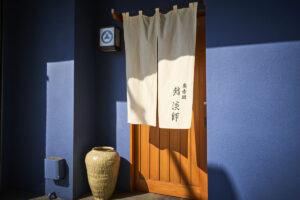
Our eight-seat counter in Oku-Akasaka serves Edomae omakase with English guidance – a calm first counter for any traveller.
Reserve at Sushi Tanji View the course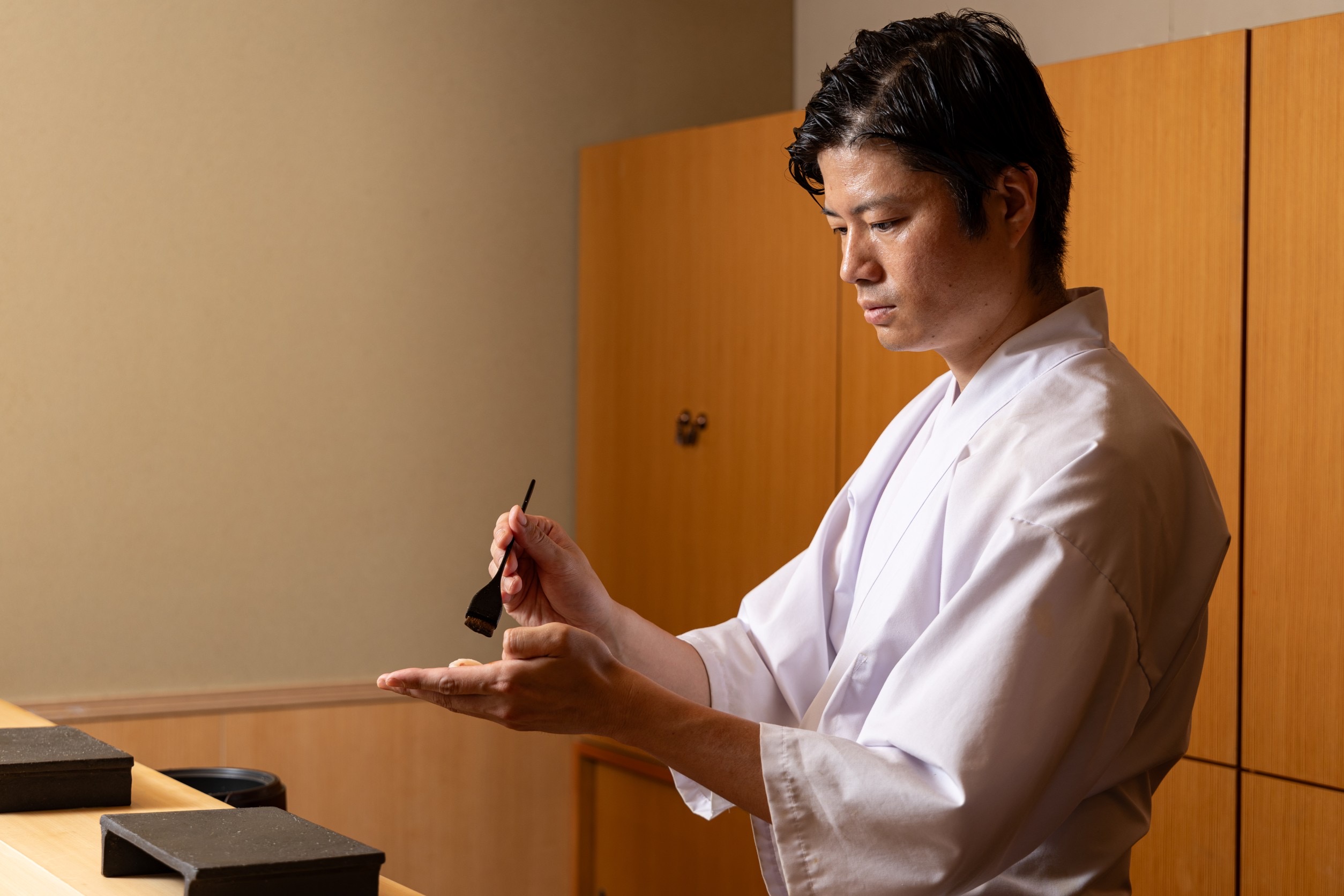
Reviewed by
Tatsuo TakadaTrained in the Edomae tradition, rooted in Kyushu, he leads the eight-seat omakase counter at Sushi Tanji in Oku-Akasaka, Tokyo – the house behind The Tokyo Sushi Guide.