Reviewed by Tatsuo Takada (owner-chef, Oku-Akasaka Sushi Tanji)
Part of The Tokyo Sushi Guide Updated Reading time about 6 minutes See the menu →
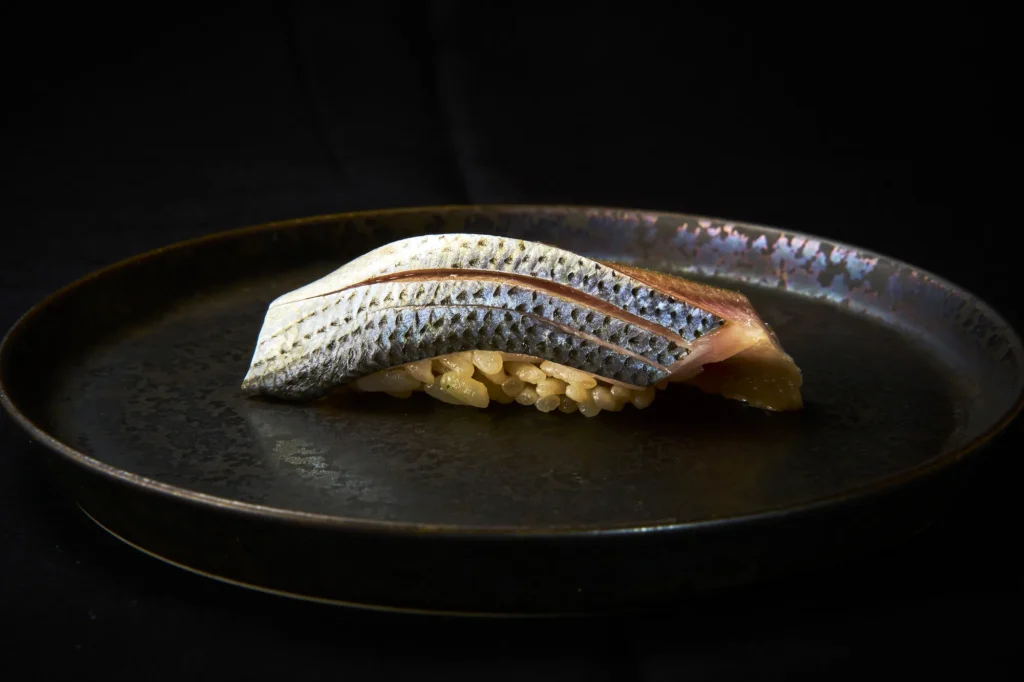
Few fish reveal a chef’s hand as honestly as kohada, the gizzard shad. It has never been an expensive fish, yet Edomae sushi houses, keepers of the old Tokyo style, have long measured a craftsman’s skill by it. Here we look at why kohada is known as a touchstone, what the work of salt and vinegar actually involves, plus shinko, the infant fish whose season opens each July.
What you will learn
- Why kohada is called the touchstone of Edomae sushi
- The names it takes as it grows: shinko, kohada, nakazumi, konoshiro
- How the salt and vinegar cure unfolds, plus what decides its depth
- Why shinko is served several fillets to a single piece
- Where kohada falls in an omakase, together with how to enjoy it
A sushi house reveals itself in its kohada
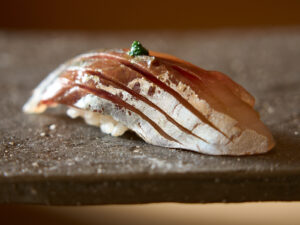
So the old saying goes. The reason is simple: kohada is not a fish whose quality can be bought at the market. Where tuna can carry a piece on the strength of the ingredient alone, kohada depends entirely on the hands that prepare it. How the salt is applied, how long the fish rests in vinegar, how the knife scores the skin: these decide everything. There is nowhere to hide, which is why a chef keeps returning to this one fish for a lifetime.
Among the silver-skinned fish known as hikarimono, kohada allows the widest range in how firmly it is cured. Two houses working with the same catch on the same day will serve two entirely different pieces. Few toppings reward comparison quite so richly.
From shinko to konoshiro: a fish that changes its name
Kohada is what the Japanese call a shusseuo, a fish renamed as it grows. The fry born in summer are shinko; a little larger they become kohada; larger still, nakazumi; the fully grown fish is konoshiro. Curiously, its market value falls as it grows. What sushi chefs prize is the small, labour-intensive shinko together with kohada.
| Name | Approximate size | Role at the counter |
|---|---|---|
| Shinko | Around 4–7 cm | The first taste of the season, arriving around July. Served several fillets to a single piece |
| Kohada | Around 7–10 cm | The classic single-fillet nigiri, where the chef’s work shows most clearly |
| Nakazumi | Around 13 cm | Sometimes cut from a half fillet for nigiri |
| Konoshiro | 15 cm or more | Its fine bones grow assertive; generally thought better grilled than served as sushi |
Salt and vinegar: judgement, not recipe
The preparation begins with butterflying each fish, then salting it. Salt draws out excess moisture along with any lingering odour, firming the flesh. Then comes the vinegar. The difficulty is that neither step can be fixed in minutes: the right timing shifts every day with the size of the fish, how much fat it carries, even the temperature of the room.
- Butterflied, then saltedSize and fat content decide both the amount of salt and the time it stays on.
- Rinsed cleanThe excess salt is washed away while the chef checks the state of the flesh.
- Rested in vinegarThe heart of the cure. Too brief and the fish tastes raw; too long and it turns firm.
- Left to settleLifted from the vinegar, the fish rests a while so the flavour can compose itself.
When the shinko season begins
Each year around July, shinko reach the counter. These are tiny fish, a few centimetres long, so small that two or three fillets are draped over a single bed of rice in what chefs call a layered piece. The smaller the fish, the harder it is to open, harder still to cure; the labour dwarfs that of ordinary kohada. Yet many guests wait all year for the first shinko, because its pale, delicate flavour exists only in these few weeks.
At Sushi Tanji in Oku-Akasaka, the air in the kitchen changes when the shinko arrive each July. For a house devoted to the classical Edomae repertoire of curing and marinating, shinko marks a turning point in the year.
Enjoying kohada at the counter
In an omakase course, where the chef sets the progression, kohada tends to appear around the middle. Because the fish is already cured, it wants very little soy sauce; where the chef brushes it with nikiri, a seasoned soy glaze, the piece is complete as it arrives. Hands or chopsticks, whichever feels natural, will serve you well. The decorative knife work scored into the silver skin is not merely ornamental; it softens the cured flesh into an even, pleasing bite.
The tang of vinegar, the company of sake
Cured in vinegar as it is, kohada may be the topping most often discussed alongside sake. Many guests reach for a kimoto, a traditionally fermented style with firm acidity; others prefer a clean, unadorned junmai. The pleasure of changing your drink from piece to piece is perhaps most vivid with kohada. When in doubt, simply ask across the counter; the question is always welcome.
Frequently asked questions
When is shinko in season?
Most years it appears from around July, with the heart of the season running into August. The fish grows quickly, so the window for the smallest early shinko is brief. Some years it closes within a few weeks.
Are kohada and konoshiro the same fish?
They are. The name changes with each stage of growth: shinko, then kohada, then nakazumi, with konoshiro as the adult. Sushi chefs work chiefly with shinko as well as kohada; the large konoshiro carries assertive fine bones, so it is generally thought better grilled.
I find silver-skinned fish difficult. Is kohada still worth trying?
The impression hikarimono leaves depends greatly on the house. A lightly cured kohada carries no sharp edge of vinegar; it can be surprisingly gentle. Mentioning your hesitation, then trying a single piece, is one of the quiet pleasures of the counter. There is no need to brace yourself.
Why is shinko said to be costly?
Each fish, only a few centimetres long, must be opened one by one before it is cured, so the labour behind a single piece is considerable. Early in the season the catch itself is scarce, which adds rarity to the effort. What you are tasting is less the fish than the chef’s time.
To book a seat at our counter, see reservations on our home page.
From the guide to the counter
Taste it at our eight-seat counter in Oku-Akasaka.
Classic Edomae craft with careful modern aging – served piece by piece, with English guidance for overseas guests.
Reserve at Sushi Tanji Explore The Tokyo Sushi Guide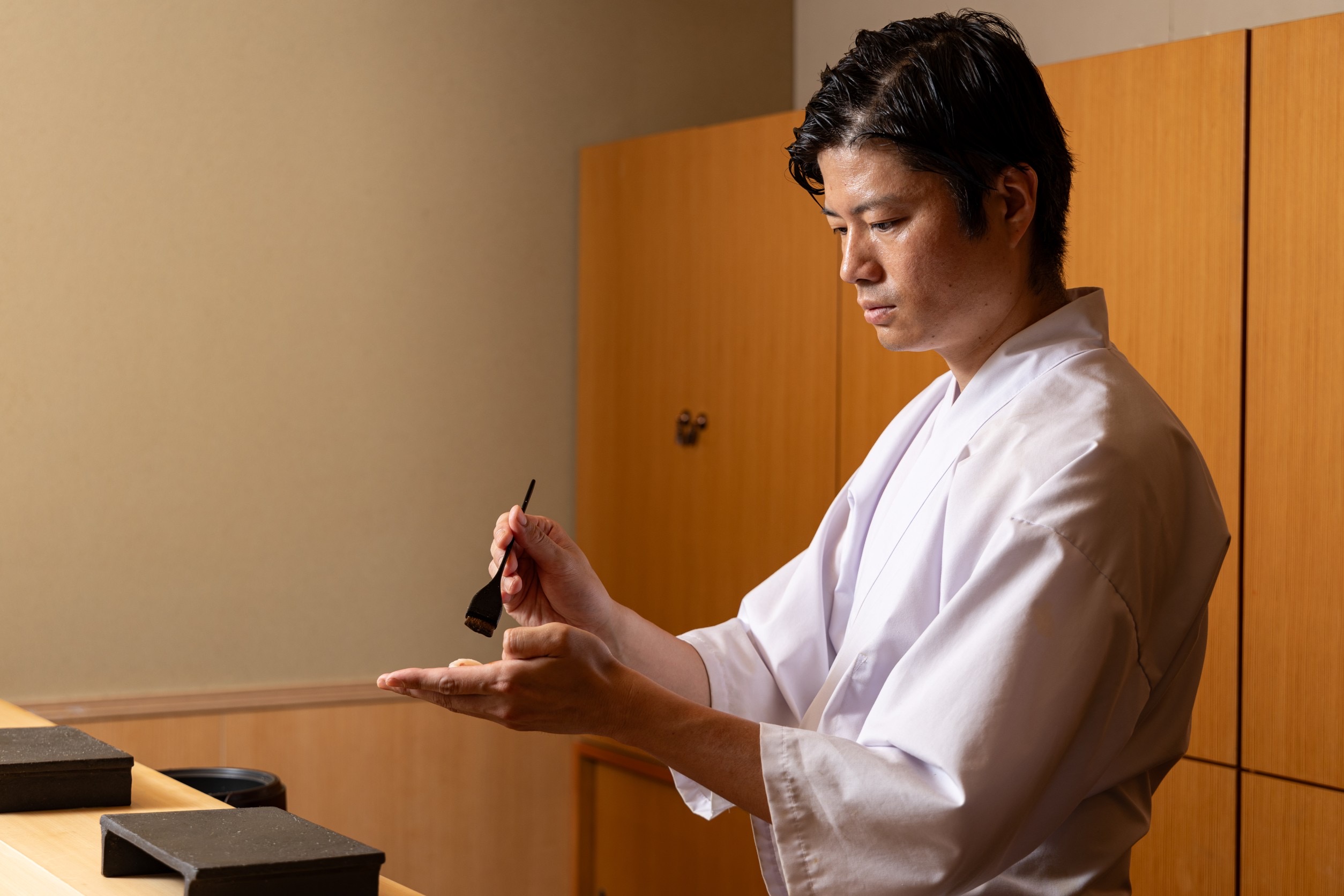
Reviewed by
Tatsuo TakadaHead chef and owner of Sushi Tanji. Trained in the Edomae tradition and rooted in Kyushu, he leads the eight-seat omakase counter in Oku-Akasaka, Tokyo, and reviews The Tokyo Sushi Guide.