
Reviewed by Tatsuo Takada (owner-chef, Oku-Akasaka Sushi Tanji)
Part of The Tokyo Sushi Guide Updated Reading time about 6 minutes See the menu →
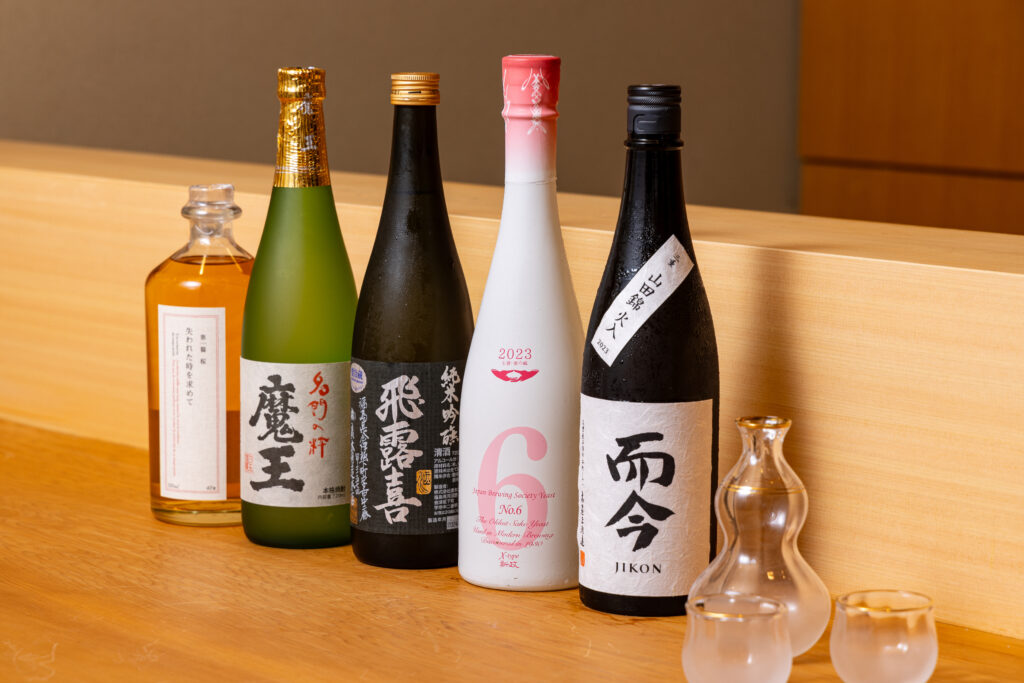
Many visitors arrive having heard that light, dry sake is the natural partner for sushi. There is truth in it. Yet a single bottle rarely keeps pace with everything from delicate white fish to chutoro, the medium-fatty cut of tuna. This guide assumes no knowledge of labels. It rests on three principles alone: the acidity of the rice, the richness of the topping, the strength of the aroma. By the last line, the words for your first glass will be ready.
What you will learn
- Where the light-and-dry rule came from, along with where it falls short
- How kimoto or yamahai brews, with their natural acidity, echo the vinegared rice
- Meeting richer fish with umami-led junmai sake, gently warmed
- Recognising the moments worth saving a fragrant sake for
- July pairings to try: horse mackerel, sardine, kombu-cured sea bass
- Relaxed ways to order at the counter without knowing a single label
A second look at the light-and-dry rule
“With sushi, light and dry.” The phrase has been the standard answer for decades. A quiet sake, restrained in aroma as well as in flavour, gets in the way of no topping at all. The logic holds up, so the choice is a perfectly sound one. Yet as an evening at the counter unfolds piece by piece, a moment of faint dissatisfaction tends to arrive. Light and dry is a way of avoiding a clash — not quite a way of making a match.
Sushi covers remarkable ground in a single sitting: white fish, shellfish, the silver-skinned fish known as hikarimono, tuna, simmered pieces to finish. In truth, asking one bottle to keep company with all of it is a tall order. The alternative is not deeper knowledge of labels. It is three principles, held lightly in mind.
Principle one: acidity to meet the seasoned rice
Half of every nigiri is shari, the seasoned rice. The acidity of rice vinegar or red vinegar, softened by a gentle sweetness, sits underneath every single piece. Pour a sake with little acidity beside it and the sake can taste strangely flat. A sake with real acidity of its own behaves differently. Brews made in the traditional kimoto or yamahai styles, along with those using white koji, face the same direction as the rice, so everything gathers into one flavour on the palate.
A kimoto brew carries a soft, lactic acidity that traces the outline of the vinegared rice almost exactly. Simply treating the words kimoto or yamahai on a menu as a landmark will change the way you choose.
Principle two: umami for the richer toppings
Rich toppings such as chutoro or a glistening iwashi (sardine) tend to sweep a light sake aside, leaving only oil on the palate. This is where umakuchi earns its keep: sake led by the rounded savour of the rice itself. A junmai, brewed from rice alone with both polish and body, does not rinse the richness away. It meets savour with savour, then holds it.
Temperature is an ally as well. Gently warmed to nurukan, just above body temperature, the same sake loosens its umami and settles in comfortably beside simmered anago (sea eel) or soy-marinated tuna. Plenty of counters keep the warmer going even in summer.
Principle three: save the fragrant sake for its moment
A fragrant daiginjo is a sake that can carry a scene on its own. Poured beside white fish cured over kombu, though, that perfume can settle over the topping’s delicate sweetness and hide it. Aromatic sake rewards a little patience. Saved for tamago (the sweet omelette), for anago under its dark tsume glaze or for uni (sea urchin), where the flavours have firm outlines, both sides come alive.
There is no need to overthink it. Quieter aromas beside delicate pieces; fragrance beside the bolder ones. Begin the evening with a still, quiet sake, then move towards perfume as the flavours deepen. The arc of the night takes shape on its own.
At the counter in July
July is when the summer fish gather. Aji (horse mackerel) arrives rich with seasonal oil, iwashi close behind it, while suzuki (sea bass) comes to the counter cool, cured between sheets of kombu. Lay the three principles over them and the pairings all but choose themselves.
| Topping | Direction for the sake | Why it works |
|---|---|---|
| Aji or iwashi | An umami-led junmai, warm if you like | A fuller flavour holds the oil-rich savour of the blue-backed fish |
| Kombu-cured suzuki | Quiet aroma with a little acidity | Nothing veils the delicate sweetness the kombu has drawn out |
| Simmered anago | A fragrant, expressive sake | Perfume layered over the sweet tsume glaze brings the evening to a close |
At a counter where a sake is suggested for each piece, such as Sushi Tanji in Oku-Akasaka, the three principles can be tasted rather than read. Where the fish is aged with care in the manner of the Tsumoto method, its umami deepens. The range of sake that can stand beside it widens in step.
Ordering without any fuss
No knowledge of labels is required. At the counter, most guests simply offer a direction: perhaps “something with a little acidity” or “something for the richer piece coming next”. That single phrase is all the person behind the counter needs. The conversation it opens tends to make the glass mean a little more.
Small pours suit the rhythm best. An omakase runs to a dozen pieces or more, so changing a half-sized pour as the flavours move carries you happily to the final piece. If sake is unfamiliar territory, leaving the first glass to the chef is a lovely way to begin. Nothing about the evening asks to be hurried.
Frequently asked questions
Is dry sake the right call for sushi in the end?
Dry is a reasonable place to start, though sweetness against dryness is only one axis. It helps more to ask whether the sake has acidity to echo the rice, umami to hold the richer fish, an aroma quiet enough for the delicate pieces. Seen through those three points, far fewer glasses miss the mark.
I know very little about sake. What should I say at the counter?
Label names are not needed. A direction is plenty: “something with acidity” or “something to suit the next rich piece”. Many guests leave the first glass entirely to the chef. There is truly nothing to feel pressured about.
What kind of sake suits fish that has been aged?
Ageing deepens a fish’s umami, so it tends to sit more comfortably beside an umami-led junmai or a gently warmed sake than beside something light. A counter devoted to ageing in the manner of the Tsumoto method will happily suggest a match for that very piece. Letting the chef lead is a fine approach here.
Is it all right to change sake partway through an omakase?
It is entirely ordinary. As the flavours move from white fish through the silver-skinned pieces to tuna, then on to the simmered dishes, a fresh half-sized pour follows the current of the meal rather than interrupting it. Please ask freely, piece by piece.
From the guide to the counter
Taste it at our eight-seat counter in Oku-Akasaka.
Classic Edomae craft with careful modern aging – served piece by piece, with English guidance for overseas guests.
Reserve at Sushi Tanji Explore The Tokyo Sushi Guide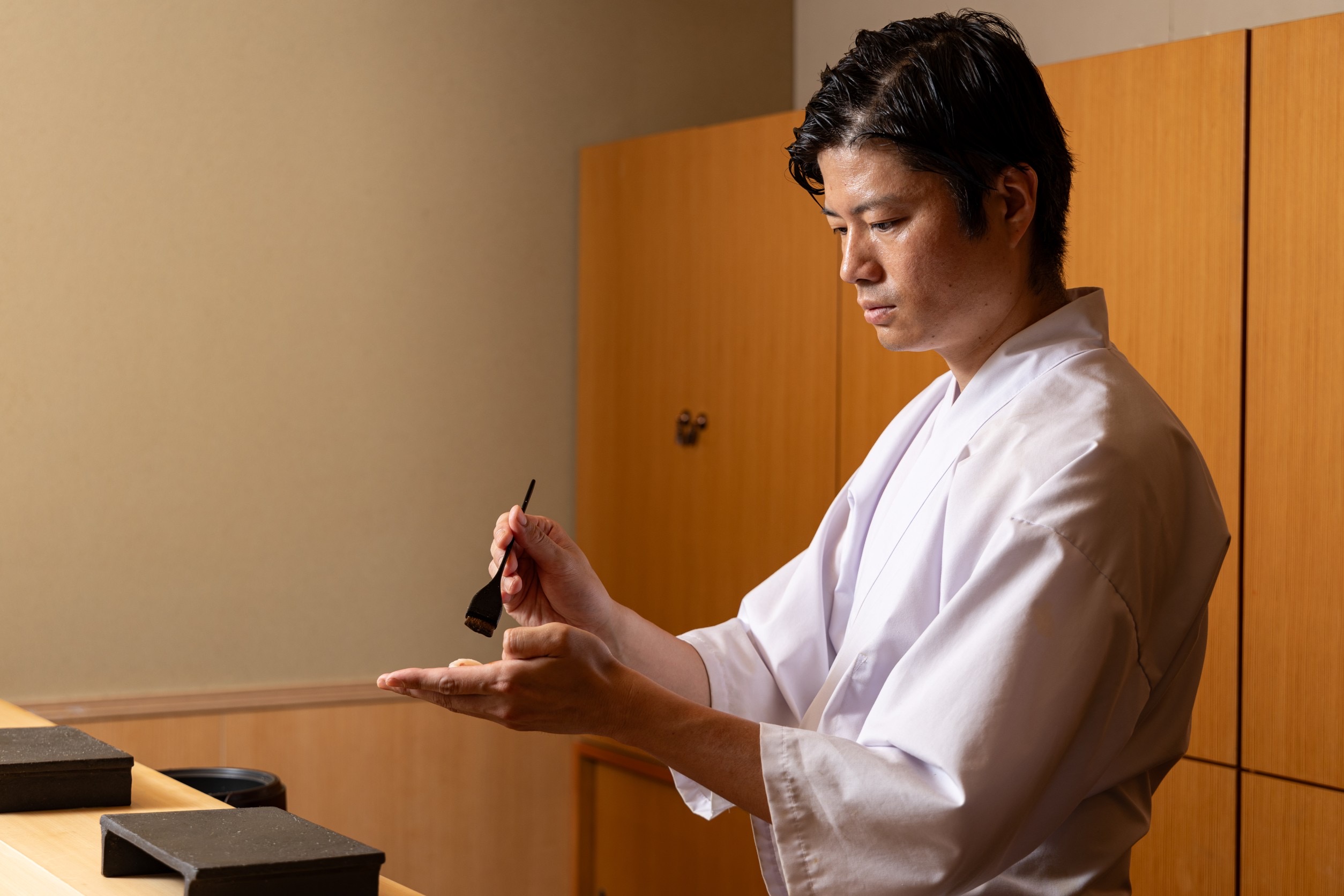
Reviewed by
Tatsuo TakadaHead chef and owner of Sushi Tanji. Trained in the Edomae tradition and rooted in Kyushu, he leads the eight-seat omakase counter in Oku-Akasaka, Tokyo, and reviews The Tokyo Sushi Guide.