Written by Oku-Akasaka Sushi Tanji, an omakase counter in Akasaka, Tokyo.See the menu →
An anniversary at the sushi counter needs neither cake nor flowers. Sitting side by side and eating the same piece at the same moment is celebration enough. This piece looks at what to mention when booking, how far a surprise can realistically go, when to take photos and what September brings to the counter. It is written from a stance that gently steers away from elaborate staging.
In short
For an anniversary at the counter, a single line when booking is all it takes. Mention the occasion with a request to be seated together. Cakes and elaborate plans are usually politely declined, as a quieter celebration suits the rhythm of the counter far better.
What you will learn
- Why sitting side by side suits an anniversary for two
- The one line to write in the booking notes, plus the order in which to mention things
- Why cakes, flowers and messages written on the plate rarely work at the counter, with what to do instead
- Photograph each piece within ten seconds of it being set down; save the photo of the two of you for the end
- Pacific saury, autumn bonito and salmon roe as September arrives, followed by a closing bowl of tea
Why the counter suits an anniversary for two
At a sushi counter you sit side by side rather than face to face. With no need to hold each other’s gaze, a pause in conversation rarely feels awkward. The silences share a common view as well: the chef’s hands at work. If an anniversary dinner at a table is time spent facing each other, the counter is time spent looking in the same direction.
Scale matters too. At a place like Sushi Tanji in Oku-Akasaka, with eight seats along a hinoki cypress counter, only a handful of guests share the evening, so no one needs to raise their voice. The same piece is set before each of you at the same moment, with no waiting for the other to finish. Without any grand words, the time itself tends to become the occasion.
What helps to mention when booking
A single line in the booking notes is enough to mention an anniversary. Something like “We’re coming for our wedding anniversary” or “We’d like to sit next to each other” keeps to the occasion with your preference, which makes it easier for the restaurant to prepare. There’s no need to spell out what you’d like done. A short note leaves the house room to take quiet care of you.
- The occasionA single phrase is enough. There’s no need to describe the scale of the celebration or any special touches.
- SeatingMost counters can seat two guests side by side. If you’d like a corner seat, it helps to ask early.
- Dislikes and appetitePerhaps one of you would rather skip raw shellfish. Perhaps you’d both prefer a lighter meal. Substitutions can often be made without disturbing the flow of the omakase (chef’s choice) menu.
- DrinksSake for one with green tea for the other is a pairing many counters are happy to accommodate.
- Which seatingThe first seating after opening tends to be calmer, which suits an anniversary well.
Allergies are easier for everyone when mentioned at booking rather than on the night. Each fish has its own preparation time, some stretching over several days, so a note the day before may come too late for certain work.
Where surprises reach their limit, with gentler alternatives
At many counters, an elaborate surprise is simply hard to arrange. Cakes are often declined, both because refrigerator space is scarce and because sweet aromas compete with the sushi. A bouquet has nowhere to rest at your feet. A message written on the plate in chocolate sits uneasily with the way a sushi restaurant thinks about its tableware.
| What you have in mind | How it plays out at the counter | An alternative |
|---|---|---|
| Bringing a cake | Often declined because of aroma and storage | Cut it afterwards at another venue or at home |
| Presenting a bouquet | Nowhere to rest it at the seat. It also catches other guests’ eyes | Hand over a small wrapped gift as you leave |
| Staging something in the restaurant | It interrupts the quiet flow of the evening | Mention the anniversary when booking, then savour the last glass or the final bowl of tea together |
| Presenting a ring | Between pieces, both the chef and the neighbouring guests are watching | Once outside, as you stroll the quiet back streets at night |
Rather than giving up on a surprise, it feels more natural to shift the focus from objects to time. The counter already has its own quiet theatre: each piece taking shape in front of the two of you, one at a time.
Photographs, quickly and piece by piece
An anniversary naturally invites photographs. For the sushi, one shot within ten seconds of the piece being set down is a good rule of thumb. The shari (seasoned rice) is at its best the moment it leaves the chef’s hands, so the longer it waits the further it drifts from what was intended. Silence the shutter. Leave the flash off. With those two small courtesies, most counters are perfectly at ease.
For a photo of the two of you, a quick word beforehand puts everyone at ease. The same goes for any frame that shows the chef’s hands. Some counters will even offer, “Shall I take one of you both?” The calm moment after the last piece is ideal, as is the minute before you rise to leave. Choosing an angle that keeps neighbouring guests out of shot from the start spares everyone a moment of worry.
The evening itself: finding a place for words of celebration
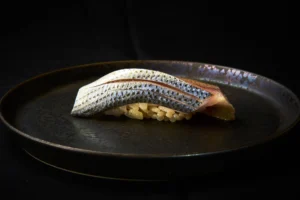
An omakase typically unfolds over about two hours, so the two of you follow the same sequence together. Raise a toast with the first drink. After that, a few words exchanged between pieces are plenty. Rather than a long speech, a simple “The kohada (gizzard shad) is lovely tonight”, shared over the same bite at the same moment, tends to linger longer in the memory of the day.
If you order two different sakes to share a little of each, the way each one meets a given piece becomes a natural topic of conversation. If one of you doesn’t drink, tea keeps pace with the meal just as gracefully, so there’s nothing to worry about. Eat as you usually would, glancing a little more often than usual at each other’s plate. That is enough.
September at the counter, with a final bowl of tea
September is when sanma (Pacific saury), modori-gatsuo (bonito returning south in autumn) plus ikura (salmon roe) begin to appear. The close of summer meets the start of autumn on a single evening, so an anniversary menu never lacks for conversation. It is also a month rich in fish that carry seasonal memory, the kind that invites the question “What were we eating this time last year?”
How the evening ends shapes the afterglow of a celebration. At Sushi Tanji, the meal is followed by matcha with a seasonal wagashi (Japanese confection) in the tea room, where the focus of the counter softens into a quiet stretch of time for just the two of you. The house works towards an evening in which the food with the sake, the tableware, the room, the conversation and that final bowl of tea all come together into time you’ll want to return to. Laid over that, an anniversary needs no grand gestures.
Frequently asked questions
Can I bring a cake to a sushi restaurant?
It is usually declined. The counter’s refrigerator tends to be full of prepared fish. Most restaurants would also rather not have sweet aromas mingling with the scent of the sushi or the sake. If you’d still like to, it’s best to ask when booking. Should the answer be no, cutting the cake afterwards somewhere else keeps things easy for everyone.
If I mention an anniversary when booking, will the restaurant do something special?
It varies from place to place, so a special gesture isn’t guaranteed. The point of mentioning it is to give the house room to consider your seating as well as the pacing of the evening. Thinking of it as “letting them know” rather than “asking for something” keeps expectations close to what actually happens.
Is it all right to take a photo of the two of us at the counter?
At most restaurants it’s fine, though good timing with a quick word helps. The end of the meal or the moment before you leave suits better than mid-service. If the chef’s hands or neighbouring guests would appear in the frame, asking first keeps the evening pleasant for all. It’s best to switch off the shutter sound as well as the flash.
Which seating time is best for an anniversary?
The first seating after opening tends to be calmer, which makes conversation easier. Later seatings are bound by the last entry time. For a relaxed evening together, an earlier seating leaves room for a walk afterwards.
Can I book as a surprise without telling my partner where we're going?
Certainly, as long as you know your partner’s dislikes and any allergies. Simply pass these on when booking. On the day, a gentle hint such as “It’s a Japanese counter, so go light on the perfume” helps them settle naturally into a setting where the aroma of the sushi is part of the pleasure.
From the guide to the counter
Taste it at our eight-seat counter in Oku-Akasaka.
Classic Edomae craft with careful modern aging – served piece by piece, with English guidance for overseas guests.
Reserve at Sushi Tanji Explore The Tokyo Sushi Guide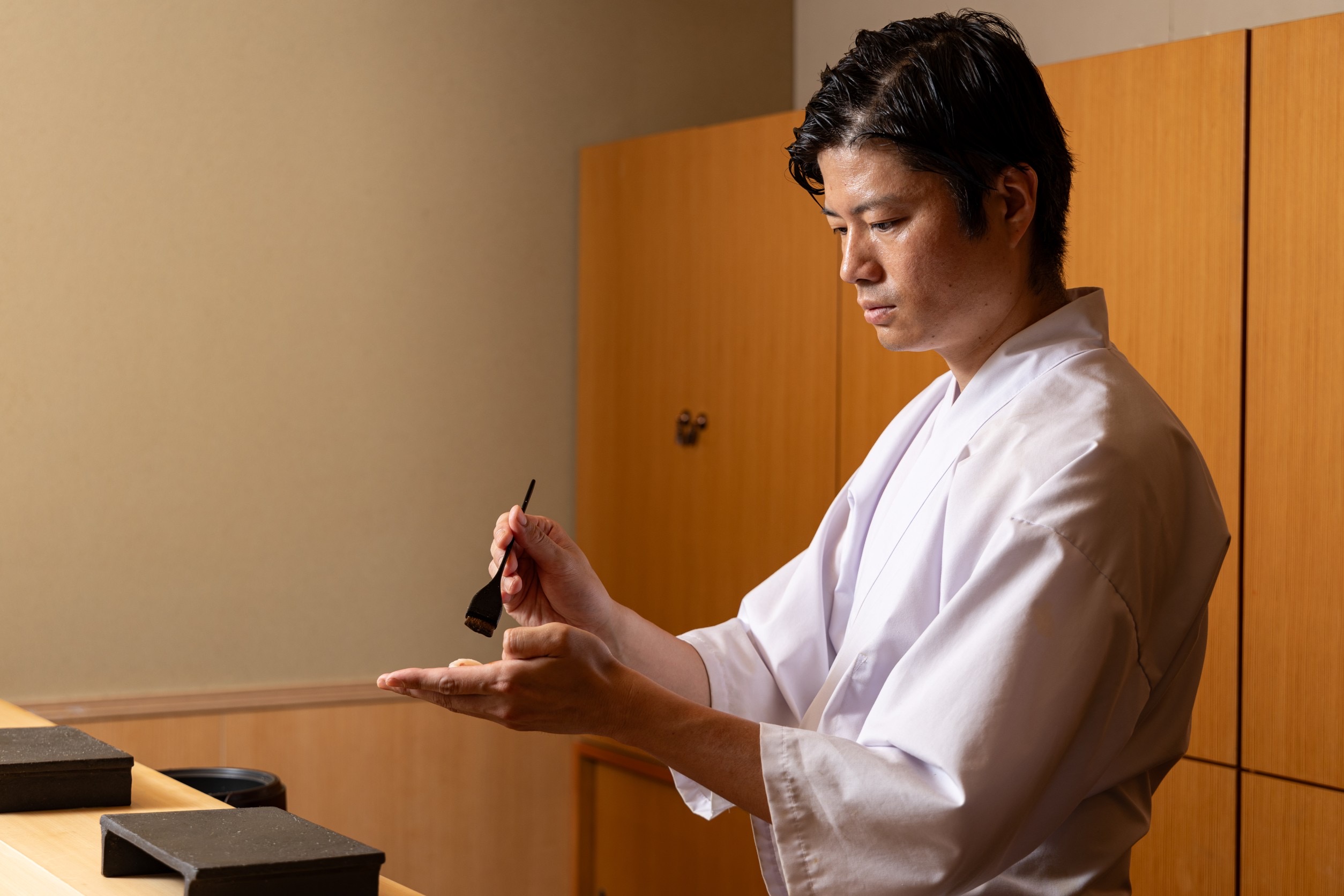
Reviewed by
Tatsuo TakadaHead chef and owner of Sushi Tanji. Trained in the Edomae tradition and rooted in Kyushu, he leads the eight-seat omakase counter in Oku-Akasaka, Tokyo, and reviews The Tokyo Sushi Guide.