
Reviewed by Tatsuo Takada (owner-chef, Oku-Akasaka Sushi Tanji)
Part of The Tokyo Sushi Guide Updated Reading time about 6 minutes See the menu →
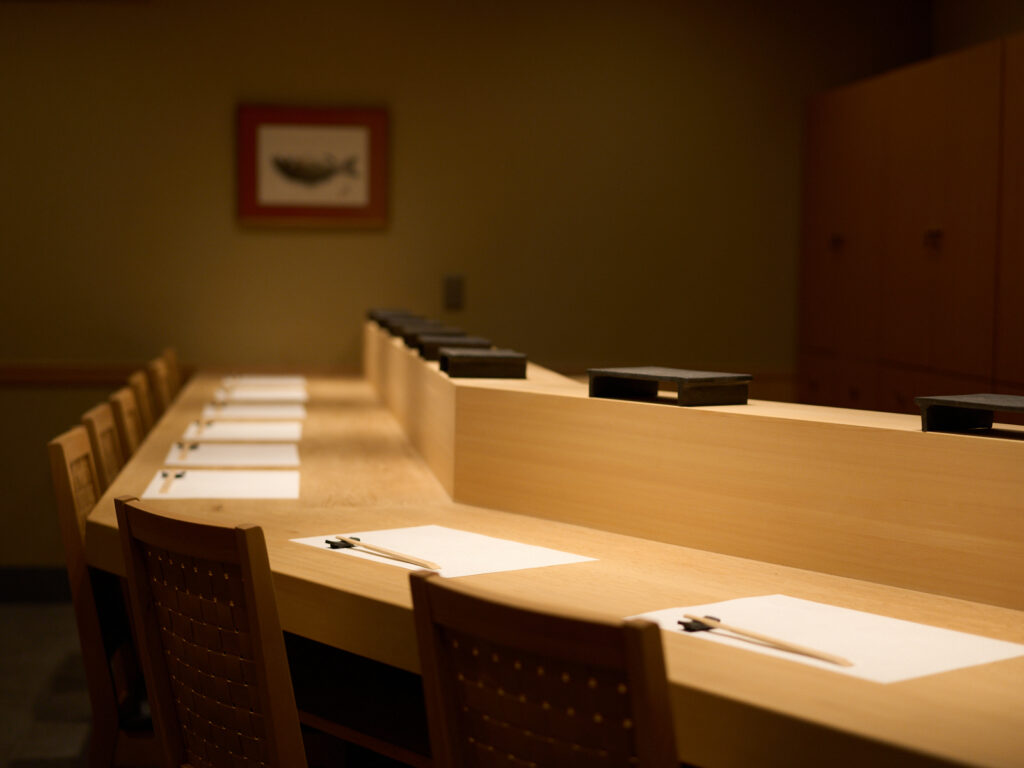
The difference between a counter seat and a table at a sushi restaurant comes down to a few seconds: the brief moment between a piece of nigiri being set down and reaching your mouth. Here we look at what happens in those seconds, the pleasure of watching the work unfold in front of you, and how to ask for the counter when you book.
In short
Sushi is at its best at the counter. The warmth of the rice and the fragrance of the fish meet most fully in the few seconds after a piece is set before you, and at a table that moment tends to pass while the plate is being carried. When booking, simply mention that you would like the counter in the notes field or by telephone.
What you will learn
- What happens to the rice and fish in the seconds after a piece is placed
- The toppings where timing shows most: nori, tsume glaze and seared fish
- The quiet theatre of watching knife and brush at work
- How the chef paces each piece to the way you eat
- How to request counter seats online or by telephone
Nigiri is at its finest in the seconds after it is placed
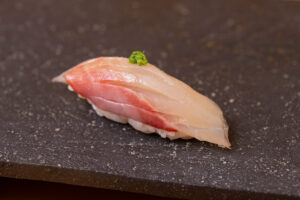
Edomae nigiri brings together shari (seasoned rice), warmed to roughly body temperature, and neta (the topping), gently returned to just the right temperature. Freshly formed, the rice holds a little air between its grains and sits together lightly, while the warmth of the rice softens the fat in the fish ever so slightly. This state is fleeting. Given time, the rice cools and tightens, and the surface of the fish begins to dry.
At the counter, each piece goes straight from the chef’s hands to the ledge in front of you. At a table, that brief moment often slips away while the pieces are arranged on a platter and brought over.
At Tanji, we age each fish in the way that suits it, and we see our work as recognising the moment a piece is at its very best, and serving it then. The counter is where that judgement reaches you without interruption.
Toppings where timing shows most
| Sushi | As it arrives at the counter | After a little time |
|---|---|---|
| Gunkan and temaki (hand rolls) wrapped in nori | The nori is toasty and fragrant, yielding cleanly to the bite | The nori absorbs moisture from the rice and turns limp |
| Anago (conger eel) with tsume (a reduced sweet glaze) | Warm, the flesh soft and gently falling apart | The temperature drops and the flesh firms |
| Lightly seared toppings | The smoky aroma and glistening fat are at their height | The aroma fades and the fat settles |
| Nigiri brushed with nikiri (a soy-based glaze) | A glossy surface and the scent of soy rising | The gloss recedes and the surface begins to dry |
Hand rolls are sometimes passed directly from the chef’s hand to yours, a small exchange that belongs to the counter alone. In November, as autumn deepens, some counters serve fish such as saba (mackerel), just beginning to gather its fat, lightly seared. It is a season for enjoying each piece while its aroma is still rising.
The quiet theatre of the work before you
The counter offers more than the right temperature. The angle of the knife as it slices from the saku (a trimmed block of fish), the stroke of the brush laying on nikiri just before serving, the soft rasp of wasabi on a samegawa (sharkskin grater). Having watched a piece come into being, you taste it with sharper definition, even when the sushi itself is the same.
The counter is also a place to ask, there and then, about the name of a fish, where it comes from, or how it was prepared, whether cured in vinegar or marinated as zuke. Many guests wait for a moment when the chef’s hands are briefly free. There is no need to feel shy about it.
A chef who follows your pace
At an omakase (chef’s choice) counter, the chef tends to watch how each guest is eating before forming the next piece. If conversation is flowing and your hands pause, they wait a little; if you are eating briskly, the rhythm quickens. Requests such as a smaller portion of rice or a lighter touch of wasabi can be made in the moment.
At a table, these adjustments pass through the serving staff, and so they inevitably arrive a beat later. That said, there are occasions when a table is the more comfortable choice, such as a larger gathering or a meal with young children. It is natural to choose according to the occasion.
Requesting the counter when you book
- Write it in the notes field when booking onlineWith online reservations, it is usual to choose a seating type if one is offered, or to write “Counter seats, please” in the notes.
- Mention it with your party size by telephoneSaying “Two people, at the counter if possible” at the outset helps the restaurant arrange the seating.
- For three or more, talk through the seatingCounter seats run in a single line, so a group may end up spread from one end to the other. If conversation matters to you, a word in advance puts everyone at ease.
- Offer seat position as a preferenceA request for a particular spot, such as directly in front of the chef, tends to be best received when phrased gently as “if possible” rather than as a condition.
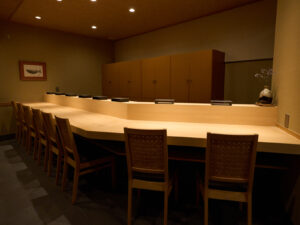
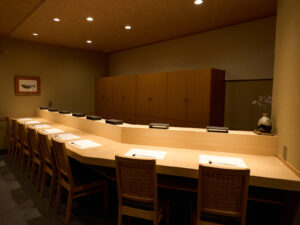
Many sushi restaurants have only counter seating to begin with. Sushi Tanji in Oku-Akasaka is one of them, with eight seats at a hinoki cypress counter (up to nine guests by arrangement).
Savouring those seconds at the counter
When a piece is placed before them, many guests take a single photograph and then enjoy it promptly. Fingers or chopsticks are equally welcome. A piece already brushed with nikiri is best enjoyed just as it is, without further soy sauce.
Even mid-conversation, take the first bite once a piece arrives. That small habit is all it takes. There is no need to hurry; simply by valuing those few seconds, you let the chef’s work reach you exactly as intended.
Frequently asked questions
Is it better to sit at the counter or at a table for sushi?
If the flavour of the nigiri is your priority, the counter is the natural choice, as you can enjoy each piece within the seconds when the warmth of the rice and the fragrance of the fish are in harmony. For larger gatherings or meals with young children, a table can feel more relaxed.
The counter feels a little intimidating. Am I expected to talk with the chef?
Conversation is entirely optional. Many guests prefer to eat quietly, and chefs tend to adjust their rhythm accordingly. If a fish catches your interest, a brief question when the chef’s hands are free is perfectly enough.
How do I request counter seats when booking?
When booking online, choose the seating type if offered, or write “Counter seats, please” in the notes field. By telephone, mention it at the start along with your party size. For groups of three or more, it is worth discussing how you will be seated as well.
Is it impolite not to eat a piece straight away?
It is less a matter of politeness than of flavour. A piece is at its best in the seconds after it is placed, so many guests enjoy it promptly. There is no need to rush; taking the first bite without waiting for a pause in conversation is quite enough.
From the guide to the counter
Taste it at our eight-seat counter in Oku-Akasaka.
Classic Edomae craft with careful modern aging – served piece by piece, with English guidance for overseas guests.
Reserve at Sushi Tanji Explore The Tokyo Sushi Guide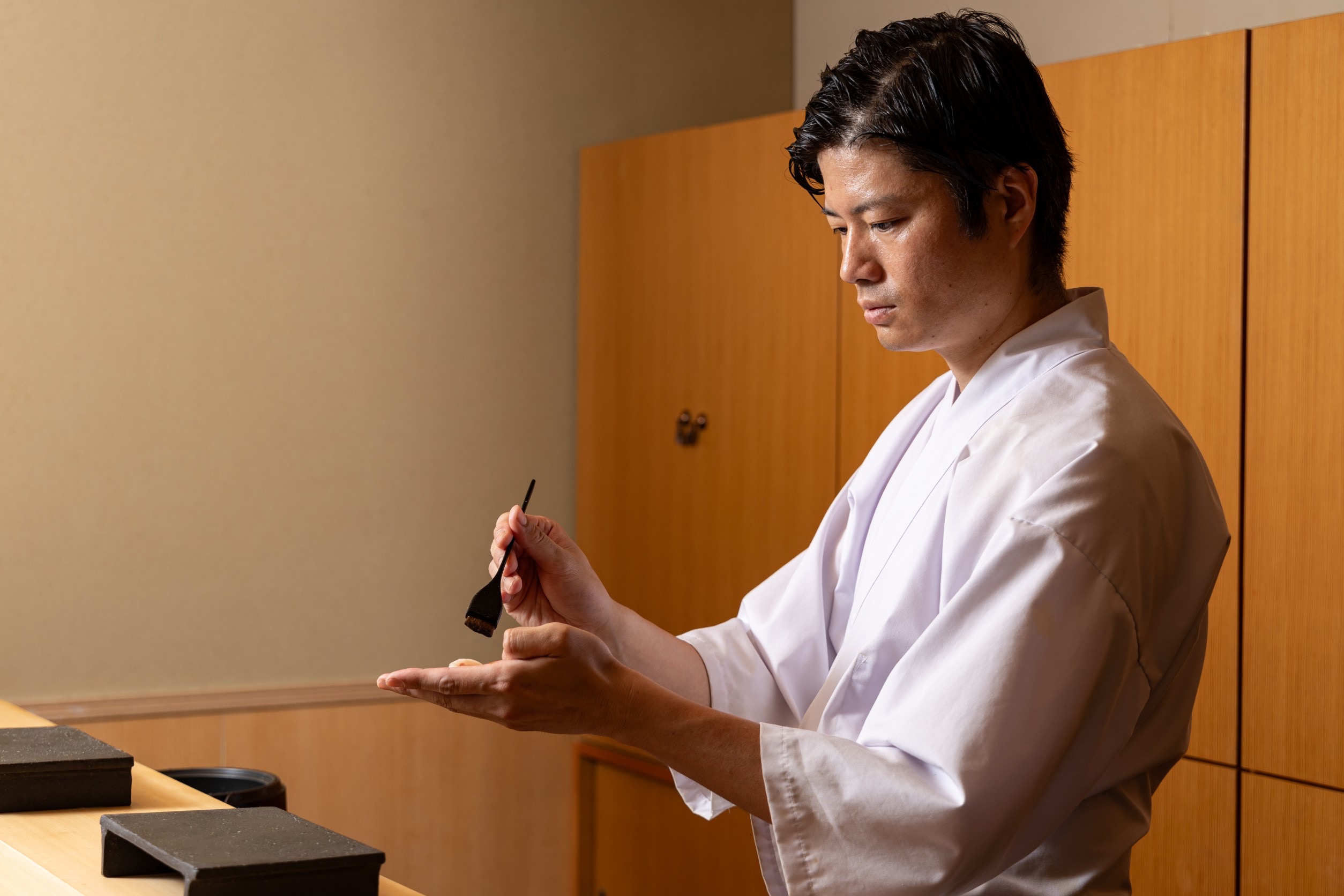
Reviewed by
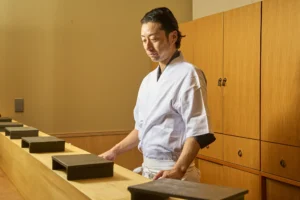
Tatsuo TakadaOwner of Sushi Tanji. Trained in the Edomae tradition and rooted in Kyushu, he leads the eight-seat omakase counter in Oku-Akasaka, Tokyo, and reviews The Tokyo Sushi Guide.