
Written by Oku-Akasaka Sushi Tanji, an omakase counter in Akasaka, Tokyo.See the menu →
Sanma (Pacific saury), ikura (salmon roe) and modorigatsuo (the autumn return run of bonito). Once these three begin to appear, the counter has turned to autumn. As the water cools the fish lay down fat; the weight of the work shifts from curing towards letting that fat speak. This piece sets out the autumn neta (toppings) you will meet from September to November, with a sense of when each arrives and what the chef’s hands are doing. By the end, you should be able to see why the piece in front of you was made the way it was.
In short
Autumn sushi is led by fat. Sanma carries its thickest belly fat through September into October, while ikura is loosened from the roe sac of autumn salmon then steeped in seasoned soy. Modorigatsuo feeds as it travels south, arriving with a richness that feels like a different fish from the light spring run.
What you will learn
- Why autumn fish carry fat: recovery after spawning plus the feeding of the southward run
- How a chef decides between raw sanma or a salt-and-vinegar cure, along with what searing the skin does
- The five steps from roe sac to finished ikura, plus how the strength of the steeping liquid changes it
- Spring bonito set against the autumn return run: season, flavour, plus the work that suits each
- Ageing rich fish, along with how to recognise the moment to stop
- Why hiyaoroshi (autumn-released sake) sits so easily beside autumn neta
The Season When Fat Returns to the Neta
From September, as the water begins to cool, fish lay down fat for the winter ahead. It is also when individuals that spawned in summer regain their condition, so firmness of flesh and richness rise together. Sanma, ikura and modorigatsuo appear on Edomae counters (the Tokyo Bay tradition of sushi) at this point because the change shows so plainly in the taste.
The same fish asks for different work in summer than it does in autumn. While the fat is thin, salt and vinegar cure it firmly; once the fat arrives, the cure is drawn back so the fish’s own character remains. Autumn is the season when the centre of gravity moves from curing towards drawing out.
Sanma: Cured or Raw
Sanma reaches the counter roughly from September into October. Among the shoals moving south from northern waters, the earliest fish are slim; towards the peak of the season the belly fat thickens. Condition varies widely depending on the grounds it came from as well as the days since landing.
The days for raw sanma are few
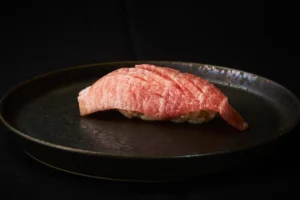
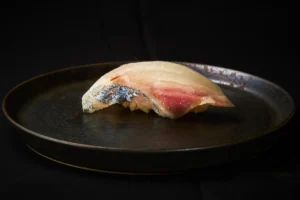
Sanma spoils quickly. Serving it raw is kept for days when everything about the fish lines up; on most counters it is lightly salted to draw off surplus moisture then passed briefly through vinegar before being formed into nigiri (a hand-pressed piece). Searing the skin to melt a little of the fat is also a familiar sight in autumn, lifting a toasted note.
Ginger, spring onion or shiso leaf come alongside. The scent of an oily fish settles only once these meet it, so the chef balances the impression of a piece through how much is used. Nikiri (the brushed soy glaze) tends to be applied with a light hand.
Ikura Begins at the Roe Sac
The ikura gunkan (a piece wrapped in a nori collar) starts in the kitchen, with the roe sac broken down then steeped. The season runs roughly from September to November, while autumn salmon are being landed. September roe has thin skins that seem to vanish in the mouth; past October the beads tighten into a gentle pop. Neither is better than the other. They simply sit at different points in the season.
- LoosenThe roe sac rests in warm salted water while the beads are eased away from the membrane.
- RinseBlood as well as fine skin is washed off, the water changed until it runs clear.
- DrainLifted into a sieve so the moisture on the surface settles.
- SteepSoy, sake plus mirin (sweet rice seasoning) are simmered to drive off the alcohol, cooled then poured over.
- RestHalf a day to overnight, until the seasoning reaches the centre.
Strength of liquid as well as time changes the expression of ikura a great deal. A light steeping lets the sweetness of the roe come forward; a longer one brings the fragrance of soy to the front. On Edomae counters the balance is usually pitched so that the soy never overpowers the acidity of the shari (seasoned rice).
Treating Modorigatsuo as a Different Fish
Bonito has two seasons in a year. Hatsugatsuo, the first bonito, rides the Kuroshio north in spring; modorigatsuo turns south off Sanriku in autumn. Having fed all summer in northern waters, the returning fish carries thick fat, so it is handled less as a lean red fish than as a rich one.
| Hatsugatsuo | Modorigatsuo | |
|---|---|---|
| Rough season | Around April to June | Around September to November |
| Flavour | Light fat, with scent plus a touch of acidity forward | Rich fat, the savour lingering on the tongue |
| Familiar preparation | Marinated, lifted by mustard or ginger | Skin seared over straw or charcoal, condiments kept modest |
Searing adds fragrance as well as melting the fat lightly so the piece sits more smoothly in the mouth. Because the fat is strong, the condiments stay few. Unlike regional styles that serve it alongside garlic, Edomae counters tend to meet it with ginger, spring onion or mustard.
Rich Fish and the Question of Ageing
Autumn fish carry a great deal of fat, which makes the judgement about resting them a delicate one. Fat is the foundation of savour, yet held too long it turns heavy. Ageing is not a matter of extending the count of days. It is a means of finding the moment a particular fish tastes best.
At Sushi Tanji, classical Edomae work is paired with careful ageing, drawing on the Tsumoto method of bleeding and dressing fish while the right period and temperature are judged species by species. Bleeding and dressing are not the goal. They are stages along the way to a piece arriving in its finest condition. The fisherman lands it, the wholesaler reads it, the dresser prepares it. The one who forms the piece receives the last of that chain, a view that runs through the thinking behind the restaurant.
Autumn Sake and Time at the Counter
Autumn is when hiyaoroshi appears: sake pressed between winter and spring, rested in the brewery through the summer, released once the outside air draws close to the cellar’s temperature. It has lost its edges and turned round. That roundness sits very comfortably beside a fatty sanma or a piece of modorigatsuo.
More restaurants now treat sake not as a supporting player but as something that completes a piece. At Sushi Tanji the owner visits breweries across the country, choosing bottles with an understanding of how each maker thinks as well as what the region gives.
An autumn omakase (the chef’s choice) tends to open with light early-season fish, move towards the richer pieces, then place strong flavours such as ikura late in the meal. There is no need to feel on guard. Is today’s sanma raw or cured? A single question like that opens up the story of the day’s preparation.
Frequently asked questions
When is sanma sushi available?
Roughly from September into October. Early-season fish are slim; towards October the belly fat thickens. Whether it is served raw or cured with salt plus vinegar usually depends on the condition of that day’s fish, so a question at the counter will bring out the story of the preparation.
When is ikura at its best?
From about September to November, while autumn salmon are being landed. September roe has thin skins with a texture that seems to disappear in the mouth; from October the beads tighten into a gentle pop. It is usually loosened from the roe sac in house then left for half a day to overnight in a cooled, seasoned liquid.
How does modorigatsuo differ from hatsugatsuo?
Hatsugatsuo runs from around April to June, riding the Kuroshio north, with light fat plus a forward scent. Modorigatsuo comes between September and November, having fed in northern waters before turning south, its fat richer as well as its savour longer on the tongue. The same fish asks for different work, so modorigatsuo is often served with the skin seared.
Does an autumn omakase feel heavy, with one rich piece after another?
The sequence moves from light early-season fish towards the richer pieces, with vinegared hikarimono (silver-skinned fish) or a clear soup placed in between. A rounded sake such as hiyaoroshi helps the palate settle.
From the guide to the counter
Taste it at our eight-seat counter in Oku-Akasaka.
Classic Edomae craft with careful modern aging – served piece by piece, with English guidance for overseas guests.
Reserve at Sushi Tanji Explore The Tokyo Sushi Guide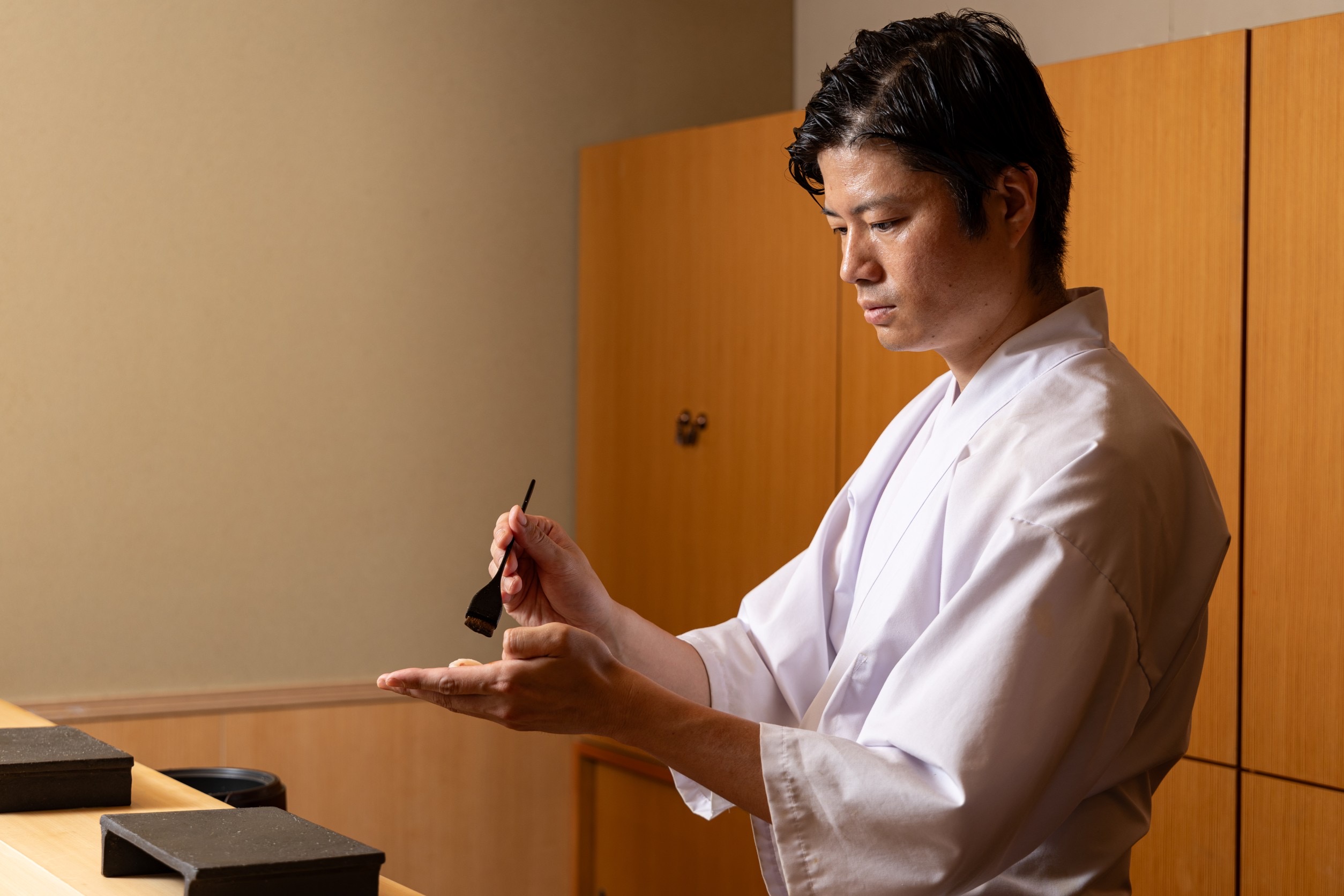
Reviewed by
Tatsuo TakadaHead chef and owner of Sushi Tanji. Trained in the Edomae tradition and rooted in Kyushu, he leads the eight-seat omakase counter in Oku-Akasaka, Tokyo, and reviews The Tokyo Sushi Guide.