
Written by Oku-Akasaka Sushi Tanji, an omakase counter in Akasaka, Tokyo.See the menu →
A sushi course rests on one idea: it opens with white fish then closes with tamago (the sweet egg omelette), moving from the light towards the rich. Across a dozen or more pieces, the weight of each flavour with the strength of each aroma is arranged so the palate never tires. Once that arrangement becomes legible, an omakase turns from a meal into something closer to a reading of how the day’s fish is being shown to you. This article follows the course in five parts: the opening, the middle, the pauses, the late stretch, then the close.
In short
A sushi course is stacked from the mild towards the rich. White fish settles the palate at the start, silver-skinned fish with lean tuna build the peak, a pause draws things back, then simmered pieces with gunkan give way to tamago at the close. The order itself is the blueprint for how the day’s fish is shown.
What you will learn
- The idea running through the whole course: light towards rich
- Why white fish opens the meal, plus what it tells you about the shari
- Why kohada, aji with the other silver-skinned fish belong in the middle
- What gari, a bowl of soup, a vinegared dish each set out to do
- Why simmered clam, simmered conger eel with gunkan gather near the end
- Why tamago closes the meal, plus what comes after it
The course has a spine: light towards rich
An omakase rarely opens with ōtoro (the fattiest belly tuna). At most Edomae counters the pieces move from the mild towards the pronounced, from soft outlines towards stronger aromas. This is not a question of formality. It is what keeps the palate alive through a dozen or more pieces. Eat the richest things first, then the quieter ones that follow lose their voice. So richness is sent backwards, further into the meal.
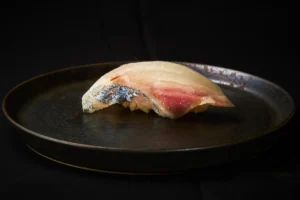
- OpeningTai (sea bream), hirame (flounder), shellfish. Salt with sudachi citrus shows the scent of the fish as well as the feel of the shari (seasoned rice).
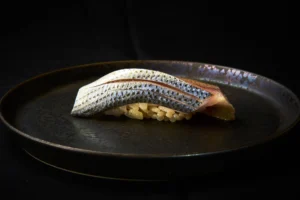
- MiddleHikarimono (silver-skinned fish) such as kohada (gizzard shad) or aji (horse mackerel), plus soy-marinated lean tuna. Vinegar with soy lifts, then the flavour reaches its peak.
- A pauseGari (pickled ginger), a bowl of soup, a small dish. The palate returns to where it began, ready for what is richer.
- Late stretchSimmered clam, simmered conger eel, gunkan (pieces banded with seaweed), rolls. Sweetness with reduced glaze brings the summit of intensity.
- The closeTamago. A single slice, close to confectionery, drawing the outline of the meal shut.
The opening white fish shows you the salt as well as the shari
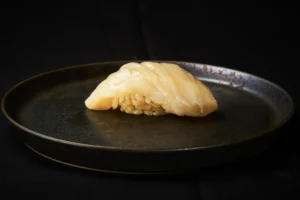
Tai, hirame, magarei (marbled sole): these are read through texture with the scent that rises a moment later, rather than through fat. They often arrive with salt and a squeeze of sudachi rather than soy. Some are cured briefly in kombu (kelp). Nothing extra is layered on. In summer, abalone, kisu (sillago) or finely cut squid may take this place.
There is a second reason white fish comes first. A mild neta (the topping on a piece of sushi) is the most honest way to receive the temperature of the shari, the strength of its vinegar, the weight of its salt. Where a counter works with red vinegar, the way that aroma rises is clear from the very first piece. It is easy to look only at the fish. The opening is also a time for tasting the shari.
The middle: silver-skinned fish with lean tuna build the peak
Kohada is salted to draw out water, then cured in vinegar. Every chef judges that curing differently, so the same fish can taste like two different things. July brings shinko, the juvenile form, small enough that two or three may be layered into a single piece. Along with aji and iwashi (sardine), hikarimono carry a strong scent of vinegar with aromatics, which is why they usually sit after the white fish, just before the lean tuna.
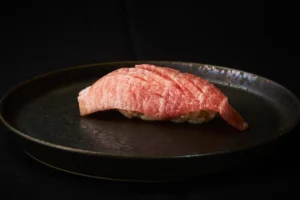
Lean tuna with ageing
Akami (lean tuna) is marinated in soy to deepen its colour with its scent, after which the fat rises through chūtoro to ōtoro. In recent years, resting fish to draw out umami has spread as a practice. In Okuakasaka, Tokyo, Sushi Tanji is one house that works with the Tsumoto method while judging the ideal period with temperature for each species. Aged neta carry a denser flavour, so their place naturally falls later in the course.
A pause returns the palate to where it started
When rich pieces come one after another, the palate slowly dulls. The pause resets it. Where gari is concerned, enough to rinse away the fat or the vinegar left in the mouth is plenty. There is no need to take a great deal.
| The pause | Where it appears | What it does |
|---|---|---|
| Gari | Between pieces | Lightly rinses the fat or vinegar left in the mouth |
| A bowl of soup (ushiojiru, a clear broth) | At the turn from the middle into the late stretch | Warm dashi returns the palate, readying it for richer flavours |
| A vinegared dish or a small bowl | Around the silver-skinned fish or the simmered pieces | Acidity lightens the mouth so the next piece keeps its outline |
When the soup arrives, it is often a sign that the late stretch is near. Whether that single bowl appears changes how sweet the simmered pieces read afterwards, by a surprising margin.
The late stretch climbs to its richest point
Nihamaguri (simmered clam), nianago (simmered conger eel), nidako (simmered octopus). Edomae simmered neta are brushed with nitsume, a glaze reduced from the cooking liquid. Sweetness layers over the scent of soy, so this is where intensity reaches its summit. Gunkan of uni (sea urchin) with ikura (salmon roe) also tend to sit here, carried by the aroma of nori (seaweed).
From there the meal moves into tekkamaki (tuna rolls), kanpyō maki (dried gourd), thin rolls of gourd with cucumber, quietly marking the end of the nigiri. Rolls read easily as a signal that the close is approaching. If you would like a little more, many guests wait until this stage to ask for one favourite piece. There is no need to hurry an extra order in earlier.
The closing tamago, then the breath that follows
The final tamagoyaki is, more often than not, closer to a confection: fish paste folded into the egg before it is cooked. Some houses cut slices from a thick block. Others build it in fine layers. As a way of closing a meal on sweetness, it could hardly sit anywhere else. A few counters serve tamago first instead, with a different intention: to show the hand behind the preparation before anything else. Neither reading is more right than the other.
Some houses design the time after the meal as well. At Sushi Tanji, the counter is followed by matcha with a seasonal wagashi (Japanese sweet) in a proper tea room. It is a way of settling the mouth once more after a rich finish.
There is no need to arrive with the order memorised. Still, knowing roughly where you are within the course lets the intention behind each piece come into view. Taste the pieces as they come, without overthinking it. The design carries itself.
Frequently asked questions
Is tamago usually served first or last?
Most houses place it at the close, though some serve it first. Closing with it lets sweetness draw the meal shut. Opening with it shows the hand behind the preparation straightaway. Both hold together as Edomae thinking.
May I ask for a favourite piece partway through the course?
Of course. Mentioning it late on, as the rolls or the tamago come into view, makes it easier for the chef to shape the flow. A rich addition early can leave the milder pieces that follow harder to read.
When is the best moment to eat gari?
A small amount after a piece with pronounced fat or a lifted vinegar aroma is plenty. There is no rule about taking it between every piece. Reach for it whenever you would like to rinse something from the mouth.
Does the order of an omakase differ from one counter to another?
In the details, yes. The light-to-rich frame is usually shared, while the arrangement of the white fish, the placing of the silver-skinned pieces, the timing of the soup are where each house shows its thinking. Reading those differences is part of the pleasure of omakase.
What if I cannot finish the course?
Saying so early often allows the portions or the pace to be adjusted. If there is something you would rather avoid, mentioning it as you sit down keeps the flow intact. There is no need to finish everything.
From the guide to the counter
Taste it at our eight-seat counter in Oku-Akasaka.
Classic Edomae craft with careful modern aging – served piece by piece, with English guidance for overseas guests.
Reserve at Sushi Tanji Explore The Tokyo Sushi Guide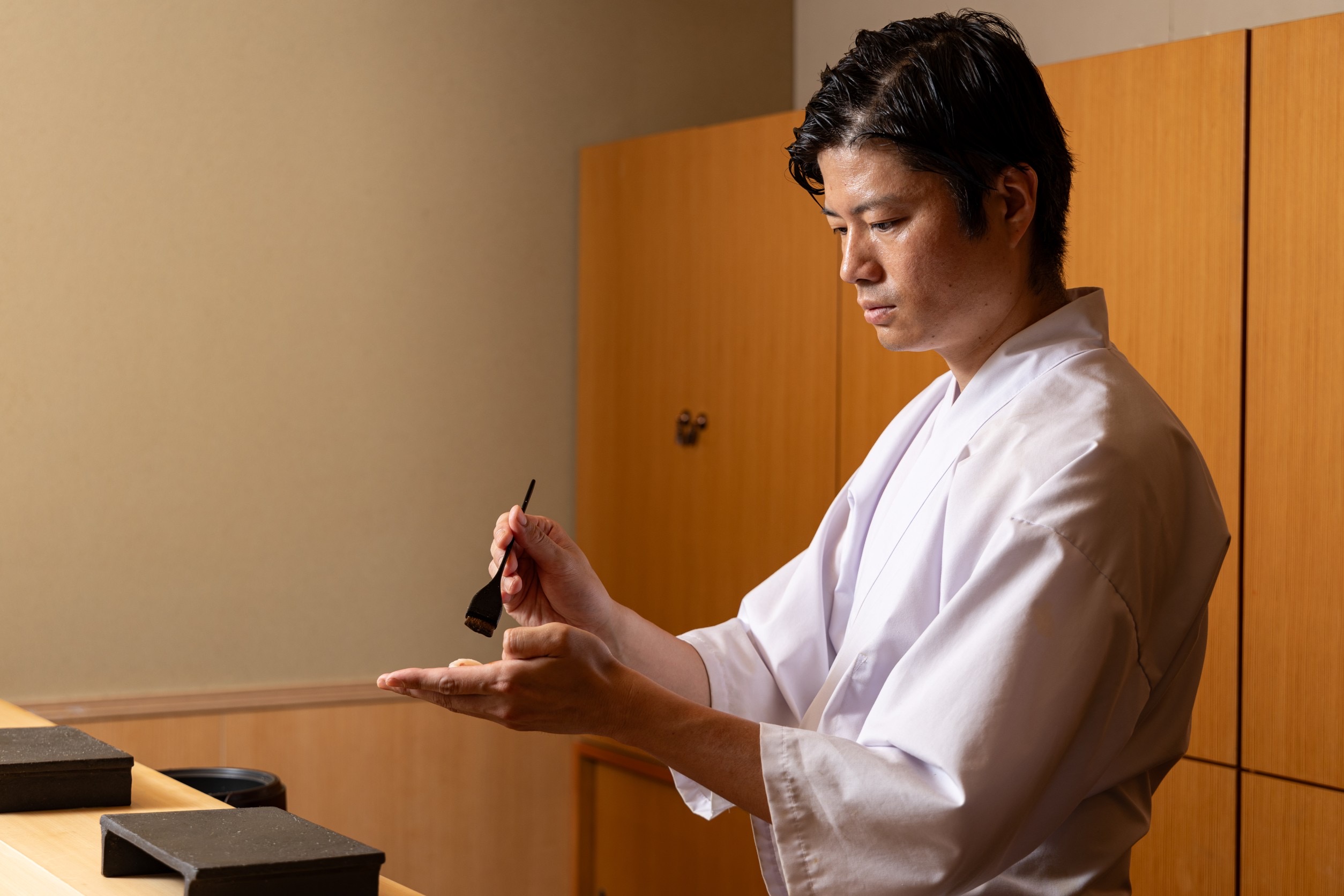
Reviewed by
Tatsuo TakadaHead chef and owner of Sushi Tanji. Trained in the Edomae tradition and rooted in Kyushu, he leads the eight-seat omakase counter in Oku-Akasaka, Tokyo, and reviews The Tokyo Sushi Guide.