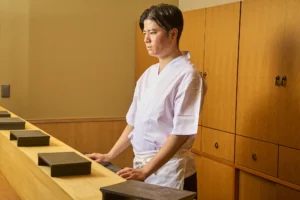

Reviewed by Tatsuo Takada (owner-chef, Oku-Akasaka Sushi Tanji)
Part of The Tokyo Sushi Guide Updated Reading time about 6 minutes See the menu →
Once you have chosen a restaurant, what remains for an omakase (chef’s choice) booking comes down to four things: party size, time slot, what you would rather not eat, plus how you will pay. Settle these before you open the reservation form and the notes field almost writes itself; on the night, all that is left is to take your seat at the counter. September is when the first ikura (salmon roe) of the season and returning bonito begin to appear, so a word about your preferences can quietly reshape an evening’s menu. Here we take the pre-booking questions one at a time.
In short
Before booking an omakase counter, settle four things: how many of you there are, which time slot you want, what you cannot or would rather not eat, plus how you will pay. Write these in the notes field when you reserve. The restaurant can then plan from the preparation stage onward, with nothing left to sort out on the night.
What you will learn
- A party of two is the easiest to seat; four or more at a counter of around eight seats calls for an early conversation
- How to tell a single-seating restaurant from a rolling start, plus how the mood shifts between opening time and after seven
- Separate 'cannot eat' from 'would rather not', then write it in three short lines in the booking notes
- Even ten minutes late deserves a phone call; cancel before the fish has been bought
- Confirm at booking whether cash or card, whether a service charge applies, plus whether the bill can be split
- September ingredients worth mentioning in advance
Party Size: Two Is the Baseline, Four or More Calls for an Early Word
Most omakase counters in Tokyo seat six to ten. At an eight-seat counter, a party of four takes half the room for the night. Two is the most flexible number to seat, which makes it the easiest booking to secure. Solo diners are warmly received at many places too. Where everyone starts together, you sit alongside other guests, so conversation across the counter tends to arise on its own.
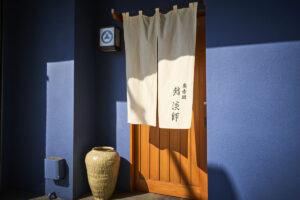
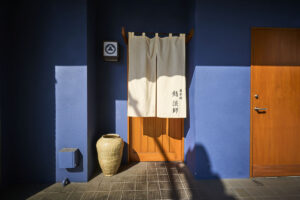
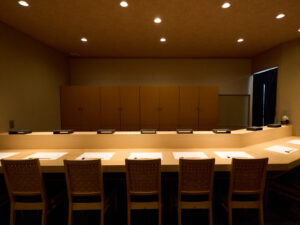
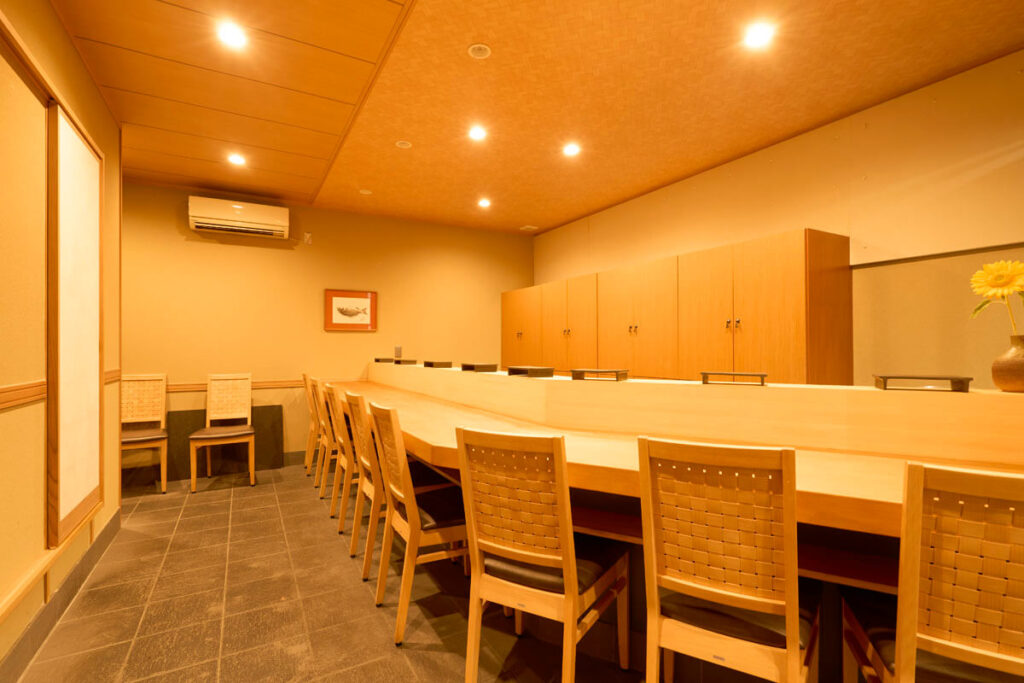
From three upward, how you are seated depends on whether the counter runs straight or turns a corner in an L. A note that you would like to sit together helps the restaurant arrange the seats. Our own counter at Sushi Tanji seats eight along a single length of hinoki cypress; by arrangement we can take up to nine. At a counter of this size, the closer a party comes to filling the room, the more an early conversation about dates smooths the way.
Policies on young children vary from one restaurant to another. Some set an age guideline, so if you are unsure, a brief question before booking will settle it.
Choosing a Time: Single Seating or Rolling Start
Omakase restaurants follow one of two patterns. In a single seating, every guest begins at the same moment; with a rolling start, each party begins as its seats become free. A single seating keeps the whole counter moving through the nigiri together, which is why a late arrival is felt more keenly. A rolling start gives you more freedom with time, though your neighbours will be at a different point in the meal. If the booking site shows only two slots, say 6:00 and 8:30 pm, you can safely assume a single seating.
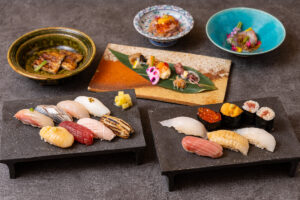
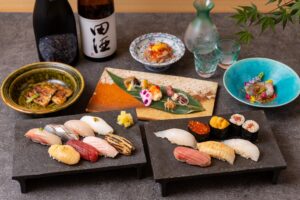
Allow around two hours for an omakase. Most counters move from tsumami (small plates to accompany drinks) into nigiri, then close with tamago (sweet egg omelette) or a hand roll. Where matcha or a sweet follows, a little extra room lets the ending unfold at its own pace. Tanji opens at five, with last entry at nine, so the evening is built to include time in the tea room afterwards for matcha with a seasonal wagashi (Japanese confection). Behind this lies a simple idea: when the food, the sake, the ceramics, the room and that final bowl of tea come together, an evening becomes one you want to return to.
The earliest slot has none of the rush of the after-work crowd, which suits a first visit well. From seven onward the mood leans towards drinking, a good fit for anyone hoping to pair the meal with sake.
| Time slot | Well suited to | Worth checking |
|---|---|---|
| Just after opening (5 to 6 pm) | First-timers, anyone who prefers a quiet meal | Whether you can arrive in time after work |
| 7 to 8 pm | Those who want to enjoy sake with the meal | Bookings tend to cluster here |
| Close to last entry | Those who can only manage a late hour | The last entry time against the length of the meal |
Allergies and Dislikes: Separating 'Cannot' from 'Would Rather Not'
The key is to separate what your body cannot take from what you simply prefer to avoid. ‘Crustacean allergy’ or ‘pregnant, so avoiding raw fish’ fall into the first group; the restaurant will prepare an alternative from the day before. ‘Not keen on raw shellfish’ or ‘find the vinegar on hikarimono (silver-skinned fish such as kohada, gizzard shad) a little sharp’ belong to the second, where the chef has room to adjust the order of the nigiri or the strength of the cure.
The notes field on the reservation form is the right place for this. Mentioned on the night, there is little room left to swap out fish prepared for that very day. Edomae work, the curing and marinating that defines Tokyo sushi, often begins the day before, so the earlier the restaurant knows, the more freely it can rework each piece.
September brings the first ikura of the year, cured in soy, along with returning bonito and sanma (Pacific saury). Whether roe is not to your taste or the aroma of oily fish gives you pause, this is the season to say so in advance, so that the substitution slips naturally into the menu. Requests about quantity, such as ‘less wasabi’ or ‘smaller shari’ (the seasoned rice), can go in the same field.
Running Late or Cancelling: The Earlier the Word, the Lighter It Weighs
Even ten minutes late, most guests will phone ahead. At a single-seating counter, the nigiri for every other seat may pause while one arrival is awaited. Knowing your arrival time, the restaurant can reorder the tsumami to keep the flow intact. A quick ‘we will be ten minutes late’ five minutes beforehand keeps the mood at the counter calm in a way that an unannounced delay cannot.
For cancellations, the guide is to call before the fish has been bought. Fish is sourced at market one or two days ahead, then goes straight into curing or ageing, so most restaurants set a fee for cancellations on the day before or the day itself. The booking site states its cancellation terms clearly. A glance through them before you submit the form gives peace of mind.
If you fall ill suddenly, the earliest possible call is the greatest help to the restaurant. The same holds when the party shrinks: a brief note that four have become three is enough for the seats and preparation to be adjusted.
- Three or more days aheadThe fish has not yet been bought, so changes or cancellations are usually free.
- The day beforePurchasing is under way, so more restaurants apply a fee. Call early in the day.
- On the dayPreparation is complete, so most restaurants ask for the full amount. A call is always better than silence.
Payment: Cash or Card, Plus Whether the Bill Can Be Split
The era when the finest restaurants took cash only is drawing to a close, though some counter sushi restaurants still do. Whether cards are accepted usually appears in the restaurant details on the booking site; if it does not, asking in the notes field is perfectly fine. A growing number of booking sites also hold card details at the time of reservation so that a no-show can be charged.
Most restaurants settle the bill as one, so separate payments by seat may not be possible. If you wish to share the cost, the simplest way is for one person to pay, then settle up afterwards. Confirming at booking whether a service charge or private-room fee applies, plus how much sake the course includes, spares any surprise when the bill arrives. Tipping is not a custom in Japan; there is no need to leave anything.
A Final Check Before You Submit
Write the four points briefly in the notes field. Something close to a list reads more easily for the restaurant than a long paragraph. A single line for each is plenty.
- Party size and seating‘Two guests, seated together please’
- Time and arrival‘6 pm. Coming from work, may be around five minutes late’
- Cannot eat / would rather not‘Crustacean allergy / go easy on raw shellfish’
- Payment and occasion‘Would like to confirm cards are accepted / birthday celebration’
- LanguageIf you would like the meal explained in English, a word here is all it takes.
Mentioning an anniversary or celebration often brings a quiet gesture from the restaurant, in the closing dish or a glass of something. What to wear, how to time your arrival, how to use your hands at the counter: all of these are gathered in our guide index, which you may like to read alongside this piece. With the four points settled, there is nothing further to worry about.
Frequently asked questions
How far in advance should I book an omakase?
For counters with few seats, two weeks to a month ahead is the usual guide. A party of two may find a seat opening up at short notice, so it is worth asking about a waiting list. For four or more, the earlier the better.
Will mentioning an allergy change the course?
Usually the affected topping is replaced with another fish or a separate dish, most often with no change to the cost of the course. Written in the notes at booking, the restaurant can adjust from the day before. Raised on the night, there is less room to substitute.
How early should I call if I am running late?
As soon as you know is the guide. Even five minutes’ notice lets the restaurant reorder the small plates to keep the flow intact. At a single-seating counter especially, an early call keeps the effect on other guests small.
Do omakase sushi restaurants take cash only?
It depends on the restaurant. Some remain cash only, while a growing number accept cards or advance payment through the booking site. Card acceptance usually appears in the restaurant details on the booking site; if not, feel free to ask in the notes field.
Can I book an omakase for one?
Many restaurants welcome solo diners; writing ‘one guest’ in the notes is all you need. It is easy to exchange a few words with the chef across the counter, with conversation sometimes arising with the neighbouring guest too. For a first visit, the earliest slot offers the calmest setting.
From the guide to the counter
Taste it at our eight-seat counter in Oku-Akasaka.
Classic Edomae craft with careful modern aging – served piece by piece, with English guidance for overseas guests.
Reserve at Sushi Tanji Explore The Tokyo Sushi Guide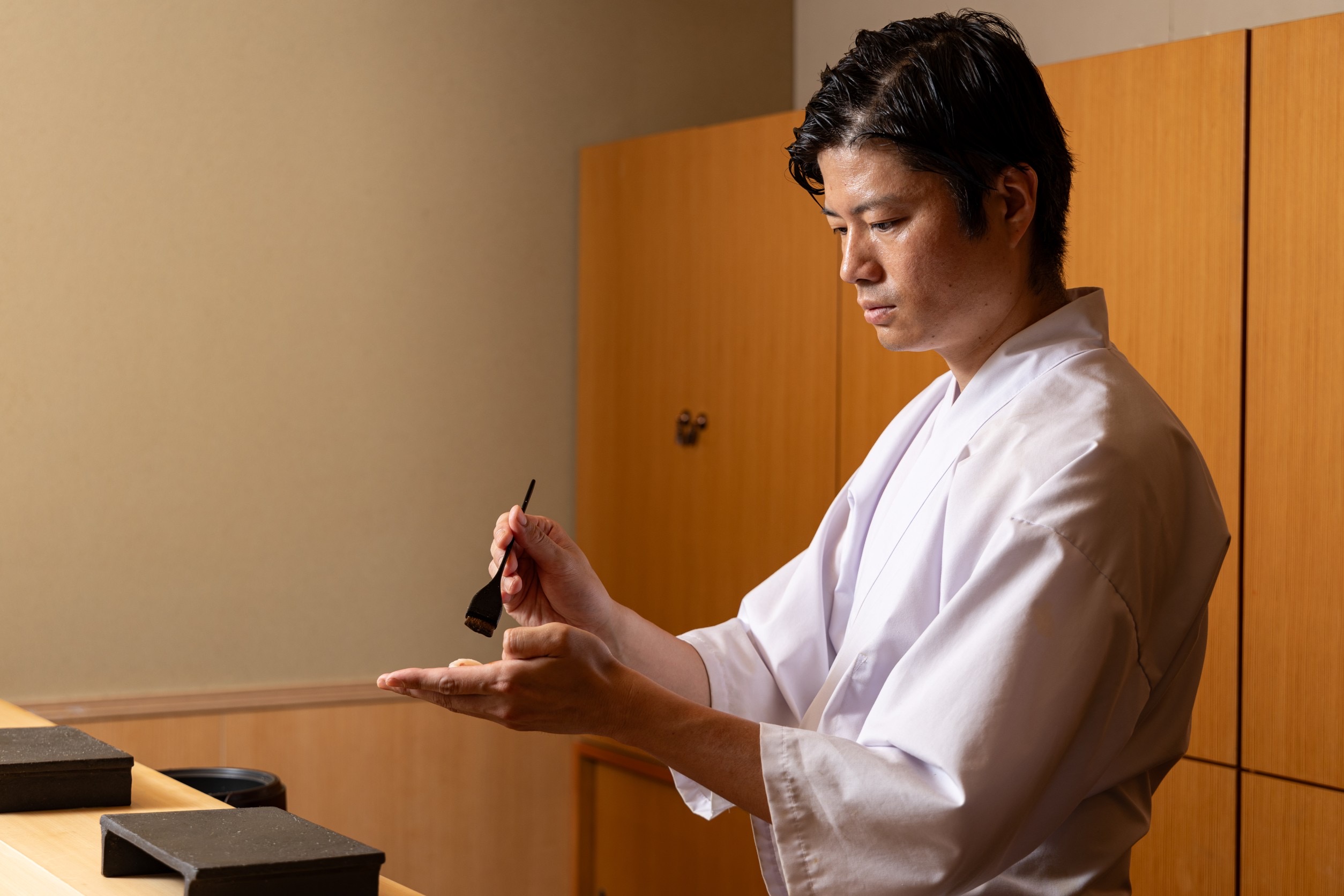
Reviewed by
Tatsuo TakadaHead chef and owner of Sushi Tanji. Trained in the Edomae tradition and rooted in Kyushu, he leads the eight-seat omakase counter in Oku-Akasaka, Tokyo, and reviews The Tokyo Sushi Guide.