Reviewed by Tatsuo Takada (owner-chef, Oku-Akasaka Sushi Tanji)
Part of The Tokyo Sushi Guide Updated Reading time about 6 minutes See the menu →
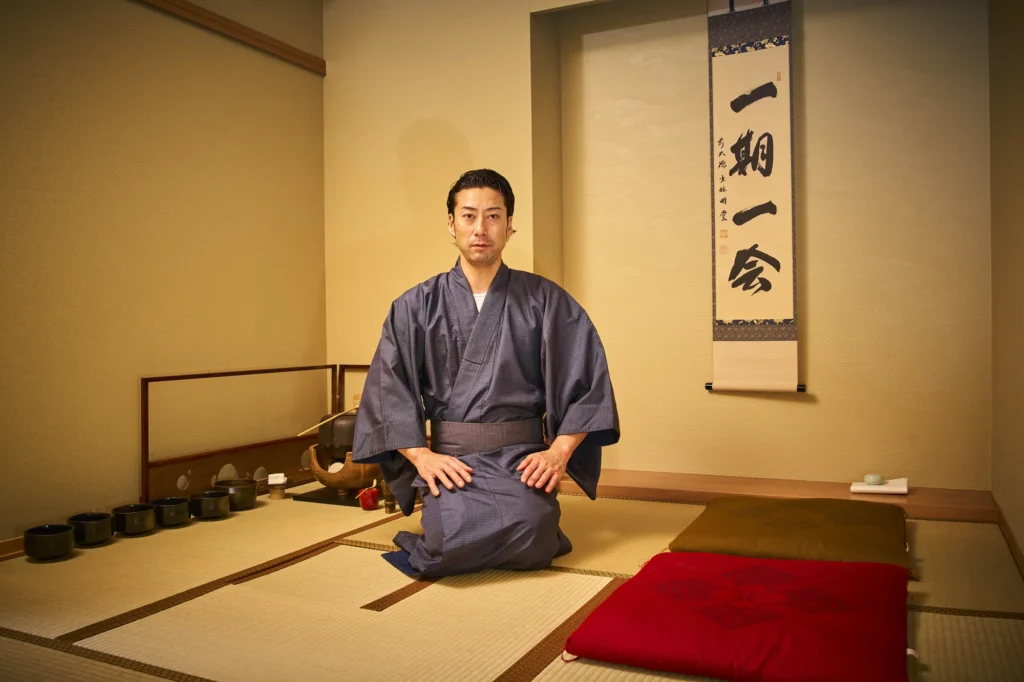
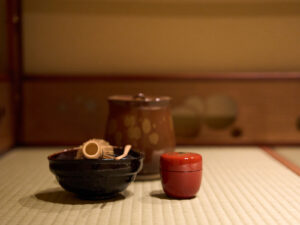
At the end of the sushi course you move through to the tea room for a bowl of matcha. That tea rests on a school of practice, in the same way each piece of nigiri rests on Edomae craft. The tea room at Oku-Akasaka Sushi Tanji follows the Ogasawara school of tea. What follows traces where that school sits within the history of the tea ceremony while answering the question many guests quietly carry: whether it is all right to sit down without knowing the etiquette.
In short
Our tea room follows the practice of the Ogasawara school of tea. The tea passed from Sen no Rikyu to Sen Sotan divided after Sotan: his sons founded the three Sen houses of Omotesenke, Urasenke as well as Mushakojisenke, while pupils such as Yamada Sohen began lines of their own. The Ogasawara school belongs to that Sohen line. No knowledge of etiquette is asked of guests.
What you will learn
- Why a tea room comes after the sushi: *ma* and *yoin*
- The line from Sen no Rikyu to Sen Sotan, up to the parting of the three Sen houses
- Yamada Sohen, a pupil of Sotan, with the school he founded
- Where the Ogasawara school of tea sits among the branches of the tea ceremony
- What a guest with no training actually does in the tea room
- What the matcha after sushi does for the palate and for the evening
Why a Tea Room Follows the Sushi
An evening that ends with rather more than “that was delicious.” The tea room placed at the close of the meal exists for that one reason. After the last piece at the counter, guests move through to another room for a bowl of matcha (whisked powdered green tea) with a seasonal sweet. Instead of stepping straight out into the street, there is time to settle the palate then think back over what the evening held. Japanese has two words for this: ma, the interval between things, along with yoin, the resonance that lingers once something has ended. Both are meant to travel home with you.
The matcha whisked in this room has a school behind it, just as the nigiri at the counter has the work of Edomae behind it. Our tea room follows the practice of the Ogasawara school of tea.
From Sen no Rikyu to Sen Sotan: How the Tea Divided
Trace almost any school of tea back far enough and you arrive at Sen no Rikyu (1522–1591) of the Azuchi-Momoyama period. After Rikyu the practice passed through Sen Shoan to his grandson Sen Sotan. Sotan never took service with a lord. He is remembered instead for deepening the austere spirit of wabi-cha, the tea of quiet simplicity.
The three schools whose names are heard most often today descend from Sotan’s sons. They are known together as the three Sen houses. Sotan also taught gifted pupils, several of whom began schools of their own. The three Sen houses along with the schools born from those pupils stand as separate branches of one root rather than in any order of rank.
| Line from Sotan | School | Notes |
|---|---|---|
| Second son, Soshu | Mushakojisenke | One of the three Sen houses |
| Third son, Sosa | Omotesenke | One of the three Sen houses |
| Fourth son, Soshitsu | Urasenke | One of the three Sen houses |
| Pupil, Yamada Sohen | Sohen-ryu | Counted among Sotan’s four great pupils |
The Sohen Branch: The Tea of Yamada Sohen
Yamada Sohen (1627–1708) received full transmission under Sen Sotan. He is counted among the four great pupils of that house. In 1655, on Sotan’s recommendation, he entered the service of Ogasawara Tadatomo, lord of the Mikawa Yoshida domain, as tea master. Tradition holds that Sotan granted him at that point the use of two names: Fushin-an, carried down from Rikyu, together with Konnichi-an, the name of Sotan’s own retirement hut. In later years Sohen settled in Honjo in Edo, where he drew pupils from many walks of life.
The temper of Sohen-ryu turns away from display. It favours plainness with a quiet bearing in the room. Rather than startling a guest with showy utensils, it looks for beauty inside simple things then digs further into the workings of the heart. As a single bowl at the close of a sushi meal, that thinking sits easily in place.
Where the Ogasawara School of Tea Belongs
The Ogasawara school of tea followed by our tea room belongs to this Sohen line. The lineage held here names Ogasawara Soko as its founder, a student of Yamada Soi, tenth head of Sohen-ryu. The school stands, in other words, at the far end of the branch running from Sen no Rikyu to Sen Sotan then on to his pupil Yamada Sohen.
Guests sometimes ask whether this makes it part of Urasenke. Urasenke is one of the three Sen houses, begun by Sotan’s fourth son Soshitsu. It forms a different branch from the same Sen Sotan. Neither is the main current of the other. The difference lies only in the path by which Rikyu’s tea has been carried forward.
Sitting Down Without Knowing the Etiquette
The short answer is that nothing is required of you. What happens in our tea room is not a formal tea gathering. It is a single bowl offered as the close of a sushi meal. The school’s etiquette guides the hand whisking the tea. Nothing is asked of the person receiving it. Guests visiting from abroad are welcome exactly as they are, as are those for whom seiza, the formal kneeling posture, is uncomfortable.
For anyone who feels steadier knowing what comes next, here is the shape of it.
| Moment | What you might do | What need not concern you |
|---|---|---|
| Entering the room | Sit however you are comfortable | Whether or not it is seiza |
| The sweet arrives | Enjoy it before the matcha | How it ought to be eaten |
| The matcha arrives | Hold the bowl in both hands then finish it in about three sips | How many times to turn the bowl |
| Once you have finished | Set the bowl down where you are | The etiquette of examining the bowl |
Another frequent question is whether matcha will taste bitter. The sweet comes first by design. Where the sweetness of the confection still lingers, the astringency of the tea meets it. Each softens the other’s edge so the finish comes through clear.
What the Matcha After Sushi Is Doing
A sushi course builds steadily in depth of flavour: white-fleshed fish first, then hikarimono (silver-skinned fish such as gizzard shad), shellfish, red-fleshed tuna, simmered pieces, closing with tamago, the sweet omelette. When the final piece is gone, the palate holds layers of fat, vinegar and soy. The astringency of matcha carries those layers off for a moment, returning the sense of taste to level ground. Whisked matcha rather than a light green tea closes the meal because it does this so well.
The second thing at work is time. A few steps carry you from the counter to the tea room. In those few steps the evening turns from eating to remembering. Sushi asks for attention piece by piece. What follows it wants quiet. The etiquette of the school is, in the end, a way of holding that quiet in shape.
Frequently asked questions
I don't know the etiquette of the tea room. Will that be all right?
There is nothing to worry about. This is not a formal gathering but a single bowl offered as the close of a sushi meal. If seiza is uncomfortable, please sit however you like. Ask us at any point about what comes next and we will tell you there and then.
Which school does the tea room at Tanji follow?
It follows the practice of the Ogasawara school of tea. Within the tea handed down from Sen no Rikyu to Sen Sotan, it belongs to the Sohen line begun by Sotan’s pupil Yamada Sohen.
Is that different from Urasenke?
Urasenke is one of the three Sen houses, begun by Sen Sotan’s fourth son Soshitsu. The Ogasawara school of tea is a separate branch from that same Sen Sotan. It is not a question of one being the main current.
Is the tea room part of the course?
After the meal we serve a bowl of matcha with a seasonal sweet in the tea room. No special request is needed when you book.
May I take photographs in the tea room?
You are welcome to. The hanging scroll along with the setting of the hearth are part of what the room offers. We ask only for a quiet word beforehand if your companions or other guests would appear in the frame.
From the guide to the counter
Taste it at our eight-seat counter in Oku-Akasaka.
Classic Edomae craft with careful modern aging – served piece by piece, with English guidance for overseas guests.
Reserve at Sushi Tanji Explore The Tokyo Sushi Guide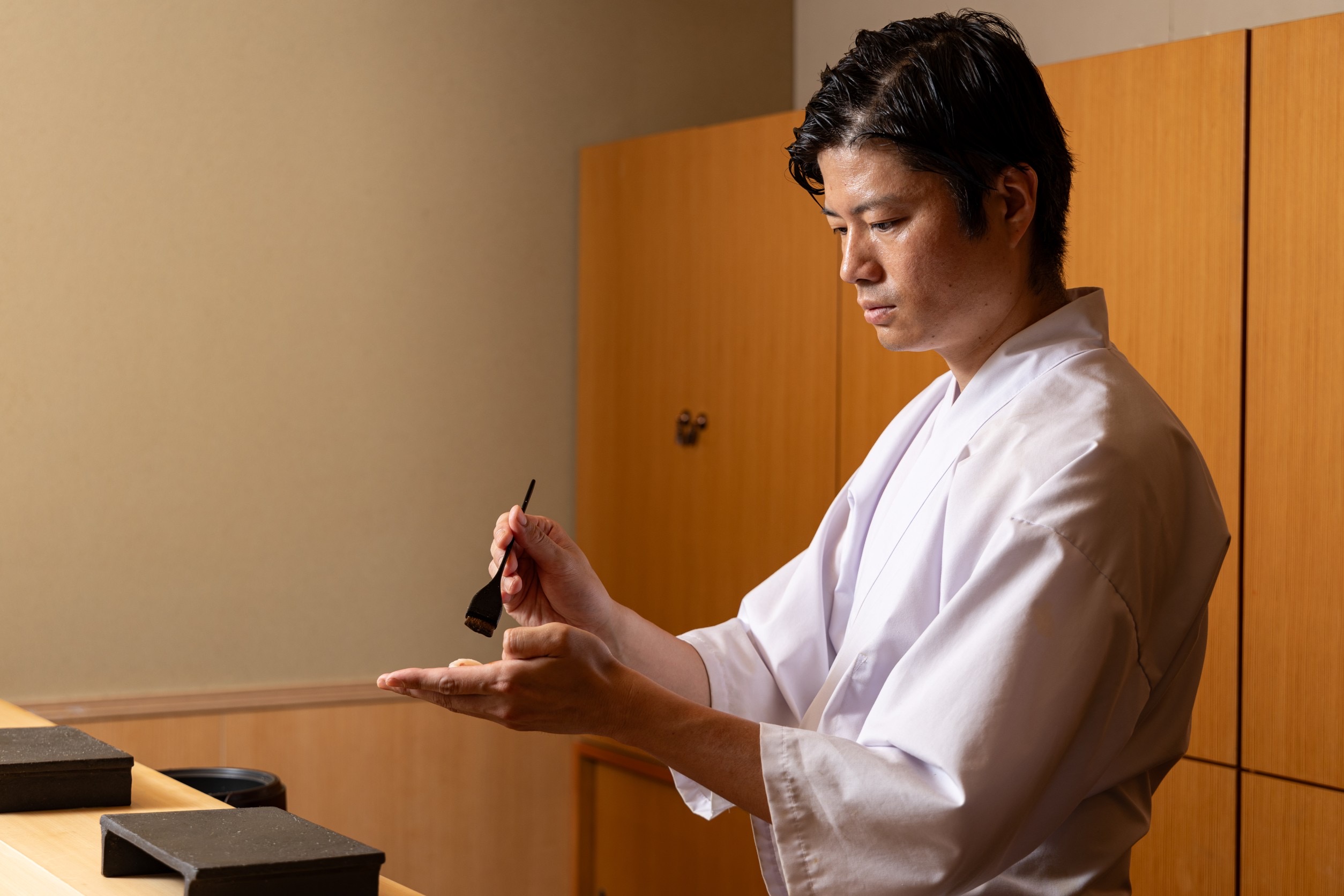
Reviewed by
Tatsuo TakadaHead chef and owner of Sushi Tanji. Trained in the Edomae tradition and rooted in Kyushu, he leads the eight-seat omakase counter in Oku-Akasaka, Tokyo, and reviews The Tokyo Sushi Guide.