Written by Oku-Akasaka Sushi Tanji, an omakase counter in Akasaka, Tokyo.See the menu →
The hot tea that arrives at the end of a sushi meal is known as agari. More often than not it is konacha (fine-leaf green tea) rather than sencha, the rolled leaf tea steeped for everyday drinking. It is not simply something to finish on. Its purpose is to rinse away the richness left in the mouth so that every piece keeps its own outline. Here we look at why konacha is chosen, why the cup is thick and tall, then how agari differs in role from matcha.
In short
The tea that closes a sushi meal is konacha, gathered from the fine particles of leaf sifted out when tea is finished. Boiling water draws it dark in a matter of seconds. Its astringency together with its heat carries off the richness left in the mouth, settling the palate for the next piece or for the quiet that follows the meal. Agari began as shorthand on the shop’s side of the counter; a guest is welcome simply to say tea.
What you will learn
- Agari is the counter's own shorthand. Asking plainly for tea is understood perfectly well
- Konacha is the fine particles of leaf. It brews dark with a clear astringency in seconds
- Heat with astringency lifts the richness left by chutoro (medium-fatty tuna) or anago (simmered sea eel)
- Why the cup is thick and tall, plus an easy way to hold it while it is still hot
- How konacha, sencha, gyokuro and matcha differ in leaf as well as in brewing
- How agari clears the mouth while matcha closes the occasion itself
Agari began as the shop's word, not the guest's
Agari started life as sushi-shop shorthand. The first tea poured for a guest was called odebana; the last was agaribana. The word now in common use is what remains of the second. It was never coined for guests to say. Asking for tea the way you would anywhere else is understood without the slightest difficulty. Often it sounds more natural too.
There is no need to feel that a little insider vocabulary is expected of you. What matters at the counter is not the name you use but taking what arrives while it is still warm. Asking plainly makes for a far happier meal than staying silent for fear of the wrong word.
Why konacha is the tea of choice
Konacha is gathered from the small particles of leaf sifted out while sencha or gyokuro (shade-grown leaf tea) is being finished. Despite the name, it is not a powder in the way matcha is. It is simply leaf broken very fine. With so much surface meeting the water, it gives itself up at once, turning dark within seconds into a tea whose astringency stands clearly forward.
That speed counts for more at the counter than it may appear. The chef prepares tea between pieces. A leaf that wants several minutes to steep would never keep pace, whereas one that pours dark straightaway makes good sense. The forward astringency suits the purpose as well, since the aim is to cut through richness rather than to add sweetness.
| Tea | Leaf | Brewing | Role at the sushi counter |
|---|---|---|---|
| Konacha | Fine leaf sifted out as sencha is finished | Boiling water, dark within seconds | Usually the tea that closes the meal |
| Sencha | Leaf steamed then rolled | 70-80°C for about a minute | A tea for fragrance; some shops pour it during the meal |
| Gyokuro | Leaf grown under shade | 50-60°C, poured slowly | Deeply savoury; a little heavy after sushi |
| Matcha | Tencha stone-ground to powder | Whisked into hot water with a chasen (bamboo whisk) | Taken in the tea room to close the occasion |
Heat and astringency carry the richness away
Both the heat and the astringency have work to do. After chutoro, shimesaba (vinegar-cured mackerel) or anago brushed with nikiri (a sweet soy glaze), fat with sweetness lingers on the tongue. Tea far hotter than body temperature carries that away, returning the palate to level. The astringency does not overstay, so the next piece rises without the memory of the last one standing in its way.
In August the counter fills with well-fatted aji (horse mackerel) plus katsuo (bonito), alongside anago simmered slowly. Even in an air-conditioned room the closing tea comes hot, partly so that the fat does not cool and settle in the mouth. A cold drink cannot easily do the same work.
Why the cup is thick, tall and without a handle
The yunomi (teacup) at a sushi counter is thick-walled, tall, with no handle. The thickness is said to hold the heat; the height allows a generous pour at one time. Since the chef’s attention is on the rice, a shape that spares constant topping up has long been preferred.
If it is too hot to lift, letting it stand a moment then cradling it in both hands is the easy answer. Holding nearer the base rather than the rim keeps the heat at a comfortable distance. Most guests set the cup on the near side of the tsuke-dai (the counter ledge where sushi is placed), on their dominant side. With the hand free, the next piece is simpler to receive.
The first cup and the last do different work
The same tea behaves differently depending on when it appears. Some shops pour it lighter at the start, stronger at the close. Asking for tea partway through is perfectly good manners. A mouthful after a run of richer pieces makes the delicacy of the white fish or shellfish that follow much clearer.
- The first cup, on being seatedIt warms the mouth as well as the body, settling the palate for what is to come.
- Partway through the nigiriA sip after a rich piece brings back the outline of the lighter fish that follow.
- The closing cupStrong hot konacha carries the richness off, drawing the day’s flavours together.
Beyond agari lies matcha
Konacha is a tea to be steeped; matcha is a tea to be whisked. Konacha gives its substance to the water while the leaf stays behind. Matcha is tencha milled on a stone mill, then dissolved in hot water with a bamboo whisk so that the leaf itself is taken in. Where agari rinses the mouth with astringency, matcha is dense with bitterness as well as sweetness, served with wagashi (traditional sweets) to close the occasion itself.
At Sushi Tanji in Oku-Akasaka, Tokyo, the meal ends with matcha plus a seasonal wagashi in a proper tea room. The house works on the belief that the food, the sake, the vessels, down to the final bowl of tea, gather into a single stretch of time. Moving from the counter to the tea room settles not only the palate but the hours themselves.
Frequently asked questions
Is it all right to say agari myself?
There is no harm in it, though the word began on the shop’s side of the counter. Asking for tea is understood perfectly well, plus it sounds more relaxed. Nobody here is being marked on vocabulary.
Why is the tea at a sushi counter so hot?
To carry off the richness left in the mouth. At around body temperature the fat tends to stay on the tongue, blurring the piece that follows. If the cup is too hot to hold, letting it stand a little then taking it in both hands makes it easy.
What is the difference between konacha and matcha?
Konacha is the fine leaf left when sencha is finished, steeped in hot water then drunk. Matcha is tencha ground on a stone mill, whisked with a chasen so that the leaf itself is taken in. Both are green tea, yet the leaf as well as the manner of drinking are quite separate.
May I ask for a refill?
Of course. A word when the cup is empty is entirely fine, though often the chef or a member of staff will notice first. There are moments when hands are full, so a little patience keeps everything comfortable.
Can I order cold tea or a beer during the meal?
Not a problem at all. Some shops keep cold tea ready in summer. Making the last cup a hot one, though, carries the richness away for a cleaner finish.
From the guide to the counter
Taste it at our eight-seat counter in Oku-Akasaka.
Classic Edomae craft with careful modern aging – served piece by piece, with English guidance for overseas guests.
Reserve at Sushi Tanji Explore The Tokyo Sushi Guide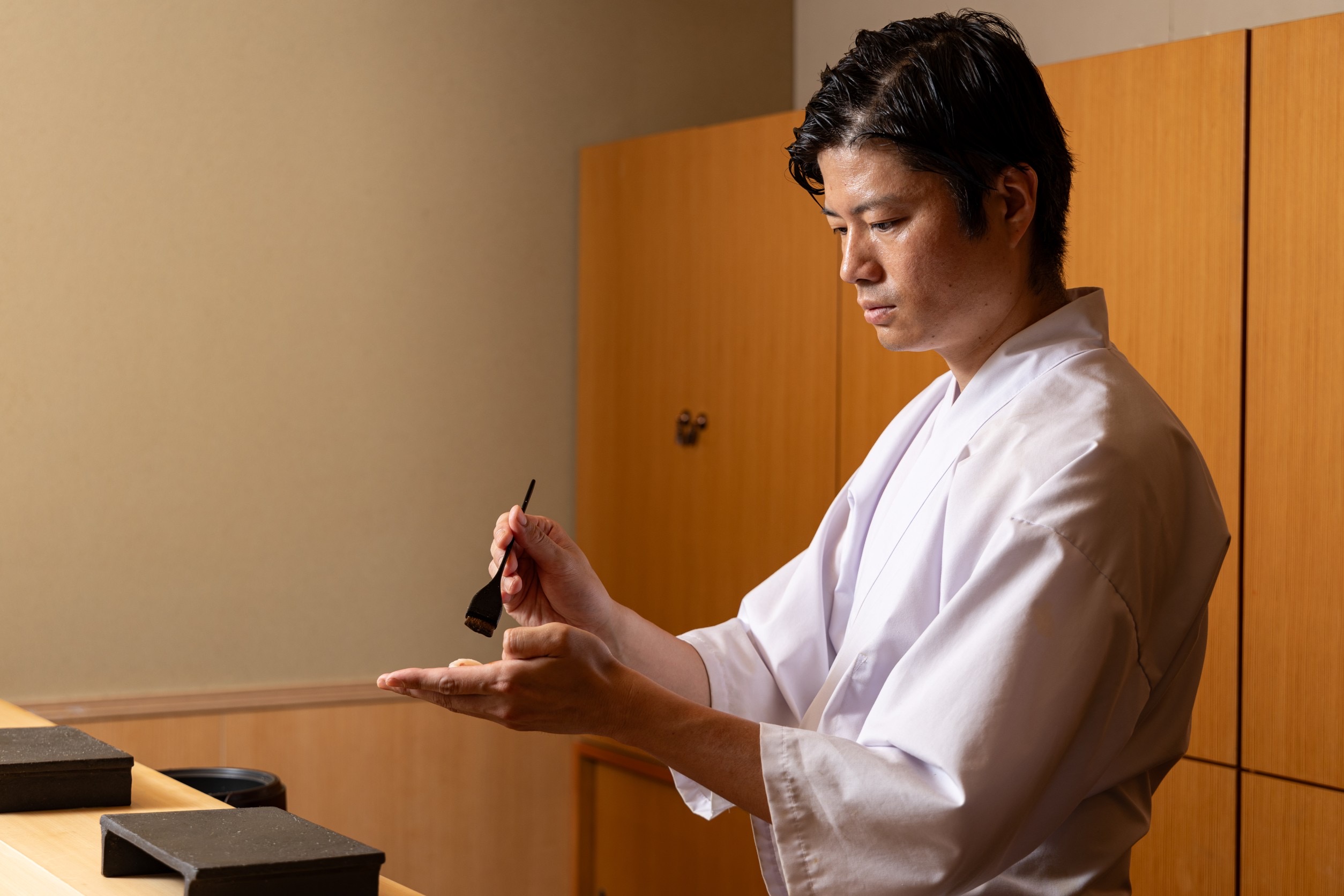
Reviewed by
Tatsuo TakadaHead chef and owner of Sushi Tanji. Trained in the Edomae tradition and rooted in Kyushu, he leads the eight-seat omakase counter in Oku-Akasaka, Tokyo, and reviews The Tokyo Sushi Guide.