Written by Oku-Akasaka Sushi Tanji, an omakase counter in Akasaka, Tokyo.See the menu →
Allergies and pieces you would rather not eat reach the kitchen far more reliably when you mention them at the time of booking than when you raise them at the counter on the night. An omakase is not a meal decided once the order is taken. Here we cover how to phrase a request when you reserve, the ingredients in sushi that are easy to overlook, the way to raise something on the day, plus what to say if you would rather not drink sake. There is no need to brace yourself. Say the word and most places will take it in quietly.
In short
Allergies and pieces you would rather avoid are surest when mentioned at the time of booking. An omakase counter buys its fish several days ahead then moves into preparation, so a word given in advance lets the menu be reshaped far more easily than a word given at the counter on the night.
What you will learn
- Why a single line in the notes field of a booking is all it takes
- How to separate “not a favourite” from “cannot eat” when you speak
- Soy sauce, nikiri, tsume: the ingredients a fish's name conceals
- The guide for the day itself: before the nigiri begins
- How to word it when you don't drink sake, plus how to split a request by person
Say it when you book. Earlier is surer
An omakase counter does not settle its menu once you sit down. Most kitchens buy fish several days ahead, then move through the work that follows: curing in salt, marinating in soy, ageing. The shape of the meal is largely fixed at the buying stage, so a piece declared impossible on the evening itself can be awkward to replace.
A single line in the notes field of a booking is enough. A phone call works just as well. If you worry it slipped through, a second message a few days before the visit is no trouble at all. The earlier it arrives, the more freely the kitchen can work. August brings the summer fish to the counter: shinko (young gizzard shad), kisu (a delicate whiting), abalone. Shellfish is worth flagging early.
Wording that lands, wording that blurs
The usual stumble is politeness, softening a request until it loses its shape. “I’m not terribly keen on it, but it’s fine” gives the chef nothing to work with. Should the ingredient be left out altogether? Or is a small taste welcome? That is the fork in the road.
| What you want to convey | Wording that blurs | Wording that lands |
|---|---|---|
| A crustacean allergy | Prawn isn’t really for me | I’m allergic to prawn and crab, so I can’t eat them |
| Not a favourite, though a taste is fine | Oily fish, hmm | I’d be glad of only a little hikarimono, the silver-skinned fish. One piece is fine |
| Nothing raw | I’m not good with raw things | Might the raw shellfish be left out? Anything cooked is fine |
The difference is simply whether the degree and the reason travel with the request. Once that is clear, the chef can think ahead about what to serve in its place. Plain speech reads as kinder than careful vagueness.
Ingredients in sushi that are easy to overlook
The name of a neta, the fish or shellfish laid over the rice, does not always tell the whole story. Soy sauce carries soy beans as well as wheat, so the same holds for nikiri, the simmered blend of soy with sake and mirin brushed over each piece at an Edomae counter. Tamago, the sweet egg piece; the simmering liquid for kanpō rolls of dried gourd; the tsume glaze painted over anago, the sea eel. Trace each back to its parts and the picture shifts. Crustacean appears beyond the obvious prawn or crab piece, turning up in stocks as well as in the toppings of gunkan, those pieces wrapped in a collar of nori.
Speak in terms of ingredients
So “I can’t have soy sauce” or “I can’t have egg” lands with certainty. Where a serious reaction is a concern, it is worth asking in advance whether the kitchen can accommodate it at all. Some will say the preparation makes it difficult. That is an honest answer rather than a cold one, a refusal to take on what they cannot promise.
If someone at your table would find it hard to explain in detail in Japanese, there are counters where the ingredients as well as the cultural background can be talked through in English. Choosing a place that prepares for guests from abroad, as Sushi Tanji does, makes the exchange on the evening much lighter.
Naming what you'd rather not eat is not a demand
Many people feel a twinge about it. Omakase means placing yourself in the chef’s hands, so surely adding conditions is discourteous. The instinct is a fair one, though from behind the counter the sentiment tends to run the other way: a piece forced down or left on the plate is the outcome nobody wanted.
The ones raised most often are uni (sea urchin), ikura (salmon roe), the hikarimono, red clam along with the other shellfish, plus delicacies such as shirako (milt) and monkfish liver. Leaving out one or two rarely thins the meal. Several fish are at their peak in any given week, so there is room to substitute.
If the list runs past ten or so, a counter that takes okonomi orders, where each piece is chosen one at a time, will suit everyone better than omakase.
Raising it at the counter on the day
Perhaps it slipped your mind at booking. Perhaps how you feel has changed since morning. The opening is still there. The guide is simply this: before the nigiri begins.
- Just after you sit downA word while the oshibori hot towel and the tea arrive reaches the kitchen before the first preparation moves.
- Before the first pieceThe meal opens with the tsumami, the small courses served ahead of the nigiri, so the earlier you speak the more room there is to rearrange.
- Even if you mentioned it when bookingRepeating it as a simple check costs nothing. Staff on duty change, so a second mention keeps things from crossing.
- If it occurs to you midwayNo rush. Mention it before the next piece is formed. Speaking up on the spot settles better for both sides than quietly leaving something behind.
There is no need to raise your voice. At a counter of eight or so seats the chef stands close by, so an ordinary speaking tone carries perfectly well.
When sake is not for you, when you bring company
Not drinking, unable to drink, simply abstaining tonight: any of these is fine to say. Where a counter proposes a pairing piece by piece, the order of the meal may be built around the flow of the sake, so knowing in advance lets tea or something else be ready for you.
At Tanji the owner travels to breweries across the country, choosing bottles from an understanding of the makers’ thinking as well as the character of each region. Plenty of counters treat sake as the thing that completes sushi. Declining it is not a lapse in manners.
With company, write the request out per person. “One of the two has a crustacean allergy” lets the pieces be served differently seat by seat. If health or circumstance means you would rather avoid raw fish, the same advance word often brings the meal towards cooked preparations.
Frequently asked questions
When should I mention an allergy?
The moment you book is the surest time. An omakase kitchen buys its fish several days ahead then begins preparation, so the earlier it is known the more naturally the menu can be reshaped. One line in the notes field of a booking is enough.
Is it rude to say what I'd rather not eat?
It isn’t. Omakase does place the meal in the chef’s hands, though what you hear from behind the counter is that knowing beforehand helps far more than watching a piece go untouched. Adding the degree makes it clearer: whether you would rather avoid it entirely or whether one piece is fine.
If I write it in the notes field of a booking site, will it reach the counter on the night?
Usually it does, though a quiet word once you sit down puts the matter to rest. The person on duty sometimes changes. A second mention is almost never unwelcome.
Can I ask for no wasabi?
Many counters will oblige when asked. Edomae nigiri sets wasabi between the shari (seasoned rice) and the fish, so leaving it out alters the handling of every piece. Mentioning it at the time of booking rather than on the spot keeps the rhythm of the meal intact.
From the guide to the counter
Taste it at our eight-seat counter in Oku-Akasaka.
Classic Edomae craft with careful modern aging – served piece by piece, with English guidance for overseas guests.
Reserve at Sushi Tanji Explore The Tokyo Sushi Guide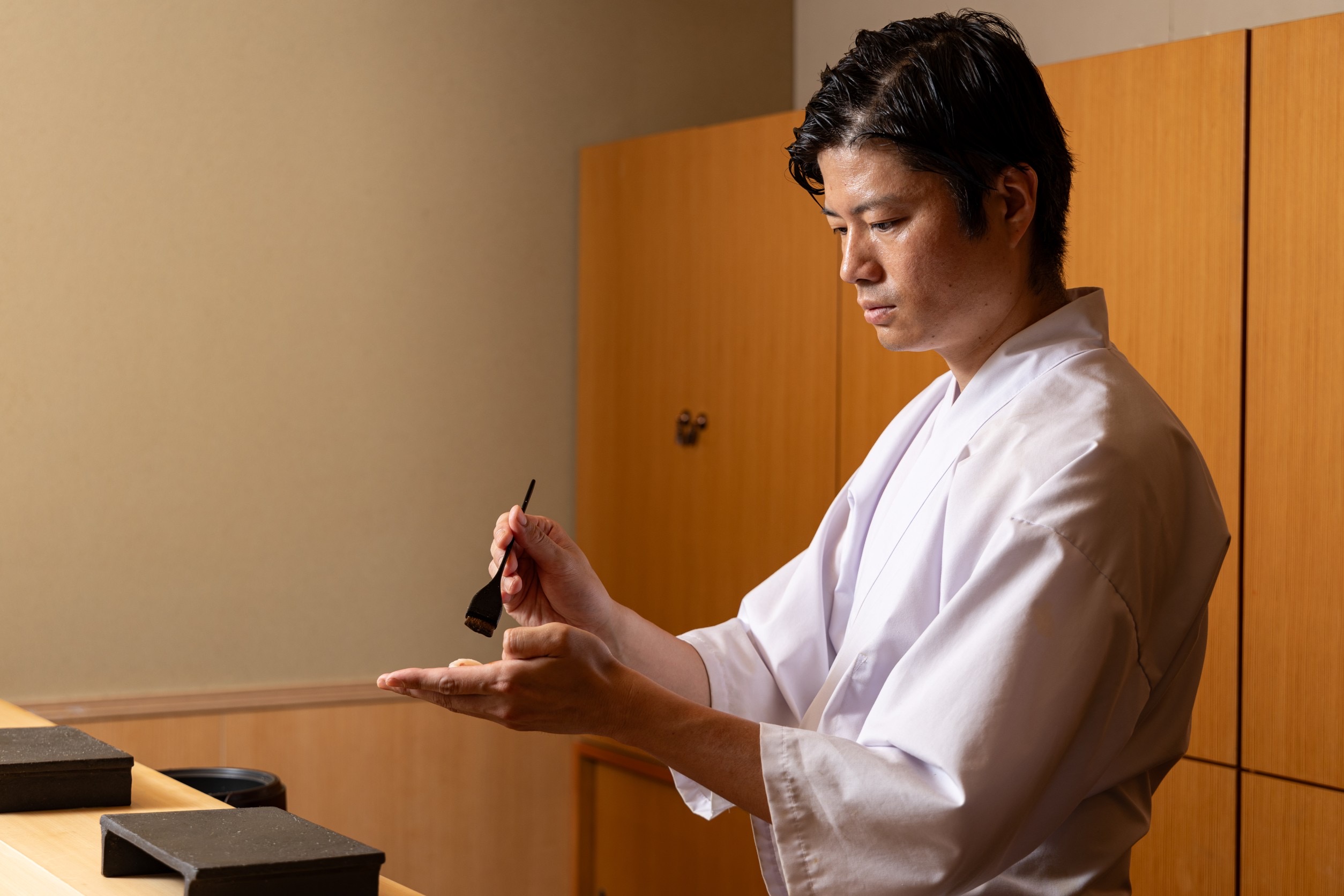
Reviewed by
Tatsuo TakadaHead chef and owner of Sushi Tanji. Trained in the Edomae tradition and rooted in Kyushu, he leads the eight-seat omakase counter in Oku-Akasaka, Tokyo, and reviews The Tokyo Sushi Guide.