Reviewed by Tatsuo Takada (owner-chef, Oku-Akasaka Sushi Tanji)
Part of The Tokyo Sushi Guide Updated Reading time about 6 minutes See the menu →
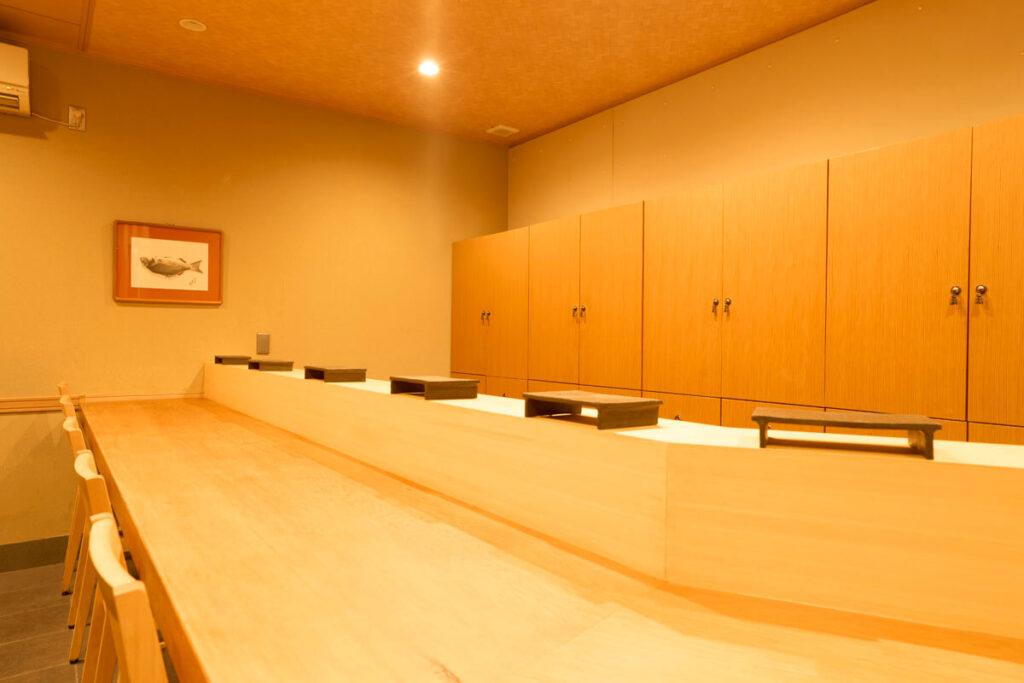
At an omakase counter, where the chef decides the meal, the part that draws a little nervousness is usually not the sushi itself but everything around it. What to wear. How early to arrive. Whether photographs are welcome. None of it is written down anywhere, which is exactly why it is easy to wonder. What follows sets out the small preparations generally valued at an Edomae counter, the Tokyo-bay style, along with the reasoning behind them. By the end, getting ready on the day should feel a shade lighter.
What you will learn
- Dress reads better as clean and understated than as formal
- Why scent is kept light and how far a fragrance carries at close quarters
- The preparation timetable behind the value placed on booking times
- An unhurried way to shape the minutes between arriving and sitting down
- Where a welcome photograph ends and an awkward one begins
- The single light layer that earns its place in July
Well Turned Out Is Enough
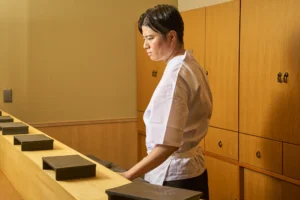
Few omakase counters in Tokyo publish a strict dress code. Even so, most guests arrive a little more considered than usual. That has less to do with formality than with proximity: eight or so seats, two hours or thereabouts, shared. A collared shirt, a close-knit jumper, well-kept leather shoes. That register settles into the room without effort.
Muted colours tend to make the choice simple. Bold patterns or a strong sheen stand out against pale hinoki (Japanese cypress) with its earthenware dishes. It helps to choose shoes on the assumption they will be seen. Where a meal closes with matcha in a tea room you may step up onto tatami matting; Sushi Tanji in Oku-Akasaka, Tokyo, is laid out with such a room.
Scent Is the Quietest Courtesy
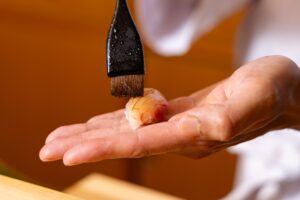
Scent is considered even more often than clothing. The flavour of sushi is built from fine differences: the lift of nikiri (brushed soy glaze) as it reaches the nose, shari (seasoned rice) held near body temperature, the faint sweetness of a white-fleshed fish. At a counter where your neighbour sits a few dozen centimetres away, perfume or styling product settles over your own piece as readily as theirs.
This is why many people leave fragrance aside altogether. Arrive close to unscented; put anything perfumed on once you have stepped back outside. Framed that way it becomes an easy thing. Fabric softener that lingers, hand cream, the trace of a cigarette all travel the same short distance. Wiping your hands on the oshibori (warm towel) set down at your place belongs to the same habit.
Keeping Time Is Keeping Flavour
Booking times are held closely because the preparation itself runs on a clock. Edomae work includes steps where the waiting is the seasoning: curing in salt, marinating, reducing soy with sake. Aged fish goes on changing character from the moment it is sliced. Shari is mixed while the rice is still hot, with only a narrow window in which it holds the right warmth.
Where the whole counter begins together, a fifteen-minute delay pushes the day’s sequence back to the very last piece. More so when another sitting follows. The care taken over time is less about discipline than about receiving the order the counter has arranged, exactly as it was arranged.
How the minutes before the start tend to fall
- Ten minutes before: find the doorIn the back streets of Akasaka, where houses sit among restaurants, signs are small and a map pin does not always land on the entrance.
- Five minutes before: let them know you have arrivedEven if you are early, a word at the door means someone can show you where to wait.
- On the hour: take your seatCoats and larger bags are handed over here. Wiping your hands, then settling on a drink, is the run-up.
- The moment you know you are late: telephoneA call saying how many minutes serves better than a rushed sprint. With that in hand, the counter can reshape the order of service before you arrive.
Photographs, Taken While the Piece Is Still Warm
Some counters welcome cameras; others would rather the phone stayed down. It is hard to read from outside, so a quiet question at the start settles it. Refusals are rarer than you might expect.
If you do take a photograph, brevity is the guide. Nigiri (hand-formed sushi) is at its best the instant it is placed, its expression shifting within ten or twenty seconds. Rather than hunting an angle by moving the dish, take one frame as it arrives. Flash, tripods and angles that catch other guests are all best left alone. Video and calls leave sound in the room, so most people step away from the counter first.
What Rests on the Counter, What Does Not
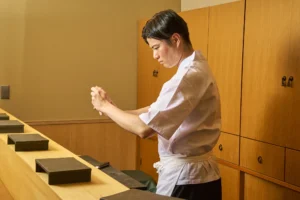
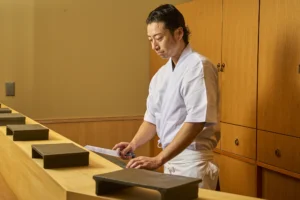
Hinoki absorbs moisture as well as odour, so most counters keep the polished pale wood clear. Phones, keys and bags go into the basket at your feet. Metal from a watch or a ring rings out against the top, which is why some guests mind where their cuffs sit.
In summer it is calming to blot away the heat of the walk before sitting down. Rather than hurrying a cold drink while still warm from the street, take a sip of hot tea first. That alone brings the first piece into focus.
July: What to Wear, What Is on the Counter
July brings the first shinko (young gizzard shad) alongside summer fish such as kisu (sillago), makogarei (marbled flounder) and awabi (abalone). Delicate flavours follow one after another, so the temperature of the shari and the scent of the nikiri come further forward.
As for dress, a linen or lightweight jacket earns its place this month. The difference between an air-conditioned room and the street outside is wide and two hours seated can leave the shoulders cool. Sitting on in a shirt that has absorbed the day’s heat is the one small regret of a summer counter. For the fish and the customs of other months, the articles in The Tokyo Sushi Guide are there as well.
Frequently asked questions
Can I wear jeans to an omakase sushi restaurant?
Clean jeans in a calm colour pass without comment at most counters. Leaving distressed denim, shorts and sandals at home, then adding a collared shirt or a jacket on top, settles the look into the room. A few places do publish a dress code, so the notes that come with your booking are worth a glance.
How far ahead should I leave off perfume?
The surest approach is simply not to wear any on the day. Fragrance lingers in fabric, so a shirt scented yesterday is best swapped for another. Choosing near-unscented styling products and hand cream helps too, with anything perfumed saved for after you leave.
I am going to be about ten minutes late. What should I do?
Telephone as soon as you know. Once the counter has a number of minutes to work with, the order of service can be reshaped and you will usually be waited for. Where everyone begins together the start itself may be held, so an early call widens the options.
May I photograph the sushi at the counter?
Asking first is the surest route. Even where it is welcome, nigiri shifts as the minutes pass, so one frame taken the moment it is placed is plenty. Flash, tripods and compositions that take in other guests or much of the room are generally set aside.
From the guide to the counter
Taste it at our eight-seat counter in Oku-Akasaka.
Classic Edomae craft with careful modern aging – served piece by piece, with English guidance for overseas guests.
Reserve at Sushi Tanji Explore The Tokyo Sushi Guide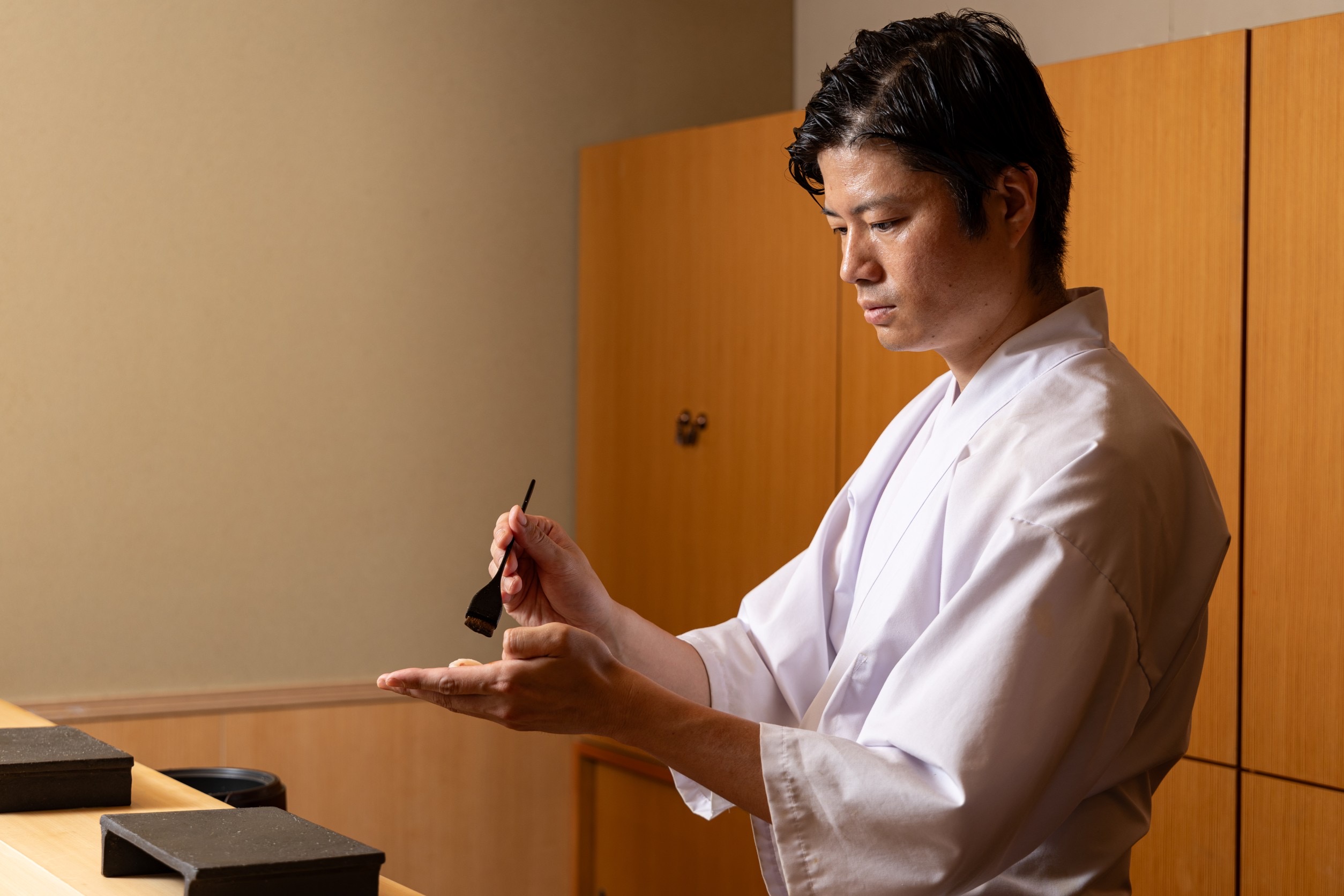
Reviewed by
Tatsuo TakadaHead chef and owner of Sushi Tanji. Trained in the Edomae tradition and rooted in Kyushu, he leads the eight-seat omakase counter in Oku-Akasaka, Tokyo, and reviews The Tokyo Sushi Guide.