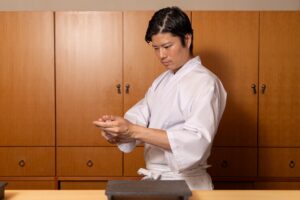

Reviewed by Tatsuo Takada (owner-chef, Oku-Akasaka Sushi Tanji)
Part of The Tokyo Sushi Guide Updated Reading time about 6 minutes See the menu →
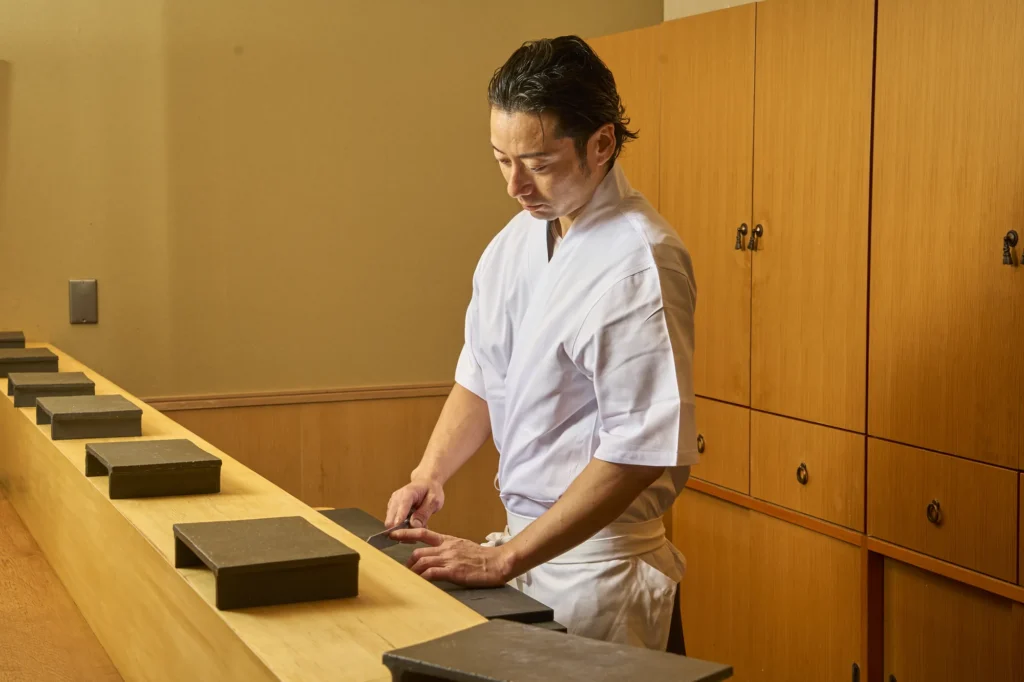
Somewhere between courses, you may have noticed that the rice beneath the fish carries the faintest blush of red. That is the work of akazu, a red vinegar born of sake lees. It spread through the street-stall sushi of old Edo. Now, as the ageing of fish finds new favour, it is being chosen once more. This article follows the story in order: what akazu is, why it became the vinegar of Edomae (old-Tokyo-style) sushi, then what sets it apart from white vinegar. By the last line, a single piece at the counter should seem a little more dimensional.
What you will learn
- What goes into akazu, plus how sake lees rested for years become kasuzu, the classic lees vinegar
- Why the street stalls of late Edo took red vinegar to heart
- How red differs from white: colour, acidity, the place of sugar
- Why akazu resonates with aged fish as well as cured or marinated toppings
- How today's counters blend the two vinegars or cook two kinds of shari
- Where to rest your attention when red shari appears on a July counter
Akazu: the amber vinegar born of sake lees
Akazu, literally red vinegar, is brewed from sake lees. It also goes by the name kasuzu, lees vinegar. When freshly pressed white lees rest in the brewery for several years, they turn from caramel to near black, quietly gathering the compounds that will become umami. Loosened with water then fermented, they yield akazu. The colour is a pale amber. The acid is rounder than that of rice vinegar, with the faintest breath of maturity in the aroma.
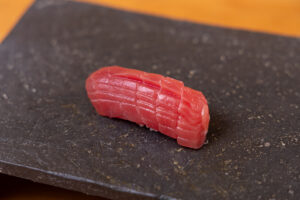
Rice seasoned with this vinegar takes on a soft blush, which is why it is sometimes called red shari, shari being the seasoned rice at the heart of every piece. It is far less red than the name implies. Seen in person, it is a refined shade of faint amber.
Why Edo's street stalls chose red vinegar
Nigiri took hold at the street stalls of Edo, as Tokyo was then called, in the early decades of the nineteenth century. Vinegar brewed from rice was expensive at the time, awkward for a trade conducted daily at speed. Into that gap came kasuzu, made from the lees left over from sake brewing. It was modest in cost yet deep in umami. Even in an era when sugar was precious, salt alone completed the seasoning of the rice. Thrift lived comfortably beside flavour in a single vinegar.
The difference from white vinegar: acidity, colour, sugar
The white vinegar in wide use today is rice vinegar, brewed from the grain itself. A different raw material naturally invites a different design of flavour. White vinegar is prized for a bright, straightforward acidity, often rounded with a measure of sugar. Akazu is calmer in its acid, letting umami with a certain richness step forward. Some houses restrain the sugar for that reason. Some season with nothing but salt plus vinegar.
| Aspect | Red-vinegar shari | White-vinegar shari |
|---|---|---|
| Raw material | Sake lees rested for several years | Rice |
| Colour | Pale amber to a light russet | Close to white |
| Acidity | Rounded, gentle | Bright, clean-edged |
| Centre of the flavour | Umami with richness | Clean, refreshing acidity |
| Sugar | Restrained, sometimes absent altogether | Often added for roundness |
Neither sits above the other. The vinegar changes with the toppings it will meet, with the picture of flavour each house sets out to draw.
Why aged fish answers red vinegar
Behind the growing number of counters returning to akazu lies the spread of ageing as a craft. When fish rests for the right span at the right temperature, savoury compounds such as inosinic acid increase. The flavour gains depth along with a firmer outline. Against that depth, a crisp white-vinegar shari can struggle to find its balance. The denser umami of red vinegar meets it precisely.
In truth, none of this is new. The classic Edomae disciplines, kohada (gizzard shad) tightened in vinegar, tuna steeped in soy as zuke, were always ways of giving a topping umami together with definition. Red-vinegar shari has kept company with such worked toppings from the start. Seen as the modern extension of that lineage, ageing makes the affinity feel less like fashion than a quiet homecoming.
Beyond red or white: the modern art of blending
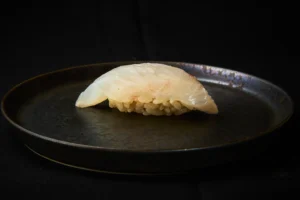
Red or white is how the question tends to be framed, yet the counter itself holds many quieter answers in between. Some houses blend akazu with rice vinegar to soften the edge of the acid. Others cook two kinds of shari, matching white vinegar to delicate white fish while keeping akazu for marinated or aged pieces. The choice reads less as a declaration of school than as a tuning to the day’s fish. Even the same akazu changes its expression with the salt, with the blend of vinegars.
Tasting red shari at the counter in July
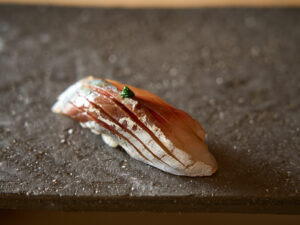
By July, the summer fish begin to arrive: shinko (the first young gizzard shad of the season), aji (horse mackerel), kisu (a delicate whiting). Shinko tightened in vinegar, set upon red shari, is one of the quiet pleasures of an Edomae summer. Before a piece reaches your mouth, spare a single breath for the colour of the rice, then for its fragrance. A faint amber cast may well be akazu at work.
When you visit a counter that joins classic Edomae technique with careful ageing, such as Sushi Tanji in Tokyo’s Oku-Akasaka, try tasting how the shari balances against each topping. The view of a single piece changes. No difficult etiquette is required. Asking the chef about whatever catches your curiosity is part of the pleasure of the counter.
Frequently asked questions
Is red-vinegar shari very sour?
Quite the opposite: the acidity is gentle. Akazu leads with the umami plus the richness it inherits from sake lees. On the palate the acid keeps its edges soft, settling quietly over the finish of the fish. There is no sharpness to brace for.
The rice looks brownish. Is that because the rice is old?
No. The colour comes from the vinegar itself. Akazu brewed from lees rested over several years carries a pale amber, which passes into the rice. Far from a sign of decline, it is the mark of a preparation standing in the Edomae line.
Which is finer, red vinegar or white?
Neither: they are different designs rather than different grades. A house that wants clean acidity to lift delicate fish may reach for white vinegar. One drawing alongside aged or marinated toppings may reach for red. Some cook both, matching each to the piece at hand.
Can I make red-vinegar shari at home?
Yes, with a bottle of akazu from a well-stocked shop. Because the vinegar carries umami of its own, the usual guide is a light hand with sugar alongside a slightly firmer hand with salt. Replacing part of your usual seasoning vinegar with akazu, then comparing the aroma, is a pleasant place to begin.
To book a seat at our counter, see reservations on our home page.
From the guide to the counter
Taste it at our eight-seat counter in Oku-Akasaka.
Classic Edomae craft with careful modern aging – served piece by piece, with English guidance for overseas guests.
Reserve at Sushi Tanji Explore The Tokyo Sushi Guide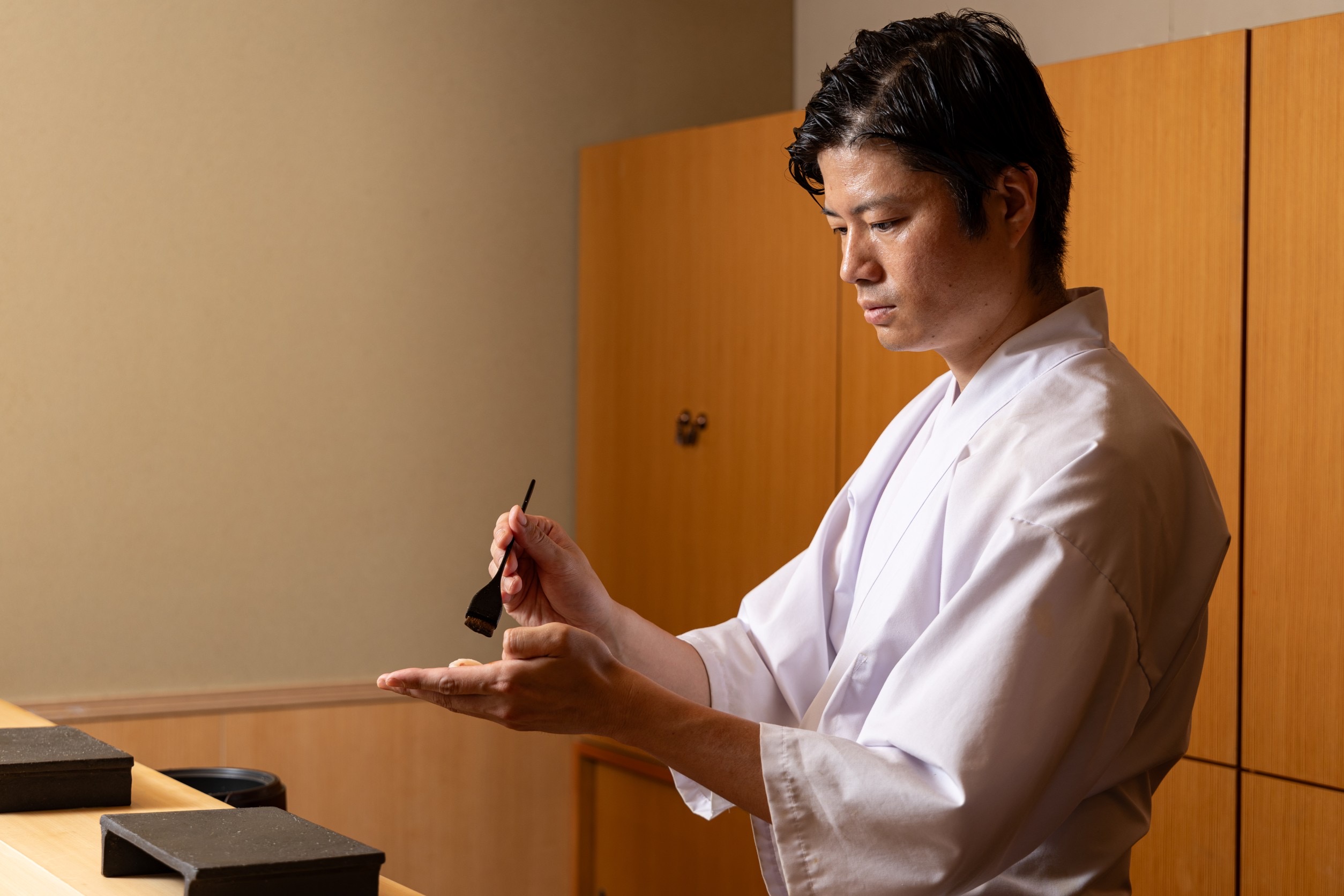
Reviewed by
Tatsuo TakadaHead chef and owner of Sushi Tanji. Trained in the Edomae tradition and rooted in Kyushu, he leads the eight-seat omakase counter in Oku-Akasaka, Tokyo, and reviews The Tokyo Sushi Guide.