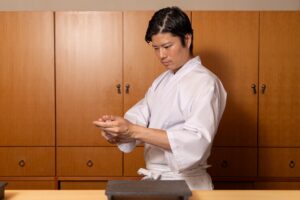

Reviewed by Tatsuo Takada (owner-chef, Oku-Akasaka Sushi Tanji)
Part of The Tokyo Sushi Guide Updated Reading time about 6 minutes See the menu →
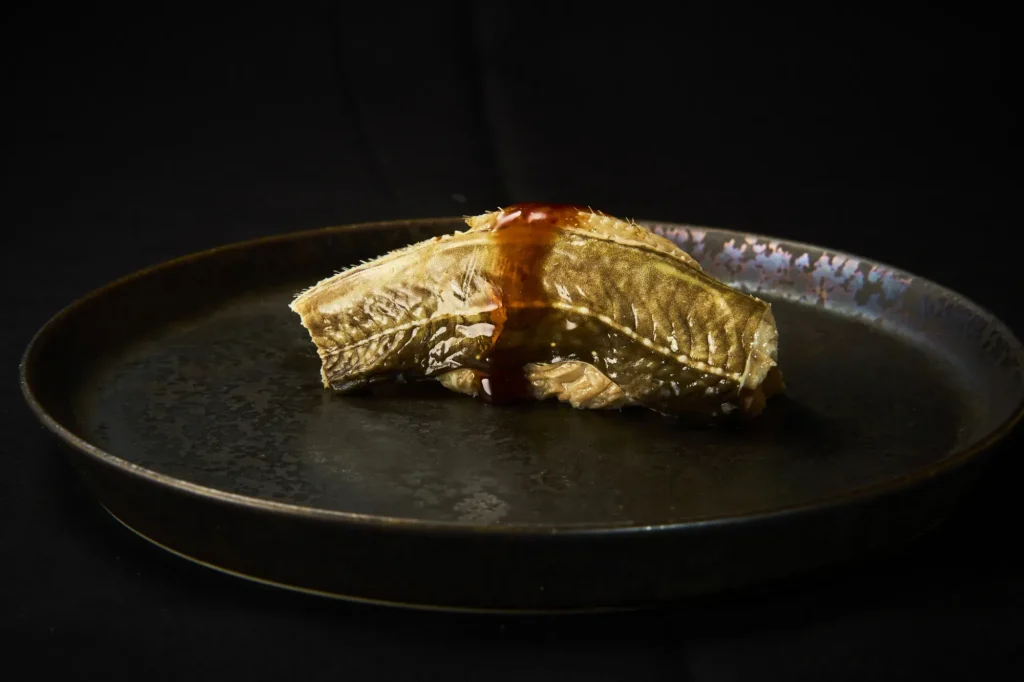
Curing, marinating, simmering, steaming, searing, ageing: these are the six works of Edomae sushi. In an Edo without ice or refrigeration, they were the means by which a day’s catch was made to keep long enough to sell. They remain on the counters of Tokyo. What follows is a look at what each one changes in a fish.
In short
Edomae sushi is not a contest of freshness but a body of technique for drawing flavour from a fish. Six works have been refined over generations: curing, marinating, simmering, steaming, searing, ageing. Each exists to reach a savour that raw fish alone does not offer.
What you will learn
- The six techniques that shigoto covers, plus how they differ from one another
- Why the time a fish spends in salt then vinegar shifts from fish to fish
- How zuke turned from a way of keeping fish into a way of seasoning it
- Which fish suit simmering or steaming, plus what nitsume really is
- Why searing aims at melting fat rather than at cooking
- The handling of blood with water that ageing depends upon
What Shigoto Means at an Edomae Counter
Sushi took something close to its present shape in the late Edo period, an age with no ice, no refrigeration. Fish landed in Edo Bay had to be sold within a few days, so the artisans of the day salted it, steeped it in vinegar, laid it in soy, simmered it, steamed it. The collective name for this handling is shigoto, the work done to a fish.
The six usually named today are curing, marinating, simmering, steaming, searing, then ageing. The first five are classics carried down from Edo. Ageing was codified more recently, as distribution alongside cold storage changed.
| Work | Fish it suits | What changes |
|---|---|---|
| Shime (curing) | Kohada, mackerel, horse mackerel | Moisture leaves, the flesh firms, a vinegar fragrance settles in |
| Zuke (marinating) | Lean tuna, white-fleshed fish | Soy savour enters; the flesh takes on a supple cling |
| Ni (simmering) | Conger eel, clam, octopus | Fibres loosen as the sweetness of the broth moves in |
| Mushi (steaming) | Abalone, conger eel | Firm flesh softens; the aroma rises |
| Aburi (searing) | Nodoguro, Spanish mackerel, golden eye snapper | Fat beneath the skin melts, adding a toasted note |
| Jukusei (ageing) | Tuna, white-fleshed fish, shellfish | Moisture withdraws while savoury compounds build |
Shime: Drawing Water Out with Salt then Vinegar
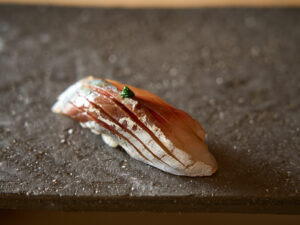
Shime is the work of salting a fish to draw out moisture, then settling it in vinegar. It belongs above all to hikarimono, the silver-skinned fish, with kohada (gizzard shad), mackerel, horse mackerel at the head of the list.
- SaltingSalt is laid over the flesh to draw off surplus water together with whatever carries a fishy edge.
- Into the vinegarThe salt is rinsed away, the fish lowered into vinegar. Here the flesh firms as a clean acidity enters.
- Letting it settleRather than shaping it at once, the chef lets it rest so the acidity softens. Edges round off; the flavour draws together.
Time in salt then vinegar shifts with the size of the fish, how much fat it carries, the temperature of the day. Shinko, the August juvenile of kohada, is only a few centimetres long, so it takes the briefest touch of each. The same fish grown to autumn size may take more than twice as long. There is no set number of minutes. The chef reads the flesh.
Zuke: Letting Soy into the Flesh
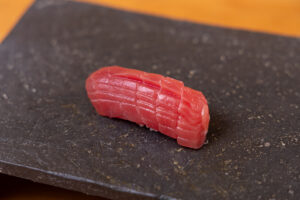
Zuke means settling fish into a bath of soy blended with simmered-off sake plus mirin. Lean tuna is its most familiar subject.
In the age before refrigeration, tuna spoiled quickly; by most accounts the fattier cuts were the ones people cared for least. Steeping the fish in soy kept it sound for longer. Yet the marinated lean flesh turned a deep adzuki red, took on a supple cling, released more savour the longer it was chewed. What began as a means of keeping fish stayed on as a means of seasoning it.
The strength of the bath alongside the length of the steeping differ from house to house. Some pass only the surface through; others carry the seasoning to the core. Under one word, zuke, a single piece can leave quite different impressions.
Ni and Mushi: Cooking to Loosen
Conger eel, anago, is the emblem of the simmered work. It is cooked in a broth of sake, soy, sugar until it parts under chopsticks. Reduced further, that broth becomes nitsume, the sweet glossy glaze brushed over the piece as it is served. Clams are often passed through the broth then finished in their own residual heat, so the flesh is never overtaken by the fire.
Steaming belongs above all to abalone. Given long time in the steamer with sake plus kombu, flesh that is firm when raw turns yielding as the scent of the shore rises. Summer is its season, so in August the counter may serve it with a sauce built on its own liver.
Aburi: Fire for the Skin and the Fat Alone
Aburi puts flame to the skin side or to the surface of the flesh only. Straw or charcoal is sometimes used, carrying its own fragrance into the fish.
The aim is not to cook but to melt the fat lying beneath the skin. Fish that store fat close to the skin, nodoguro (blackthroat seaperch), Spanish mackerel, golden eye snapper, need only a breath of heat for the aroma to lift, for the way they yield in the mouth to change. Whether the fish is chilled in iced water afterwards or shaped straight away also tells in the finish.
Jukusei: Making Time Itself the Work
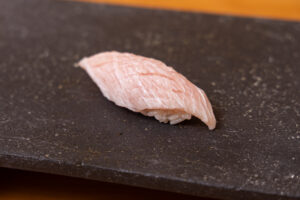
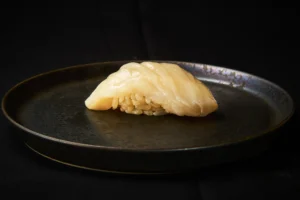
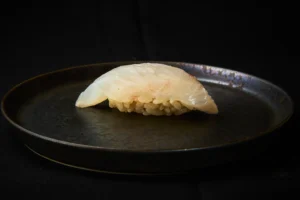
Jukusei is the work of letting a fish rest so that moisture withdraws while its savoury compounds build. Unlike curing or marinating, it adds nothing to the fish. It handles the passing of time.
Everything rests on the handling of blood together with water. Flesh that still holds blood is difficult to keep, so the precision of the initial dressing governs much of the result. Methods such as the Tsumoto technique have spread in recent years, widening the span over which a fish can be held. At Sushi Tanji, in the quiet reaches of Akasaka, that technique is part of the practice, with the suitable period and temperature judged fish by fish.
The right length differs by species: white-fleshed kinds tend to be shorter, while tuna alongside certain shellfish may be held far longer. Bleeding a fish then dressing it are means rather than ends. The spine of the technique is the judgement of the moment at which a given fish tastes best.
How the Six Works Read at the Counter
All six rarely appear in a single meal. The season together with the day’s buying decide which works come alive. In August you are likely to meet shinko under salt then vinegar, steamed abalone, simmered conger eel within the same sitting.
There is no need to prepare for any of this. If something catches your attention, ask what work went into it; most chefs are generous with an answer. Many guests feel the question is hard to raise, though a short word just after a piece is set down sits easily within the rhythm of the meal.
Edomae sushi is often taken for fresh fish sliced then laid over shari, the seasoned rice. It is closer to the opposite. Once you begin to notice what has been done to the fish, each piece looks different.
Frequently asked questions
Does Edomae sushi not use raw fish?
A great many pieces are shaped from raw fish. What sits at the centre of Edomae, though, is choosing the handling that suits a particular fish rather than leaving it untouched. Cured pieces, marinated pieces, raw pieces commonly share the same counter within one meal.
What is the difference between shime and zuke?
Shime draws water out with salt then vinegar so the flesh firms; zuke carries seasoning in through a bath built on soy. Shime tends to go to silver-skinned fish such as kohada or mackerel, zuke to lean tuna. The change each one seeks differs too: one takes water out of the flesh, the other puts savour in.
Does aged fish mean fish past its freshness?
It is a different thing from fish that has simply grown old. Ageing means dressing the blood alongside the water, managing temperature with duration, then resting the fish towards the point where its savour is greatest. The process is nothing like neglect, with a suitable span that shifts from fish to fish.
Will all six works appear in a single meal?
More often than not they will not. An omakase takes its shape from the day’s buying together with the season, so steaming alongside curing stand out in summer, while ageing plus marinating come forward in winter. Following what has been done to each piece tells you a great deal about how a house thinks.
Where can I read more about the six works?
Pieces on individual fish along with seasonal reading are gathered in The Tokyo Sushi Guide. Each technique touched on here, the curing of kohada, the marinating of lean tuna, the thinking behind ageing, has an article of its own.
From the guide to the counter
Taste it at our eight-seat counter in Oku-Akasaka.
Classic Edomae craft with careful modern aging – served piece by piece, with English guidance for overseas guests.
Reserve at Sushi Tanji Explore The Tokyo Sushi Guide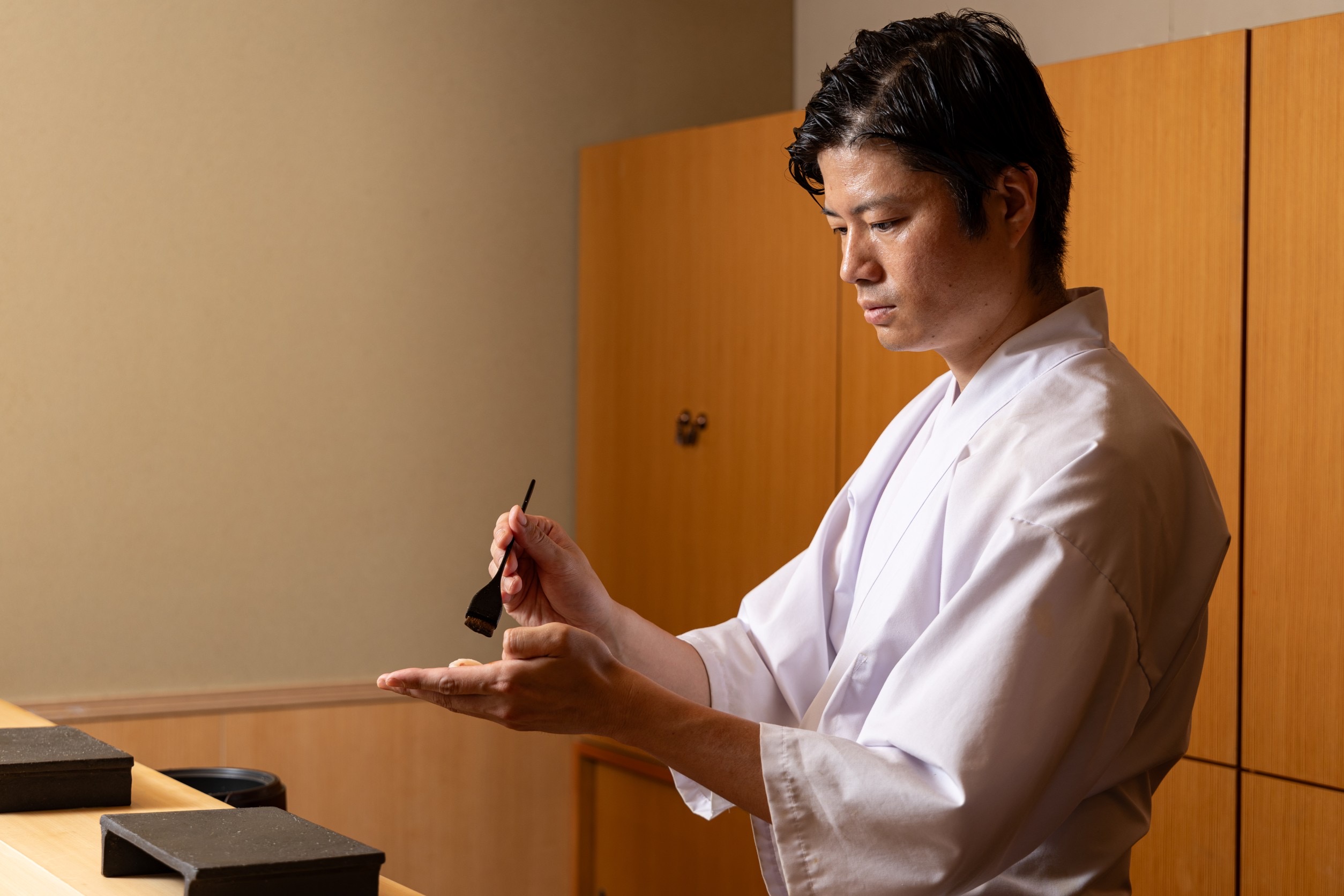
Reviewed by
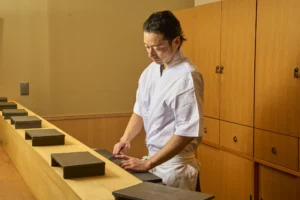
Tatsuo TakadaHead chef and owner of Sushi Tanji. Trained in the Edomae tradition and rooted in Kyushu, he leads the eight-seat omakase counter in Oku-Akasaka, Tokyo, and reviews The Tokyo Sushi Guide.