

Written by Oku-Akasaka Sushi Tanji, an omakase counter in Akasaka, Tokyo.See the menu →
In Edomae sushi, shigoto (the work) refers to four kinds of preparation: curing, marinating, simmering and ageing. The words on the day’s list, kohada (gizzard shad), zuke (soy-marinated tuna) or nihamaguri (simmered clam), each point to one of the four. We will take them in turn. By the end, the single piece set down in front of you should carry some sense of the hands it has passed through.
In short
Edomae work divides into four: curing, marinating, simmering and ageing. Each began as a way of keeping fish sound in an age before refrigeration. Today they survive as techniques for drawing out what a fish has to offer while bringing it into balance with the shari, the seasoned rice.
What you will learn
- What the word shigoto covers: born as preservation, kept on as a matter of flavour
- Curing in two stages. What the salt draws out, what the vinegar puts in
- Marinating: the range of times a slice rests in nikiri soy, plus what happens when it rests too long
- Simmering: how conger eel and clam meet the heat, along with the difference between tsume and nikiri
- Ageing: resting fish that has been carefully handled, plus why the number of days shifts by species
- How the four techniques appear, in order, at an August counter
Edomae shigoto: the hands a fish passes through
When shigoto appears on an Edomae list, it refers to the preparation given to the fish. Rather than simply slicing it and forming the piece, the chef salts it, passes it through vinegar, steeps it in soy, simmers it in a light stock or lets it rest. In a city with neither ice nor refrigeration, this began as the knowledge that carried the morning’s catch through to the following day.
The need for preservation has faded, yet the four survive because some fish stand taller for having been worked. Salt draws off water together with any coarse smell; vinegar firms the flesh while lending it fragrance. Soy travels inward slowly. Heat loosens the fibres. Every one of them is a step towards a flavour that balances the shari, resting on the idea that a piece of nigiri is fish plus rice, two things made one.
| Technique | What is done | Fish often treated this way |
|---|---|---|
| Curing | Salted to draw off water, then passed through vinegar | Kohada, mackerel, horse mackerel, sillago |
| Marinating | Steeped in nikiri soy so the flavour enters | Lean tuna, some white-fleshed fish |
| Simmering | Cooked in a lightly sweetened stock, then brushed with tsume | Conger eel, hard clam, octopus |
| Ageing | Rested under managed temperature over time | Tuna, white-fleshed fish such as sea bream |
Curing: what the salt draws out, what the vinegar puts in
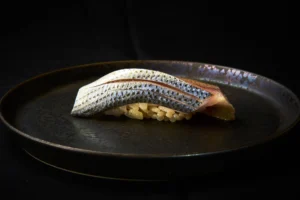
Hikarimono, the silver-skinned fish, are handled in two stages. Salt comes first, either scattered directly over the flesh or dissolved in a brine the fillets are laid into. Both draw off surplus moisture while carrying away any coarse smell. Vinegar follows. The flesh tightens, the weight of the fat loosens, a fragrance settles in. Salt has one task and vinegar another; on its own neither amounts to a cure.
- Butterfly the fish and lift the bonesSmall bones sit differently in every species, so they are traced with the pad of a finger and drawn out one by one.
- Apply the saltThickness and fat decide the timing. Even two fillets from the same catch on the same day may call for something different.
- Rinse, then into the vinegarThe salt is washed away before the fish meets the vinegar. Some are lifted out after a matter of seconds; others are left to steep.
- Let it settleNothing is formed straight away. The fish is left until the flavours have come together, which is as much part of the work as the rest.
Kohada is the fish on which this judgement shows most plainly. By August the shinko of early summer have grown towards a size that earns the name kohada. As the flesh thickens the salting and the vinegaring shift with it, so the same line on the same list can taste noticeably different in July than it does in August.
Marinating: soy finding its way inward
Zuke began as a way of keeping lean tuna in the days before ice. What it uses is nikiri: soy brought to the boil with sake plus mirin, its edges taken off, its savour drawn together. It meets fish more gently than raw soy does.
The steeping runs from a few minutes to a quarter of an hour, according to the thickness of the slice as well as its fat. A long marinade carries flavour deep, though the flesh firms up while the salt can come forward more than one might wish. The opposite approach seasons only the surface, leaving the centre with the scent of the tuna itself. Neither is the right answer. It is a question of the fish that day alongside the thinking of the house.
Simmering: conger eel, clam and a stroke of tsume
Edomae is not a world of raw fish alone. Cooking has been one of its pillars from early on. Anago (conger eel) is stripped of its slipperiness along with its bones, then simmered briefly in a thin stock of soy, sake plus a restrained measure of sugar, until it comes up soft. Hamaguri (hard clam) shrinks and toughens if given too much heat, so one approach is to slip it into the boiling stock, cut the flame at once, letting the residual warmth carry it through as it cools.
Reduce that simmering liquid and you have tsume. A single stroke of the brush is enough to join the sweetness of the cooked flesh to the fragrance of the piece. Tsume is often confused with nikiri, though they are different things: nikiri is a soy-based glaze; tsume is a sweet reduction of the cooking liquid. Both come from the same thought, which is that the chef takes on the seasoning so the guest need not reach for the soy dish.
Ageing: judging how long to let a fish rest
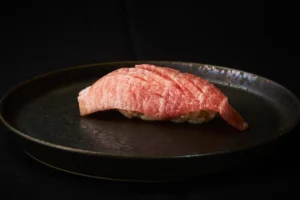
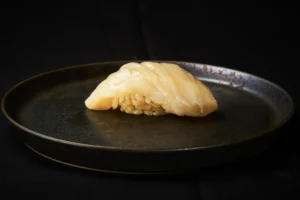
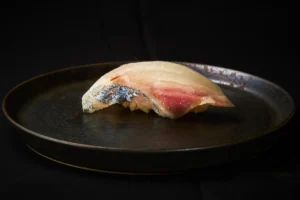
Of the four, ageing wears the newest face. A fish that has been bled and dispatched with care is then rested under managed temperature plus humidity, during which the flesh changes in composition as its savour deepens. The number of days follows the species, the size, the fat: delicate white-fleshed fish rest briefly, while a large tuna is given far longer. It is not a matter of applying one figure to everything.
At Sushi Tanji in Oku-Akasaka, Tokyo, classical Edomae work is paired with ageing informed by the Tsumoto method, the optimal period and temperature judged species by species. Bleeding and preparation are means rather than ends: the fish is aged as suits it, then served at the moment it tastes best. The house frames ageing this way because resting, once it becomes the point in itself, tends to lead away from what the fish has to offer.
Meeting the four at an August counter
Across the course of an omakase, the four appear in turn. Vinegar-cured silver-skinned fish tend to come early, zuke of lean tuna around the middle, simmered clam or conger towards the end, with aged pieces set among them. In August the season shows itself in kohada grown on from shinko, in anago filling out, in the first of the young squid.
There is no need to feel on the back foot if the words are unfamiliar. Ask what work has gone into a piece and most chefs will answer briefly, with evident pleasure. Articles that go deeper into each technique are gathered in the Tokyo Sushi Guide. Beginning with whichever technique caught your interest seems a fine way in.
Frequently asked questions
What does shigoto mean in Edomae sushi?
It is the general term for the preparation given to a fish, falling into four groups: curing, marinating, simmering plus ageing. The practices arose in an Edo without refrigeration as a way of keeping fish sound. They continue today as techniques for drawing out a fish’s character while bringing it into balance with the shari.
How does curing differ from marinating?
Curing uses salt with vinegar to draw off water while firming the flesh, most often on silver-skinned fish such as kohada or mackerel. Marinating steeps the fish in nikiri soy so that flavour enters, lean tuna being the classic example. One takes something away; the other puts something in.
Are nikiri and tsume the same thing?
They are different. Nikiri is a glaze of soy brought to the boil with sake plus mirin, brushed onto white-fleshed fish or lean tuna. Tsume is a sweet reduction of the liquid in which conger eel or clam has been simmered, spooned over those pieces. What they share is that the chef settles the seasoning before the piece reaches you.
How does aged sushi differ from sushi served fresh?
Resting changes the composition of the flesh, so savour tends to deepen while the edges of the flavour round off. The texture shifts too, from a tight springiness towards something that settles softly on the tongue. Because the number of days depends on species as well as size, the same fish arrives differently from house to house.
Do all sushi restaurants still use the full range of Edomae work?
Approaches differ. Some houses draw on all four techniques; others trust the freshness of the material, keeping preparation light. The shape of the omakase, along with whether pieces arrive already brushed with soy, tends to reveal where a place stands.
From the guide to the counter
Taste it at our eight-seat counter in Oku-Akasaka.
Classic Edomae craft with careful modern aging – served piece by piece, with English guidance for overseas guests.
Reserve at Sushi Tanji Explore The Tokyo Sushi Guide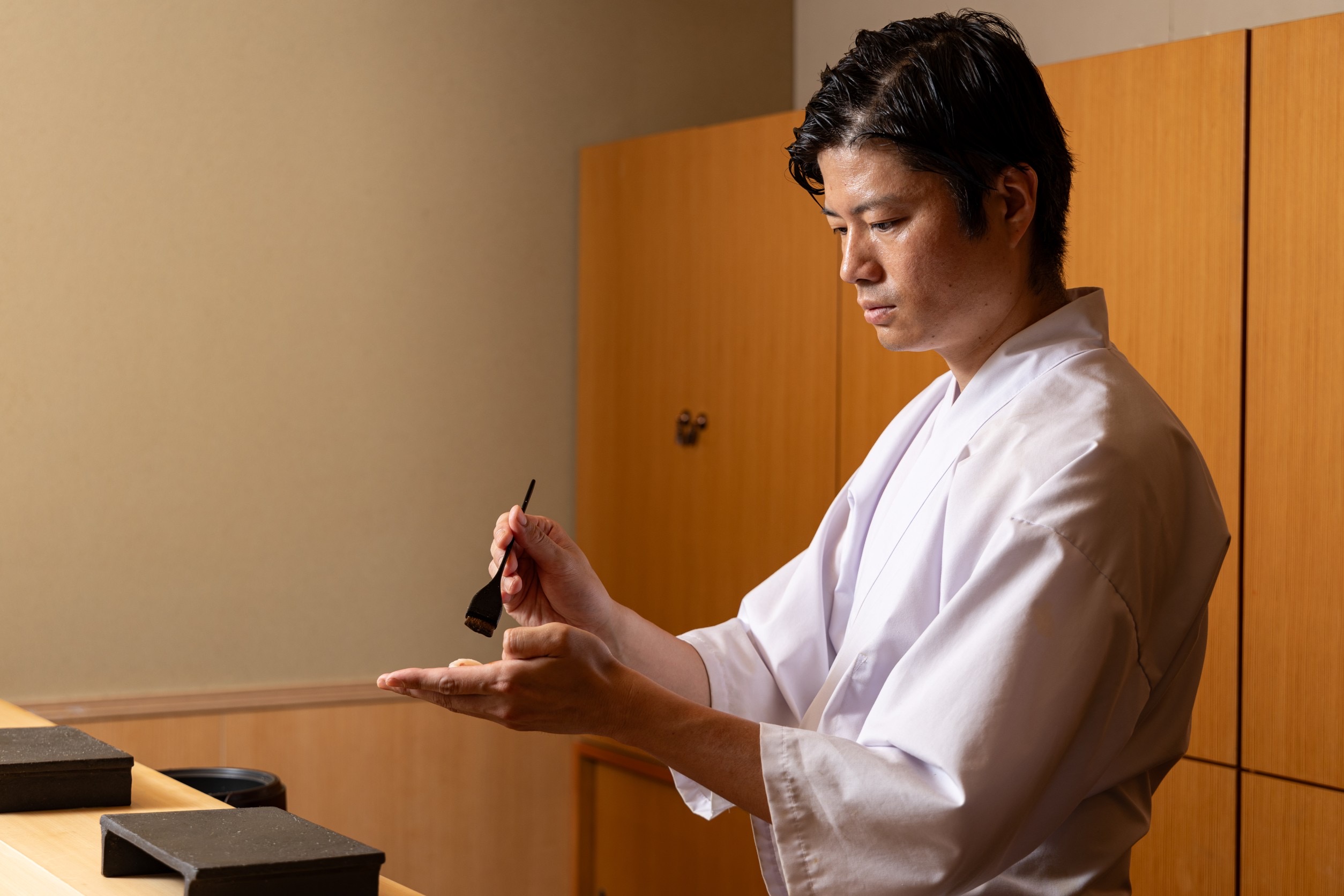
Reviewed by
Tatsuo TakadaHead chef and owner of Sushi Tanji. Trained in the Edomae tradition and rooted in Kyushu, he leads the eight-seat omakase counter in Oku-Akasaka, Tokyo, and reviews The Tokyo Sushi Guide.