Written by Oku-Akasaka Sushi Tanji, an omakase counter in Akasaka, Tokyo.See the menu →
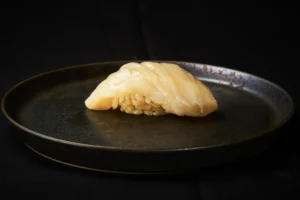
Kobujime (kelp-curing) is a preparation of Edomae (the old Tokyo style) in which lightly salted white fish rests between sheets of kelp for a few hours or up to a day. A quiet white fish gains presence as a single piece of sushi because the kelp draws off water then leaves umami in its place. This article follows how that works, the rough curing times for kisu, hirame, tai plus other fish, then the way kobujime meets the white fish of August.
In short
Kobujime is an Edomae preparation in which lightly salted white fish rests between kelp, taking on the glutamate the kelp carries. Water leaves the flesh so the flavour concentrates; the fish’s own inosinate meets the umami of the kelp, giving a depth that raw fish alone does not reach.
What you will learn
- How glutamate in kelp meets inosinate in fish to deepen umami
- Why the fish is lightly salted first, plus why the kelp is dampened with sake
- Rough curing times for kisu, hirame, tai and squid, with how each one turns out
- The characters of ma-konbu, Rishiri and Rausu kelp when matched to white fish
- Why the watery white fish of August suits kobujime, plus how to meet it at the counter
What kobujime actually involves
Kobujime is a preparation in which a filleted white fish is salted lightly, then laid between sheets of dampened kelp to rest under refrigeration. Kelp travelled south on the old northern shipping routes, so the technique took root as home cooking along the Japan Sea coast; Edomae sushi has drawn on it for white fish for a very long time.
While the fish rests, two things happen at once. The kelp draws moisture out of the flesh. In its place, the umami of the kelp moves in. This is why a white fish that tastes merely faint as sashimi arrives with a clear outline once it is served as sushi.
How the umami deepens
The backbone of kelp’s savour is glutamate; the backbone of a fish’s is inosinate. When the two meet in the same mouthful, umami reads more strongly than either does alone. Kobujime is the work of building that overlap into a single piece.
The second effect is dehydration. Summer white fish carries a great deal of water, which can leave the flavour a little diffuse. Once some of that water has passed into the kelp, the taste concentrates; the piece then holds its own against the shari (seasoned rice). The texture shifts too, taking on a gentle, resilient chew.
How the work runs at the counter
The steps themselves are simple. The judgement lies in knowing where to stop.
- Fillet then dryThe fish is filleted, the skin drawn off, the surface patted carefully dry.
- Salt lightlyA light salting rests for a short while, drawing off surplus moisture along with any raw edge.
- Soften the kelpDry kelp is wiped with a cloth dampened in sake until it turns supple again.
- Wrap then restThe fish sits between the kelp in the refrigerator for whatever time that particular fish asks of it.
- Lift at the right momentScent plus firmness are checked, then the fish leaves the kelp before the flavour travels too far.
Used dry, kelp pulls out too much water; the flesh stiffens. Dampening it with sake brings it back to a supple state while lending a quiet aroma of its own.
Fish by fish, a sense of the timing
Curing time follows the thickness of the flesh together with its fat. The thinner the fish, the shorter the rest; the thicker, the longer. The figures below are the usual bearings for Edomae white fish. They move a little with the condition of the day’s catch.
| Fish | Rough timing | How it turns out |
|---|---|---|
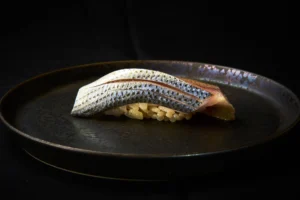
| Kisu (sillago), sayori (halfbeak) | Thirty minutes to two hours | The aroma stays; the flesh firms only slightly |
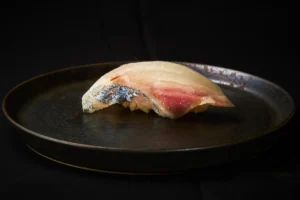
| Hirame (flounder), makogarei (marbled sole) | Three hours to half a day | Sweetness comes forward; the bite turns supple |
| Tai (sea bream), suzuki (sea bass) | Half a day to a full day | Flavour concentrates; the texture grows dense |
| Aori-ika (bigfin reef squid), sumi-ika (golden cuttlefish) | One hour to half a day | Sweetness rises; the knife scores the flesh more readily |
Longer is not better. When the kelp goes in too deeply, the name of the fish disappears; only kelp remains. Plenty of chefs will say the final check is not the clock but the scent of the flesh under the fingertips.
Choosing the character of the kelp
Kelp carries a character particular to where it grew. Ma-konbu is gently sweet with a refined edge; Rishiri offers a clear aroma alongside a limpid umami; Rausu is dark as well as assertive. For lean white fish, ma-konbu or Rishiri tends to be the choice.
Thicker kelp gives more umami, though it also holds more power to erase the outline of the fish. Pair a delicate kisu with a strong kelp for too long: nothing but the kelp is left. The thinking runs the other way round. Rather than fitting a fish to the kelp, choose the kelp that suits the fish.
August white fish and the kelp
In August the counter fills with the white fish of summer: suzuki, kisu, makogarei, aori-ika. As the water warms, these fish carry more moisture; the flesh slackens easily. This is the season in which kobujime does its finest work.
At Sushi Tanji in Oku-Akasaka, bleeding or dressing a fish is not treated as an end in itself. Each fish is given the rest that suits it, then served at the moment it tastes best. Kobujime belongs to that same line of thinking.
Meeting it at the counter
A piece of kobujime already carries its seasoning from the salt together with the kelp. Nikiri (the brushed soy glaze) is usually applied with restraint, so further soy is rarely wanted. Sometimes the piece arrives with sudachi (a small green citrus), salt or wasabi alone.
There is no need to feel caught out by an unfamiliar presentation. Take the piece as it comes, then follow the sweetness of the fish that lingers once the scent of the kelp has drawn back. More on Edomae preparations appears in our sushi reading.
Frequently asked questions
How long is fish left between the kelp?
It follows the thickness of the flesh. Thin fish such as kisu or sayori take thirty minutes to two hours; hirame plus makogarei want three hours to half a day; thicker fish such as tai or suzuki sit for half a day to a full day. Longer is not better, so the fish is lifted before the kelp overtakes it.
Which fish suit kobujime?
Lean white fish are the heart of it. Kisu, sayori, hirame, makogarei, tai plus suzuki all appear often. Squid such as aori-ika as well as sumi-ika take to it too, gaining sweetness. Richer fish like maguro (tuna) or buri (yellowtail) are seldom treated this way.
How does kobujime differ from ageing?
The aims overlap; the routes differ. Ageing waits for the fish’s own enzymes to build savoury compounds. Kobujime brings umami in from the kelp while drawing water out. The two are sometimes combined.
Is soy sauce used with kobujime sushi?
In most cases it is not needed. Salt together with kelp has already seasoned the fish, so at the counter nikiri is brushed on lightly; often the piece comes with sudachi or salt alongside. Tasting it just as it arrives is a good place to begin.
Can kobujime be made at home?
It can. Salt a sashimi block lightly, leave it about thirty minutes, pat it dry, then set it between kelp that has been wiped with a cloth dampened in sake and rest it in the refrigerator. For a first attempt, tasting at around two hours makes it easy to find the degree of curing you like.
From the guide to the counter
Taste it at our eight-seat counter in Oku-Akasaka.
Classic Edomae craft with careful modern aging – served piece by piece, with English guidance for overseas guests.
Reserve at Sushi Tanji Explore The Tokyo Sushi Guide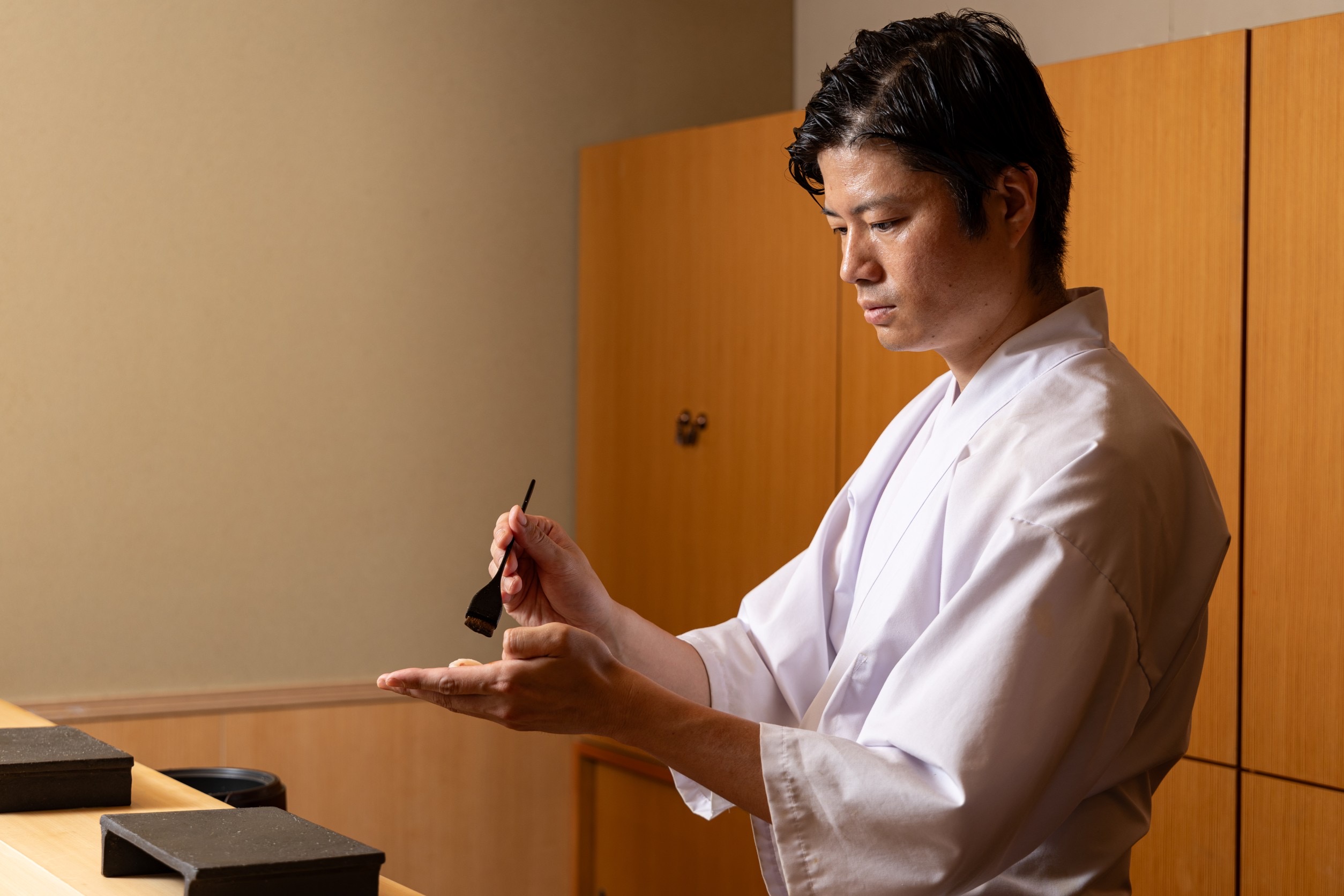
Reviewed by
Tatsuo TakadaHead chef and owner of Sushi Tanji. Trained in the Edomae tradition and rooted in Kyushu, he leads the eight-seat omakase counter in Oku-Akasaka, Tokyo, and reviews The Tokyo Sushi Guide.