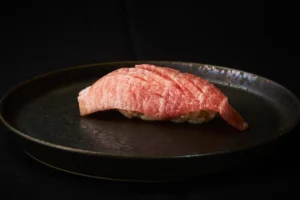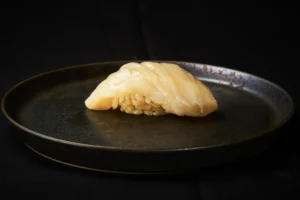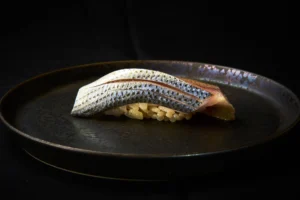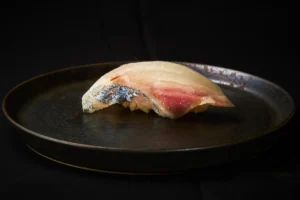


Written by Oku-Akasaka Sushi Tanji, an omakase counter in Akasaka, Tokyo.See the menu →
A few degrees of difference in the rice will change how the fat of the very same tuna behaves. In Edomae nigiri (hand-formed sushi), shari (seasoned rice) declares the character of a house as plainly as the quality of the fish does. How it is cooked, how the vinegar is blended, how warm it is when the piece is formed. Hold those three in mind at the counter, then the shape of each piece set before you comes clearly into view.
In short
Edomae shari is formed at around body warmth, close to thirty-six degrees, firm enough to hold together under chopsticks yet ready to loosen in the mouth. Whether the vinegar is red or rice-based, plus the way salt and sugar are placed, changes the outline of the flavour, so the same fish can leave a quite different impression from one counter to the next.
What you will learn
- Why shari is kept at body warmth, plus what that temperature does to the fat of the fish
- The water ratio and the folding of vinegar that produce rice which stands up then loosens
- How akazu (red vinegar) and rice vinegar differ in character, plus the option of blending the two
- How aged fish and vinegar-cured silver-skinned fish find balance with the acidity of the rice
- What happens to shari at an August counter: room temperature, humidity, the turn of the rice year
- An easy way to mention your own preference about the rice
Body Warmth Is the Measure
There is nothing accidental about the gentle warmth of a piece as it reaches you. At an Edomae counter the rice is usually held a little below body heat, somewhere near thirty-six degrees.
When the rice sits too cool, neither the sweetness of the grain nor the fragrance of the vinegar comes forward, while the fat of the topping stays closed in the mouth. Too warm and the surface of the fish slackens, blurring the outline of the piece. “Body warmth” can sound like a poetic notion. It is really a practical target, pitched between the temperature at which fat melts and the heat of the mouth.
The cooked rice is turned out into a wooden tub, the seasoned vinegar poured over it, then cut through with the paddle. Once the fiercest heat has gone, it moves to a covered box that holds its warmth while piece after piece is formed. When you notice a cloth being lifted and settled again, it is usually this temperature being looked after.
Firm Enough to Stand, Ready to Loosen
Good shari holds its shape when lifted with chopsticks, then falls apart the moment it enters the mouth. The two qualities sound contradictory. They sit together as long as the grains have never been worked into a paste, with air still held between them.
The water is generally kept below what plain white rice would take, leaving the grains room to drink the seasoned vinegar. Vinegar is poured over rice cooked on the firm side, then folded through with a cutting motion. Stirring would draw out the stickiness, taking the edges off each grain.
The number of movements in forming a piece counts as well. Every additional press tightens the rice, so the shape is settled in as few motions as possible. A piece that looks airy yet never collapses is the result of that restraint.
- Cook it firmHold back the water, leaving room for the vinegar to be absorbed.
- Fold in the vinegarPour the seasoned vinegar over the rice in the tub, folding rather than stirring as the heat falls.
- Let it restKeep the warmth in a covered box while the vinegar settles into the grain.
- Form the pieceA few light movements hold the air in, so it loosens in the mouth.
The Vinegar Blend Draws the Outline
Nowhere is the character of a house stated more plainly than in its vinegar. Broadly there are two: akazu, made from sake lees, alongside vinegar made from rice. They differ in colour, in fragrance, in the very nature of their acidity.
| Type | Colour and character | Where it sits well |
|---|---|---|
| Akazu (sake-lees vinegar) | Pale amber. Rounded and deep, with gentle acidity | Aged red tuna, richer cuts, simmered preparations |
| Rice vinegar | Almost colourless. Bright acidity with a light finish | White-fleshed fish, shellfish, the fresh toppings of summer |
| A blend | Between the two. Depth kept, the finish still light | When every piece across a menu should share one character |
Salt and sugar tell as well. In the Edomae line, sugar is often used sparingly or left out altogether. Red vinegar already carries depth with a natural sweetness, so the flavour holds without it.
At Sushi Tanji, in the quiet reaches of Okuakasaka in Tokyo, red vinegar and rice vinegar are blended, with two salts of differing character used for different purposes. Declining to settle on a single vinegar or on a single salt, is itself a sign of rice being treated as the foundation.
Shari Decides How Fish and Rice Meet
Aged fish loses water as it rests, its savour concentrating, its density of flavour rising. Fish in that state asks for rice with a clear outline. Where the acidity and salt sit too low, the savour alone lingers heavily.
Silver-skinned fish cured with vinegar and salt, by contrast, carries acidity of its own. The curing and the acidity of the rice are decided with an eye on each other, since pushing either one alone leaves a hard edge. The reason the curing time for kohada (gizzard shad) shifts through the year has as much to do with this balance as with the fat of the fish.
Quantity and shape follow the same thinking. Rather than adding rice because the topping is large, the aim is the point at which fish and rice come apart together in the mouth. If the taste of the fish arrives first, with the sweetness of the grain following just behind, the balance is right.
At Tanji, bleeding and preparation are means rather than ends. The work is to give each fish the ageing it asks for, then to recognise the moment it tastes best. The rice stands on the receiving side of that judgement.
What August Does to the Rice
August asks more of the rice than any other month. The room is warm, the air heavy, so the temperature is watched closely as pieces are formed. Keeping the rice out of the direct path of the air conditioning belongs to the same care.
The Edomae menu at this time gathers delicate flavours: shinko (young gizzard shad), suzuki (sea bass), makogarei (marbled sole), awabi (abalone), tachiuo (scabbardfish). Should the acidity or the salt come too far forward, the fineness of the fish disappears. If the summer rice feels lighter to you, that is usually an adjustment made for what it carries.
The rice itself is between harvests. Last year’s crop has dried a little, so the water is adjusted by degrees at each cooking. That is why the same blend tastes slightly different from season to season.
Meeting Shari at the Counter
Your preference about the rice is worth saying aloud. “A little less rice, please” is an everyday exchange at the counter. Reducing the quantity does not disturb the flow of the menu, plus saying so early means the meal stays comfortable to the very last piece.
A piece begins to cool from the moment it is set down. Even mid-conversation, it is worth taking it while it is there. There is no need to hurry. Simply not leaving a gap lets you taste it at the temperature it was meant to have. None of this needs to feel like a performance.
Frequently asked questions
How warm should shari be?
Many houses work to about body warmth, somewhere near thirty-six degrees, a touch below the heat of the body itself. The setting matches the range in which the fat of the fish begins to melt in the mouth. Cool rice keeps both the sweetness of the grain and the fragrance of the vinegar from coming forward.
Is red-vinegar shari better than white?
Neither ranks above the other. They aim at different flavours. Akazu is made from sake lees, rounded with depth, said to suit aged fish as well as richer cuts. Rice vinegar is brighter in acidity with a lighter finish, which lifts white-fleshed fish and shellfish. Some houses blend the two.
May I ask for less rice?
Please do. It is an everyday exchange at the counter. Say so before the first piece arrives or when the second is set down, then it can be carried through the rest of the meal.
Why does the rice sometimes taste sweet?
It is either the sugar in the seasoned vinegar or the natural sweetness of the red vinegar itself. In the Edomae line, sugar is often used sparingly or left out altogether. Red vinegar carries a natural sweetness with depth, so the flavour holds without it.
What could I change at home to come closer?
Begin with less water, cooking the rice on the firm side so it still has room to take the vinegar. Once the seasoned vinegar is poured over, fold it through with a cutting motion rather than stirring. Handling the rice lightly as you form each piece keeps the grains standing.
From the guide to the counter
Taste it at our eight-seat counter in Oku-Akasaka.
Classic Edomae craft with careful modern aging – served piece by piece, with English guidance for overseas guests.
Reserve at Sushi Tanji Explore The Tokyo Sushi Guide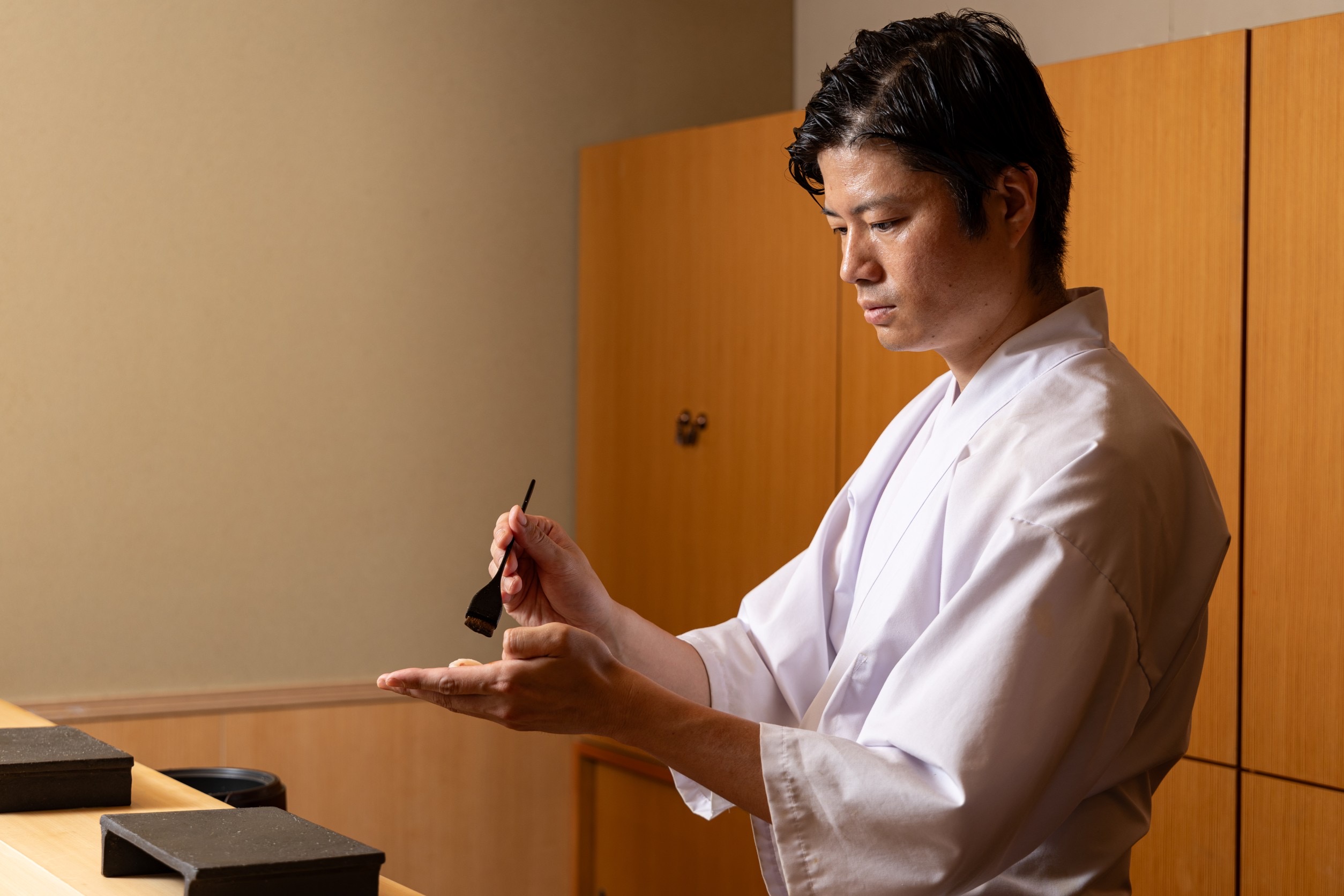
Reviewed by
Tatsuo TakadaHead chef and owner of Sushi Tanji. Trained in the Edomae tradition and rooted in Kyushu, he leads the eight-seat omakase counter in Oku-Akasaka, Tokyo, and reviews The Tokyo Sushi Guide.