Reviewed by Tatsuo Takada (owner-chef, Oku-Akasaka Sushi Tanji)
Part of The Tokyo Sushi Guide Updated Reading time about 6 minutes See the menu →
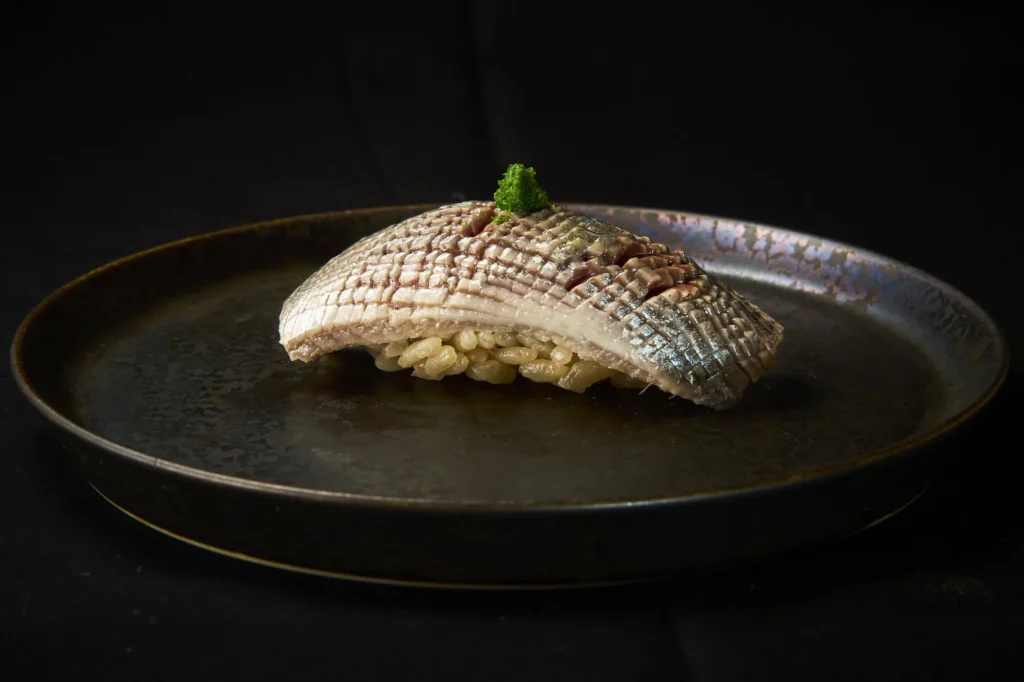
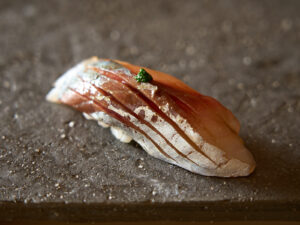
Early in summer, a small silver slice may be set before you at the counter. This is shinko, the gizzard shad in its youngest form, caught before it becomes kohada. The season for it is remarkably brief, the price notably high. Why would a chef pursue so small a fish? Let us look calmly, from both the season and the craft.
What you will learn
- How shinko, kohada and konoshiro are one fish renamed as it grows
- The summer style of layering several slices into a single piece
- Why the season runs only from July into August
- The curing with salt and vinegar that a smaller fish demands
- A gentle way to understand why shinko commands such a price
Shinko, the fish before it becomes kohada
Shinko is the name given to the young of the gizzard shad. This is a fish renamed as it matures. From the few-centimetre shinko, it grows into the kohada familiar to anyone who loves nigiri, then into konoshiro as it grows larger still. What appears at market in early summer is this youngest form.
Being small, its flesh is thin, the silver of its skin soft. Even within one fish, the feel of the work shifts with the season and the size. Shinko sits at the very start of that path.
July into August and why the season is so short
Shinko usually appears for a short spell from July into August. It can be tasted only in the brief moment before the fish fills out, so it is treated as a special herald of early summer. At the outset the pieces are especially small, growing a little day by day until they pass into kohada.
So even within a single summer, the form on the counter differs from one day to the next. The pleasure of chasing the first shinko sits alongside the steady savour of a grown kohada. To taste both as the season turns is part of what makes Edomae so quietly rewarding.
Layering several slices into one piece
Because each slice of shinko is small and thin, a chef may layer several to form one piece. With the smallest of the early catch, three or four slices might be joined before there is enough for a single nigiri. As the season advances and the fish fills out, fewer slices are needed.
The number of slices quietly tells you the size of that day’s shinko. Some guests like to remark on the count at the counter, though there is no need to. Rather than counting, savouring how the thin layers meet on the palate carries the charm of this piece more readily.
- The first of the seasonThe smallest slices, often several layered into one piece.
- Towards the peakAs the flesh fills out, the number of layers slowly falls.
- Into kohadaLarge enough for a single slice, the name shifts too.
The smaller the fish, the finer the curing
For silver-skinned fish, the work of curing in salt then resting in vinegar is the heart of the flavour. Since shinko is thin and tender, both the touch of salt and the time in vinegar call for a finer judgement than kohada. Too strong and the flesh tightens too far; too gentle and its character blurs. That margin is narrower than with an ordinary fish.
Each slice also asks for careful handling of tiny bones and skin in the preparation, so working through any quantity takes its measure of time. Difficult precisely because it is small: with this fish, that phrase feels close to the truth.
Why the price runs so high
Several reasons gather behind the price of shinko. The season is short, so quantities rarely amount to much. Many slices go into one piece, so a single serving needs a good number of fish. The preparation asks for time. The very first of the catch can draw an especially high price at market.
| Aspect | Shinko | Grown kohada |
|---|---|---|
| Season | A brief spell from July into August | A wider run from summer through autumn |
| Slices per piece | Often several layered together | A single slice suffices |
| Preparation | Thin and small, more delicate | Steady and easy to handle |
The high price is simply scarcity and effort made visible. Read not as show but as the labour of answering a brief season, the piece begins to look a little different.
How to enjoy it at the counter
Shinko is a fish of delicate work, so it usually arrives finished with a brush of nikiri (a sweet soy glaze) or a touch of salt, ready to eat as it is. Before reaching for soy, you might taste it just as the chef has set it down. Follow the meeting of thin layers, the soft acidity, the faint scent of the skin, quietly.
At an Edomae counter such as Sushi Tanji, with its eight seats in Oku-Akasaka, the first of a season is often woven into the day’s menu. What appears on any given day is never fixed. Should a small silver slice greet you in early summer, it is something like a gift of a brief season.
Frequently asked questions
How does shinko differ from kohada?
They are the same fish at different stages of growth. The youngest and smallest is called shinko; grown, it becomes kohada; larger still, konoshiro. Shinko has thin flesh, so several slices are often layered into one piece of nigiri.
When can shinko be eaten?
Usually across a short spell from July into August. The first of the catch is especially small, filling out as the season moves on until it passes into kohada. It is treated as a herald of summer.
Why is shinko so expensive?
The season is short, so quantities rarely gather; each piece uses several slices; the preparation asks for time. These reasons overlap. The very first of the catch can draw a high price of its own.
Should shinko be eaten as it is?
In most cases it is finished with nikiri or salt. Tasting it just as it comes lets the delicate acidity and the scent of the skin come through. Whether to add soy is entirely as you please.
From the guide to the counter
Taste it at our eight-seat counter in Oku-Akasaka.
Classic Edomae craft with careful modern aging – served piece by piece, with English guidance for overseas guests.
Reserve at Sushi Tanji Explore The Tokyo Sushi Guide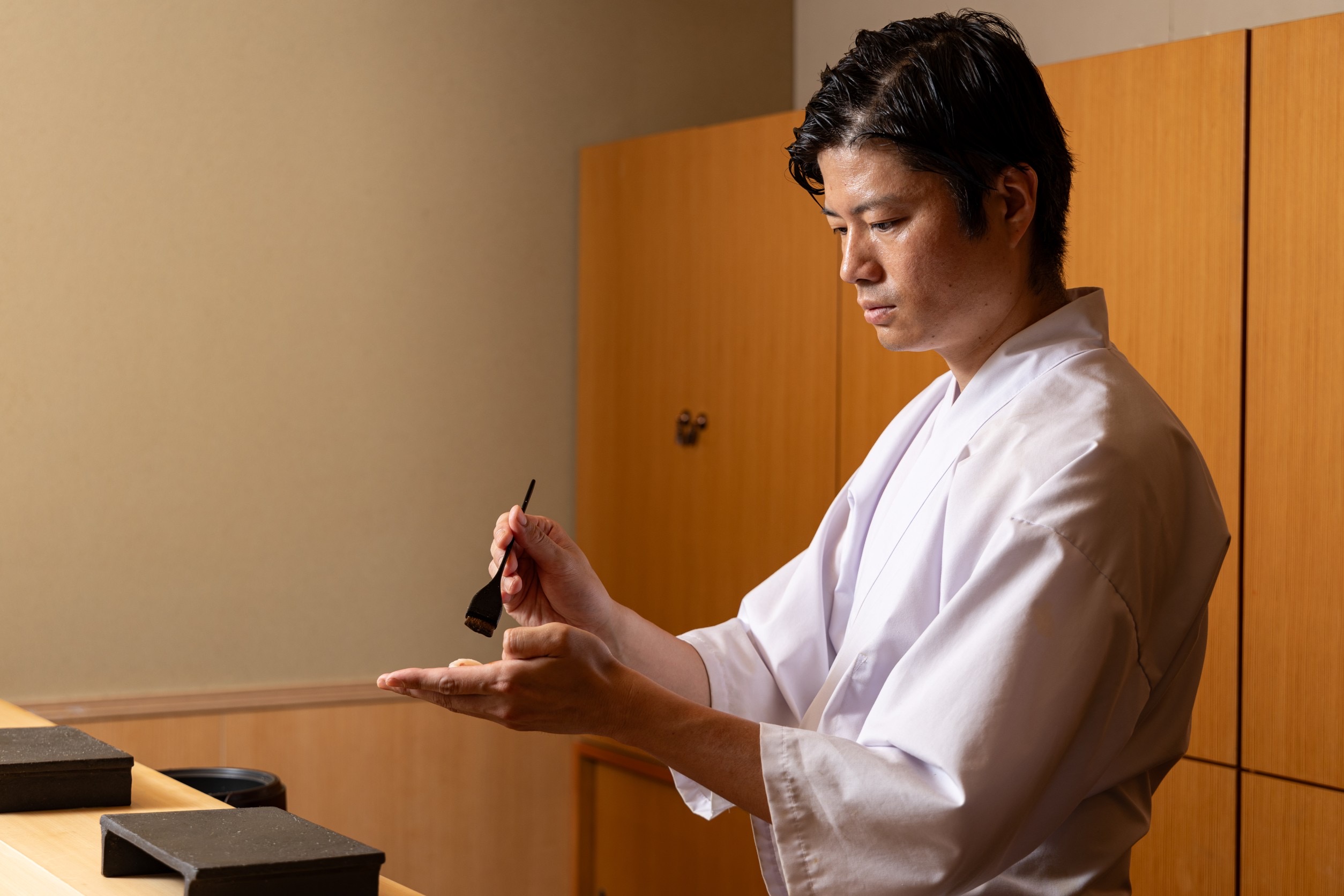
Reviewed by
Tatsuo TakadaHead chef and owner of Sushi Tanji. Trained in the Edomae tradition and rooted in Kyushu, he leads the eight-seat omakase counter in Oku-Akasaka, Tokyo, and reviews The Tokyo Sushi Guide.