Reviewed by Tatsuo Takada (owner-chef, Oku-Akasaka Sushi Tanji)
Part of The Tokyo Sushi Guide Updated Reading time about 5 minutes See the menu →
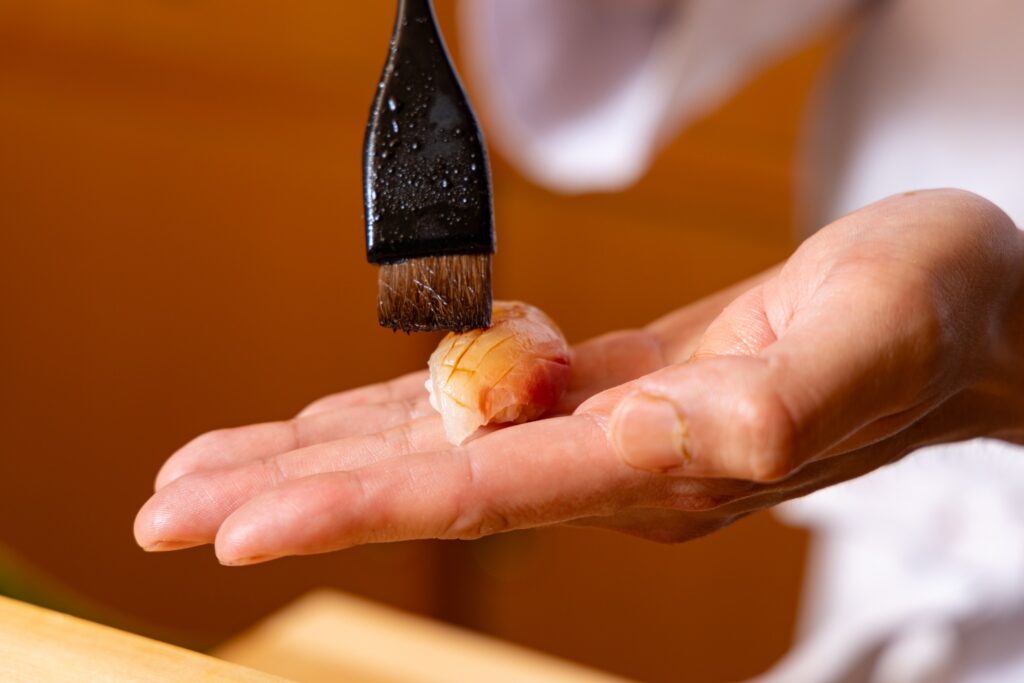
When the first piece is set on the counter before you, a small question arises: fingers or chopsticks? Nearly everyone has paused over it at least once. Either is perfectly fine. What shapes the flavour far more is how you hold the piece, where the soy sauce touches it, plus the time it takes to reach your mouth. Here we walk through the gestures that bring a nigiri, the hand-formed piece of fish over rice, to your lips intact, with steps for hands as well as for chopsticks.
What you will learn
- Why hands and chopsticks are both proper form at the counter
- Finger placement that keeps the rice intact, plus the right angle for chopsticks
- Why soy sauce goes on the fish, which then meets your tongue first
- How a single bite lets rice and topping become one
- Why a nigiri is at its best for only the briefest while
- A relaxed way to ask for smaller pieces when one bite feels like a lot
Hands or Chopsticks: Both Are Welcome
Is nigiri meant for the hands or for chopsticks? In truth, neither answer is wrong. Edomae sushi, the Tokyo style, first spread as food to be picked up briskly at street stalls, so eating by hand has roots that run deep. At today’s counters, just as many guests reach for chopsticks without a second thought.
What matters is not the tool but the journey: keeping the shari (the seasoned rice) unbroken so the topping can speak clearly. Hold on to that one idea and either choice will serve you well.
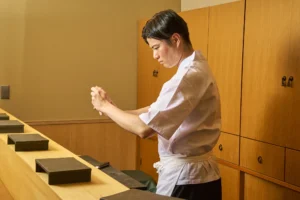
Holding Nigiri by Hand
The pleasure of eating by hand lies in fine control. Shari that has been formed loosely, with air folded through it, often responds more kindly to the pads of the fingers than to chopsticks.
- Cradle it lightly between thumb and middle fingerRest your thumb and middle finger against either side of the piece, with your index finger lying lightly on the neta (the topping).
- Tilt it gently onto its side as you liftHolding it almost lying down keeps pressure off the rice.
- A touch of soy sauce at the topping's edgeUnless nikiri (a lightly simmered soy glaze) has already been brushed on, a small dab at the tip of the fish is plenty.
- Topping-side down, into the mouthLet the fish meet the tongue first, taking the piece in one bite.
With Chopsticks, Grip from the Side
With chopsticks, pinching from above presses into the rice, which makes the piece likelier to crumble. Take the nigiri from the side instead, letting it lean a little as you lift; it will feel far more stable. For soy sauce the idea matches the hand-held approach: tip the piece so only the topping meets the dish.
| By hand | With chopsticks | |
|---|---|---|
| How to hold | Thumb and middle finger at either side | From the side, tilted a little |
| Soy sauce | A small dab at the tip of the topping | Tip the piece so only the topping dips |
| When it suits | Nigiri in general, whenever fine control of pressure helps | Gunkan (battleship rolls), plus any time you would rather keep your fingers clean |
Soy Sauce on the Topping, Fish-Side to the Tongue
Soy sauce belongs on the topping, not the rice. Shari that has been dipped drinks in too much, turning the flavour heavy while loosening the grains until the piece comes apart. At many Edomae counters the chef brushes each piece with nikiri before it is served; when that is the case, nothing more is needed. Simply enjoy it as it comes.
Why One Bite Matters
A nigiri is, in most cases, composed for a single mouthful. Air is folded through the shari so that it loosens on the tongue, mingling with the topping as it goes. Bitten in half, that structure gives way; stray grains tend to follow.
That said, a piece can sometimes feel like more than one bite. Rather than hurrying it down, feel free to ask at the start for the shari to be made a little smaller. Counters are usually glad to oblige.
A Race Against Time: The Piece Before the Photograph
A nigiri is at its very best in the moments just after it leaves the chef’s hands. The warmth of body-temperature shari against the cool of the fish, the sheen of freshly brushed nikiri — this balance holds only briefly, fading a little even while a photograph is framed.
In July, the most delicate work feels the wait most keenly: the season’s first shinko (young gizzard shad), summer aji (horse mackerel), pieces whose careful preparation registers every passing second. At an eight-seat counter such as ours in Okuakasaka, each piece is set before you one at a time. When one arrives, let the conversation rest for a breath. Eating it straight away is the warmest reply to the chef’s work, as well as the surest path to its best flavour.
Frequently asked questions
Is it bad manners to eat sushi with your hands?
Not at all. Edomae sushi began as street food taken up with the fingers, a history that still lives at today’s counters, where hands remain entirely welcome. Many restaurants set out an oshibori (a damp hand towel) with exactly this in mind.
Can gunkan rolls be eaten the same way?
Gunkan lean toward collapse when tipped onto their side, so lifting them upright as they are is the gentler path. If you would like soy sauce, a well-known approach is to dip a slice of gari (pickled ginger) into the sauce, then brush it lightly over the top. If the piece arrives already glazed with nikiri, simply enjoy it as it is.
What if one bite feels like too much?
The most natural course is to ask at the start for the shari to be made smaller. Most restaurants oblige gladly. If you do divide a piece in two, take your time over the plate or the geta (the wooden serving board) before you. It is nothing anyone would hold against you.
What should I do with my hands afterwards?
A light wipe with the oshibori is all that is needed. The hand towel resting on the counter is there for precisely this moment. For more of the counter’s gentle habits, including how to approach soy sauce and nikiri, our Tokyo sushi guide continues the conversation.
From the guide to the counter
Taste it at our eight-seat counter in Oku-Akasaka.
Classic Edomae craft with careful modern aging – served piece by piece, with English guidance for overseas guests.
Reserve at Sushi Tanji Explore The Tokyo Sushi Guide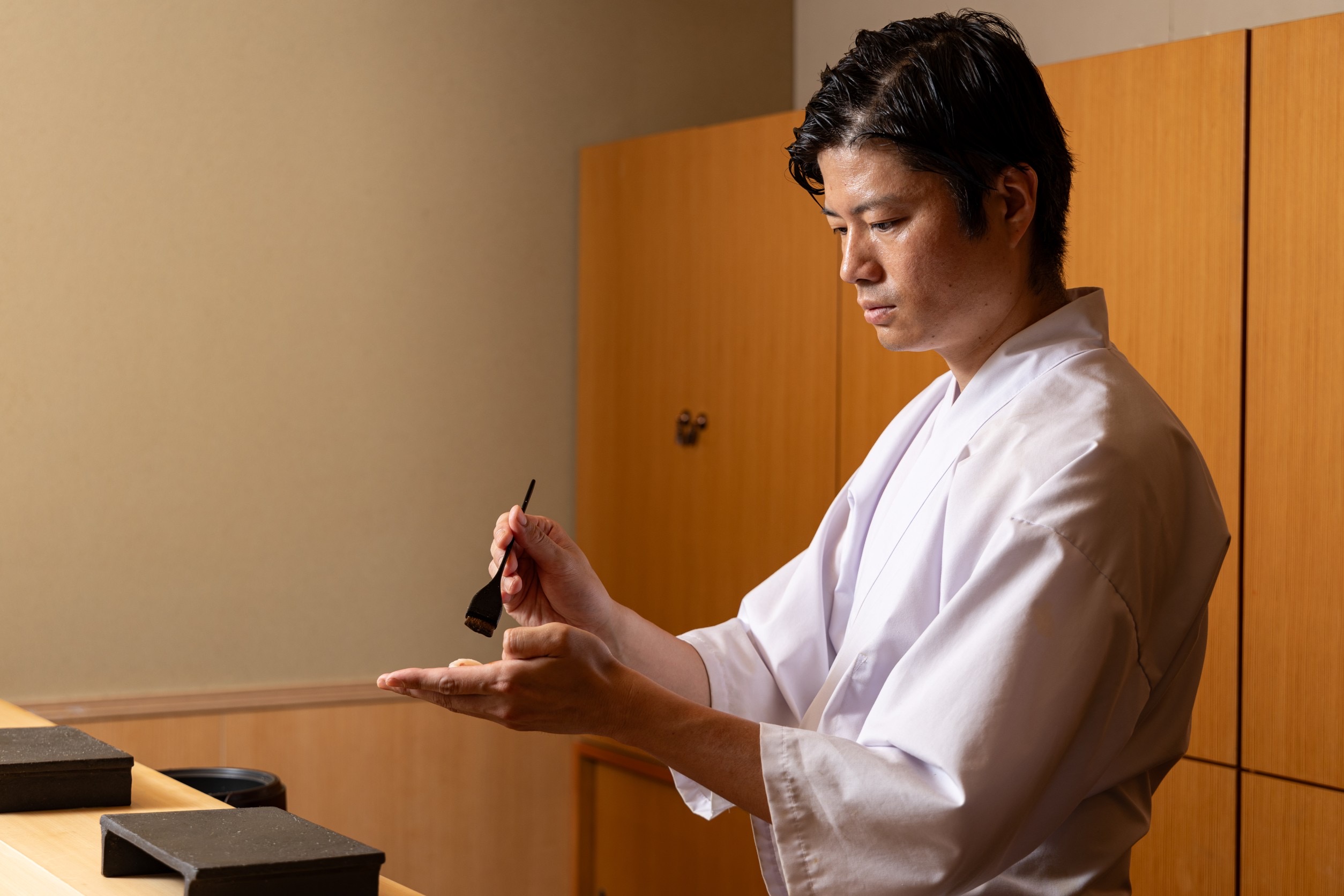
Reviewed by
Tatsuo TakadaHead chef and owner of Sushi Tanji. Trained in the Edomae tradition and rooted in Kyushu, he leads the eight-seat omakase counter in Oku-Akasaka, Tokyo, and reviews The Tokyo Sushi Guide.