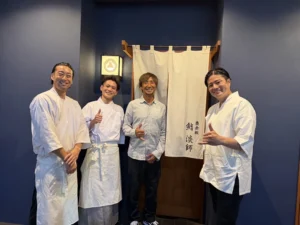


Reviewed by Tatsuo Takada (owner-chef, Oku-Akasaka Sushi Tanji)
Part of The Tokyo Sushi Guide Updated Reading time about 7 minutes See the menu →
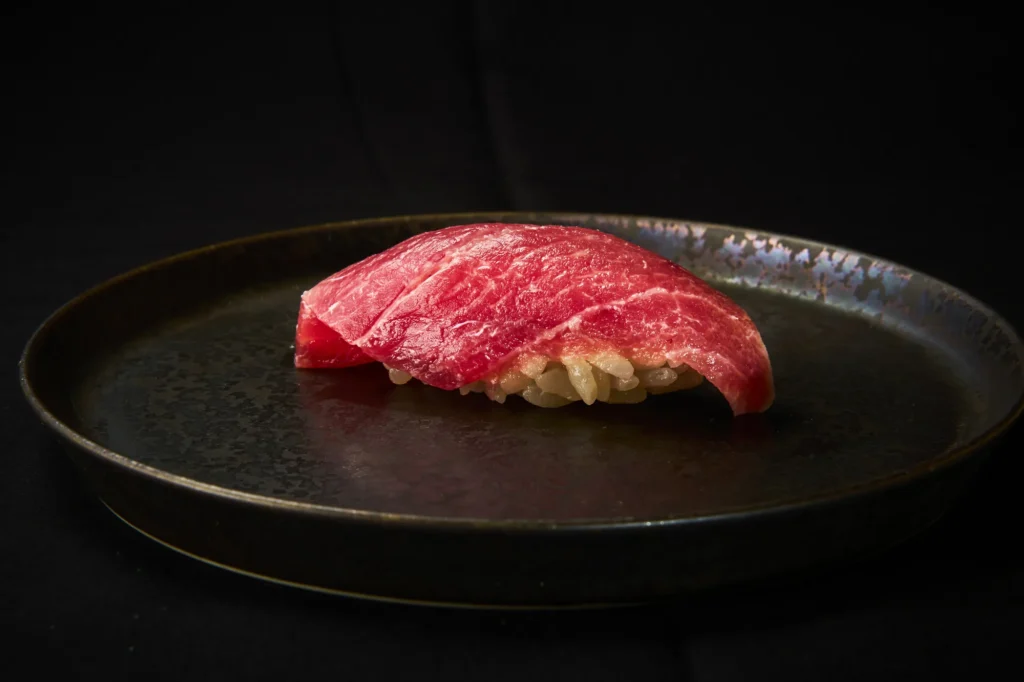
Aged fish tastes good. Most of us sense as much. Yet what actually happens inside the fish while it rests is less widely understood. It looks intricate from the outside, though the mechanism itself is really rather tidy. Sort the source of umami (savoury depth) into two and much of it falls into place: why resting deepens flavour, then why resting too long lets it slip away.
What you will learn
- That ageing is the work of drawing out umami through the fish's own components and enzymes
- That umami rests on two pillars: inosinic acid (the nucleotide side) plus free amino acids (the amino-acid side)
- How inosinic acid is born from ATP, then moves on to hypoxanthine and towards bitterness if the fish rests too long
- How enzymes break protein down so that free amino acids such as glutamate build up
- What the three foundations mean: bleeding, a gentle dispatch, plus cold near-vacuum storage
- The idea of judging the moment when umami and texture meet
Ageing: The Work of Drawing Out Umami
Ageing means making the most of the components and enzymes a fish already carries, drawing out as much umami as possible: inosinic acid along with free amino acids such as glutamate. Nothing is added from outside. It is the work of settling, with time and temperature, a power the fish held all along.
So ageing is less an act of addition than one of release. The better the fish to begin with, the wider the range of umami there is to draw out.
Three Foundations of Ageing
Before any umami can be drawn out, there is a base worth getting right. Let it slip and ageing drifts towards spoilage instead. Whether at an Edomae counter (the classic Tokyo style) or with a maker who follows the Tsumoto method (a careful approach to bleeding and storage), three things come first.
- Bleed the fishHaemoglobin in the blood oxidises and turns into a source of off-notes. Careful bleeding keeps the flavour clear and clean.
- Dispatch it gentlyA method that spares the fish needless stress leaves behind more ATP, the very thing that later becomes umami.
- Store cold, near vacuumA chill of around two degrees, held close to vacuum, holds oxidation and decay in check while the changes unfold slowly.
The First Umami: Inosinic Acid
A fish carries ATP and after death it turns into inosinic acid step by step. Inosinic acid is a nucleotide-type umami, the same one behind the dashi (stock) drawn from katsuobushi (dried, shaved bonito). The more ATP a gentle dispatch and clean bleeding leave behind, the more inosinic acid there is to form.
There is a turning point, though. Rest the fish too long and inosinic acid breaks down further, passing through inosine on its way to hypoxanthine. As hypoxanthine builds, what was once umami leans towards bitterness and a certain harshness.
The Second Umami: Free Amino Acids
The other pillar is free amino acids. The fish’s own enzymes break protein down little by little. Passing through peptides, the protein unwinds into free amino acids such as glutamate. This is the amino-acid-type umami, the same family as the dashi drawn from kombu (kelp).
Here is the lovely part: when nucleotide inosinic acid meets amino-acid glutamate, the two umami lift one another. Together they feel far richer than either does alone.
This side has its own limit too. Let the breakdown go too far and the flesh loses its structure and bite. The umami may keep rising while the texture on the palate falls away.
What to Judge: Where the Two Overlap
So there is not a single peak to aim for. One is the point where inosinic acid runs highest. The other is where free amino acids have risen while a pleasing texture still holds. The aim is the place where those two overlap. This is why ageing is called a matter of timing.
| How far the ageing has gone | What is happening | How it tends to taste |
|---|---|---|
| Early | Inosinic acid is yet to come; free amino acids are still few | Clean and crisp, with quiet umami |
| Just right | Inosinic acid runs high while free amino acids rise | Umami layers up, texture still there |
| Too far | Inosinic acid tips into hypoxanthine; the flesh softens | Bitterness and harshness creep in as texture fades |
The ideal span and temperature shift with the species and the condition of the fish. White-fleshed against oily fish, the run of fat, the thickness of the flesh. The same number of days will not give the same result. So the maker reads each fish on its own terms.
Ageing Suits Each Fish Differently
Even the same ageing suits some fish better than others, with the right moment shifting from one to the next. This is where a maker’s skill and taste show. As a broad guide, sorting them like this helps you find the knack.
| Type of fish | How it takes to ageing | Timing it tends to want |
|---|---|---|
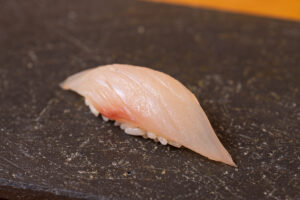
| White-fleshed (tai sea bream, hirame flatfish) | Takes on umami readily; sits well with kombu-jime (curing between kelp) | From a few days, sometimes longer |
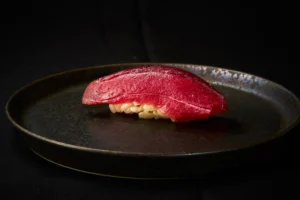
| Large red-fleshed (maguro tuna) | Resting or a zuke soy marinade tends to add depth | Varies with the cut and its condition |
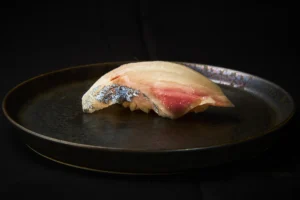
| Shiny-skinned (kohada gizzard shad, aji horse mackerel, iwashi sardine) | Curing does the main work; earlier often suits better than a long ageing | Short |
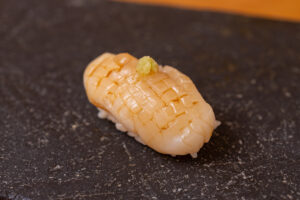
| Shellfish and squid | Prized for their bite, so long ageing rarely suits; squid can turn sweeter with a little rest | Short |
With the shiny-skinned fish, freshness and a well-judged cure are what carry the flavour. More often than not they suit being formed into nigiri while in fine condition, rather than a long rest. White-fleshed fish and the large red-fleshed ones, by contrast, tend to gain depth of umami when rested with care. Even so, this is not something days alone can settle; the usual practice is to decide by the state of the flesh on the day.
Ageing as We Think of It at the Counter
In recent years the Tsumoto method has spread and now underpins the precision of ageing. By bleeding with care and managing the cold, it has become easier to rest each species towards the moment we are after.
At Sushi Tanji, an eight-seat counter in Oku-Akasaka, Tokyo, we pair this careful ageing with the classic Edomae craft. Judging the span and temperature for each species, we form every piece to the day’s own moment.
Ageing is no showy trick. Trust the fish, leave well alone, wait for the moment. That quiet judgement is what surfaces as the depth of umami in a single piece.
Frequently asked questions
Does ageing make any fish taste better?
Not as a rule. Inosinic acid has a peak; once past it the flavour heads towards bitterness. Because the right moment shifts with species and condition, longer is not simply better.
How does ageing differ from a fish starting to spoil?
They are worlds apart. Ageing is a change guided under proper management: bleeding, cold, storage close to vacuum, all holding oxidation and decay in check. Left without that base, a fish drifts not towards ageing but towards spoilage.
How long should a fish be rested?
It varies with species, the run of fat, plus the thickness of the flesh. White-fleshed fish are said to lean longer while oily fish lean shorter, though days alone cannot decide it. The maker judges by the state of the fish.
Can I age fish at home?
It is not impossible, though temperature control and hygiene are the tricky parts to judge. Holding the cold, handling everything cleanly, reading the moment without missing it. Unless those three come together, spoilage arrives before umami.
From the guide to the counter
Taste it at our eight-seat counter in Oku-Akasaka.
Classic Edomae craft with careful modern aging – served piece by piece, with English guidance for overseas guests.
Reserve at Sushi Tanji Explore The Tokyo Sushi Guide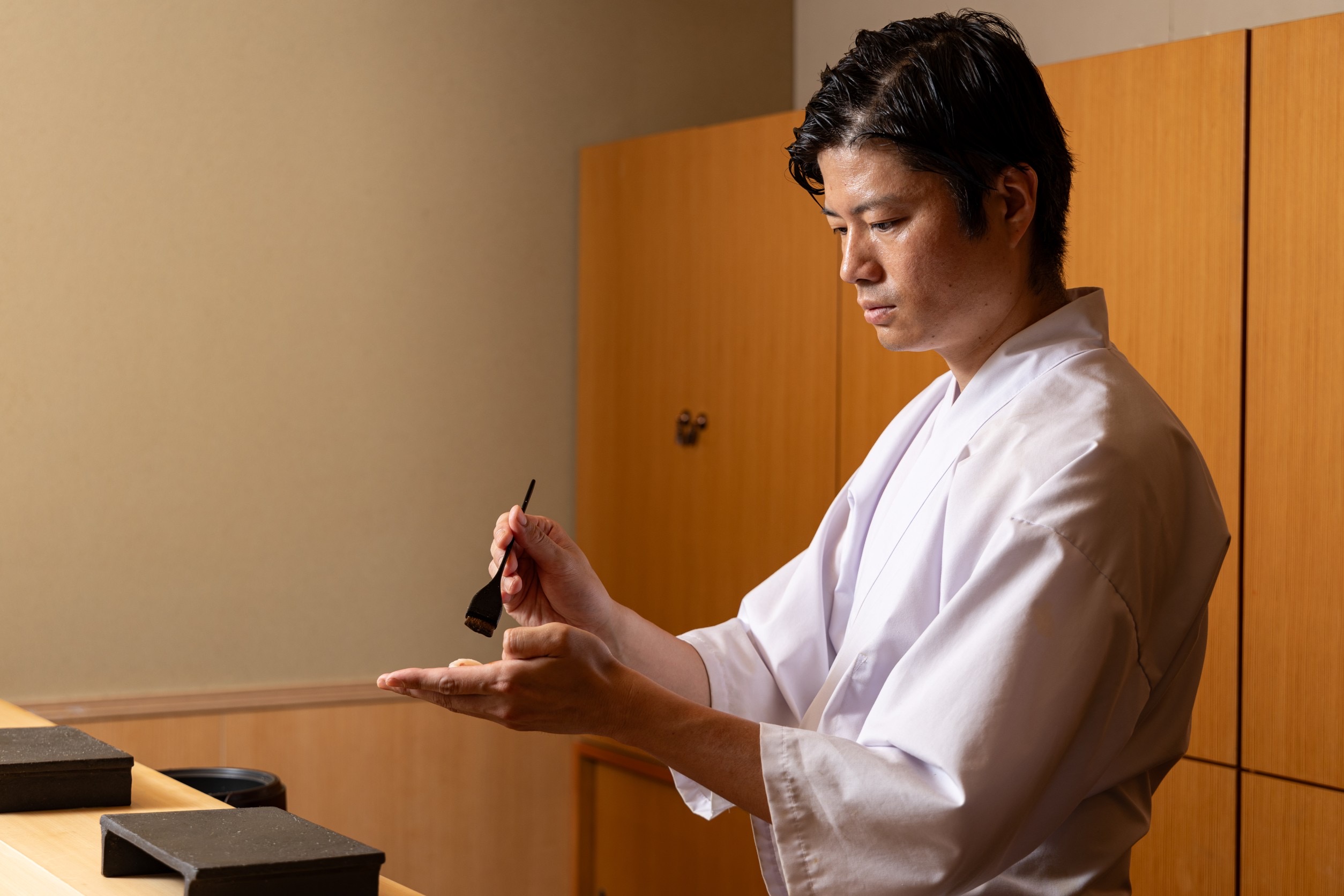
Reviewed by
Tatsuo TakadaHead chef and owner of Sushi Tanji. Trained in the Edomae tradition and rooted in Kyushu, he leads the eight-seat omakase counter in Oku-Akasaka, Tokyo, and reviews The Tokyo Sushi Guide.