

Reviewed by Tatsuo Takada (owner-chef, Oku-Akasaka Sushi Tanji)
Part of The Tokyo Sushi Guide Updated Reading time about 6 minutes See the menu →
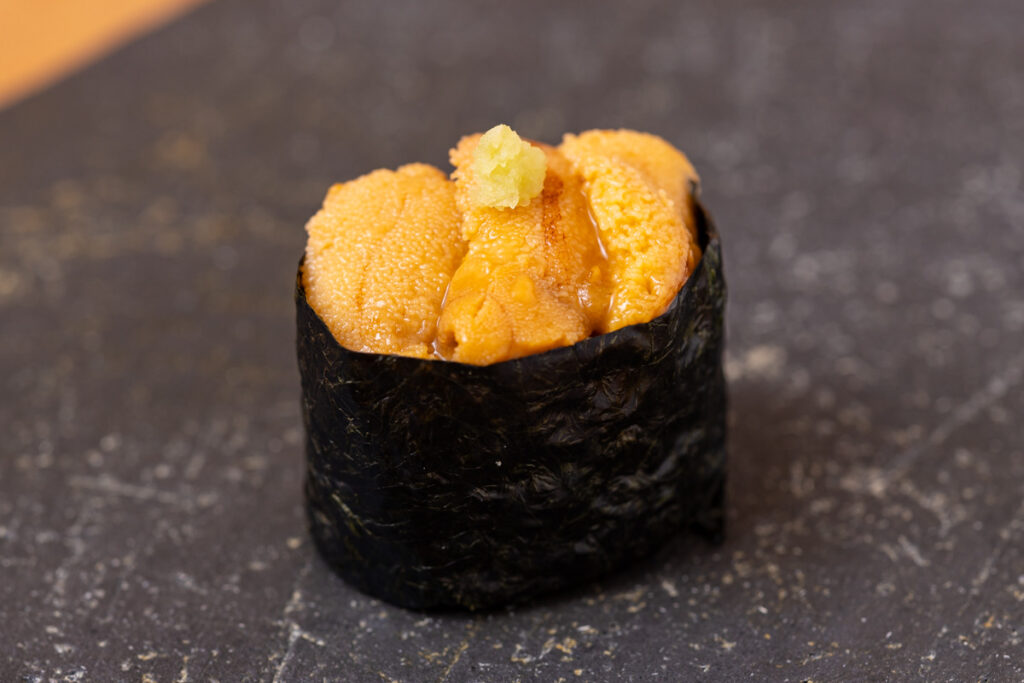
Few sushi toppings make so lasting a first impression as uni (sea urchin). For some, that first piece becomes a memory of melting sweetness; for others, only the bitterness stays. Here we look at the differences between murasaki, bafun and aka uni, at a preservation treatment called alum that is often behind the bitterness, plus the choice between the gunkan roll and laying uni straight on the rice, in the hope that you might meet uni afresh.
What you will learn
- How murasaki, bafun and aka sea urchin differ in colour and sweetness
- The alum treatment behind the idea that uni is bitter, plus how salt-water uni differs
- Why the gunkan roll was invented, plus what a chef intends by laying uni straight on the rice
- Hokkaido uni at its June-to-August peak, together with the kelp-rich waters that raise it
- How to choose your next piece if the first one left you unsure
Few Toppings Divide Opinion Quite Like Uni
Few sushi toppings divide opinion quite like uni. Some diners are captivated by its melting sweetness, while others tried it once and quietly decided it was not for them. As it happens, the split has its reasons.
Uni changes character with its species, its origin, plus how it is handled once landed. The first piece you happen to taste all but settles your impression. If your memory of uni is a bitter one, a different piece can redraw the whole landscape.
Murasaki, Bafun and Aka: Three Faces of Uni
At a sushi counter, the two kinds you are most likely to meet are murasaki uni (purple sea urchin) and bafun uni (short-spined sea urchin). Murasaki has pale yellow lobes, rather large in the grain, with a clean, refined sweetness. Bafun is a deep orange, smaller in the grain, carrying the scent of the shore alongside a rich, full-bodied sweetness.
A third kind, prized in western Japan, is aka uni (red sea urchin, Pseudocentrotus depressus). Found only in Japanese waters, it lives on shallow rocky shores from Matsumae in Hokkaido and Hitachi in Ibaraki south to the Ōsumi Islands of Kagoshima. Crack the shell open and five bright golden-yellow lobes lie along the inside; the taste is strongly sweet, with almost no fishiness or harsh edge. The catch is small: in Genkai off Karatsu in Saga, ama divers gather them one by one by free diving, and they are sometimes called the “phantom uni”.
| Type | Colour and grain | Character of the sweetness |
|---|---|---|
| Murasaki uni | Pale yellow with a larger grain | Clean, refined sweetness |
| Bafun uni | Deep orange with a smaller grain | Rich, full-bodied sweetness |
| Aka uni | Bright golden yellow | Strongly sweet, with little fishiness |
None ranks above the others; it is a question of taste and of pairing. If rich flavours are not your natural territory, beginning with murasaki’s gentler sweetness tends to change the picture.
What Is Bafun Uni?
Bafun uni is known for its small, deep-orange lobes, with the scent of the shore and a rich, full sweetness. It leans in a different direction from murasaki uni, whose larger lobes are pale yellow. In Hokkaido, ezo-bafun urchins grow in the kelp-rich waters of Rishiri, Rebun and Shakotan.
The Source of the Bitterness: A Word About Alum
The memory that uni is bitter can very often be traced to a preservative called alum. Sea urchin lobes are remarkably fragile, so the uni arranged on wooden trays is usually dipped in an alum solution to keep its shape. When the treatment is heavy, it can linger on the tongue as an astringent, faintly medicinal bitterness.
Salt-water uni, by contrast, travels afloat in brine close to seawater. The lobes give up a little of their shape yet keep a sweetness near to the moment of landing. In recent years, more sushi restaurants have chosen to serve it.
Gunkan or Straight on the Rice: Two Good Reasons
For many, uni means the gunkan (battleship roll), the form wrapped in a band of nori (toasted seaweed). It is a relatively recent invention, born in the Shōwa era as a way to keep a fragile topping settled on the shari (seasoned rice). The toasted fragrance of the nori flatters the sweetness of the uni, so the form makes quiet, perfect sense.
When the lobes are firm, though, some chefs set the nori aside and lay the uni directly on the rice, a style called jika-nose. With no seaweed in between, the uni and the red-vinegar shari meet as one. Which way it arrives usually comes down to how the day’s lobes are looking.
Uni Seasons Shift by Species and Region
When Bafun Uni Is in Season
In Hokkaido, ezo-bafun and kita-murasaki urchins reach their peak from June through August. Lobes raised in the kelp-rich waters of Rishiri, Rebun and Shakotan are especially good at this time.
When Aka Uni Is in Season
In western Japan, summer is when aka uni fills out. A Yamaguchi Prefecture fisheries guide notes that its lobes are at their largest from July to September, with spawning from about October to March. In Tango, Kyoto, the lobes and flavour are said to be at their best in July and August, just before spawning, while Karatsu in Saga gives July to September as its season.
At omakase counters that gather the seasons from across Japan, a dispatch from the northern sea often joins the summer menu. For a restaurant such as Sushi Tanji in Tokyo’s Oku-Akasaka, which follows the seasons nationwide with Kyushu as its axis, summer is when the map of the sea stretches north.
Meeting Uni Again
If uni once put you off, a small change in how you choose can make all the difference. Look for the words salt-water uni on the label; favour pieces whose origin is named. At an omakase counter, it is perfectly fine to mention that uni has never quite won you over. The chef may study the day’s lobes and offer, say, a pale murasaki laid straight on the rice.
There is no need to brace yourself. Uni is a topping of real depth — each lobe reflects the sea that raised it. When an old bitterness loosens its hold, the counter gains one more pleasure.
Frequently asked questions
Why does uni sometimes taste bitter?
In most cases the bitterness comes from the alum treatment used to keep the lobes from collapsing. When the treatment is heavy, it can linger as astringency on the tongue. Salt-water uni, along with lightly treated lobes, rarely carries this bitterness.
Murasaki or bafun: which should I try first?
It comes down to taste, though those wary of rich flavours often begin with murasaki for its clean, refined sweetness. If you are drawn to the scent of the shore plus a deeper richness, bafun will suit you well.
When is uni in season?
It varies with species and origin. Hokkaido’s ezo-bafun and kita-murasaki urchins peak from June through August. In western Japan, aka uni fills out in summer; Karatsu in Saga gives July to September as its season. Because the harvest moves from place to place, each part of the year brings uni from a different sea.
Should I dip an uni gunkan in soy sauce?
At an omakase counter it usually arrives already seasoned with nikiri (brushed soy) or salt, so feel free to enjoy it just as it is. A tilted gunkan tends to spill, which makes taking it exactly as served the easiest way.
To book a seat at our counter, see reservations on our home page.
From the guide to the counter
Taste it at our eight-seat counter in Oku-Akasaka.
Classic Edomae craft with careful modern aging – served piece by piece, with English guidance for overseas guests.
Reserve at Sushi Tanji Explore The Tokyo Sushi Guide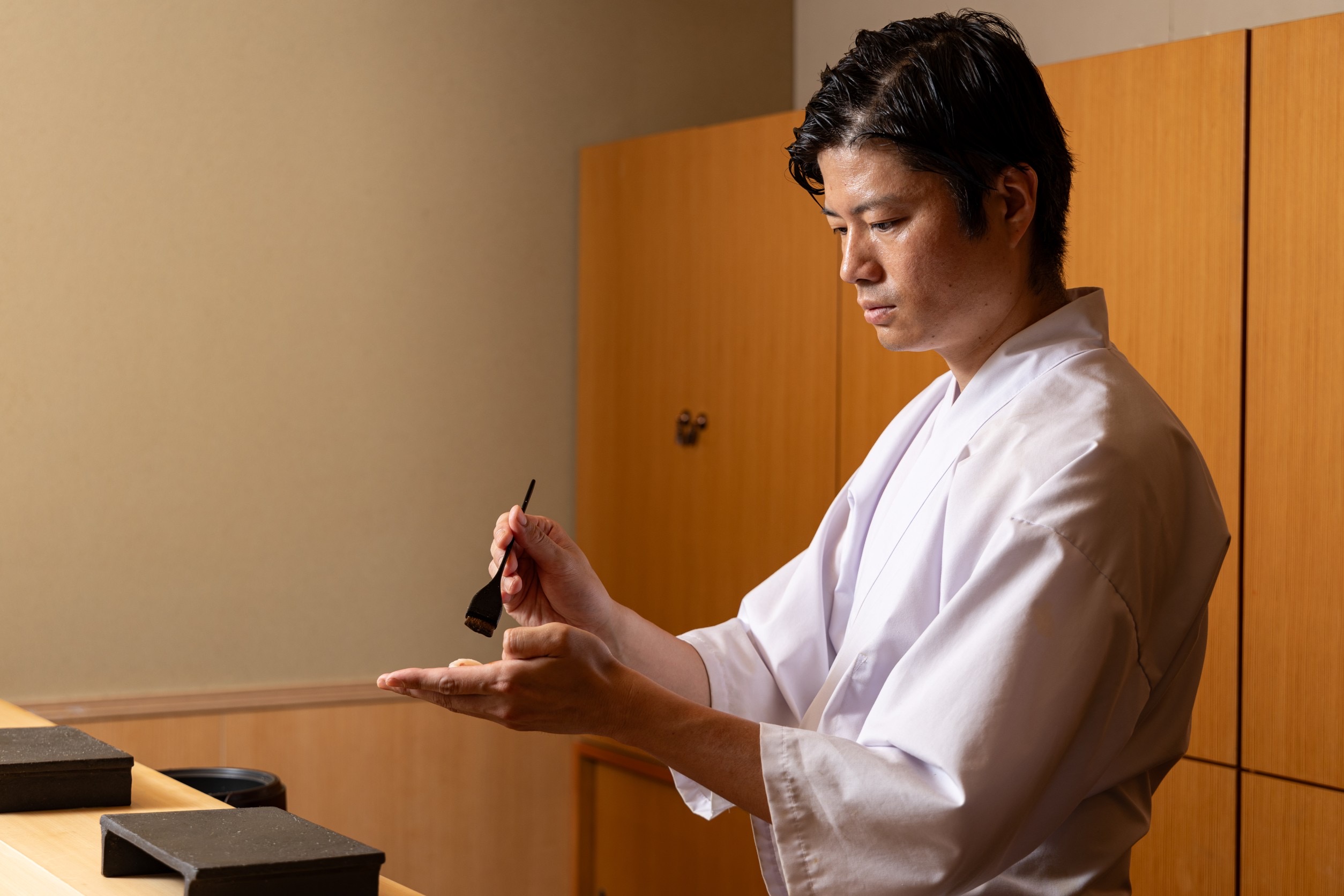
Reviewed by
Tatsuo TakadaHead chef and owner of Sushi Tanji. Trained in the Edomae tradition and rooted in Kyushu, he leads the eight-seat omakase counter in Oku-Akasaka, Tokyo, and reviews The Tokyo Sushi Guide.