Reviewed by Tatsuo Takada (owner-chef, Oku-Akasaka Sushi Tanji)
Part of The Tokyo Sushi Guide Updated Reading time about 6 minutes See the menu →
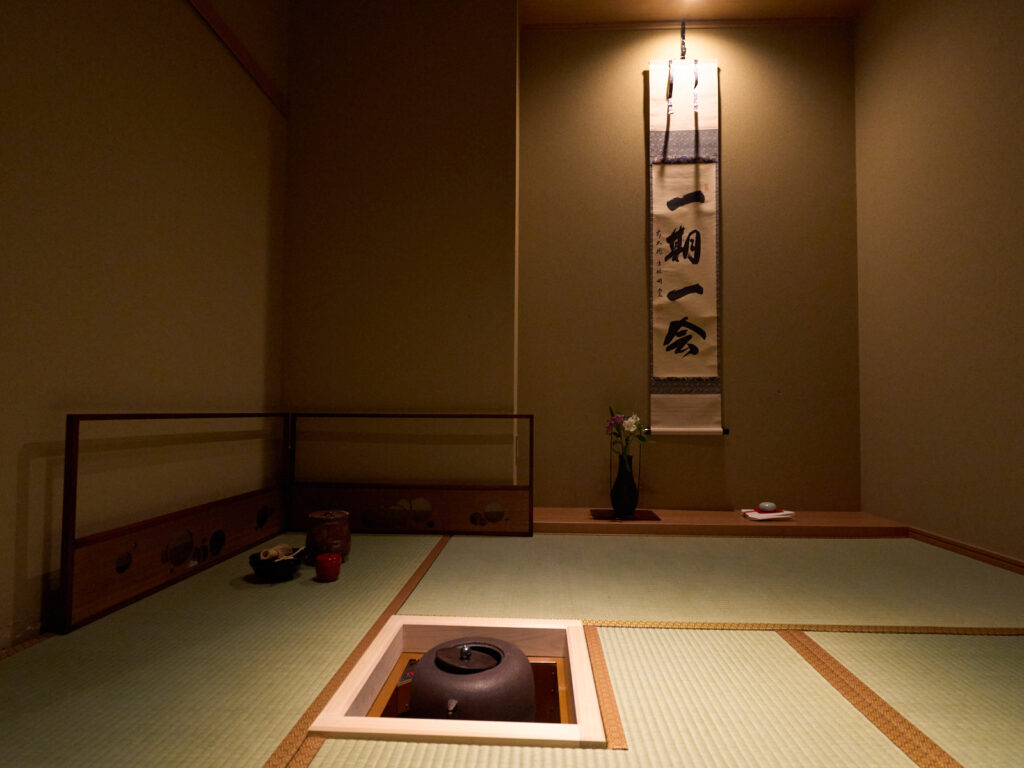
When the omakase is finished, you move to a tea room for matcha with a seasonal sweet. At an eight-seat counter in Oku-Akasaka, this is not a matter of adding something sweet to the meal. What is being shaped is the time itself, from the last bite to the moment you rise. This article looks at the two Japanese ideas placed at that ending: ma, the deliberate pause, together with yoin, what lingers afterwards.
In short
Moving to the tea room at the close of a sushi meal lets matcha with a seasonal sweet settle the palate while placing a ma before you rise. Leaving without haste is what allows the day’s flavours to stay with you as yoin.
What you will learn
- What a house is actually doing when it ends the meal in a tea room
- Why ma is not empty time but a margin that prepares you for what follows
- Why yoin asks for an interval free of fresh stimulus
- How matcha with a seasonal sweet differs in purpose from dessert
- How to spend the time in the tea room, with no etiquette to brace for
- How ageing, seasonal fish, sake plus the tea room are arranged as a single flow
Why the meal ends in a tea room
Once the last piece of an omakase has been eaten, most counters begin to close the evening. A kanpyo roll (dried gourd) or tamago (sweet omelette), a bowl of miso soup, then the bill. Two hours or so finish in a matter of minutes. Only the ending is suddenly quick.
Where a tea room closes the meal, another stage sits before that ending. You leave the counter for a different room to take a bowl of matcha (whisked green tea). The seat changes, the light falls differently, voices settle of their own accord. The meal is over, yet the evening is still going. These few minutes change how the day is remembered.
Ma is not empty time
Ma does not mean blank space. In noh theatre as in rakugo storytelling, ma is the taut interval before the next movement. Silence does not mean nothing is happening; something is happening inside it. That is why Japanese speaks of ma ga warui (poor timing) as well as ma ga motanai (a pause that cannot be held).
The same thing lives on the sushi counter. The breath between a piece being set on the tsuke-dai (serving board) and your hand reaching for it. The stillness while the next fish is chosen. At an Edomae counter the pieces do not arrive in an unbroken stream; these short gaps are how the person receiving the sushi gets ready. Seen as one flow, the meal closes with a single larger ma: the time in the tea room.
Yoin stays on the tongue as well as in memory
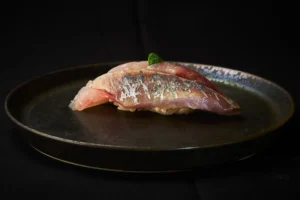
Yoin is the taste or the sound caught in the act of fading — what spreads towards the back of the tongue after swallowing, what remains in the air once a bell has been struck. Fish aged with care can release its umami late, so the true character may arrive in the seconds after the piece is eaten rather than at first contact.
Yoin does ask for an absence of fresh stimulus. Settle the bill, put your shoes on then step straight into the noise of the street; what was still unfolding is cut off midway. At an ordinary meal this passes unnoticed. With sushi, where every piece is dressed a little differently, that break is a loss worth avoiding. The few minutes in the tea room are placed there to prevent it.
| Word | Reading | What it means at the table |
|---|---|---|
| 間 | ma | A taut, deliberate pause that prepares you to receive what comes next |
| 余韻 | yoin | The taste or sensation that remains as it fades after swallowing |
| 名残 | nagori | The trace left once something has ended; also used of a season closing |
| 一期一会 | ichigo ichie | The sense that this gathering can never be repeated in quite the same way |
Matcha with a seasonal sweet resets the palate
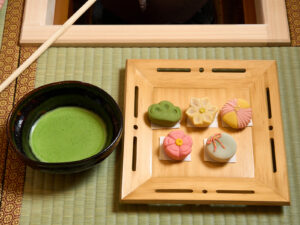
Matcha plays a different part from an ordinary dessert. Its astringency with its clear bitterness carries off the richness of the fish, the vinegar of the rice as well as the sweetness of sake, returning the palate to where it began. The wagashi (traditional sweet) comes first because a little sweetness on the tongue lets the bitterness of the tea rise without a hard edge.
Wagashi mirror the season. In July the choice often falls to something translucent, made with kudzu starch or kanten (agar), where the coolness of the appearance is itself the signal. Closing a meal of summer fish with a summer sweet is a way of noting the season twice.
What the room itself does
A low ceiling, small windows, little decoration. The tea room is deliberately spare in what it offers the eye. On the way back from the concentration of the counter to ordinary life, this quiet room sits in between. The same bowl of matcha alters your sense of time simply by being drunk somewhere else.
Ageing, seasonal fish, sake, the tea room: one continuous design
This ending is not a flourish standing on its own. At Sushi Tanji in Oku-Akasaka the ageing draws on the Tsumoto method of bleeding and dressing fish; the fish itself is chosen in season from across the country with Kyushu at the centre; the sake list runs to sought-after labels from small breweries; the tea room follows with matcha plus a seasonal sweet. All of it is built as one flow. Behind it sits a simple thought: taste alone is not what stays in the memory.
- The last pieceThe run of nigiri comes to a close with the yoin of aged fish and shari (seasoned rice) still in the mouth.
- Changing seatsYou stand up to walk a short distance. The move itself becomes a ma.
- A bowl in the tea roomThe seasonal sweet first, the matcha after. Mouth and mind both settle.
- Stepping outsideYou leave once the heat of the meal has eased. The yoin is not cut short.
Time in the tea room: nothing to brace for
Many people arrive half expecting to be caught out by etiquette. A bowl of tea after a meal asks for none of the procedure of a formal tea gathering. This time holds together perfectly well without any knowledge of formal movements.
Take the sweet first. When the bowl is set down, hold it in both hands, turning it slightly so you drink from a little off the front. That is roughly what most people do, no more binding than that. Draining the last of it with a small sound has long been read as a sign that you have finished rather than a lapse. If something is unclear, asking there and then is welcome. Where guests from abroad are at the table, some houses will happily explain the background in English.
Sitting does not call for seiza (kneeling) either. If your legs begin to complain, saying so suits the spirit of these minutes better than enduring them in silence.
What stays with you afterwards
What comes back a few days later is rarely the taste of an individual piece. The colour of the hinoki cypress counter, the sound of the knife going in, the quiet walk home. Flavour is stored alongside the feeling of the place. The minutes in the tea room are the margin in which that memory sets.
The house opens at 17:00, with last entry at 21:00. Leaving the rest of the evening loose lets these final minutes unfold at their own pace. The space itself is arranged in the same spirit, without hurrying a meal towards its end.
Sushi is a food whose value gathers into the few dozen seconds between the forming of a piece and the eating of it. Once you see that this brevity rests on long stretches of time placed either side of it, the walk to the tea room at the end makes plain sense.
Frequently asked questions
Why is matcha served after sushi?
Its astringency with its bitterness carries off the richness of the fish, the vinegar of the rice as well as the sweetness of sake, returning the palate to where it began. It works less as a dessert than as a way of settling the mouth so the meal can close.
Do I need to follow tea ceremony etiquette in the tea room?
A bowl of tea after a meal asks for none of the procedure of a formal gathering. Take the sweet first, hold the bowl in both hands then turn it slightly so you drink from a little off the front. That is quite enough. Anything unclear is worth simply asking about at the time.
How long does the tea room take?
It is a single bowl of tea rather than a long tea gathering, so it asks for very little time. Think of it as a short, settled pause after the meal. Keeping the rest of the evening unhurried means these few minutes need not be rushed.
Would guests visiting from abroad enjoy it?
Where the house can host in English, the background of both the ingredients and the culture can be explained as you go. The matcha with the tea room closes the meal in a way that carries with little need for words, so sushi and Japanese culture are experienced together.
How do ma and yoin differ?
Ma is the pause placed there so you can receive what comes next; yoin is the taste or sensation that remains once something has ended. The order matters: a pause is what allows the yoin to last. Rising quickly from the table leaves no ma, so the yoin is cut short with it.
From the guide to the counter
Taste it at our eight-seat counter in Oku-Akasaka.
Classic Edomae craft with careful modern aging – served piece by piece, with English guidance for overseas guests.
Reserve at Sushi Tanji Explore The Tokyo Sushi Guide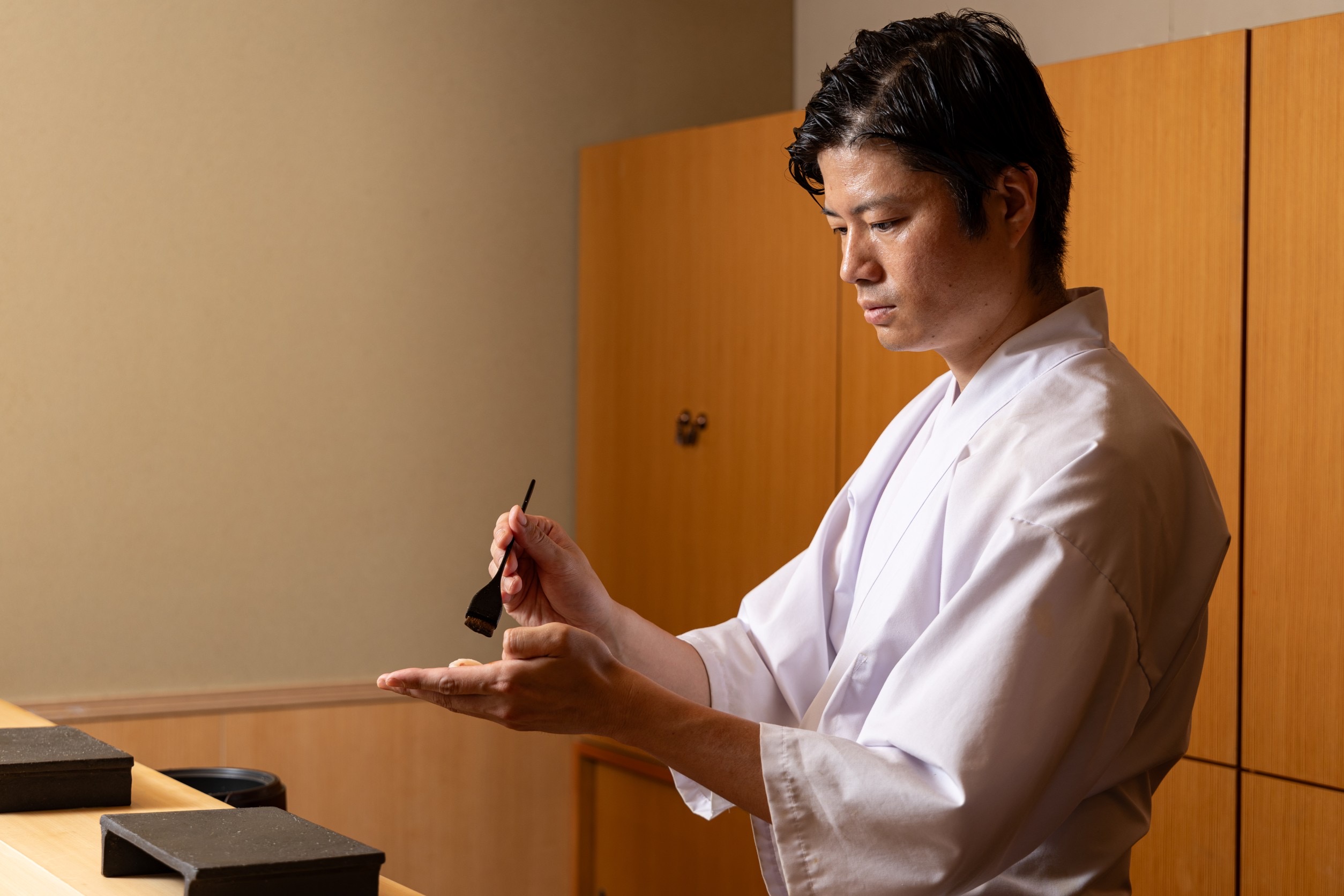
Reviewed by
Tatsuo TakadaHead chef and owner of Sushi Tanji. Trained in the Edomae tradition and rooted in Kyushu, he leads the eight-seat omakase counter in Oku-Akasaka, Tokyo, and reviews The Tokyo Sushi Guide.