
Reviewed by Tatsuo Takada (owner-chef, Oku-Akasaka Sushi Tanji)
Part of The Tokyo Sushi Guide Updated Reading time about 6 minutes See the menu →

The history of nigiri begins with a quick bite eaten standing at the street stalls of late Edo. From there we follow some two hundred years: the preserving craft of an age without refrigerators, the cold storage of the post-war years, sushi’s travels abroad and the ideas, salmon among them, that found their way back to Japan.
In short
Nigiri took shape at Edo’s street stalls around the 1820s as a snack about twice the size of today’s pieces. With no refrigeration, techniques of curing, marinating and simmering developed. Post-war cold storage later put raw fish and toro (fatty tuna) at centre stage. Once sushi had spread abroad, creations such as salmon nigiri travelled back to Japan.
What you will learn
- How nigiri emerged at street stalls in the Bunsei era of the 1820s, plus how large it was then
- Why curing, marinating and simmering began as ways of preserving fish before refrigeration
- How refrigeration, freezing and modern distribution changed the standing of toro
- The paths by which the California roll and conveyor-belt sushi carried sushi to a wider world
- Salmon nigiri as an example of a dish that came home to Japan from abroad
- How the idea of ageing fish connects with the Edomae tradition
A Street-Stall Snack Eaten in Two Bites
Nigiri is thought to have taken shape in the late Edo period, around the Bunsei era of the 1820s. The name most often credited is Hanaya Yohei of Ryōgoku. Other craftsmen are said to have been experimenting along similar lines at the same time, though, so it is fairer to see nigiri as a shared discovery than the work of one man.
Earlier sushi was largely pressed, with fish and rice layered and left to meld over time. There was also narezushi (fish fermented with rice). Setting fish on shari (seasoned rice) and shaping it on the spot meant no waiting at all, which seems to have suited the famously impatient townspeople of Edo. Stall nigiri is said to have been two to three times the size of today’s. Workers on their way home would eat it standing, in two or three bites.
Shigoto: The Craft of an Age Without Refrigeration
Edo’s street stalls had no refrigeration. Since raw fish would not keep for long, cooks developed ways of treating the neta (the topping on the rice) before serving it. These techniques are still known today as Edomae shigoto, the work of the Edo style.
- Curing (shimeru)Kohada (gizzard shad) and mackerel are cured in salt and vinegar to settle the flesh.
- Marinating (tsukeru)Akami (lean tuna) rests in soy sauce so the flavour sinks in.
- Simmering (niru)Anago (conger eel) and clams are simmered, then brushed with nitsume, a glossy reduced glaze, before serving.
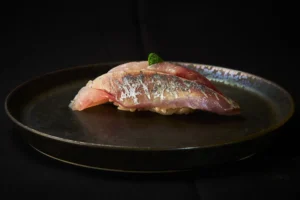
Each began as a way to preserve fish, then was refined over time into a technique for deepening flavour. At the counter in September, vinegar-cured kohada grown on from summer’s shinko (the season’s first young kohada) carries that heritage clearly.
How Refrigeration Changed the Line-up of Toppings
From the Meiji era onwards, ice-making spread. Once ice-cooled chests reached sushi shops, the range of fish that could be served raw slowly grew. After the war came electric refrigerators and freezing technology, along with a distribution network that kept fish chilled from the landing port to the market. With them, the shift became decisive.
Toro, the fatty belly of tuna, also came to be prized in this era. In Edo times it spoiled easily and is said to have been little liked. Only once it could travel cold did the sweetness of its fat truly come into its own.
The stalls themselves moved indoors over the war and post-war years, prompted in part by hygiene regulations. Their legacy lives on in today’s tsukedai (the counter where each piece is set down) as well as in the closeness of sitting face to face with the chef.
Nigiri Crosses the Ocean
A turning point for nigiri abroad is generally placed on the West Coast of the United States in the 1960s. At a Japanese restaurant in Los Angeles, the California roll was born, with the nori (dried seaweed) turned to the inside and avocado in the filling. It offered people unused to raw fish a gentle way into sushi.
In Japan, kaitenzushi (conveyor-belt sushi) opened in Osaka in 1958, carrying sushi from a special treat at the counter to a relaxed family meal out. The growth of sushi restaurants around the world owes much to this broadening base, together with the spread of frozen tuna.
What Came Home Again
Some things that grew up abroad have also returned to Japan. Salmon nigiri is the best-known example. For a long time, salmon was not a fish Japanese people ate raw. In the 1980s Norway introduced farmed salmon raised for raw eating to Japan. Today it ranks among the most popular choices at conveyor-belt restaurants.
The word omakase has also passed into English unchanged. Leaving each piece to the chef’s judgement won admirers overseas first. It is now enjoying fresh appreciation in Japan as well.
| Period | Nigiri at the time | Background |
|---|---|---|
| Late Edo (around Bunsei) | Generous nigiri from street stalls | Curing, marinating and simmering to keep fish |
| Meiji to early Shōwa | Raw fish gradually increases | Spread of ice-making and ice-cooled chests |
| Post-war | From street stall to indoor shop | Hygiene rules; cold storage, freezing and distribution |
| 1950s to 1960s | Conveyor-belt sushi; the California roll | Mass appeal at home with growth abroad |
| 1980s onwards | Salmon nigiri takes hold | Introduction of Norwegian salmon |
The Edo That Remains at Today's Counter
Refrigeration did not make the Edomae craft unnecessary. With temperatures now finely controlled, jukusei (ageing), resting fish to draw out its umami, has joined curing and marinating in the repertoire. What began as a means of preservation has become a craft of judging when each fish tastes its best.
At Sushi Tanji in Oku-Akasaka, classical techniques such as curing, marinating and nikiri (a brushed soy glaze) are paired with ageing informed by the Tsumoto method of fish preparation. Bleeding and dressing the fish are means rather than ends. The aim is to recognise the moment each fish is at its finest, then serve it at exactly that point.
A piece eaten in two bites at an Edo stall. A piece served across today’s counter. The size has changed, as has the handling of the fish. Yet the simple form of shaping sushi before you to be eaten at once has held for two hundred years.
Frequently asked questions
Who invented nigiri?
Hanaya Yohei of Ryōgoku, working around the Bunsei era of the late Edo period, is the name most often given. Other craftsmen are thought to have developed similar ideas at the same time, though, so it cannot be credited to a single inventor.
How large was nigiri in the Edo period?
It is said to have been two to three times today’s size. It was a light snack for a hungry moment, eaten standing at a stall in two or three bites.
Is it true that toro was once unpopular?
In Edo times the fatty cuts spoiled quickly, so they are said to have been little valued. Their standing rose after the war, when refrigeration, freezing and cold distribution made it possible to enjoy the sweetness of the fat.
When did salmon nigiri arrive in Japan?
It spread from the 1980s onwards. The turning point is thought to be Norway’s introduction of farmed salmon for raw eating to Japan. Today it is a staple of conveyor-belt sushi.
Where was the California roll born?
It is thought to have been created at a Japanese restaurant in Los Angeles sometime between the 1960s and the 1970s. Turning the nori to the inside and adding avocado made it approachable for people unused to raw fish.
From the guide to the counter
Taste it at our eight-seat counter in Oku-Akasaka.
Classic Edomae craft with careful modern aging – served piece by piece, with English guidance for overseas guests.
Reserve at Sushi Tanji Explore The Tokyo Sushi Guide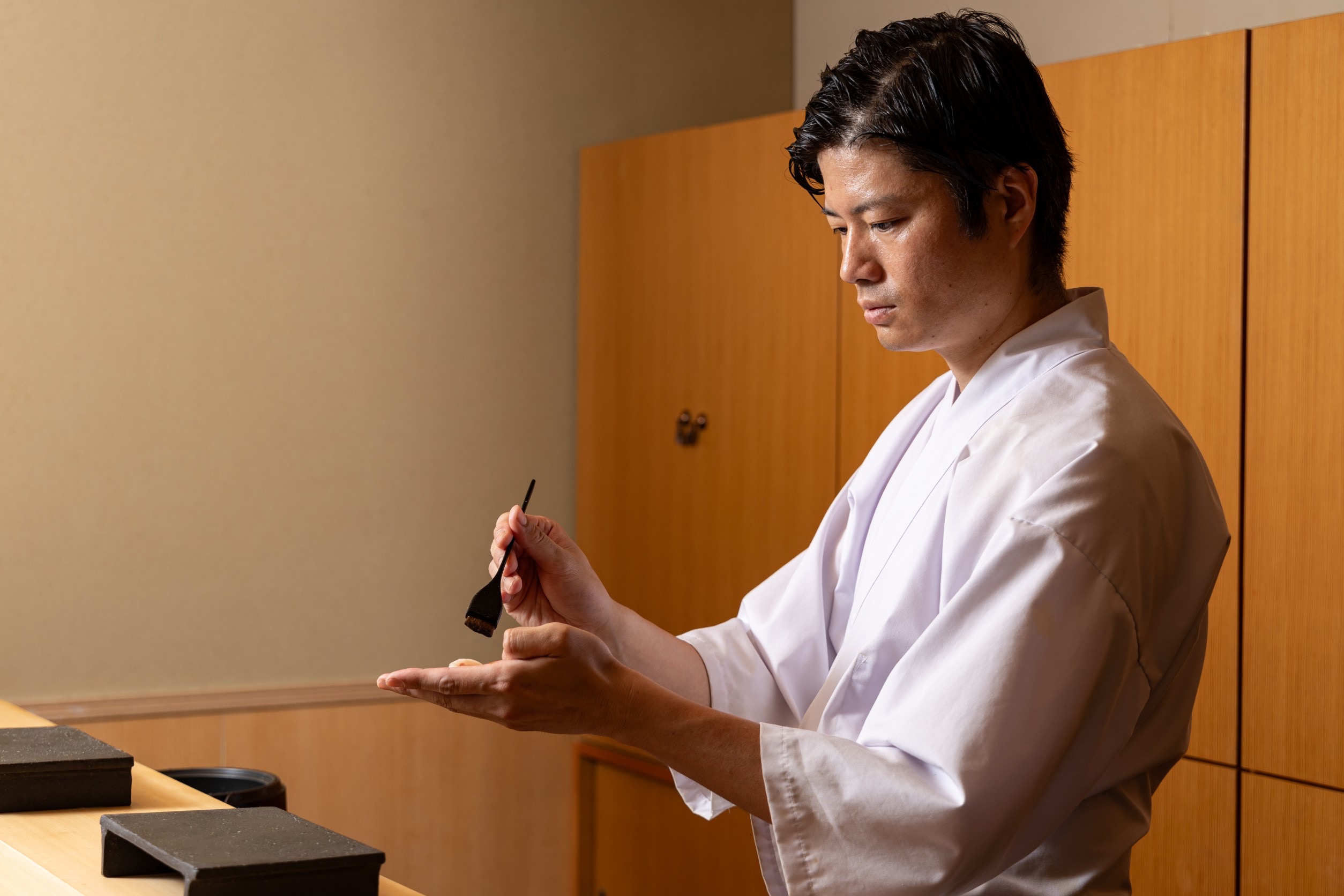
Reviewed by
Tatsuo TakadaHead chef and owner of Sushi Tanji. Trained in the Edomae tradition and rooted in Kyushu, he leads the eight-seat omakase counter in Oku-Akasaka, Tokyo, and reviews The Tokyo Sushi Guide.