
Reviewed by Tatsuo Takada (owner-chef, Oku-Akasaka Sushi Tanji)
Part of The Tokyo Sushi Guide Updated Reading time about 6 minutes See the menu →
Murasaki (soy sauce), agari (tea) and oaiso (the bill) are well known as sushi-bar jargon. Yet they began as the house’s own private shorthand, and there is no need for a guest to learn them. Here we look at the words you are likely to hear at the counter, where they come from, and where the line falls between words guests can use just as they are and the craftsman’s own jargon.
Murasaki, agari and oaiso are, at heart, words used by the people behind the counter. As a guest, asking for soy sauce, tea or the bill in everyday terms is perfectly enough, while widely adopted words such as shari, gari, neta and sabi-nuki can be used freely and will be understood.
What you will learn
- Where shari, neta, gyoku and namida come from
- Which words guests can use with ease, and which remain the house's own
- Why asking for the bill reads more naturally than saying oaiso
- How knowing the names of techniques such as shime, zuke and nikiri enriches the conversation
- The October menu words: modori-gatsuo, ikura and shime-saba
Jargon was born behind the counter
Fuchō (trade jargon) is, in essence, an insider’s language: a quick way for staff to pass messages to one another in front of guests. It is hardly unique to sushi. Fish markets and kimono merchants once had their own coded words for prices and goods.
Trace the words back and you catch the texture of life in old Edo. Shari (seasoned rice) likens grains of rice to busshari, the relics of the Buddha; neta (the topping) is tane, meaning ingredient, read backwards; and gyoku (the omelette) is the Chinese-derived reading of the character for tamago, egg. Wasabi is called namida, tears, because of the way its sharp heat rises through the nose and brings a tear to the eye.
Words heard at the counter, and how guests might use them
Here are the words you are most likely to hear, arranged by how comfortably a guest might use them.
| Word | Meaning | A guide for guests |
|---|---|---|
| Shari | Seasoned sushi rice | Use freely; widely understood |
| Neta (tane) | The fish or seafood laid over the rice | Use freely; widely understood |
| Gari | Ginger pickled in sweet vinegar | Use freely; widely understood |
| Sabi-nuki | Without wasabi | An established way to order |
| Hikarimono | Silver-skinned fish such as kohada, aji and saba | Use freely; widely understood |
| Murasaki | Soy sauce | Simply asking for soy sauce is enough |
| Agari | Tea | Simply asking for tea is enough |
| Oaiso | The bill | Asking for the bill sounds more natural |
| Namida | Wasabi | A word that stays behind the counter |
| Gyoku | Tamagoyaki, the sweet omelette | Tamago is understood |
| Tsume | A sweet, reduced glaze | Heard with anago or simmered clam |
| Nikiri | Reduced soy sauce brushed on with a fine brush | Use freely; widely understood |
Words to use with ease
Shari, neta and gari have long since slipped into everyday conversation, and they sound entirely natural from a guest. Ordering sabi-nuki is equally well established, and many people who would rather skip the wasabi use it.
The same is true of omakase and okonomi. Omakase means leaving the menu to the chef; okonomi means ordering whatever you fancy, one piece at a time. Both were always meant for guests to use.
Murasaki, agari and oaiso belong to the house
These words were originally used by the craftsmen and staff. A guest who uses them will rarely meet any disapproval, but asking in plain, everyday words tends to sound the more natural of the two.
Oaiso in particular is said to come from a humble phrase used by the house when presenting the bill, roughly an apology for lacking in charm, aiso. For that reason, most guests simply ask for the bill instead.
There are number words too, such as pin (one), ryan (two) and geta (three), which craftsmen have used to call out quantities to one another. They vary from shop to shop and region to region, and there is no need for guests to learn them.
Knowing the names of the techniques deepens the conversation
Quite apart from jargon, the names of the techniques are well worth knowing, as they add to the pleasure of the meal. There is shime, firming the fish with vinegar or salt; zuke, marinating it in soy sauce; and nikiri, soy sauce simmered with sake or mirin. Each is a piece of Edomae craft, refined over generations to keep fish at its best and to bring its flavour into balance.
At Sushi Tanji in Oku-Akasaka, these techniques of shime, zuke and nikiri are paired with ageing, with the time and temperature judged for each kind of fish, to shape every piece. Bleeding and preparation are only the means. The aim is to recognise the moment a fish is at its most delicious, and to serve it then.
A simple question, such as whether the mackerel has been cured or whether a piece is zuke, will often lead the chef to share a little about the preparation.
Words you will meet on the October menu
In October, seasonal words multiply at the counter. Bonito that has fattened through the autumn and is heading back south is called modori-gatsuo, returning bonito. Ikura, salmon roe loosened from the raw skein and marinated in soy sauce, is often prepared at this time of year too. And in shime-saba, mackerel cured in vinegar just as it begins to take on richness, the character 〆 captures the whole technique of shime in a single stroke.
If the kanji on the menu are unfamiliar, there is no cause for concern. Simply ask, and you will usually hear how the word is read, along with something of where the fish came from and how it was prepared.
Frequently asked questions
Is it rude to say oaiso at a sushi restaurant?
It is not wrong to use it, but the word is thought to have begun as the house’s own phrase when presenting the bill. Most guests simply ask for the bill, which sounds more natural.
Should I say murasaki and agari at a sushi restaurant?
There is no need. Both are, at heart, words used by the staff, and asking for soy sauce or tea is perfectly clear.
Is it all right for an adult to order sabi-nuki?
Please feel free to ask. Plenty of adults who would rather skip the wasabi use the word, and mentioning it at the start of the meal usually means it will be taken care of.
Can I ask for more gari or another cup of tea?
At most restaurants, yes, and quite casually. Asking in ordinary words for a little more ginger or another cup of tea is all it takes.
From the guide to the counter
Taste it at our eight-seat counter in Oku-Akasaka.
Classic Edomae craft with careful modern aging – served piece by piece, with English guidance for overseas guests.
Reserve at Sushi Tanji Explore The Tokyo Sushi Guide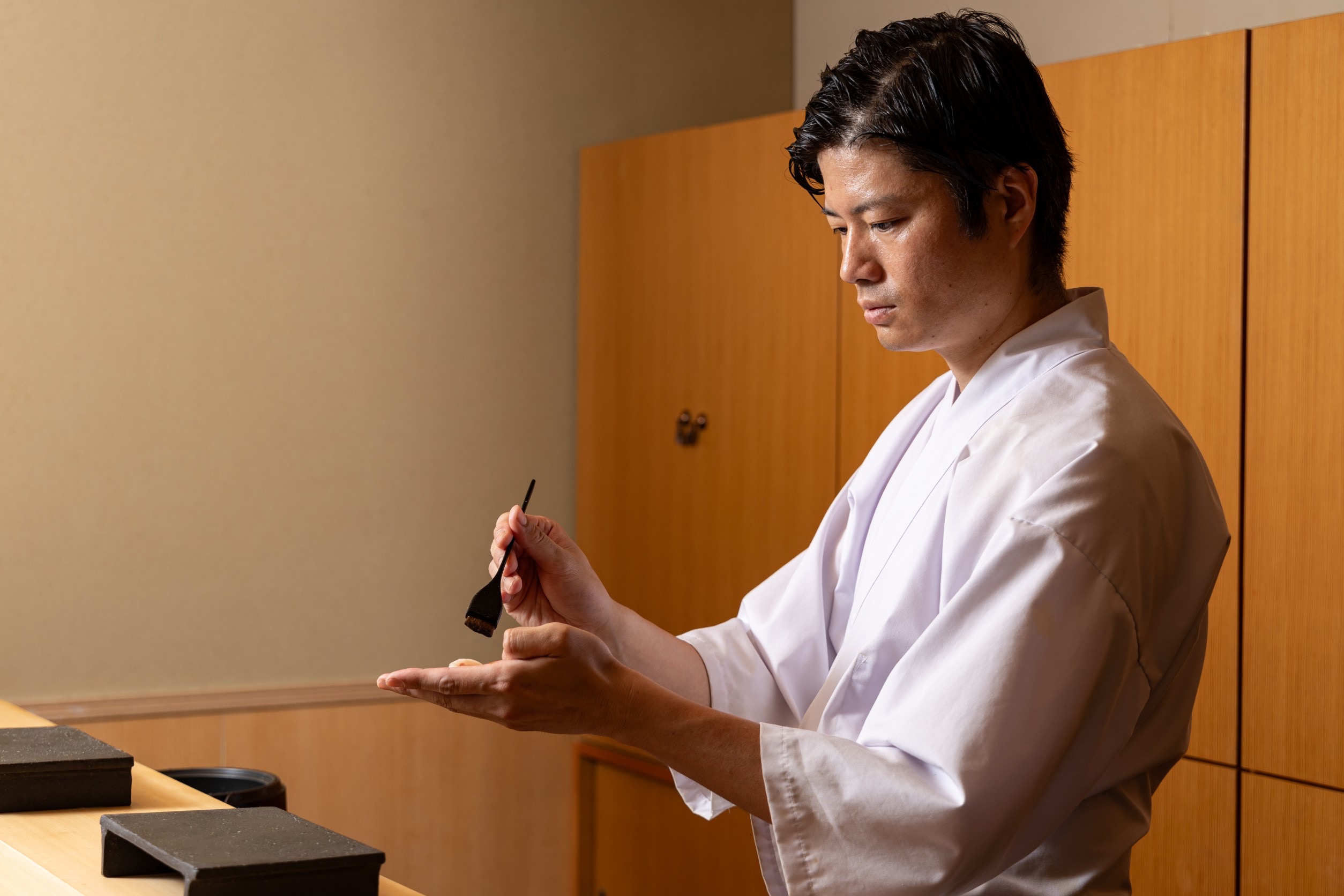
Reviewed by
Tatsuo TakadaOwner of Sushi Tanji. Trained in the Edomae tradition and rooted in Kyushu, he leads the eight-seat omakase counter in Oku-Akasaka, Tokyo, and reviews The Tokyo Sushi Guide.