
Reviewed by Tatsuo Takada (owner-chef, Oku-Akasaka Sushi Tanji)
Part of The Tokyo Sushi Guide Updated Reading time about 6 minutes See the menu →
The single bevel of the Japanese knife exists for one purpose: a clean cut through sashimi and the toppings laid over sushi rice. With an edge ground on one face only and a back left almost flat, the blade is shaped to pass through fish in a single stroke. Here we look at how that edge is built, how the cut it leaves shows up on the palate, which knives work behind a sushi counter, how the chefs keep them sharp, and how they differ from the knives found in kitchens abroad.
In short
A Japanese knife has a single bevel so that its flat back can run true against the fish while the edge is ground thin and keen. A slice made in one pull has crisp corners and leaves the fibres of the flesh largely intact, which you can feel in the texture of sashimi and sushi toppings.
What you will learn
- The three parts of a single-bevel blade: kireha, urasuki and uraoshi
- Why a single drawing stroke, hikikiri, protects the cut surface
- Where the deba, yanagiba and usuba each do their work
- The sequence of sharpening, from coarse stone to finishing stone
- How the single bevel compares with double-bevelled Western knives, and why handedness matters
- Slicing November's white-fleshed fish thinly, and what the knife brings to it
What a single bevel is: an angled face and a flat back
A single-bevel knife has an angled face, the kireha, ground on one side of the blade, while the other side is finished almost flat. On a right-handed knife the bevel sits on the right. The back is not quite as flat as it looks: it carries a very shallow hollow called the urasuki, and along the edge runs a narrow flat band known as the uraoshi.
The hollow keeps food from clinging to the blade, while the flat band holds the edge straight and true. In knives forged by layering hard steel over softer iron, a method known as awase, it is the steel that forms the cutting edge on the back. This shape is often said to rest on the long tradition of Japanese smiths forging steel in layers.
How the cut shapes the flavour: slicing in one stroke
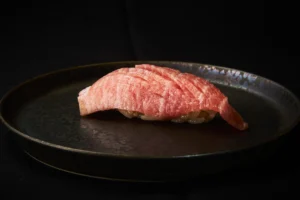
To slice sashimi or a sushi topping, the chef sets the heel of the blade against the fish and draws the full length of the edge towards the body in a single movement. This is called hikikiri, the pull cut. Because a single bevel allows a finer edge angle and the flat back lies along the flesh, one stroke is enough to part the slice cleanly, with no sawing back and forth.
Pressing down or sawing tends to crush the fibres, so moisture carrying much of the flavour seeps from the cut face. A cleanly drawn slice has defined corners and a smooth surface, and the nikiri (a glaze of soy sauce softened with sake and mirin) settles over it evenly. The difference on the tongue is clearer than one might expect.
Three knives of the sushi kitchen
In the preparation area of a sushi restaurant, single-bevel knives are matched to particular tasks. The deba is thick and weighty, used to take off the head and lift the fillets away along the bone. The yanagiba is long and slender, often around 27 to 30 centimetres, and is the knife for slicing toppings from a trimmed block of fish, the saku. In the Kanto region some chefs prefer the takohiki, which has a squared-off tip.
The usuba is the vegetable knife, used for katsuramuki, peeling daikon into a long, paper-thin sheet, and for cutting the fine shreds served alongside sashimi, known as ken. Filleting, slicing, peeling: that each task calls for its own blade thickness and length is one of the hallmarks of the single-bevel tradition.
The culture of sharpening: to the whetstone after service
A single-bevel knife is a tool whose shape is kept by the hand that sharpens it. Many sushi chefs tend their blades on a whetstone after the evening’s service or before the day’s preparation begins. Sharpening usually moves from a coarse stone to progressively finer ones.
- Arato, the coarse stoneRepairs chips and any larger loss of shape in the edge.
- Nakato, the medium stoneThe heart of the process, where the bevel face is levelled and the edge is formed.
- Shiageto, the finishing stonePolishes the edge to a smooth finish, which carries through to the lustre of the cut. Many chefs favour natural finishing stones.
- Touching the backThe flat band on the back is passed lightly over the stone to remove the burr. The art lies in grinding the back as little as possible.
Keeping the bevel face even while preserving the narrow flat on the back is demanding work that takes years to master. A yanagiba in long service grows gradually slimmer, by exactly as much as the stone has taken away.
How it differs from knives abroad
Most European and American knives are double-bevelled, with an edge ground at the same angle on both faces. They suit push cuts and rocking cuts, and handle meat and firm vegetables with ease. The santoku and gyuto knives found in most Japanese home kitchens are largely double-bevelled too.
| Feature | Single bevel (Japanese knife) | Double bevel (Western knife) |
|---|---|---|
| Blade shape | Bevel on one face, back almost flat | Edge at the same angle on both faces |
| Main cutting style | A single pull towards the body | Push cuts and rocking cuts |
| Best suited to | Sashimi, very thin slicing, katsuramuki | Meat, root vegetables, everyday cooking |
| Handedness | Made in right- and left-handed versions | Comfortable in either hand |
| Sharpening | Bevel and back are tended separately | Both faces are sharpened alike |
Neither is better than the other. It helps to see the single bevel as something refined in Japan precisely because this is a cuisine that places such value on the cut surface of raw fish.
November's white fish and the final stroke
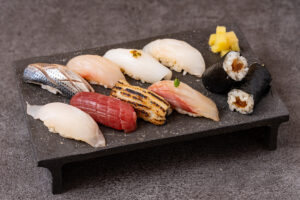
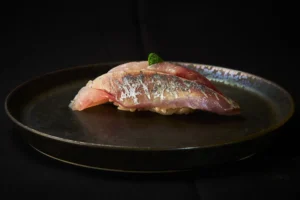
November is the season when white-fleshed fish such as hirame (olive flounder) and kawahagi (thread-sail filefish) come into their best. When firm white fish is sliced thin, the condition of the blade shows directly in the cut. Aged fish tends to soften, and a dull edge can easily press and crush its fibres.
At Sushi Tanji in Oku-Akasaka, the work rests on a simple idea: the fish passes from fisherman to wholesaler to the specialist who prepares it, and the counter is the last pair of hands to receive it before it is shaped into sushi. The single stroke of the knife comes at the very end of that long chain of care. If you watch the chef’s hands at the counter, you may notice the blade being wiped gently with a cloth before each cut.
Frequently asked questions
Can a left-handed cook use a single-bevel yanagiba?
Single-bevel knives come in right- and left-handed versions, and left-handed knives are made with the bevel on the opposite side. A right-handed knife used in the left hand has its bevel facing the wrong way, which makes a straight pull difficult. Knife shops are usually happy to order a left-handed version.
Can a double-bevelled knife slice good sashimi?
A well-sharpened double-bevelled knife can cut sashimi very cleanly. Rather than sawing, try using the full length of the edge and drawing it towards you in a single stroke, and the slices will keep their crisp corners.
How should I look after a yanagiba at home?
Carbon steel knives can rust, so many owners wash the blade straight after use and dry it thoroughly. For sharpening, a single medium stone is a perfectly good place to begin. There is no need to aim for perfection at the outset; a relaxed approach serves you well.
Where are sushi chefs' knives usually made?
Sakai, in Osaka, is well known for its single-bevel Japanese knives. The town has a long tradition of dividing the work between craftsmen, with forging, sharpening and fitting the handle each done by different hands, and it has long supplied knives to professional cooks.
From the guide to the counter
Taste it at our eight-seat counter in Oku-Akasaka.
Classic Edomae craft with careful modern aging – served piece by piece, with English guidance for overseas guests.
Reserve at Sushi Tanji Explore The Tokyo Sushi Guide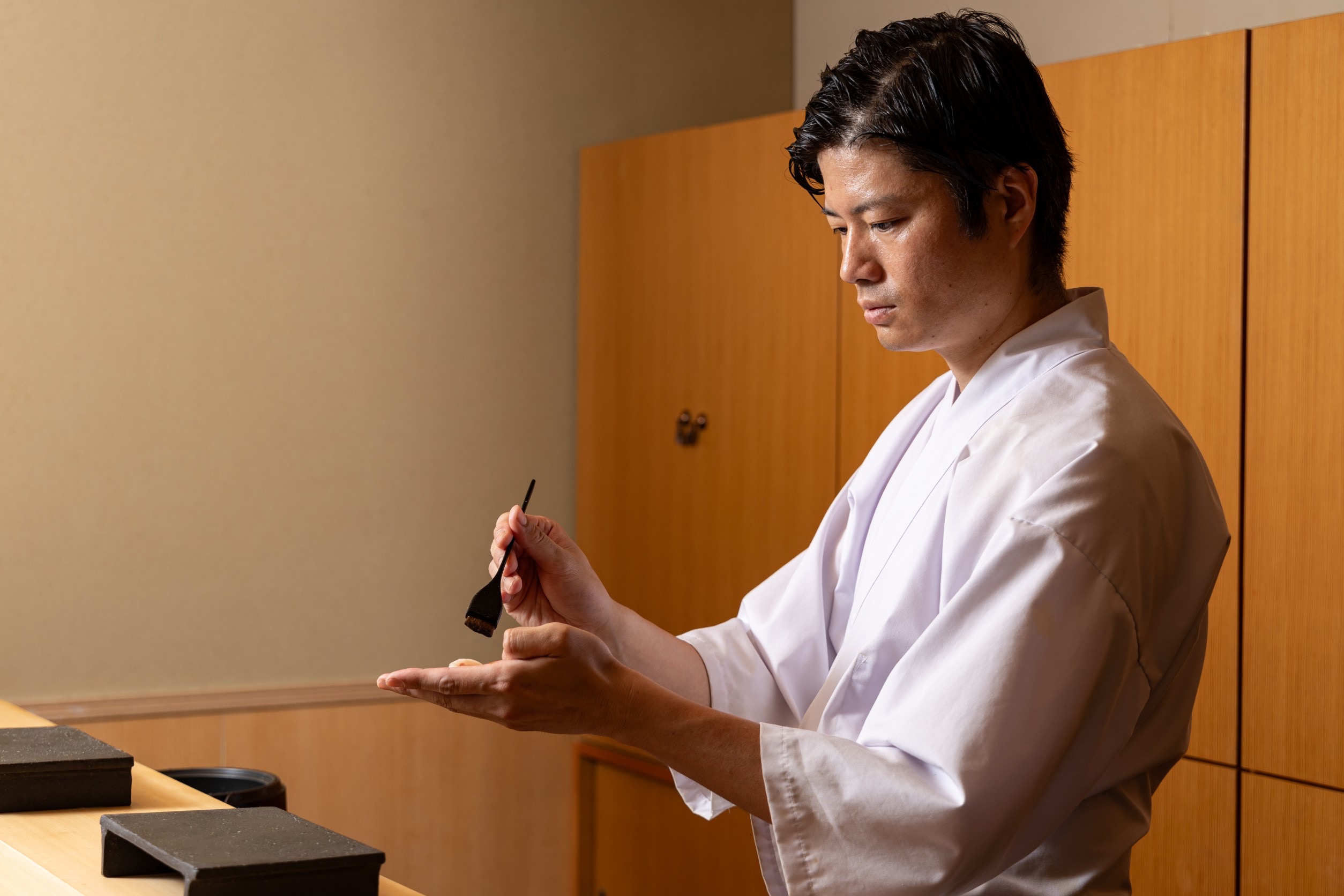
Reviewed by
Tatsuo TakadaOwner of Sushi Tanji. Trained in the Edomae tradition and rooted in Kyushu, he leads the eight-seat omakase counter in Oku-Akasaka, Tokyo, and reviews The Tokyo Sushi Guide.