
Reviewed by Tatsuo Takada (owner-chef, Oku-Akasaka Sushi Tanji)
Part of The Tokyo Sushi Guide Updated Reading time about 6 minutes See the menu →

Junmai, ginjo and daiginjo are not a ranking of quality. They describe how far the rice has been polished and whether a little distilled alcohol has been added. Once you can read the polishing figure on a label and sense how a fragrant sake behaves alongside sushi, choosing a glass at the counter becomes a quiet pleasure rather than a puzzle.
In short
The difference between junmai, ginjo and daiginjo comes down to the polishing ratio (how much of each brown rice grain remains after milling) and whether brewer’s alcohol has been added. The more the rice is polished, the more aromatic the sake tends to be, and delicate white fish or well-seasoned rice often sits more comfortably beside a gently scented sake.
What you will learn
- Why a polishing ratio of 60% means that 40% of the grain has been milled away
- The polishing and added-alcohol standards behind the eight premium sake categories
- How ginjo aroma comes from slow, cool fermentation in the ginjo style of brewing
- Why a highly aromatic sake can overlap with white fish and red-vinegar rice
- Which styles of sake tend to suit each kind of preparation at the counter
- Why describing the aroma you enjoy is often more helpful than naming a grade
Polishing ratio: the share of rice that remains
The polishing ratio, or seimai buai, is the proportion of each grain left once the brown rice has been milled. At 60%, the outer 40% has been taken away; at 50%, half the grain is gone. The lower the figure, the more thoroughly the rice has been polished.
The outer layers of the grain are rich in protein and fat. They can lend a sake rougher notes, yet they are also a source of savouriness and body. Polish more and the flavour becomes clearer and lighter; polish less and the rice shows more depth. It helps to think of these as two directions rather than a higher and a lower rung.
The eight premium sake categories
Words such as “junmai” and “ginjo” may appear on a label only when the sake meets national standards for premium sake, known as tokutei meishō-shu. Any category bearing the word junmai (pure rice) is brewed solely from rice, kōji (rice cultivated with the kōji mould) and water. The others include a small measure of added brewer’s alcohol.
| Category | Polishing ratio | Added brewer's alcohol |
|---|---|---|
| Junmai-shu | No set limit (ratio shown on the label) | None |
| Tokubetsu junmai-shu | 60% or below, or a special brewing method | None |
| Junmai ginjo-shu | 60% or below | None |
| Junmai daiginjo-shu | 50% or below | None |
| Honjozo-shu | 70% or below | Up to 10% of the polished rice weight |
| Tokubetsu honjozo-shu | 60% or below, or a special brewing method | Up to 10% of the polished rice weight |
| Ginjo-shu | 60% or below | Up to 10% of the polished rice weight |
| Daiginjo-shu | 50% or below | Up to 10% of the polished rice weight |
Brewer’s alcohol is usually added to lift the aroma or to lighten the finish. Its presence or absence, on its own, says little about whether a sake is good.
Where ginjo aroma comes from
The bright, fruity fragrance typical of ginjo and daiginjo sake is called ginjo-ka. It arises from ginjo-zukuri, a style of brewing in which well-polished rice ferments slowly at low temperatures. Its best-known components are ethyl caproate, which recalls apple, and isoamyl acetate, closer to banana or melon.
How strongly a sake is scented also depends a great deal on the yeast and on the brewer’s intentions. Some daiginjo are quite restrained, while some junmai are notably fragrant. The polishing ratio is one useful guide, though it does not decide the aroma by itself.
When an aromatic sake meets sushi
Much of sushi’s flavour is gentle: the soft savouriness of hirame (flounder) cured in kombu, the rounded acidity of shari (seasoned rice) made with red vinegar, the faint toastiness of nikiri (a brushed soy glaze). When a fruity ginjo aroma rises strongly over these, the two fragrances can overlap and blur the outline of the fish. Fish that has been cured or marinated, on the other hand, tends to come into sharper focus beside a sake that keeps the savouriness and acidity of its rice.
| Fish and preparation | Sake that tends to suit | Why |
|---|---|---|
| Hirame, kombu-cured | A softly scented junmai ginjo, served cool | The aroma leaves the kombu’s savouriness uncovered |
| Kohada (gizzard shad) and shime saba (vinegar-cured mackerel) | A junmai with lively acidity | The acidity of the cure and of the sake answer one another |
| Zuke (soy-marinated) tuna and simmered anago (conger eel) | A fuller junmai, gently warmed | The depth of the rice meets soy and the sweetness of nitsume glaze |
| Uni (sea urchin) and amaebi (sweet shrimp) | A quietly scented daiginjo is well worth considering | Natural sweetness pairs easily with a clear, clean sake |
Talking about sake at the counter, and the sake of November
There is no need to remember the grades. Simply describing what you enjoy, perhaps “something light with a gentle aroma” or “something with a little more body”, makes it easy for the counter to match a sake to the rhythm of the nigiri. Guests who would like to enjoy a fragrant daiginjo often choose it for the first glass, or for the moment when sweeter pieces arrive.
In November, the mellow hiyaoroshi released in autumn are still being poured, and the earliest breweries begin to offer their shinshu (new-season sake). It is also when winter yellowtail and hirame start to gather richness, so there is real pleasure in comparing a matured, rounded sake with a young, vivid one.
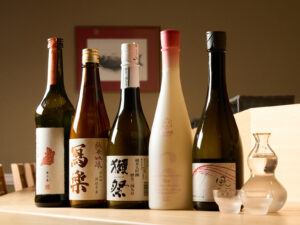
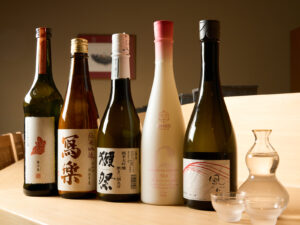
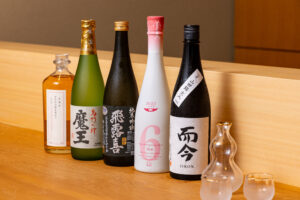
At Sushi Tanji in Oku-Akasaka, sake is seen not as an accompaniment but as part of what completes the sushi. Our owner visits breweries across Japan to understand each maker’s thinking and the character of their region before a sake joins the list. The guiding question is not its grade, but whether it sits gracefully beside each piece.
Frequently asked questions
Is daiginjo the finest kind of sake?
Daiginjo is a category defined by a polishing ratio of 50% or below, not a position in a ranking. It tends to be fragrant and light, yet with sushi there are many pieces that sit more happily beside a junmai that keeps the savouriness of its rice.
Which suits sushi better, junmai or ginjo?
It depends on the piece. Boldly flavoured fish, such as vinegar-cured or soy-marinated cuts, often suits a junmai, while gentle white fish and shellfish tend to sit well with a softly scented ginjo. Thinking in terms of aroma rather than category usually makes the choice easier.
Is sake with added brewer's alcohol of lower quality?
Not necessarily. In ginjo and daiginjo, a small amount within the permitted limit is often added to lift the aroma or lighten the finish. Whether a sake is junmai reflects a difference in method, not a mark of merit.
Why do more highly polished sakes tend to cost more?
The more the rice is milled, the more brown rice is needed to make the same volume of sake, and the polishing itself takes longer. Ginjo brewing also relies on long, cool fermentation, which asks for considerable time and care.
From the guide to the counter
Taste it at our eight-seat counter in Oku-Akasaka.
Classic Edomae craft with careful modern aging – served piece by piece, with English guidance for overseas guests.
Reserve at Sushi Tanji Explore The Tokyo Sushi Guide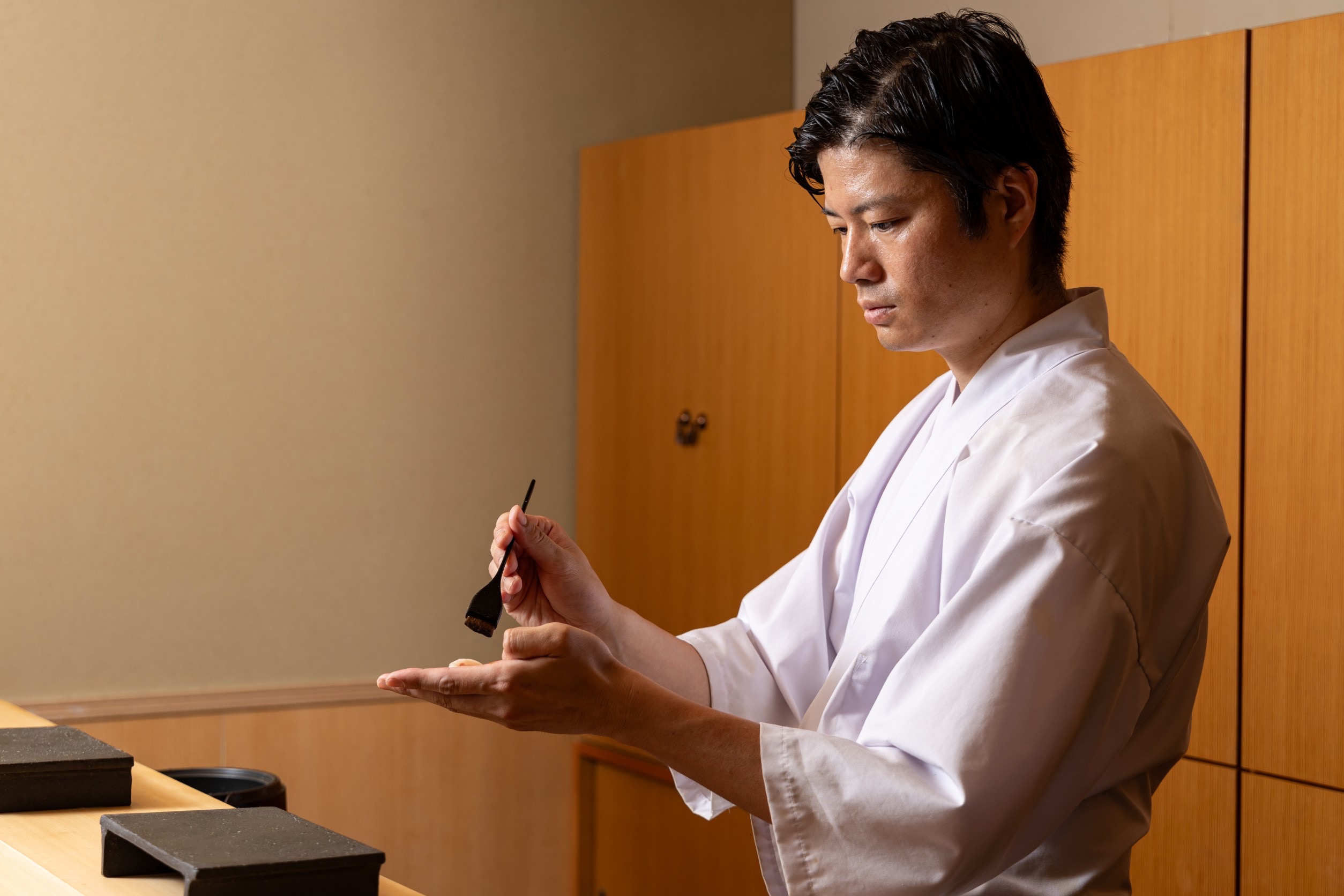
Reviewed by
Tatsuo TakadaOwner of Sushi Tanji. Trained in the Edomae tradition and rooted in Kyushu, he leads the eight-seat omakase counter in Oku-Akasaka, Tokyo, and reviews The Tokyo Sushi Guide.