

Reviewed by Tatsuo Takada (owner-chef, Oku-Akasaka Sushi Tanji)
Part of The Tokyo Sushi Guide Updated Reading time about 6 minutes See the menu →
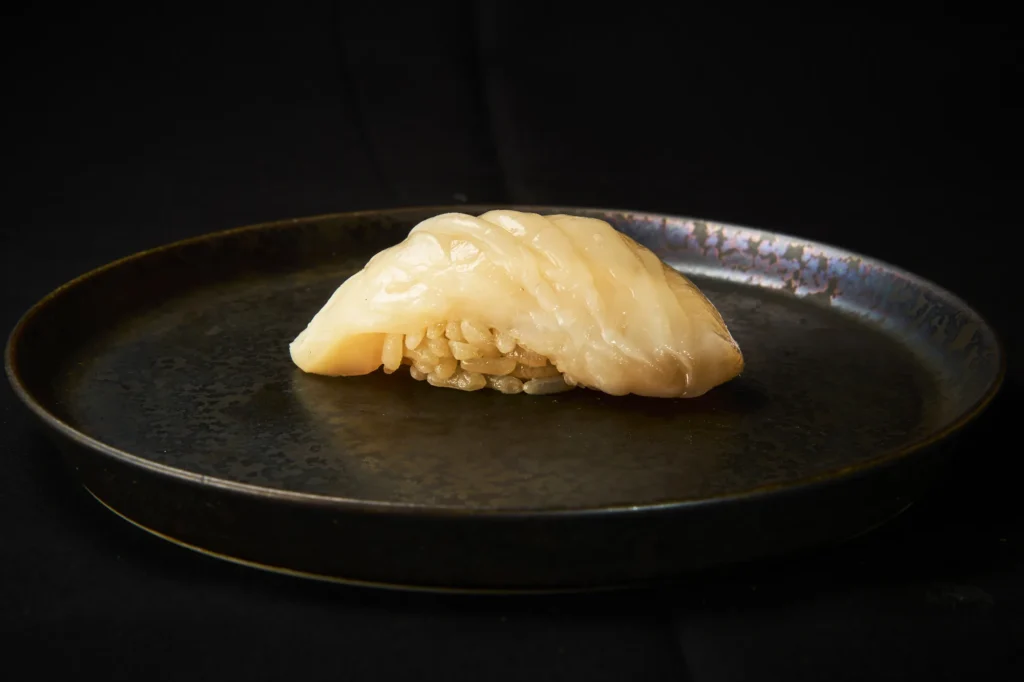
If you are eating sushi in Tokyo in winter, three things are worth keeping in mind: kanburi (cold-season yellowtail), hirame (olive flounder) plus shirako (cod milt). Held together they make the shape of an omakase, the chef’s choice course, much easier to follow. These three form the frame of the winter menu, being also the ingredients on which Edomae technique, the old Tokyo way of curing and ageing fish, tells most clearly. We will look at when each fish is at its best, together with the meaning of the work carried out at the counter, one at a time.
In short
Three things anchor winter sushi: kanburi (cold-season yellowtail), kelp-cured hirame (olive flounder) plus shirako (cod milt). As the water cools, fish build up fat and savour before spawning, so this is the season when Edomae work such as salt-curing, kelp-curing and ageing shows at its best.
What you will learn
- Why kanburi carries its finest fat from December to February
- Why the belly and the back are cut to different thicknesses
- How kelp-curing changes the flavour of hirame
- What blanching and searing each bring out in shirako
- How the order of a winter omakase is put together
- When to plan if you would like a winter seat
Why winter fish taste deeper
Fish taste better in winter because they lay down fat and savour ahead of spawning. The colder the water, the firmer the flesh becomes, while fat from a cold sea has a low melting point that gives way on the tongue. A winter piece can be rich without feeling heavy, which is said to owe more to the quality of the fat than to its quantity.
There is a reason on the preparation side as well. Edomae curing, marinating in soy plus the ageing that follows all depend on close control of temperature and time. When the air is cold, the flesh holds its condition more easily, so work that draws out savour over days becomes easier to build. Winter brings pieces of real depth because the state of the fish meets the state of the kitchen.
Kanburi: shaping the peak of the fat
Kanburi is the name for wild yellowtail from roughly December to February, when the fat has reached its fullest just before spawning. Fish landed along the Sea of Japan coast are well known, with larger specimens, above ten kilos or so, generally said to carry fat of a more settled quality. Set beside the same fish in summer, the outline of the flavour belongs to another creature altogether.
The flavour is not uniform within a single fish. The belly side is richly fatted and settles on the tongue, while the back is firmer, closer to the savour of lean flesh. At an Edomae counter the belly may be cut a little thinner to let some of that weight go. Two pieces from different parts may also follow one another, so that the cut itself adjusts the impression.
Rich fish sometimes gather their savour better after a few days than immediately after being dressed. At Sushi Tanji, classical Edomae technique is joined with ageing informed by the Tsumoto method (a careful bleeding and dressing process), the period and temperature judged species by species. Bleeding is not treated as an end in itself; it is a means of bringing the fish to the guest at the moment it tastes best.
Hirame and kelp-curing: drawing out white fish
Hirame is another white fish that gains in winter, known then as kanbirame. It carries less fat than yellowtail, though the flesh is firm, with a sweetness that rises the longer you chew. In an omakase that opens with white fish, it tends to appear early on.
Why kelp-curing suits white fish
White fish hold a good deal of water, so their savour does not come forward as strongly as it does in lean red flesh. Pressed between sheets of kombu (dried kelp), the flesh gives up that excess water and firms, taking on glutamates from the kelp. Thin fillets want a short time, thicker ones longer, so judging the interval largely decides the taste.
- Fillet the fish, then salt itThis draws a little water from the surface while settling the flesh.
- Rinse with vinegar, then press with kelpVinegar used lightly. Ma-kombu or Rishiri kombu are the usual choices.
- Lift it off at the right momentAnywhere from tens of minutes to several hours. Cured too long, the kelp fragrance covers the fish.
The engawa is the muscle along the rim that works the fin, so only a little comes from each fish. It has both fat and bite; in winter it is sometimes formed as its own piece alongside the fillet. Two expressions from one fish is part of what makes white fish interesting.
Shirako, a piece that appears only in winter
Shirako is cod milt, at its best from December through February. Most of what circulates comes from Pacific cod, also called kumoko. It is not something available the year round, so its arrival on a menu reads as a signal of the season.
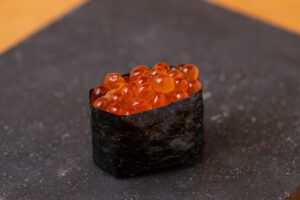
In sushi the usual handling is a brief pass through hot water to firm the surface or a light sear for fragrance. Some counters set it in a gunkan (a band of nori wrapped to hold a loose topping) with sudachi or ponzu alongside; others bring it in a small bowl, so practice varies. Because the flavour is rich, it often arrives in the later part of the course, around the soup.
Shirako loses freshness quickly, so the care taken in preparation shows plainly. Removing the threads of blood patiently, then washing in cold water before any heat is applied, is said to leave little in the way of off notes. Behind that yielding texture sits a good deal of quiet work.
How a winter omakase moves
One common shape begins with pale white fish, passes through hikarimono (silver-skinned fish) plus shellfish, then moves on to lean tuna and the richer pieces. Bold things such as kanburi or shirako sit from the middle onwards, with a soup or a roll to settle the palate at the close. The order itself is the design of the meal’s rise and fall.
| Neta (topping) | When it is at its best | Winter work |
|---|---|---|
| Kanburi | December to February | Belly and back cut to different thicknesses |
| Hirame | November to February | Kelp-cured; engawa formed separately |
| Shirako | December to February | Blanched or seared, set in gunkan |
| Akagai (ark shell) | December to March | Struck lightly to lift its fragrance |
| Kanmaguro (winter tuna) | November to February | Lean cuts marinated or rested through ageing |
Winter changes the matching of sake as well. Rich pieces such as kanburi or shirako often find company in sake with firm acidity as well as in nurukan (sake warmed to around body temperature), where the warmth helps carry the fat away. Sake is not thought of as something set beside the sushi; it completes the piece.
Planning a winter visit
Winter seats fill early. December in particular can see weekends taken well in advance from the autumn onwards. Settling on dates during the summer leaves room to move while times plus seating are still open. Many guests find it easier to hold a quiet weekday evening ahead of time than to search in a hurry.
There is no need to arrive prepared. Committing every winter fish to memory is not required; holding kanburi, hirame plus shirako in mind is enough to place whatever arrives. Most guests simply ask about a fish they do not recognise; the conversation at the counter tends to open out from there.
Sushi Tanji, an eight-seat counter in the quiet reaches of Akasaka, works with seasonal fish gathered from across Japan, Kyushu above all, dressed with Edomae technique and ageing. The meal closes in a tea room with matcha and a seasonal wagashi (Japanese sweet), a small pause before the cold night outside. The thinking behind it is set out in the concept, with seasonal reading gathered in the guide.
Frequently asked questions
When is kanburi at its best?
Roughly December to February. Wild yellowtail that has stored fat ahead of spawning comes ashore in this window, with fish from the Sea of Japan side particularly well known. The fat differs so much from the same fish in summer that the winter form is given a name of its own.
How does kelp-cured hirame differ from plain hirame?
Water leaves the flesh, which firms while taking on savour from the kelp, so the flavour reads as more concentrated. Raw, the appeal is bite with a faint sweetness; kelp-cured, a denser texture with deeper savour comes forward. In winter both may appear on the same day.
What if I am not fond of shirako?
That is quite all right. In an omakase, mentioning anything you would rather avoid at the start usually means another topping can be offered instead. Seared shirako is more fragrant than blanched, with a lighter finish, so some guests who find the texture difficult get on well with it that way.
Is a winter omakase dearer than other seasons?
At the same restaurant, winter can indeed come to more. Toppings whose market price rises, shirako, kanburi plus winter tuna among them, appear more often, with the market moving especially around the New Year. Figures differ from house to house, so a word at the time of booking settles it.
How far ahead should I book for winter?
For a weekend in December, moving during the autumn leaves you with choices. A small counter of about eight seats can take only so many bookings in a day, so offering two or three possible dates makes it much easier to settle.
From the guide to the counter
Taste it at our eight-seat counter in Oku-Akasaka.
Classic Edomae craft with careful modern aging – served piece by piece, with English guidance for overseas guests.
Reserve at Sushi Tanji Explore The Tokyo Sushi Guide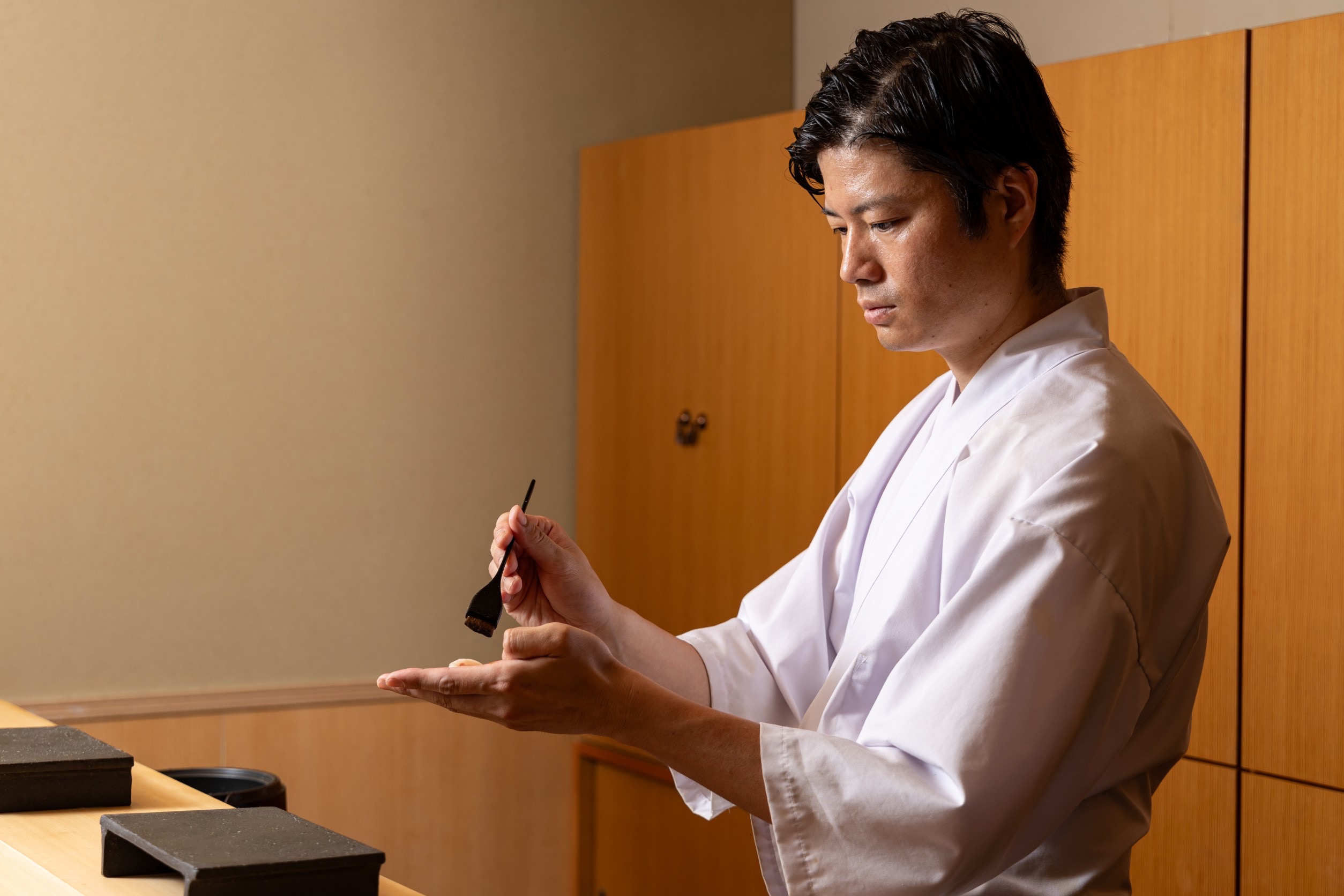
Reviewed by
Tatsuo TakadaHead chef and owner of Sushi Tanji. Trained in the Edomae tradition and rooted in Kyushu, he leads the eight-seat omakase counter in Oku-Akasaka, Tokyo, and reviews The Tokyo Sushi Guide.