
Reviewed by Tatsuo Takada (owner-chef, Oku-Akasaka Sushi Tanji)
Part of The Tokyo Sushi Guide Updated Reading time about 6 minutes See the menu →
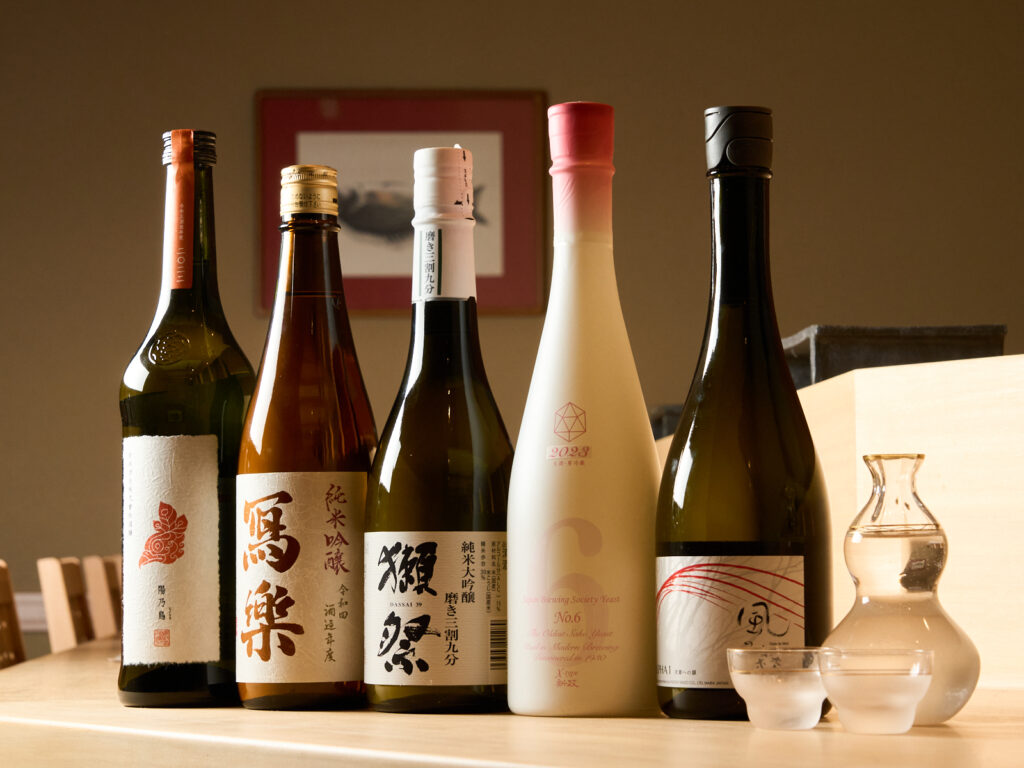
The words junmai, ginjo and daiginjo on a sake list are not a ranking of quality. They describe what the sake is made from and how far its rice has been polished. Once these two ideas are familiar, even a list of unknown names becomes surprisingly readable. This guide covers the labels, the names for serving temperatures and the choice between a glass and a small cup, all with the sushi counter in mind.
In short
A sake list can be read with two questions: is it junmai, and is it ginjo? Junmai sake is made only from rice, rice koji and water, while ginjo sake uses rice polished to 60% of its original size or less. Even without knowing a single brand, you can order well by mentioning the aroma you enjoy, the weight of flavour you prefer and the temperature you would like.
What you will learn
- Junmai means no added distilled alcohol; ginjo means rice polished to 60% or less
- The polishing figure shows how much of the grain remains, not how much was removed
- What sets October's hiyaoroshi apart, and the autumn fish it suits
- The traditional names for serving temperatures, from icy cold to hot
- Why ginjo is often poured into a glass and warm sake into a small cup
- Three simple ways to order, even if the labels are unreadable
Two words that unlock most of the sake list
Beside each name on a sake list you will often see a category such as junmai ginjo or honjozo. These belong to a classification known as tokutei meishō-shu (special designation sake), and it rests on two points. The first is whether a little distilled alcohol has been added; the second is how much the rice has been polished. Junmai (pure rice) sake is brewed only from rice, rice koji and water. Ginjo and daiginjo sake are made from well-polished rice, fermented slowly at cool temperatures.
| Label | Added distilled alcohol | Polishing ratio (approx.) | Typical character |
|---|---|---|---|
| Junmai | None | No set requirement | Rounded, with the savoury depth of rice |
| Honjozo | A small amount | 70% or less | Light and clean |
| Junmai ginjo | None | 60% or less | Fragrant, with the body of rice |
| Ginjo | A small amount | 60% or less | Aromatic and light |
| Junmai daiginjo | None | 50% or less | Delicate and highly fragrant |
| Daiginjo | A small amount | 50% or less | Clear aroma and a pure, transparent feel |
Distilled alcohol is not added simply to stretch the volume. Brewers also use it to lift the aroma and lighten the finish, so a sake that is not junmai is in no way a lesser one.
The polishing figure shows what remains
A seimai buai (polishing ratio) of 50% means half of the brown rice grain has been milled away and half remains. The lower the figure, the more of the outer layer has been removed. Fewer of the compounds that can muddy the flavour are left behind, and the sake tends towards a clearer, more refined aroma.
Hiyaoroshi, the sake of October
In autumn, one name appears on sake lists again and again: hiyaoroshi. Pressed in winter or spring, the sake is pasteurised once, rested through the summer and released in autumn without a second pasteurisation. The result is mellow, with its edges softened by time. It is a natural partner for the richer fish of the season, such as returning autumn bonito or well-fattened mackerel.
You may also see namazake, which is unpasteurised, and genshu, which is undiluted and so often a little higher in alcohol. The nihonshu-do (sake meter value) leans drier as the positive number rises and sweeter as it falls into the negative. Acidity also shapes how sweet or dry a sake feels, though, so the figure is best taken as a gentle hint rather than a rule.
A name for every five degrees
Sake is unusual among drinks in being enjoyable both chilled and warmed. Each temperature has its own name, and you will hear them on menus and in conversation across the counter.
| Name | Approx. temperature | Often suits |
|---|---|---|
| Yukibie (snow-chilled) | Around 5°C | Namazake, crisp honjozo |
| Hanabie (flower-chilled) | Around 10°C | Ginjo, daiginjo |
| Suzubie (cool) | Around 15°C | Junmai ginjo, hiyaoroshi |
| Hiya (room temperature) | Around 20°C | Junmai, hiyaoroshi |
| Nurukan (gently warmed) | Around 40°C | Junmai, honjozo |
| Atsukan (hot) | Around 50°C | Honjozo, dry junmai |
The word hiya can be a little confusing. Traditionally it means sake served at room temperature, without warming, while refrigerated sake is called reishu. A fragrant ginjo can close up if served too cold, and a junmai often opens up its savoury depth when warmed.
Glass or cup: how the vessel shapes the aroma
For aromatic ginjo and daiginjo, more and more counters now pour into a wine glass with a gently tapered rim. The aroma gathers inside the bowl and rises with every sip. Warmed sake, or a junmai enjoyed for its rice character, sits more naturally in an ochoko or the slightly larger guinomi, small cups made for sake. Thick earthenware softens the feel on the lips, while fine porcelain leans towards a crisper impression.
If you are unsure which to choose, it is a pleasure to leave the vessel to the house as well. Cups and glasses are usually chosen to suit each sake, and the pairing itself is a quiet suggestion from the counter.
Three things to mention, and the rest follows
There is no need to decipher every name on the list. At the counter, many guests simply describe what they enjoy in a few words and let the host choose.
- AromaMention whether you would like something fragrant and bright, or something calmer that tastes of rice.
- WeightLight and clean, or full and savoury. Whatever suits your mood that evening is enough.
- Temperature and quantityAsk for something chilled or warmed, or for small pours of a few different sakes, and the host can follow the rhythm of the sushi.
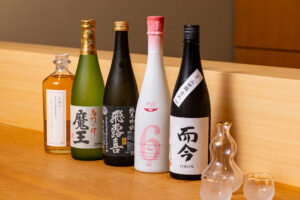
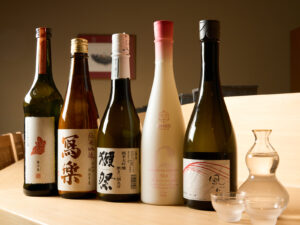
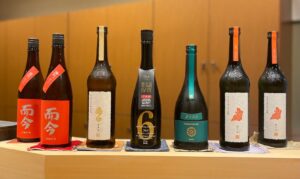
At Sushi Tanji, sake is not an accompaniment but part of what completes the sushi. Bottles chosen from breweries across Japan are suggested to suit each piece as it arrives. Changing sake as the meal moves from white fish to silver-skinned fish and on to simmered dishes is one of the quiet pleasures of omakase. If a word on the list is unfamiliar, please feel free to ask at any point.
Frequently asked questions
Which suits sushi better, junmai or ginjo?
Neither is better than the other. A gently fragrant ginjo tends to suit delicate pieces such as white fish and shellfish, while a junmai with savoury depth often pairs well with richer pieces such as zuke or simmered conger eel.
If I ask for "hiya", will I be served cold sake?
Traditionally, hiya means sake at room temperature. If you would like it chilled, asking for reishu makes your wish clear. Some places do use hiya to mean chilled, so describing the temperature in a few words is the simplest way to be sure.
Does hot sake go well with sushi?
Many guests enjoy it. Warmed sake suits oily fish and vinegared silver-skinned fish particularly well, and it is especially welcome from autumn into winter. Very hot sake can lose some of its aroma, so starting with nurukan (gently warmed) is a lovely way to begin.
Can I ask for a pairing even if I know little about sake?
Of course. A pairing is perhaps the easiest way to enjoy sake when you are new to it. Mention any aromas you dislike and how much you would like to drink at the start, and the pairing will be shaped around you.
From the guide to the counter
Taste it at our eight-seat counter in Oku-Akasaka.
Classic Edomae craft with careful modern aging – served piece by piece, with English guidance for overseas guests.
Reserve at Sushi Tanji Explore The Tokyo Sushi Guide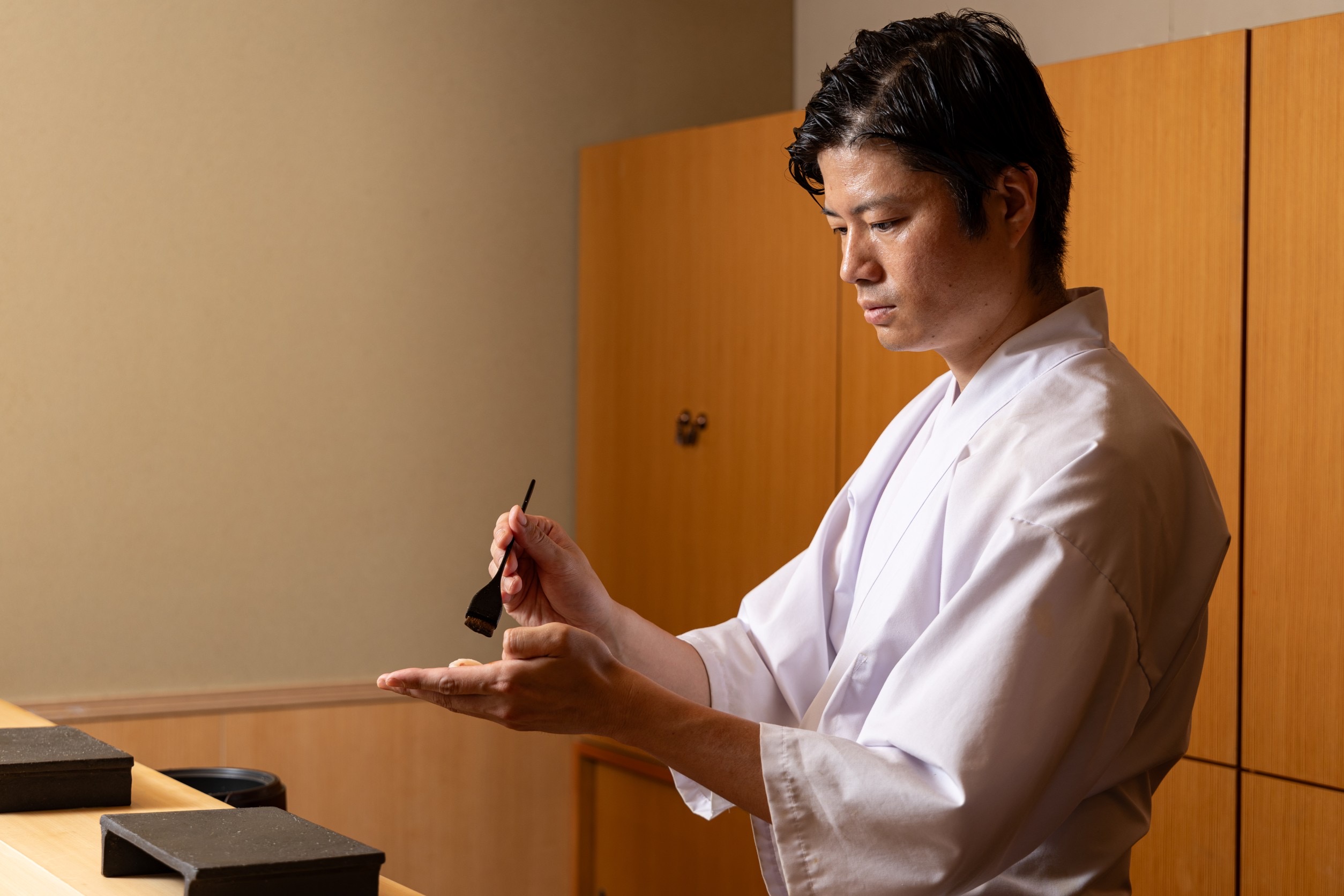
Reviewed by
Tatsuo TakadaHead chef and owner of Sushi Tanji. Trained in the Edomae tradition and rooted in Kyushu, he leads the eight-seat omakase counter in Oku-Akasaka, Tokyo, and reviews The Tokyo Sushi Guide.