
Reviewed by Tatsuo Takada (owner-chef, Oku-Akasaka Sushi Tanji)
Part of The Tokyo Sushi Guide Updated Reading time about 6 minutes See the menu →
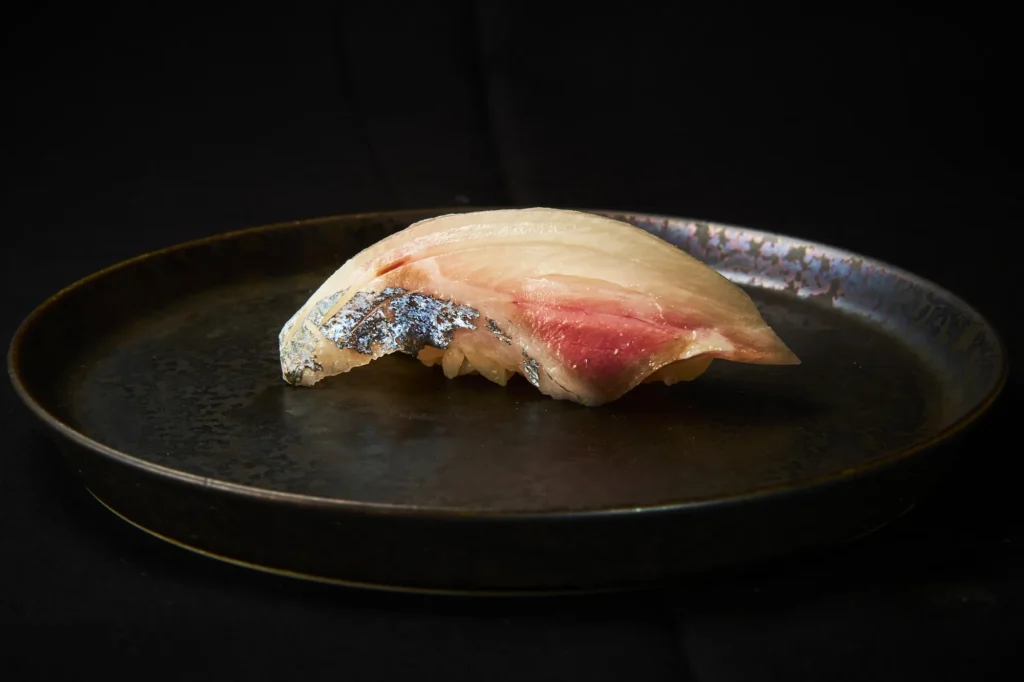
Ultimate bleeding is a method of preparation that uses the pressure of water to push blood out of a fish. The steps themselves probably matter less to you than a simpler question: what does it do to the taste? This article follows what happens in flesh where blood remains, why flushing with water leaves nothing watery behind, plus how it changes the time a fish can be given to mature, taking aroma, moisture and time in turn.
In short
What ultimate bleeding changes is how much blood stays in the flesh. The iron-like note that blood carries recedes, surplus moisture leaves at a steadier rate, plus the taste holds together through several days at low temperature. The difference shows less at first bite than in what lingers once you have swallowed.
What you will learn
- Why much of what reads as fishiness rises from residual blood rather than from the flesh itself
- How water can pass through the blood vessels without leaving the flesh watery
- Why bleeding widens the window for maturing rather than simply extending shelf life
- The three stages where the difference appears: opening aroma, moisture on the bite, the lingering finish
- How the effect differs across silver-skinned fish, white-fleshed fish, plus the larger species
- How preparation is divided from the work at the counter, with a graceful way to ask about it
Blood left behind shows first in the aroma
The scent usually described as fishiness in a piece of sushi rises more often from blood held in the flesh than from the flesh itself. In fish with a well-developed chiai, the dark bloodline muscle, such as aji (horse mackerel) or katsuo (bonito), the contrast is easy to recognise.
Blood shifts in character as the hours pass. Even held cold, it comes forward in proportion to the time it has sat. How thoroughly a fish was bled at the stage of preparation therefore shapes the impression of a piece served several days later. That is a separate matter from whether the fish is fresh.
Water passes through without leaving the flesh watery
In the preparation known as ultimate bleeding, water is sent into the artery so that blood held in the capillaries is pushed out of the flesh. Since water goes in, many people wonder whether the flesh takes water on.
The water travels inside the vessels. It is not being worked into the cells of the flesh. What follows is a stage of draining blood together with the water, then wrapping the fish in paper to rest at low temperature. Surplus moisture leaves gradually there, so a well-prepared fish tends to firm up rather than soften, holding its shape when it is formed into a piece.
Moisture leaving also means flavour concentrating. With the same fish, whether what spreads across the tongue on the bite is water or taste changes the whole impression of a piece.
What widens is the window, more than the shelf life
A fish still holding blood tends to develop aroma before it develops umami, which shortens the time it can be kept. Once the blood is drawn out, the grace period before that aroma arrives lengthens, leaving room to wait for the flavour to change.
Bleeding is therefore closer to a technique for choosing when to serve than a technique for keeping fish a long while. Whether to cut at two days or wait a week becomes a decision made by reading the fish.
At Sushi Tanji the fish arrives already prepared, so the craft is centred on the ageing that follows, with the resting period and the temperature judged species by species. Ageing is never the aim in itself. Underneath it sits the idea that it is simply a way of finding the moment at which a particular fish tastes best.
Where the difference shows in the taste
The difference appears three times over the course of a single piece. Following them in order makes it easier to know where to look.
- The opening aromaThe scent rising through the nose is clearer, so the sweet smell of the fish itself comes forward.
- Moisture on the biteRather than water spreading first, the taste emerges the more you chew.
- The finish after swallowingThe iron-like aftertaste steps back, leaving the scent of nikiri, the brushed soy glaze, with the gentle acidity of the shari (seasoned rice).
When the finish is clear, moving on to the next piece feels lighter. Whether an omakase (chef’s-choice) sequence stays buoyant to the end depends on this accumulation of small aftertastes.
The effect differs from fish to fish
Bleeding does not register in the same way in every fish. The size of the bloodline together with the delicacy of the flesh decides where in the taste the difference lands.
| Type of fish | How readily blood remains | Where it tends to show in the taste |
|---|---|---|
| Silver-skinned fish such as aji or katsuo | A large bloodline, so blood remains easily | Iron in the aftertaste; the way the aroma rises |
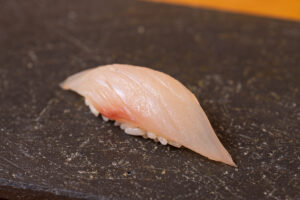
| White-fleshed fish such as suzuki (sea bass) or madai (red sea bream) | Delicate flesh, so even a faint scent stands out | How moisture leaves; sweetness on the bite |
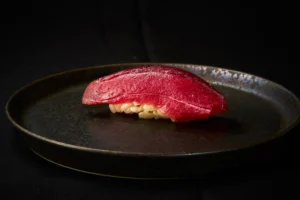
| Larger fish such as maguro (tuna) or buri (yellowtail) | A greater volume of blood, which takes patience to draw fully | The breadth of the window for ageing |
The August counter holds the fish of summer: aji, suzuki, plus shinko, the young gizzard shad. Flesh slackens easily in this season, so a difference in preparation carries straight through to the texture.
The hands that prepare, the hands that form
A single fish passes from the fisherman to the wholesaler, then to the person who prepares it, then to the sushi chef. Drawing the blood along with shinkei-jime, the spiking of the nerve, is usually the work of specialists at the port or in preparation. A chef at the counter rarely takes part in what happens on the boat.
Sushi Tanji also stands on the receiving side, narrowing its work to how a fish is rested once it arrives plus where it is formed into a piece. At the root of that lies the posture of meeting each fish as the last pair of hands to hold it. Our approach to the craft rests on the same ground.
You are welcome to ask at the counter what preparation a fish has had. There is no need to feel formal about it. A word offered when hands are free can open up the story behind that day’s piece.
Frequently asked questions
Does a fish given ultimate bleeding taste different from an ordinary one?
The difference shows most readily in the aroma with the aftertaste. As the iron-like note carried by blood recedes, the sweetness of the fish tends to stay once you have swallowed. At the first moment on the palate the gap is often smaller than expected.
Does sending water in leave the flesh watery?
The water travels inside the blood vessels. It is not being worked into the flesh. A stage of draining that moisture then storing the fish cold follows, so a well-prepared fish tends to firm up instead.
How long can a bled fish be rested?
It varies a great deal with the species along with its condition. Delicate white-fleshed fish often reach their moment within a few days, while larger fish such as tuna or yellowtail may be given a week or more. The usual practice is to judge by aroma with the firmness of the flesh rather than by the number of days.
Are shinkei-jime and bleeding the same thing?
They are separate operations. Shinkei-jime slows the onset of rigor after death, while bleeding reduces the blood left in the flesh. The two are often combined in preparation, with each showing in a different place on the palate.
From the guide to the counter
Taste it at our eight-seat counter in Oku-Akasaka.
Classic Edomae craft with careful modern aging – served piece by piece, with English guidance for overseas guests.
Reserve at Sushi Tanji Explore The Tokyo Sushi Guide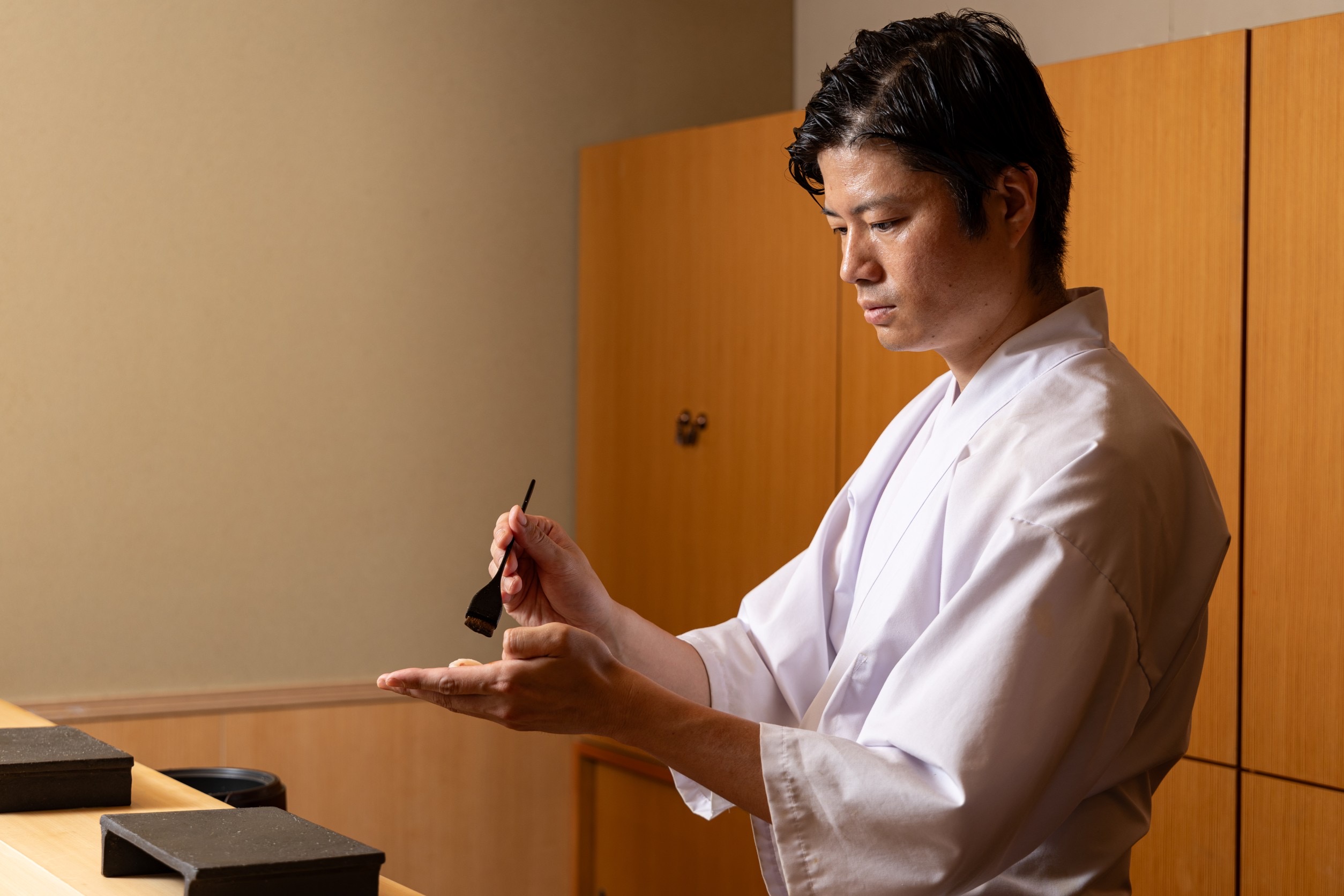
Reviewed by
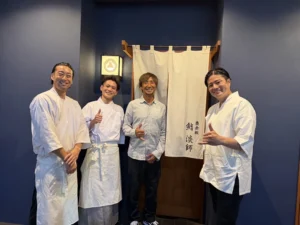
Tatsuo TakadaHead chef and owner of Sushi Tanji. Trained in the Edomae tradition and rooted in Kyushu, he leads the eight-seat omakase counter in Oku-Akasaka, Tokyo, and reviews The Tokyo Sushi Guide.