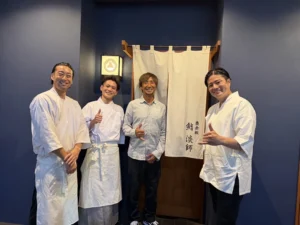


Reviewed by Tatsuo Takada (owner-chef, Oku-Akasaka Sushi Tanji)
Part of The Tokyo Sushi Guide Updated Reading time about 6 minutes See the menu →
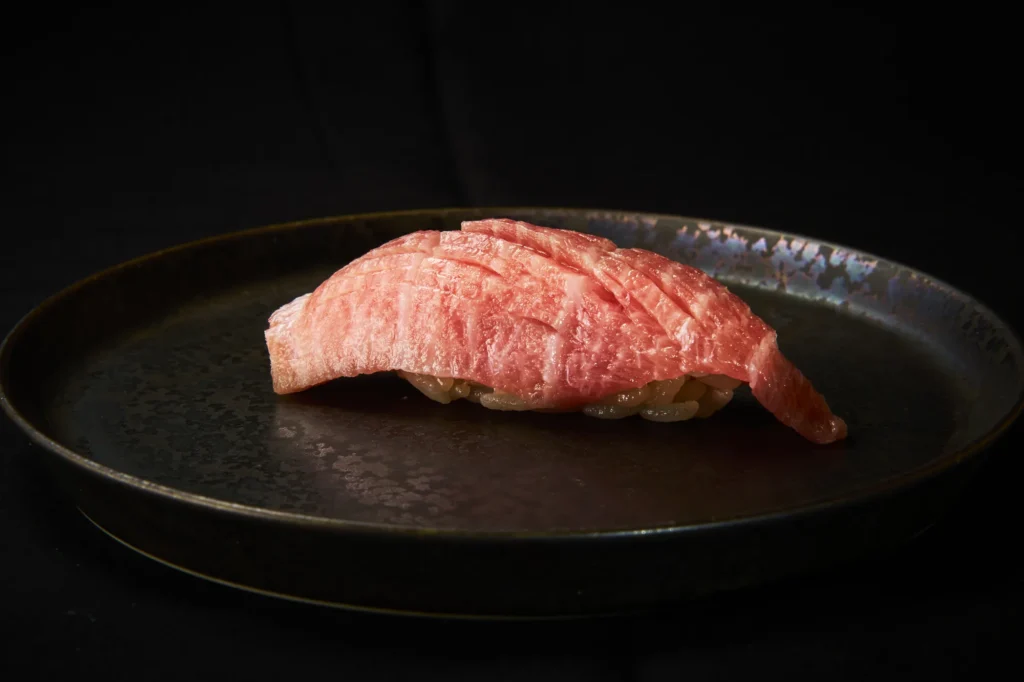
There is no fixed number of days for ageing any given fish. How long a piece rests depends on the nature of the flesh, the condition of that particular fish, the season it was caught in. This article looks at how the right moment is recognised behind an Edomae counter: the difference between white-fleshed fish and red, the part played by the Tsumoto method of bleeding, then a few fish of August. Not a table of correct days, but a way of judging.
In short
There is no single correct ageing time. The nature of the flesh, the state of that one fish, the water temperature of the season are read together, then counted backwards from the point where savour reaches its peak. Days are not the aim. They are simply the scale by which the best moment is met.
What you will learn
- Why ageing times are never fixed, plus the three things read in their place
- How the purpose of resting changes between white-fleshed fish, red flesh, hikarimono (silver-skinned fish)
- Differences between individual fish of the same species: size, fat, how they were killed
- How ageing quickens in August, when the water is warm
- What the Tsumoto method of bleeding can do for ageing, as well as what it cannot
- The order of checks that settles the moment: touch, cut, aroma, taste
Ageing is not a matter of counting days
After a fish dies, two changes run through its flesh at different speeds: savoury compounds build up, while moisture leaves the flesh so the texture shifts. The work of ageing is to find the moment where these two overlap most happily, then to serve at that point. The number of days follows from that decision rather than leading it.
So “how many days it rested” is not the goal. Three days can mean two entirely different things inside two different fish. In Edomae preparation the weight of attention tends to fall on how far a particular fish has travelled rather than on the days that have passed.
The purpose of resting changes with the fish
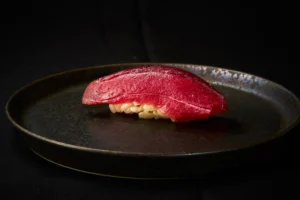
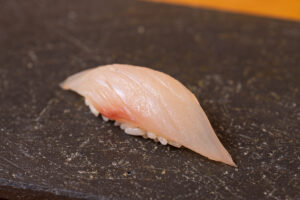
The nature of the flesh sets the first pace. White-fleshed fish such as hirame (olive flounder) or madai (red sea bream) hold a great deal of moisture, so if the springiness of the nigiri is to be kept, the window is not especially wide. Tuna, by contrast, whether akami (lean loin) or chutoro (medium fatty belly), may be given rather longer while its flavour is watched as it opens.
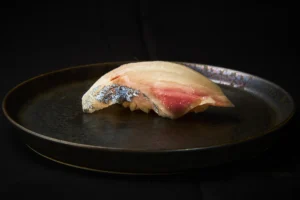
With hikarimono (silver-skinned fish) such as kohada (gizzard shad) or aji (horse mackerel), the curing comes before any ageing. Salt then vinegar move the moisture along with the state of the flesh, after which time is given for everything to settle. The fish rests in both cases, though the purpose sits somewhere else entirely.
| Type of flesh | How it changes | What is watched |
|---|---|---|
| White flesh (hirame, madai, makogarei) | Moisture leaves, sweetness emerges. Bite tends to soften first | How much springiness remains |
| Red flesh (tuna, katsuo) | Colour with aroma shift, sharpness giving way to savour | The sheen of the cut face plus its smell |
| Hikarimono (kohada, aji, saba) | Salt with vinegar lead. Resting is for settling | How the flesh firms after curing |
Even within one species, every fish differs
A species may set the rough window, yet the final decision belongs to the fish in front of you. Two hirame of different sizes have flesh of different thickness, so they change at different rates. Then there is the fat it carries, whether it is before or after spawning, the method by which it was caught, how much it struggled. Whether the temperature held steady from the moment it was killed until it reached the counter.
A fish whose history is unsettled may never gain much flavour, however carefully it is rested. A fish in good condition, meanwhile, can wait longer, with a higher peak at the end of that wait. Handling each fish individually at market serves two purposes: deciding the day’s menu, also deciding how many days ahead it will be used.
August water temperature quickens the clock
Summer asks for the most care of any season. Fish caught in warm water come aboard with the flesh already warm, so everything that follows tends to move faster. The same species may well reach its moment in fewer days than it would in winter.
Summer also brings fish that appear at no other time. Tachiuo (scabbardfish) carries fine fat in these months, suiting a light sear of the skin side to lift its aroma. Shinko are young kohada before they grow into the name, their flesh so thin that the balance of salt with vinegar decides everything rather than any resting. Makogarei (marbled sole) thickens in summer, making it one of the more patient white-fleshed fish. Season works as a force that draws the days in or lets them out.
The Tsumoto method prepares the ground for ageing
There is a reason talk of bleeding comes first whenever ageing is discussed. Blood left in the flesh turns to a fishy edge over time, which shortens how long a fish can wait. The Tsumoto method uses water pressure to push blood out of the vessels then treats the nerve line, reducing in advance the things that cause flesh to deteriorate.
The easy misreading here is that bleeding a fish makes longer ageing possible in itself. It only prepares the ground. It does not say how many days are right. At Sushi Tanji the Tsumoto method is part of the work, with the ageing itself built around the period plus the temperature that suit each species. Bleeding along with the rest of the preparation is a means rather than an end: give each fish the ageing it asks for, then serve it at the moment it tastes best.
Where the moment is recognised
This is not a judgement that numbers alone can make. How the flesh springs back under a finger, the colour of the cut face, the way the aroma rises, then the taste of an actual slice. These accumulate until it becomes clear whether a fish is served today or given one more day.
- Touch itThe way it returns under pressure shows how much moisture has gone along with how much spring remains.
- Cut itLook at the sheen of the cut face plus the tightness of the fibres. Any remaining blood shows itself here.
- Smell itThe fragrance of savour arriving is treated as quite separate from the smell of a fish gone too far.
- Taste itOne slice, judged through to how it will read once married with the shari (seasoned rice).
This reading repeats every day. It is not the sort of thing learned once then set aside, because the same fish will not always arrive at the same state after the same number of days. Calling ageing a matter of recognition rather than of waiting points at exactly this repetition.
Frequently asked questions
How many days of ageing make sushi taste best?
It shifts with the species along with the state of the individual fish, so no single figure applies. White-fleshed fish tend to have a short window that closes as the bite softens, while red flesh may be given rather longer as its flavour opens. Rather than working to a number of days, the usual approach is to judge how far that particular fish has come.
Is aged fish still raw?
Yes. Ageing involves no cooking. It means resting the flesh under controlled temperature with careful hygiene, waiting for the moment savour arrives. It is served as sashimi or nigiri exactly as it would be otherwise.
Does the Tsumoto method allow longer ageing?
Blood left in the flesh brings a fishy edge, which shortens the time a fish can be held. The Tsumoto method reduces that factor, preparing the ground for ageing, though it does not settle how many days are right. That is judged afresh from the species along with the state of the individual fish.
Is summer a poor season for aged sushi?
Not poor, though things move faster, so the window for judging is narrower. August brings fish such as tachiuo or makogarei that show their best in the heat. It is closer to say the measure of days changes with the season.
From the guide to the counter
Taste it at our eight-seat counter in Oku-Akasaka.
Classic Edomae craft with careful modern aging – served piece by piece, with English guidance for overseas guests.
Reserve at Sushi Tanji Explore The Tokyo Sushi Guide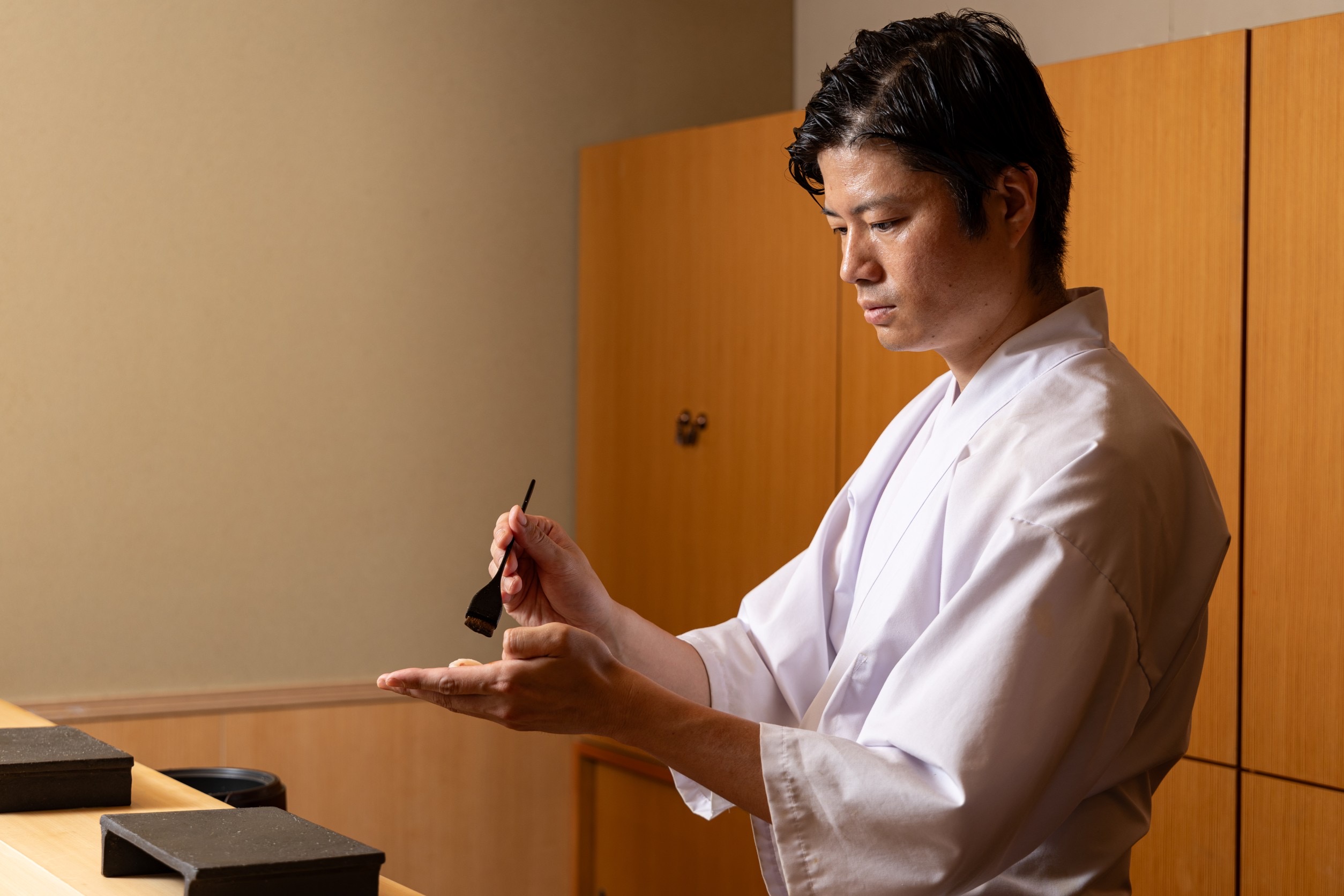
Reviewed by
Tatsuo TakadaHead chef and owner of Sushi Tanji. Trained in the Edomae tradition and rooted in Kyushu, he leads the eight-seat omakase counter in Oku-Akasaka, Tokyo, and reviews The Tokyo Sushi Guide.