

Reviewed by Tatsuo Takada (owner-chef, Oku-Akasaka Sushi Tanji)
Part of The Tokyo Sushi Guide Updated Reading time about 6 minutes See the menu →
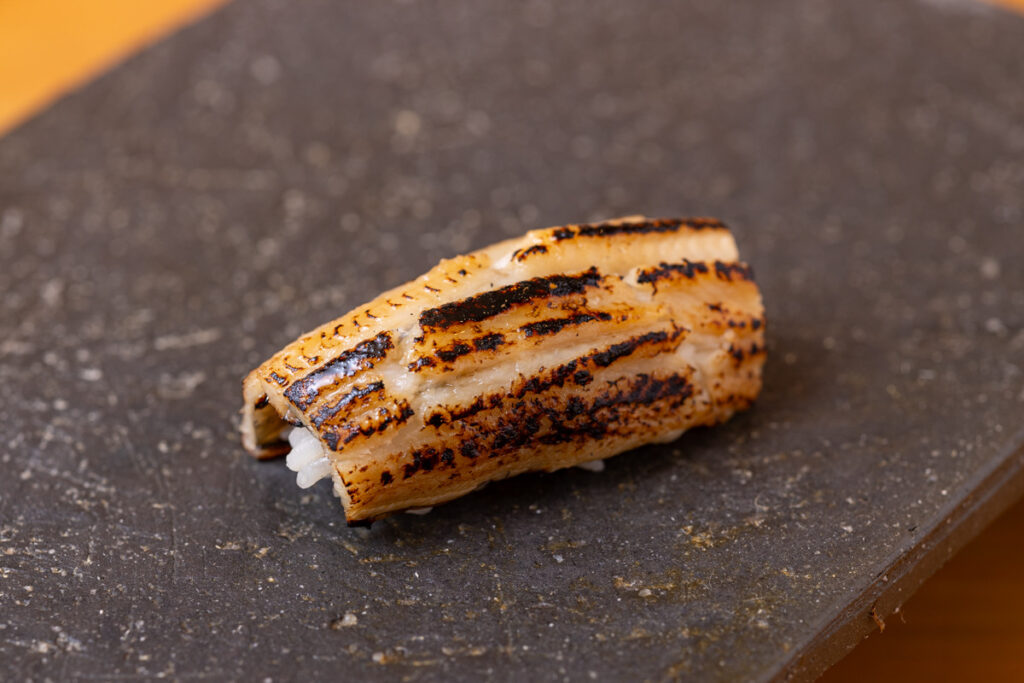
At a sushi counter, tamago (the sweet egg course) comes in two broad styles. One is a layered omelette rolled with dashi. The other is the so-called castella tamago, baked with a fine paste of shiba shrimp. Unlike fish, tamago owes nothing to the morning’s catch, so all the care that goes into making it shows plainly in the result. In this piece we look at how Edomae tamago is made, why it has long been said to reveal a counter’s craft, and what it means when it arrives at the close of an omakase.
In short
Edomae tamago is a castella-like slab made by blending a paste of shiba shrimp or white fish with egg, sugar and mirin, then baking it slowly over a low flame. Because the effort of preparation comes through so clearly in the flavour, it has long been said that one taste of the tamago tells you how a sushi counter works.
What you will learn
- How dashi-rolled tamago differs from Edomae tamago made with fish paste
- The Edomae method of chopping and grinding shiba shrimp, then baking over a gentle flame
- Why tamago was long said to reveal the quality of a sushi counter
- Why tamago is placed at the close of an omakase, and how it may be served, including the kuragake style
- Enjoying tamago at the counter, simply and without soy sauce
Two Traditions of Sushi Tamago
The tamago served at sushi counters falls into two broad families, depending on how it is made. The first is a thick omelette in which egg is loosened with dashi (a delicate stock), poured in thin sheets and rolled layer upon layer. The second is an older Edomae style, in which seafood paste is folded into the egg and the mixture is baked as a single thick slab. Its fine, even crumb resembles sponge cake, which is why it is also known as castella tamago.
| Point of comparison | Dashi-rolled tamago | Edomae tamago with fish paste |
|---|---|---|
| Main ingredients | Egg, dashi, sugar, soy sauce and so on | Egg, a paste of shiba shrimp or white fish, sugar, mirin and so on |
| Method | Poured thinly and rolled in layers | Poured thickly and baked slowly over a low flame |
| Texture | Moist, with dashi gently seeping out | Light and airy, with a sweetness close to a confection |
Edomae Tamago Made with Shiba Shrimp
The ingredient most often found in Edomae tamago is shiba ebi (shiba shrimp), a small shrimp whose name is said to come from Shibaura, a stretch of the old Edo shoreline where it was once caught in abundance. The peeled shrimp are chopped finely with a knife, then ground smooth in a suribachi (a ridged earthenware mortar) before egg, sugar and mirin are worked in a little at a time. Some cooks also grate in yamaimo (mountain yam) to give the tamago extra lift.
- Chop and grindThe shrimp is chopped, then worked in the mortar until no grain remains.
- Blend with eggEgg, sugar and mirin are added, and the mixture is pressed through a sieve for an even texture.
- Bake gentlyThe mixture is poured thickly into a copper tamago pan and baked slowly over a restrained flame so that it does not scorch.
- Turn and finishOnce one side has set, the slab is turned and the other side is coloured to a lovely golden brown. It is not unusual for the whole process to take around an hour.
The savour and sweetness of the shrimp melt into the egg. In the mouth, a toasty note comes first, followed by a faint, lingering fragrance of shrimp. Some counters use a paste of white fish in place of shiba shrimp.
Why Tamago Was Said to Reveal a Counter's Craft
It is said that in the sushi shops of old, some guests would sit down and order tamago first, using it to take the measure of the house. Fish depends on the quality of what the market offers that day. Tamago is made from humble ingredients, so the care of its preparation shows through directly: the smoothness of the paste, the balance of sweetness, the evenness of its colour.
Within the trade, too, being entrusted with the tamago has traditionally marked a milestone in an apprentice’s training. It is said to take a long time before the hands learn to read the flame by feel.
Now that omakase (the chef’s chosen sequence) has become the usual way to dine, it is rare to see a guest begin with tamago. Even so, many counters still make their own, and it remains a quiet window onto each counter’s philosophy.
A Sweet Close to the Omakase
In an omakase, tamago usually appears towards the end. Once the nigiri (hand-pressed sushi) have been served, and perhaps a roll or a bowl of soup, a single slice of sweet tamago arrives. It softens the lingering richness of oily fish and the tang of vinegar, and brings the meal to a gentle close, much as a dessert would.
How it is served varies from counter to counter. In the kuragake (saddle) style, the tamago is draped over a small mound of shari (seasoned rice) and held in place with a band of nori. Other counters offer a thick slice on its own, without rice, and some place it among the small dishes earlier in the meal.
At Sushi Tanji, our aim is for everything from the food and sake to the final cup of tea to come together into time you will want to return to. To close the meal, guests move to our tea room for matcha and a seasonal wagashi (Japanese confection). It is another way of ending: the sweetness of tea following the sushi.
Enjoying Tamago at the Counter
Tamago is already fully seasoned, so most guests enjoy it just as it is, without soy sauce. When it is served as nigiri, fingers and chopsticks are equally welcome. There is no need to overthink it.
Some counters serve tamago warm from the pan, while others bake it the day before and let it rest so the flavours settle. Warm tamago is airy and fragrant; rested tamago has a calmer sweetness and a finer, firmer crumb. Around October, as the air begins to cool, the gentle warmth of freshly made tamago is especially welcome. If you are curious which approach your counter takes, the chef will be glad to tell you.
Frequently asked questions
Why is shiba shrimp used in sushi tamago?
It lends the egg its savour and sweetness, and gives the tamago a light, airy crumb. This is the traditional Edomae method, and some counters use a paste of white fish instead of shiba shrimp.
When does tamago appear in an omakase?
It usually arrives towards the end, as a closing course once the nigiri have been served. Some counters bring it out among the small dishes earlier on, so the order depends on how each chef composes the meal.
Should I dip sushi tamago in soy sauce?
Tamago is already seasoned with sugar and mirin, so it is usually enjoyed as it is, without soy sauce. That said, a touch of soy is perfectly fine if you prefer it.
Can tamago really tell you how good a sushi counter is?
Tamago does show the care behind it, from the smoothness of the paste to the way it has been baked. It is best enjoyed as one clue to a counter’s character, alongside everything else on the menu.
From the guide to the counter
Taste it at our eight-seat counter in Oku-Akasaka.
Classic Edomae craft with careful modern aging – served piece by piece, with English guidance for overseas guests.
Reserve at Sushi Tanji Explore The Tokyo Sushi Guide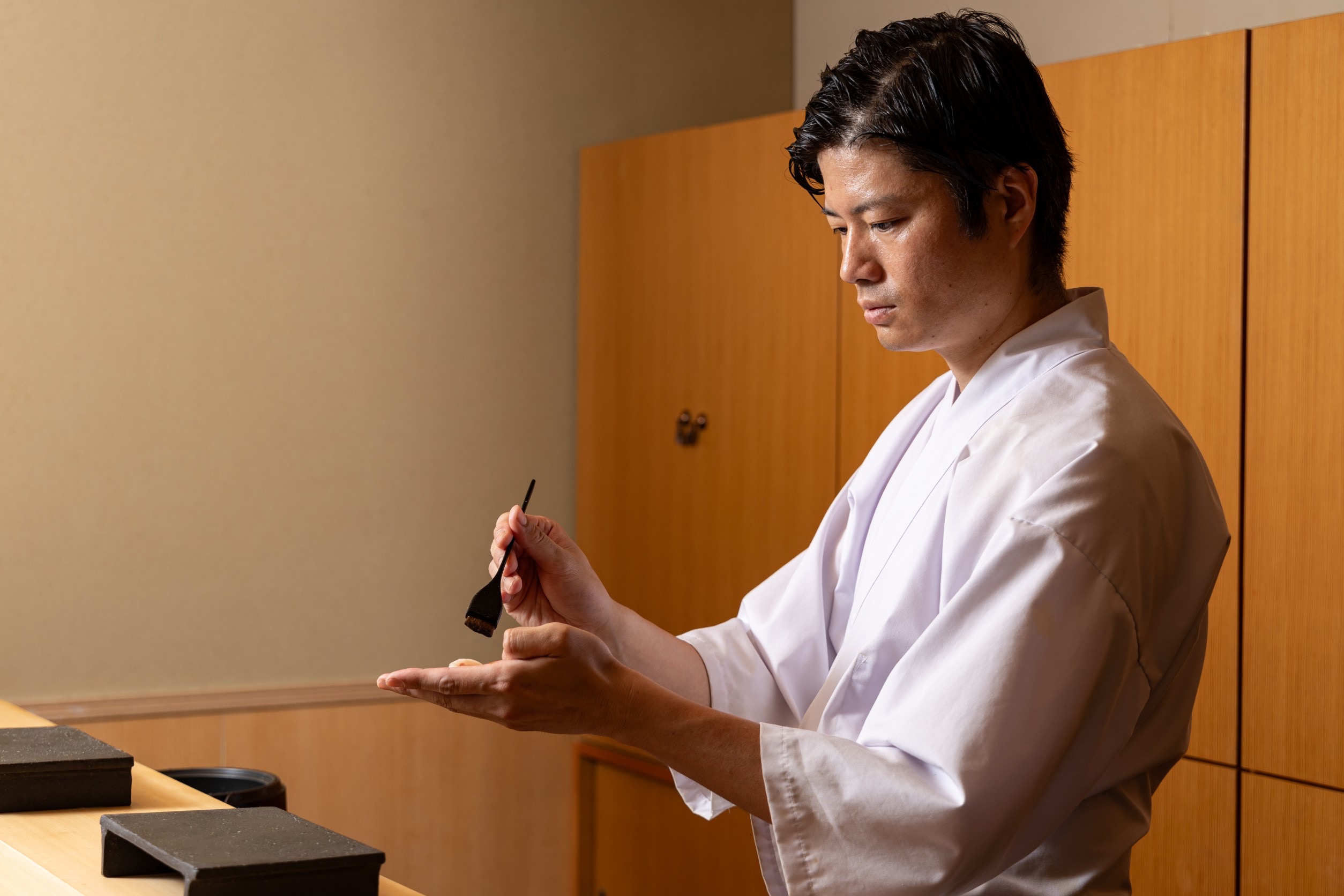
Reviewed by
Tatsuo TakadaHead chef and owner of Sushi Tanji. Trained in the Edomae tradition and rooted in Kyushu, he leads the eight-seat omakase counter in Oku-Akasaka, Tokyo, and reviews The Tokyo Sushi Guide.