

Reviewed by Tatsuo Takada (owner-chef, Oku-Akasaka Sushi Tanji)
Part of The Tokyo Sushi Guide Updated Reading time about 6 minutes See the menu →
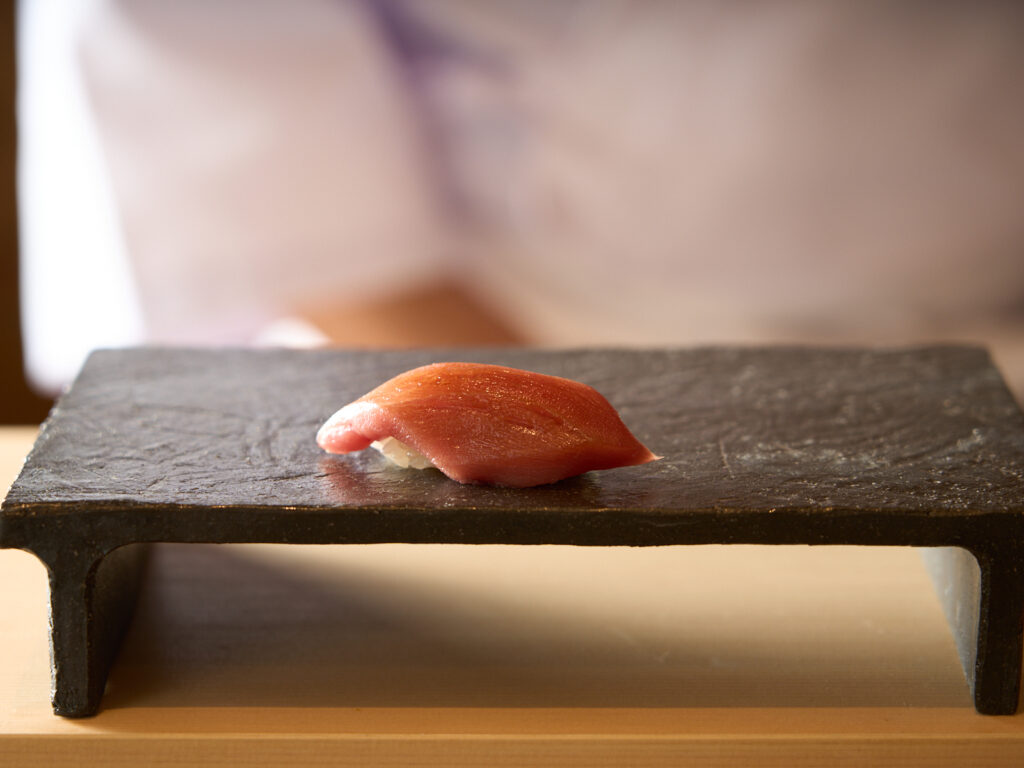
Kinmedai, the splendid alfonsino, is a red fish that lives several hundred metres down in the deep sea, and in winter it lays down a generous layer of fat just beneath its skin. At the sushi counter, the craft turns on what to do with that fat: bring out its fragrance with aburi (searing), or keep its sweetness intact with yushimo (a brief scald of hot water). Here we look at the fish itself, its ties to the harbours of Izu, and how to enjoy it when it reaches you across the counter.
In short
Kinmedai is a winter fish, at its peak roughly from December to February, when the layer of fat between skin and flesh is at its thickest. In sushi the skin is usually left on, and the fish is either seared or scalded to coax out that fat and its aroma.
What you will learn
- Why kinmedai lives in the deep sea, and why its eyes shine gold
- How winter fat gathers beneath the skin, a trait particular to this fish
- Its principal landing ports, from Inatori and Shimoda on the Izu Peninsula onwards
- The differences between three preparations: searing, scalding and kelp curing
- How resting the fish changes the texture of its flesh
- When to eat it at the counter, and why it sits so well with gently warmed sake
What kind of fish is kinmedai?
Kinmedai is a deep-sea fish that gathers in shoals over rocky ground, somewhere between 200 and 800 metres below the surface. Despite the tai in its name, it is not a true sea bream like madai (red sea bream) but belongs to a separate family altogether, the alfonsinos. Its vivid red colouring is thought to work as camouflage, since red light barely reaches those depths.
A winter fish, with its fat beneath the skin
Kinmedai is landed all year round, yet in the world of sushi it is winter that people wait for. In the cold months the fish carries a thick, white band of fat between skin and flesh. Look at a cut surface and you will see a milky edge just under the skin, framing flesh the colour of pale cherry blossom.
The flesh itself is gentle, as white fish tends to be. What gives the flavour its shape is the fat under the skin and the aroma of the skin itself, which is why sushi chefs so often choose to leave the skin on.
The harbours of Izu
On the eastern shore of the Izu Peninsula, the ports of Inatori and Shimoda are well known for their kinmedai. Inatori markets the fish under its own name, and the harbourside eateries serve it simmered in a sweet and savoury broth as a local speciality. Rather than being netted in bulk, much of the catch is taken on hooked lines lowered deep into the sea, and the care taken once it is landed has a great deal to do with its reputation.
Choshi and Katsuura in Chiba, along with Muroto in Kochi, are also celebrated sources, and the richness of the fat varies with the waters and the time of year. At home the fish is best known simmered, but a fatty winter specimen comes into its own as a sushi topping, served raw or lightly cooked.
Searing and scalding: how to treat the skin
Kinmedai skin is thin. Left as it is, it can linger between the teeth, yet it holds much of the fish’s aroma and fat. At Edomae counters, the skin is often given a touch of flame or hot water so that it can be enjoyed rather than removed.
| Preparation | Method | Impression on the palate |
|---|---|---|
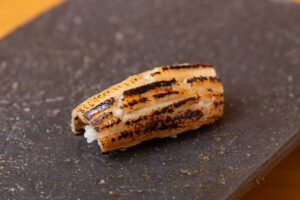
| Aburi (searing) | Only the skin side is seared quickly over a fierce flame | The fat melts and turns fragrant, warm and soft in the mouth |
| Yushimo (also kawashimo) | Boiling water is poured over the skin, then the fish is plunged into iced water | The skin softens and the sweetness of the fat comes through clear |
| Kobujime (kelp curing) | The flesh is pressed between sheets of kelp for a few hours or overnight | The kelp’s savoury depth passes into the fish, which firms and deepens in flavour |
Searing brings the fragrance of the fat to the fore, while scalding quietly preserves its sweetness. The same fish takes on a clearly different character depending on which path the chef chooses. Whether it is finished with a brush of nikiri (a reduced soy glaze) or with salt and a squeeze of sudachi citrus also reflects each counter’s thinking.
What resting changes
Fatty fish tends to become more supple, and its flavour easier to appreciate, when it is rested for a few days rather than served straight after it is killed. Many sushi counters bleed kinmedai carefully and then let it rest before shaping it. The length of that rest depends on the size of the fish and how much fat it carries, so there is no fixed number of days.
At Sushi Tanji in Oku-Akasaka, bleeding and preparation are seen as a means rather than an end. Each fish is aged in the way that suits it, and served at the moment it tastes best. With a fish like kinmedai, whose fat shifts from one day to the next, that judgement shows clearly in every piece.
Enjoying it at the counter
The longer seared kinmedai sits after it has been shaped, the more its fragrance settles, so many guests like to enjoy it soon after it is set before them. Fingers or chopsticks, whichever feels natural, is perfectly fine.
Many like to pair the sweetness of the fat with junmai sake served gently warm, or nurukan, whose warmth sits beautifully with the toasted notes of the skin. In a winter omakase, kinmedai may appear midway through the meal as one of the high points among the white fish, alongside yellowtail and flounder.
Frequently asked questions
When is kinmedai in season?
It is landed all year, but the fat is richest in winter, roughly from December to February. That is also when it appears most often in sushi omakase.
Why are kinmedai's eyes golden?
Behind the retina is a layer that reflects light. It helps the fish gather the faint light of the deep sea, and in brighter surroundings it shines gold.
Why is kinmedai sushi so often seared?
Most of the fat lies just beneath the skin, and a touch of flame melts it and releases its fragrance. Searing also softens the skin, so it is less likely to linger in the mouth.
How does scalding differ from searing?
For yushimo, boiling water is poured over the skin and the fish is then chilled at once in iced water, which keeps the sweetness of the fat clean and clear. Searing adds a toasted note with flame and brings the fat’s fragrance forward.
Is kinmedai a type of sea bream?
Its name includes tai, the word for sea bream, but it belongs to a separate family, the alfonsinos, rather than the true breams such as madai. The name is thought to come from its red colouring.
From the guide to the counter
Taste it at our eight-seat counter in Oku-Akasaka.
Classic Edomae craft with careful modern aging – served piece by piece, with English guidance for overseas guests.
Reserve at Sushi Tanji Explore The Tokyo Sushi Guide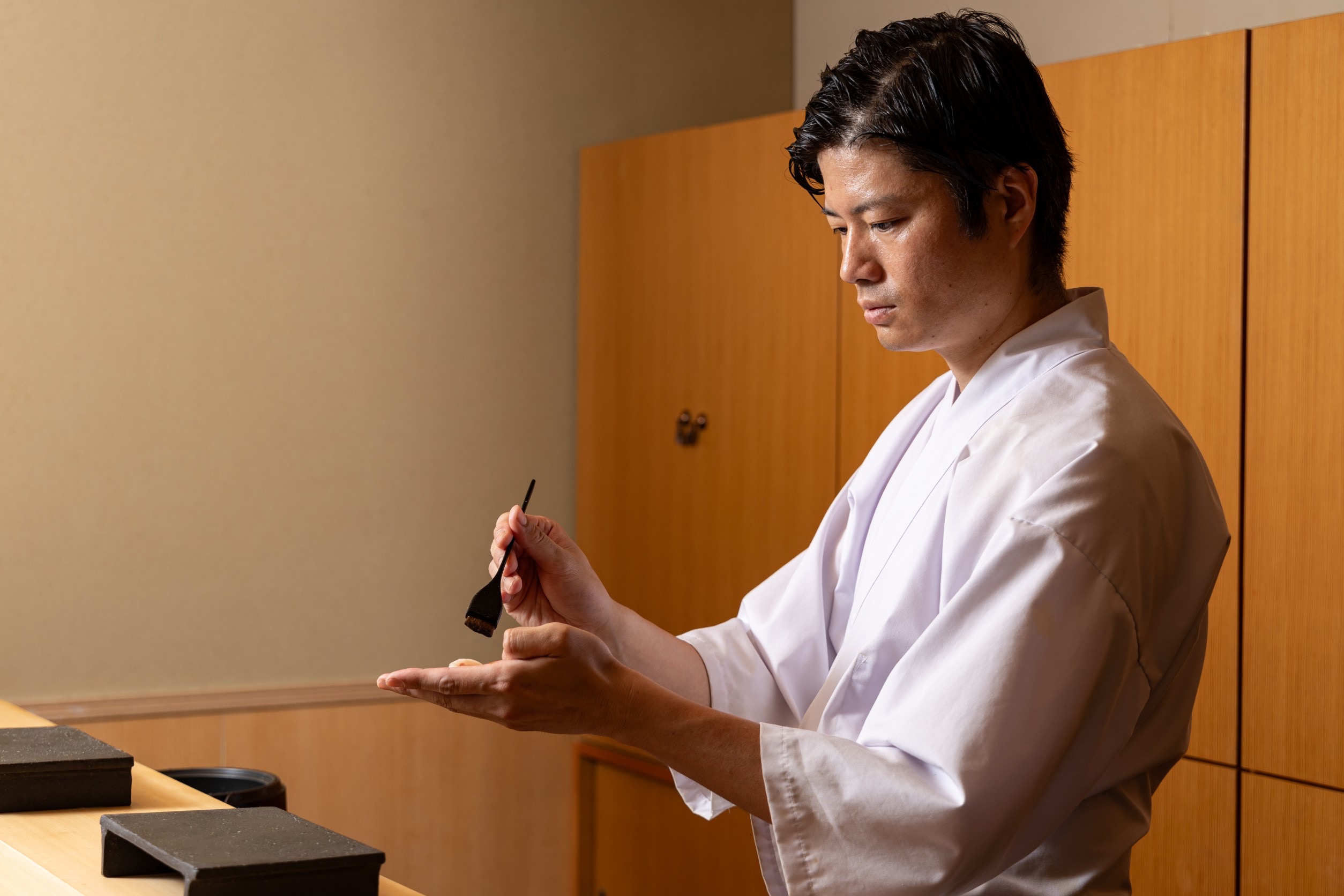
Reviewed by
Tatsuo TakadaOwner of Sushi Tanji. Trained in the Edomae tradition and rooted in Kyushu, he leads the eight-seat omakase counter in Oku-Akasaka, Tokyo, and reviews The Tokyo Sushi Guide.