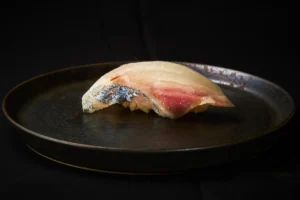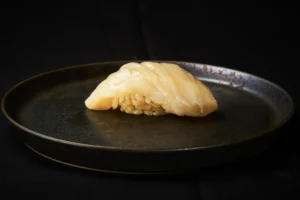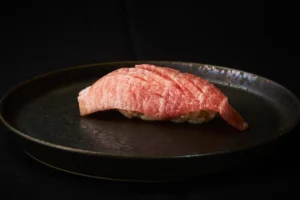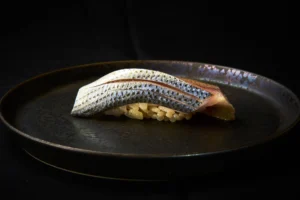
Written by Oku-Akasaka Sushi Tanji, an omakase counter in Akasaka, Tokyo.See the menu →
Tokyo’s sushi counters can be booked without a word of Japanese. Switch the reservation site to English, give your party size, your time, plus anything you cannot eat, then let the evening follow the chef’s rhythm, one piece at a time, all the way to the bill. This is for anyone who has been asked by a visiting friend how the booking works, as well as for anyone heading to a Tokyo counter without much confidence in their Japanese. We take it in order, from reading the screen to the small gestures on the day.
In short
Most Tokyo sushi counters take bookings through reservation sites with an English screen, so no Japanese is needed. You give three things: party size, time, plus anything you cannot eat. On the day, the omakase (chef’s choice) format carries you through to the bill.
What you will learn
- What the English fields on a booking site (Party size, Allergies, Cancellation policy) actually refer to
- The three details a booking genuinely needs, with short English phrasings for each
- Why cancellation terms can look strict (at an eight-seat counter, one guest is an eighth of the room)
- When registering your name in Roman letters smooths the exchange at the door
- How the omakase format itself does the talking once you are seated
- How the bill works, how to check whether cards are accepted, plus why no tip is needed
Reading the English booking screen
Most omakase (chef’s choice) counters in Tokyo take reservations through a site such as TableCheck, which switches to English with a single language toggle. The fields vary a little from restaurant to restaurant, but the order is broadly the same. Here are the ones you will meet most often.
| English field | What it means | How to fill it in |
|---|---|---|
| Party size / Number of guests | How many of you are coming | Count children too. At a counter of around eight seats, groups of more than four rarely fit into one sitting |
| Date / Time | The date plus the starting time | Omakase often runs in set sittings that begin together. If you are unsure of arriving in time, choose the later slot |
| Allergies / Dietary restrictions | Allergies plus anything you cannot eat | Separate dislikes from medical restrictions. A blank field reads as ‘I eat everything’ |
| Special requests | Anything else | An anniversary, a seating preference, a wish to be guided in English. A short line of English is plenty |
| Cancellation policy | The terms for cancelling | Whether a fee applies the day before or on the day. At many counters a drop in party size counts as well |
The cancellation terms are worth a careful read, especially where a card is registered in advance. At an eight-seat counter, one cancelled guest is an eighth of the evening’s takings, so a firm deadline is not a sign of unfriendliness. It is simply what a small room looks like on paper.
Three things to tell them: party size, time, what you cannot eat
Only three details on the form genuinely need your attention. The rest can stay blank without causing any trouble.
- Party sizeAdding guests after booking rarely works, since the seats are already spoken for. If the number goes down, an early message helps: some counters waive the fee when told in good time.
- TimeMost omakase counters start everyone together, so a late arrival unsettles the flow from the very first piece. Sushi Tanji opens at 5 pm with last entry at 9 pm. Bookings are taken through TableCheck, with guidance in English for guests from overseas.
- What you cannot eatCuring, marinating: the preparation begins days before you arrive. Shellfish, raw fish, nori (seaweed) and the like are hard to swap out on the day, so noting them at booking lets the counter rearrange things while the prep is still under way.
In English, a long note is unnecessary. ‘No shellfish (allergy)’ or ‘Prefer no sea urchin’ is enough. A word in brackets to say whether it is an allergy or a preference gives the kitchen all it needs to plan.
On the day, at the door
Five minutes before the start is a good time to arrive. Thirty minutes early and the counter is still mid-preparation, which means waiting outside the door. At the entrance you give the name on the booking. Showing the confirmation screen, with your name as registered in Roman letters, is enough. If you booked on behalf of a friend from overseas, registering under the name of the person who will actually be dining keeps that exchange to a single sentence.
Coats and larger bags are usually taken at the door, where a gesture is all it takes. Many guests skip strong perfume, since it sits over the faint scent of white-fleshed fish and shellfish. In September the counter begins to show returning bonito and the first ikura (salmon roe) of the season, pieces where those quiet differences in aroma are the whole point.
At the counter, the format does the talking
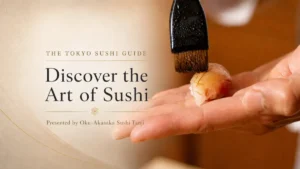
Once seated, you will hardly need words to order. In an omakase the chef sets each piece in front of you in turn, brushing anything that wants soy with nikiri (a light, sweetened soy glaze) before it reaches you. A murmured ‘as it is, please’ means the piece is ready to eat with nothing added. Hands or chopsticks, whichever you prefer.
More and more counters can name the fish in English. If something is unfamiliar, pointing at it with a questioning look usually brings back either the English name or a printed list of the day’s neta (toppings). Sake can be ordered the same way: say omakase and the chef will pick one to sit alongside that particular piece.
At Sushi Tanji the aim is an evening where the food, the sake, the ceramics, the conversation and the final bowl of matcha come together into a time you want to return to. Whether that conversation is in English or a few words of Japanese, it is treated as part of the whole in exactly the same way. The counter is set up to explain the ingredients and their background in English, so if a question comes to mind, a gesture is enough to ask it.
The bill and the question of tipping
The bill is settled either at your seat or near the entrance. If you are unsure whether English will carry, a small rectangle traced in the air with both hands says ‘the bill, please’ quite clearly. Cards are accepted at most omakase counters in Tokyo, though a few remain cash only. The restaurant page on the booking site usually has a ‘Payment’ or ‘Credit cards accepted’ line, so a glance at booking time saves any flurry on the night.
Tipping is not the custom here; an offered tip is simply declined. If you need a receipt, ‘Receipt, please’ is all it takes. The total is the omakase course with any extra sake added, so you have a fair idea of it before you even sit down.
If English does not carry
Should you hit a moment where English does not get through, three small preparations cover it: keep the booking confirmation on your phone, write what you want to say in a short line to show, then have a translation app on the table. Sushi chefs tend to read a written note more carefully than they follow speech, so showing rather than saying usually settles things in one exchange.
Phones are often answered in Japanese only, so changes or cancellations are more reliably sent through the booking site’s messaging function. If you lose your way on the day, showing the address in Japanese to a passer-by or a taxi driver will get you there, even to a counter tucked into a back street, as in Akasaka. The manners of the evening and the stories behind each topping are covered across The Tokyo Sushi Guide.
Frequently asked questions
Can I book a Tokyo sushi counter without speaking Japanese?
Yes. Reservation sites such as TableCheck switch to English, so a booking goes through once you enter party size, time, together with anything you cannot eat. At counters that state they offer guidance in English, the evening itself will run in English too.
What if a field on the English booking form is unclear?
Most fields can stay blank. The essentials are party size, time, together with anything you cannot eat. Anything further you would like to mention fits into ‘Special requests’ as a short line of English.
How do I change the party size or time after booking?
The booking site’s messaging function is the surest route, since phones are often answered in Japanese only. Adding guests is rarely possible because of the seat count. If the number goes down, an early message helps, as some counters waive the fee when told in good time.
Will English be understood at the counter?
It depends on the restaurant, though with omakase you will hardly need words to order. The chef places each piece in front of you in turn, with soy already brushed on where it belongs. If you would like to know the name of a fish, pointing usually brings back either the English name or a list of the day’s toppings.
Can I pay by card? Is a tip expected?
Most counters accept cards, though a few remain cash only, so it is reassuring to check the payment line on the restaurant’s booking page beforehand. Tipping is not the custom, so an offered tip will simply be declined.
From the guide to the counter
Taste it at our eight-seat counter in Oku-Akasaka.
Classic Edomae craft with careful modern aging – served piece by piece, with English guidance for overseas guests.
Reserve at Sushi Tanji Explore The Tokyo Sushi Guide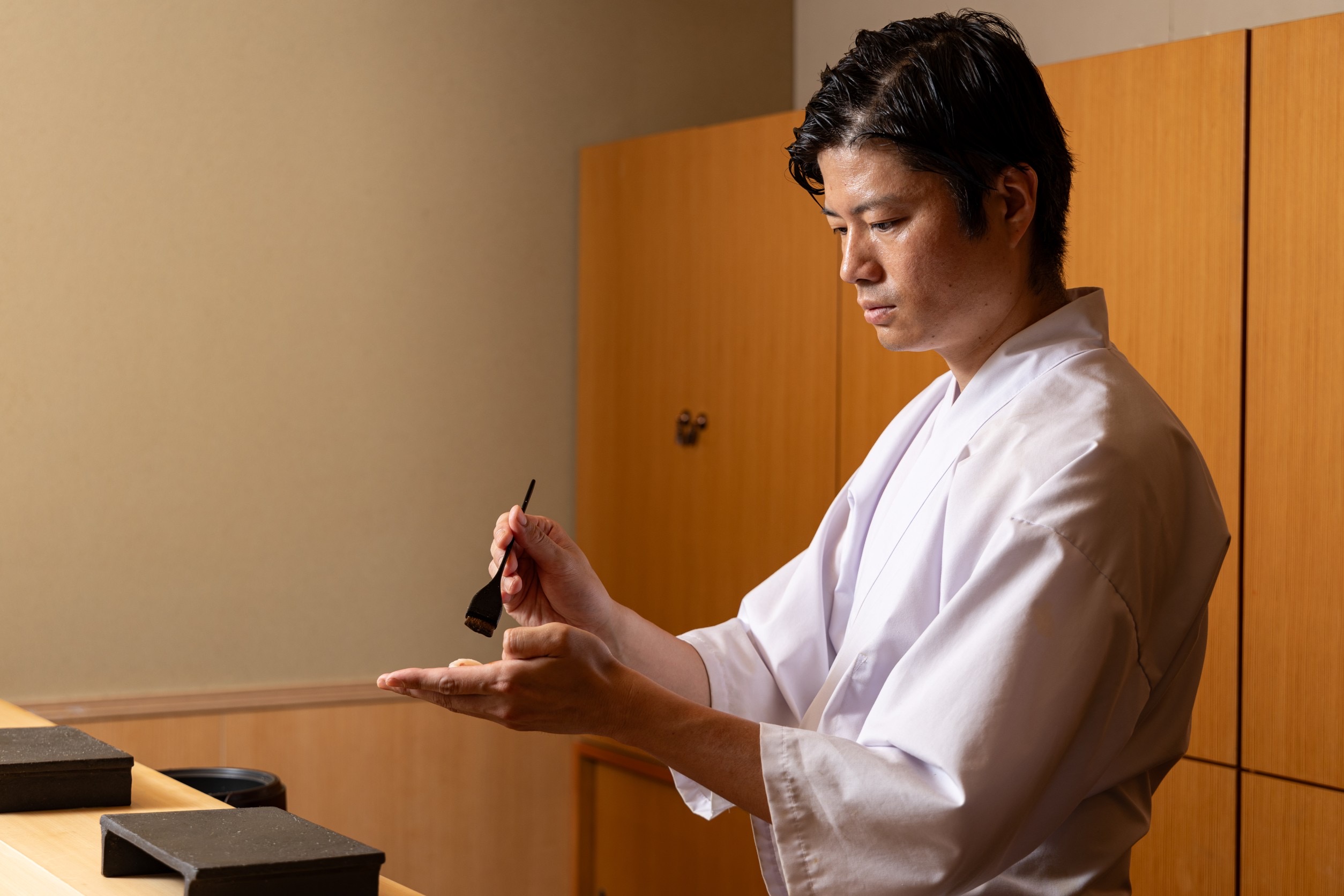
Reviewed by
Tatsuo TakadaHead chef and owner of Sushi Tanji. Trained in the Edomae tradition and rooted in Kyushu, he leads the eight-seat omakase counter in Oku-Akasaka, Tokyo, and reviews The Tokyo Sushi Guide.