
Reviewed by Tatsuo Takada (owner-chef, Oku-Akasaka Sushi Tanji)
Part of The Tokyo Sushi Guide Updated Reading time about 6 minutes See the menu →
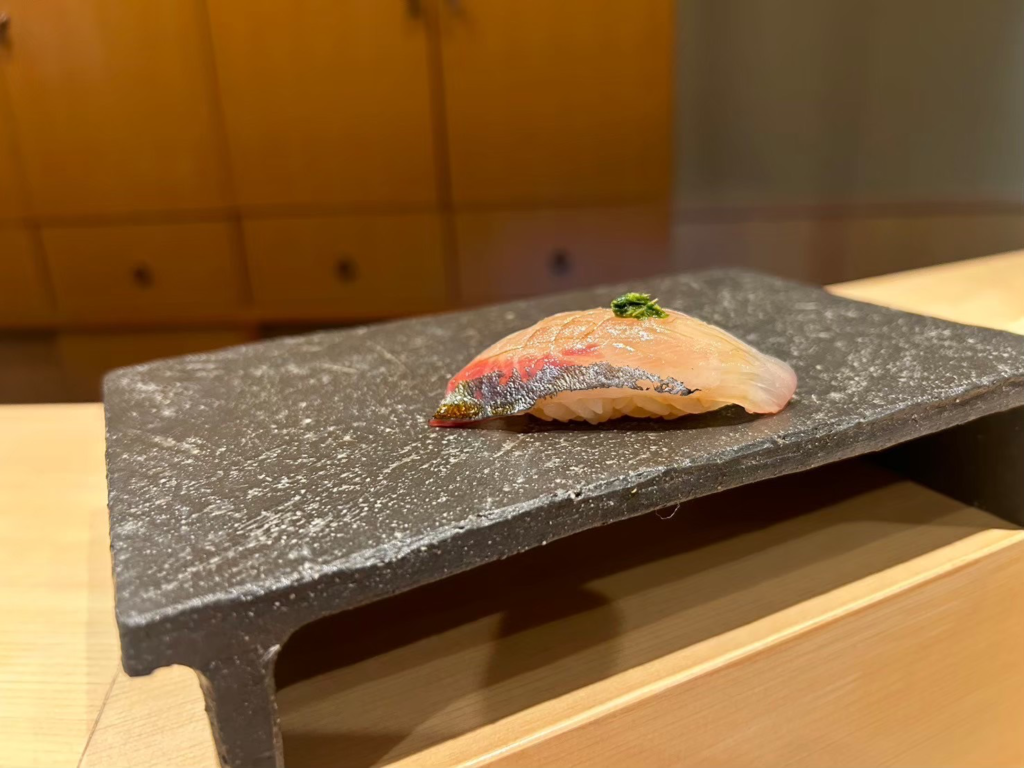
Nodoguro is often called the “toro of white fish”. Its flesh is white, yet a thick, sweet layer of fat sits just beneath the skin. At the sushi counter it is usually served with the skin lightly seared, and that single gesture reflects a chef’s thinking about how best to treat both the fat and the skin. Here we look at the nature of that fat, the reasons for searing, how a chef decides between seared and raw, and how the fish is eating in November.
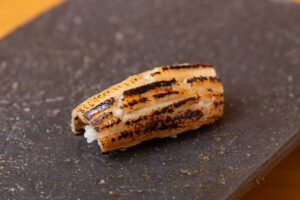
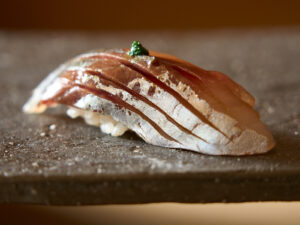
Nodoguro (blackthroat seaperch, also known as akamutsu) carries a generous layer of fat between skin and flesh, so sushi chefs often sear only the skin. This softens the fat and gives the skin a toasty fragrance. When a fish has gentler fat and firmer flesh, it may instead be skinned and served raw.
What you will learn
- Why nodoguro and akamutsu are the same fish, and where it is landed
- The character of its "white-fish toro" fat, and how it differs from otoro
- Yakishimo, the technique of searing only the skin, and what it achieves
- How a chef chooses between yakishimo, kawashimo, raw and kombujime
- How the fat develops from autumn into winter, and in November in particular
- A few thoughts on enjoying a freshly seared piece at the counter
Nodoguro and Akamutsu: One Fish, Two Names
Nodoguro is known by its standard Japanese name, akamutsu. It lives near the seabed at depths beyond a hundred metres, and although its body is a vivid red, the inside of its mouth is black. That dark throat gave the fish its everyday name, which means simply “black throat”. It is landed along the Sea of Japan coast in Shimane, Ishikawa and Niigata, as well as in Kyushu waters such as Nagasaki, and many regions have their own well-regarded local brands.
It is not one of the fish found on old Edomae menus, and it became widely known as a sushi topping only in relatively recent times. Perhaps for that reason, the way it is prepared tends to say a good deal about each restaurant’s own approach.
The Fat Behind the Name "White-Fish Toro"
Nodoguro is classed as a white fish, yet a fine marbling of fat runs through the cut surface, and a particularly thick layer lies between skin and flesh. This fat melts readily. On the tongue it loosens at body temperature and releases a sweet, gentle aroma.
Where the fat of tuna otoro (the richest cut of fatty belly) coats the palate boldly, nodoguro’s fat feels more refined, and many people find that it fades away cleanly. The delicacy of white fish and the melting texture of toro, held together in a single slice. That pairing is where the name comes from.
Why the Skin Is Seared
Nodoguro skin is fairly thick and, left raw, tends to linger between the teeth. Removing it gives a smoother bite, but the fat beneath goes with it. Many chefs therefore keep the skin on and apply heat to the skin side alone, a technique called yakishimo (skin-searing).
A brief pass over charcoal, burning straw or a gas flame softens the skin and lends it a toasty fragrance, while the fat below loosens and seeps into the flesh. The centre stays raw, so each piece holds a contrast between the warm, seared surface and the cool flesh within. The softened fat also settles more easily into the shari (seasoned rice), which is served at about body temperature.
Seared or Raw: What the Chef Looks For
Nodoguro is not always seared. The preparation changes from fish to fish, and a chef mainly considers the amount of fat, the thickness of the flesh, the firmness of the skin and how the flesh has settled after resting.
| Condition of the fish | Likely preparation | Intention |
|---|---|---|
| Large, with thick fat | Yakishimo, searing the skin side | To loosen the fat and give its richness a clear outline with the toasty skin |
| Slightly firm skin, moderate fat | Kawashimo, pouring hot water over the skin | To soften the skin and keep the sweetness of the fat pure |
| Gentle fat, firm flesh | Skinned and served raw | To bring forward the delicate sweetness and texture of the flesh |
| Flesh holding a lot of moisture | A light salting, or kombujime (curing between sheets of kelp) | To draw out excess moisture and concentrate the flavour |
Some chefs vary the preparation from one fish to the next, even within a single day’s delivery. Searing still predominates because so much of nodoguro’s character is gathered beneath its skin.
In Season from Autumn to Winter: The Fat in November
Views on nodoguro’s season differ from region to region. Some point to early summer into summer, before spawning, while others favour autumn into winter, when cooler water lets the fat build up in the flesh. It is a rich fish all year round, but November is often regarded as a time when firmness and fat are especially well balanced.
Size is another guide, as larger fish tend to carry thicker fat. If the nodoguro at the counter is seared one day and raw the next, it is because the chef is reading these differences of season and individual fish.
Enjoying It at the Counter
Seared nodoguro is at its best while the skin is still warm, so do enjoy it soon after it is placed on the tsukedai (serving board). Some restaurants brush on a little nikiri (a light, glossy soy glaze), while others bring out the sweetness of the fat with salt and a squeeze of sudachi citrus. Either way, the piece usually arrives ready to eat just as it is.
At Sushi Tanji in Oku-Akasaka, Tokyo, bleeding and preparation are seen as a means rather than an end. Each fish is aged in the way that suits it, and served at the moment it tastes its best. With a fish as rich as nodoguro, the choice between seared and raw becomes a question of where that moment lies.
Frequently asked questions
Are nodoguro and akamutsu the same fish?
Yes, they are. The standard Japanese name is akamutsu, and because the inside of its mouth is black, the name nodoguro (“black throat”) spread, particularly along the Sea of Japan coast. Sushi menus may use either name.
Why is nodoguro sushi so often seared?
Its flavourful fat sits just beneath the skin, and the skin itself is fairly firm. Searing only the skin side, known as yakishimo, softens the skin, adds a toasty aroma and loosens the fat so it melds with the flesh and rice. The centre of the flesh is usually left raw.
When is nodoguro in season?
It depends on the region. Some favour early summer into summer, others autumn into winter. It is a rich fish throughout the year, though autumn and winter are often considered the time when the fat is at its finest.
Should I dip seared nodoguro in soy sauce?
Pieces served at the counter are usually already seasoned with nikiri, salt or sudachi, so they are lovely just as they are. If you are ever unsure, feel free to ask the chef. It is a perfectly natural question.
From the guide to the counter
Taste it at our eight-seat counter in Oku-Akasaka.
Classic Edomae craft with careful modern aging – served piece by piece, with English guidance for overseas guests.
Reserve at Sushi Tanji Explore The Tokyo Sushi Guide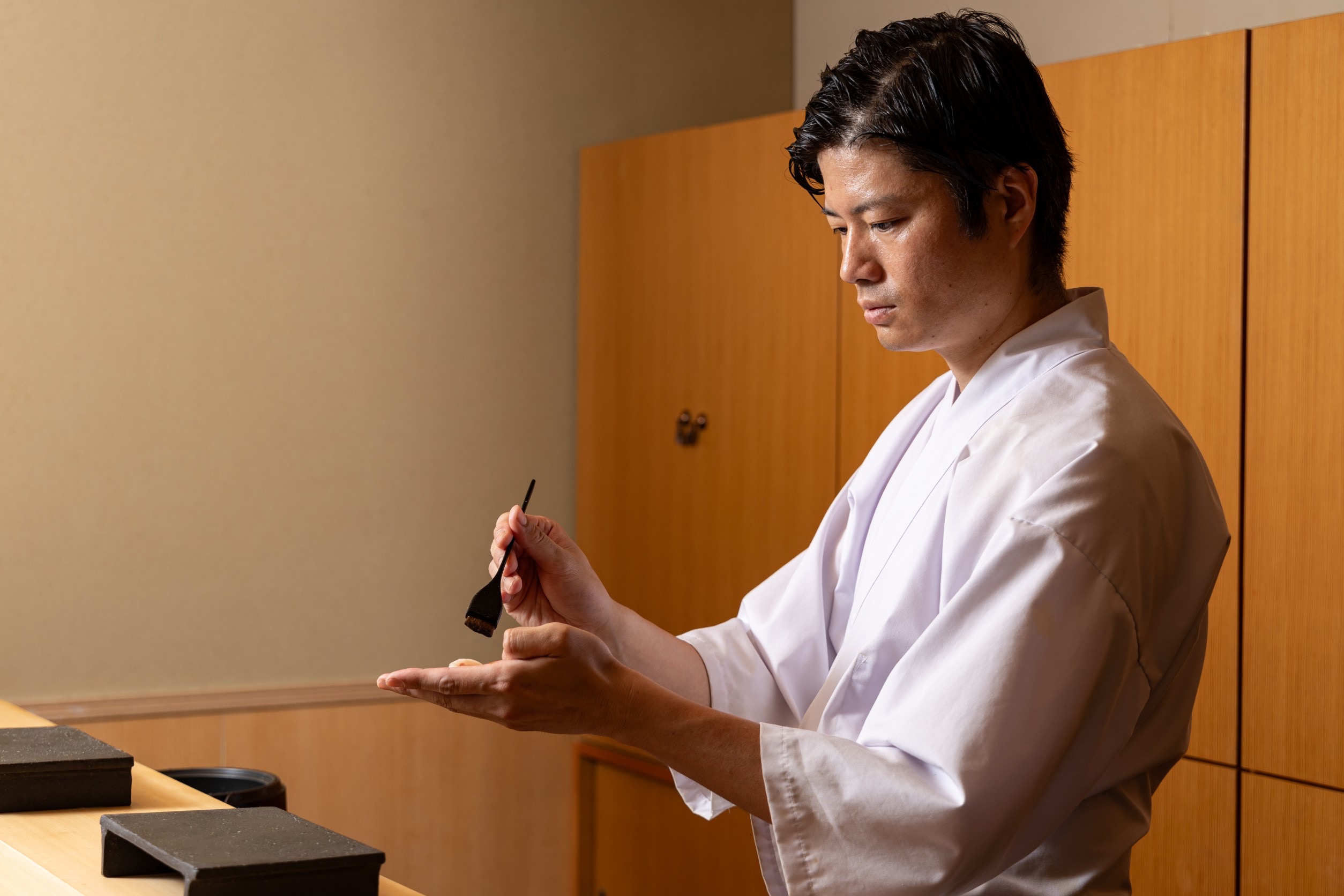
Reviewed by
Tatsuo TakadaOwner of Sushi Tanji. Trained in the Edomae tradition and rooted in Kyushu, he leads the eight-seat omakase counter in Oku-Akasaka, Tokyo, and reviews The Tokyo Sushi Guide.