
Reviewed by Tatsuo Takada (owner-chef, Oku-Akasaka Sushi Tanji)
Part of The Tokyo Sushi Guide Updated Reading time about 6 minutes See the menu →
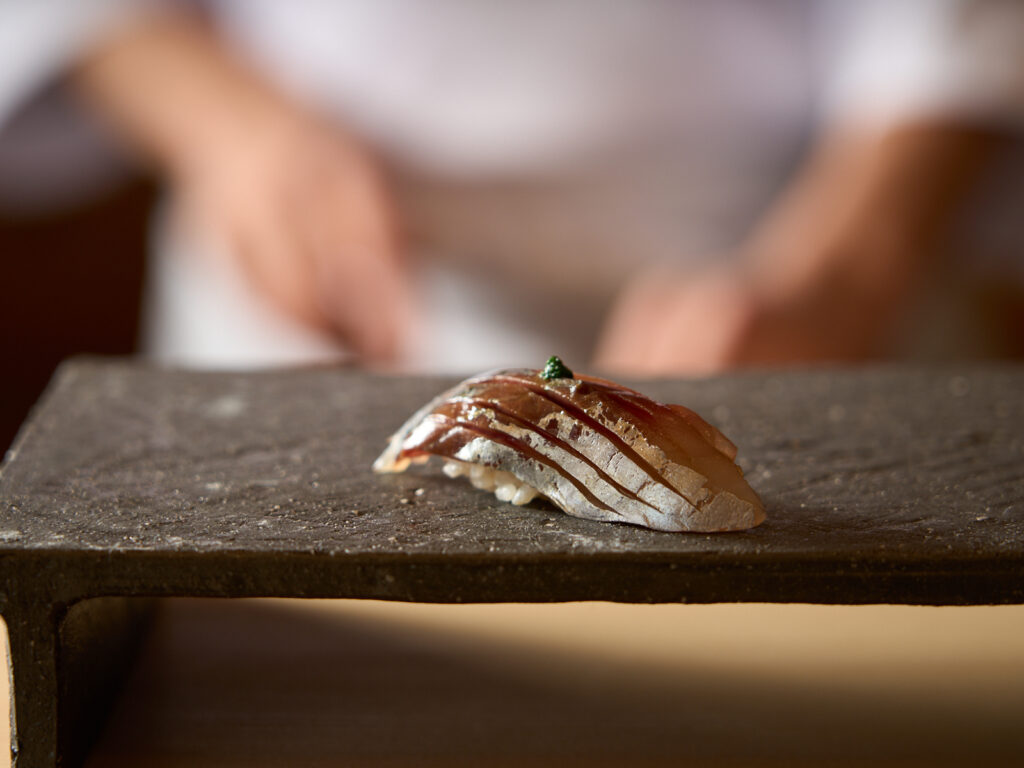
Akagai (ark shell), torigai (Japanese cockle) and hokkigai (surf clam) are three shellfish of the Edomae counter, the traditional Tokyo style of sushi, and each has its own colour and its own preparation. Akagai is struck while raw to firm the flesh. Torigai is briefly blanched to draw out its sweetness. Hokkigai may arrive raw or blanched, and with a little heat its tip turns a vivid red. This guide looks at their texture, aroma and preparation in turn, so that you can recognise the piece set before you at a glance.
In short
Akagai is the vermilion shellfish, served raw and struck against the board to lift its aroma and sharpen its bite. Torigai is dark brown and blanched to bring out its sweetness, while hokkigai, a clam from northern waters, turns red at the tip once blanched. Colour and preparation will usually tell you which is which.
What you will learn
- How to tell akagai, torigai and hokkigai apart by colour
- Why akagai is struck against the cutting board
- The gentle blanching that keeps torigai's dark colour
- How raw and blanched hokkigai differ in flavour and colour
- Other Edomae shellfish, from simmered clam to pen shell and aoyagi
- The shellfish you are most likely to meet at the counter in November
Telling the three apart by colour and craft
Akagai is vermilion, torigai a deep blackish brown, and hokkigai has a red tip. Colour alone will usually tell you which one you have. Knowing whether each is served raw or passed through hot water then explains the differences in texture and aroma.
| Shellfish | Appearance | Texture and aroma | Main preparation | Approximate season |
|---|---|---|---|---|
| Akagai (ark shell) | Vivid vermilion | Crisp bite, with a clear scent of the sea | Struck raw to firm the flesh | Autumn to spring |
| Torigai (Japanese cockle) | Blackish brown outside, pale within | Tender, with sweetness at the fore | Blanched | Spring to early summer |
| Hokkigai (surf clam) | Greyish purple tip when raw, red once blanched | Thick and meaty, sweeter with every bite | Raw, or blanched | Winter to spring |
Seasons shift a little with region and year, so please treat the table as a rough guide.
Akagai: struck raw to bring out its aroma
Akagai owes its red flesh to haemoglobin in its blood, which is unusual among shellfish. A faint, almost iron-like note sits beneath its scent of the shore. Its season runs from autumn into spring, and the flesh grows thicker as winter approaches.
In preparation, the shell is opened and the body is separated from the mantle fringe, known as himo. The body is then opened out and its innards removed. Next the opened flesh is slapped against the cutting board, a step known as striking. Fresh akagai tightens and curls the moment it is struck, and its bite becomes crisper. Before it is shaped into nigiri, it is usually scored with fine cuts, which make it easier to eat and give it a neat finish.
The himo that rings the body has a firm texture and a strong aroma of its own. It is often paired with cucumber as himokyu, served in a roll or as gunkan, a small cup of rice wrapped in nori.
Torigai: blanched for sweetness and tenderness
With torigai, it is the foot that is opened out and laid over the rice. The surface is a blackish brown and the inside is pale. The dark colour rubs off easily under a fingertip, so it is handled with real care. The name means bird shellfish. Some say this is because the foot looks like a bird’s beak, while others say the flavour recalls chicken.
Blanching is the heart of its preparation. Too much heat makes the flesh shrink and toughen and dulls the colour, so it is usually only passed briefly through hot water. Torigai also often reaches the market already shelled and blanched.
In the mouth it has none of akagai’s crisp snap. It is tender at first, and then its sweetness slowly comes through. Its season is spring to early summer, so November is a quiet month for it.
Hokkigai: different in colour and flavour, raw or blanched
Hokkigai is a large clam from the cold waters of Hokkaido and Tohoku, and its standard Japanese name is ubagai. Its season runs from winter into spring. The flesh is thick, and it tastes sweeter the more you chew.
Raw, the tip is a greyish purple and the texture is firm. After a quick blanch, the tip turns bright red and both sweetness and aroma deepen. Raw, it offers the scent of the sea and a firm bite; blanched, a softer sweetness. The same clam shows two quite different characters.
More shellfish of the Edomae counter
Few pieces show the Edomae tradition as clearly as ni-hamaguri, simmered clam. The clam is gently simmered and left to steep in its cooking liquid, then brushed with tsume, a glossy sauce made by reducing that liquid. Unlike raw shellfish, this is a piece where you taste the time spent on its preparation.
From winter into spring you may also meet tairagi (pen shell), its large adductor muscle served raw or lightly seared; aoyagi (trough shell) and kobashira, its small adductor muscles; and mirugai (geoduck), prized for its crunch. Striking, blanching, simmering: each method becomes part of the shellfish’s character.
Shellfish at the counter in November
In November akagai becomes plumper and hokkigai starts to come into season. Torigai, by contrast, is between seasons and waiting for spring. Because the choice of shellfish changes through the year, whatever is set before you is also a small clue to the season.
At Sushi Tanji, the guiding idea is that techniques such as bleeding and dressing fish are a means rather than an end, and the aim is to serve each ingredient at the moment it tastes best. If you think of striking or blanching a shellfish the same way, as one more means to that end, each piece may look a little different to you.
If you don’t know a name, there is no need to worry. Simply ask which shellfish it is, and most chefs will be glad to tell you, often adding where it came from and how it was prepared.
Frequently asked questions
What is the difference between akagai and hokkigai?
Akagai is vivid vermilion throughout. It is struck raw before serving and is loved for its crisp bite and scent of the sea. Hokkigai is a large clam from northern waters. When blanched, only its tip turns red, and its thick flesh is full of sweetness.
Why is akagai slapped against the cutting board?
To firm the flesh and give it a crisper bite. Fresh akagai tightens and curls when struck, and this reaction also helps the chef judge its condition during preparation.
Is torigai ever served raw?
At Tokyo sushi counters it is usually blanched before being shaped into nigiri. A little heat brings out its sweetness and tenderness, and it often reaches the market already shelled and blanched.
When are akagai, torigai and hokkigai in season?
As a rough guide, akagai is in season from autumn to spring, hokkigai from winter to spring, and torigai from spring to early summer. Timing varies with region and year, so it is always worth asking at the counter what is good that day.
From the guide to the counter
Taste it at our eight-seat counter in Oku-Akasaka.
Classic Edomae craft with careful modern aging – served piece by piece, with English guidance for overseas guests.
Reserve at Sushi Tanji Explore The Tokyo Sushi Guide
Reviewed by
Tatsuo TakadaOwner of Sushi Tanji. Trained in the Edomae tradition and rooted in Kyushu, he leads the eight-seat omakase counter in Oku-Akasaka, Tokyo, and reviews The Tokyo Sushi Guide.