

Reviewed by Tatsuo Takada (owner-chef, Oku-Akasaka Sushi Tanji)
Part of The Tokyo Sushi Guide Updated Reading time about 6 minutes See the menu →
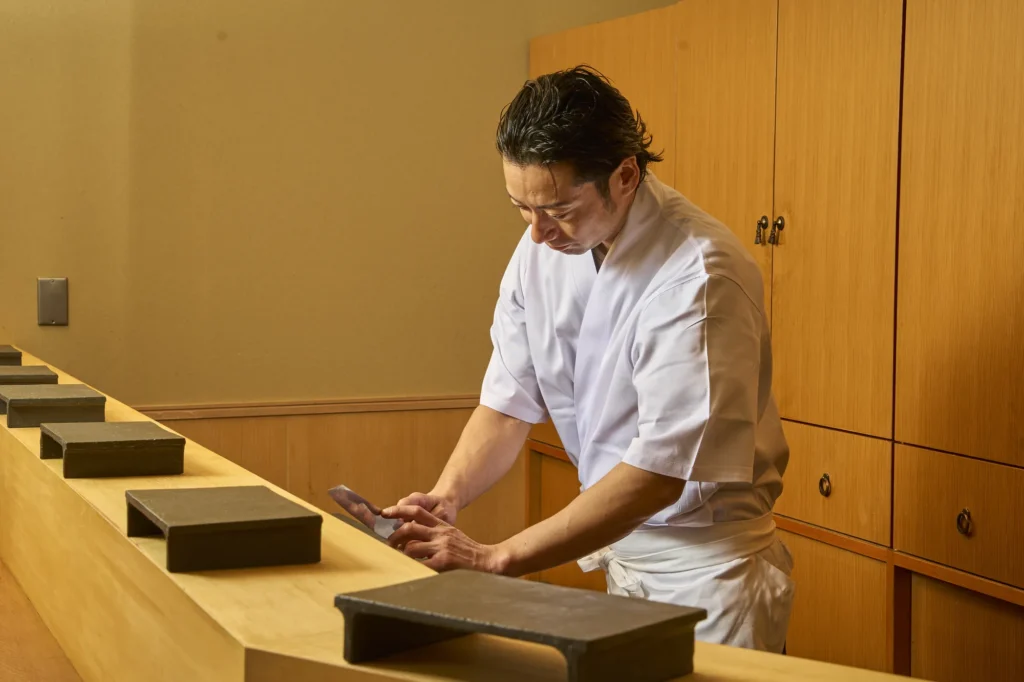
A sushi apprenticeship begins with oimawashi, the cleaning, washing up and deliveries that keep a restaurant running. From there it moves on to cooking the rice and preparing the fish, and only then to shaping nigiri. Here we follow each stage in turn, looking at what an apprentice is trusted with and why the path has traditionally taken so many years. We also look at how the arrival of sushi schools and other changes are reshaping what training looks like today.
In short
A sushi chef’s training usually begins with oimawashi, the general work behind the scenes, then moves on to cooking the rice, preparing fish and finally shaping nigiri. Around ten years was once the accepted measure, though today, with sushi schools now widespread, the length of training varies greatly from one restaurant to the next.
What you will learn
- The four stages of training: oimawashi, rice, preparation and nigiri
- What the old saying "three years for the rice, eight for nigiri" really means
- Why the water for the rice changes when the new harvest arrives in November
- The Edomae techniques learned during preparation, from curing kohada to making tamagoyaki
- How training in a restaurant differs from a sushi school
- How years of training show in the small gestures behind the counter
The stages of training at a glance
The details vary by restaurant and by era, but training broadly follows the order below. An old saying holds that it takes three years to master the rice and eight to master nigiri, and around ten years in all has long been spoken of as a natural measure.
- OimawashiCleaning, washing up, deliveries and the staff meal: the quiet work that holds the restaurant together.
- Cooking the riceWashing and cooking the rice, then folding in the seasoned vinegar. The apprentice is trusted with the foundation of sushi.
- PreparationFilleting, curing and simmering fish, learning the craft of Edomae sushi by hand.
- NigiriStanding behind the counter and shaping sushi in front of guests.
Oimawashi: learning by watching
The first stage of training is known as oimawashi. The morning cleaning, washing the tableware and cloths, demae (deliveries) and cooking the makanai (staff meal) all fall to the newest member of the team. The name is said to come from being chased from one errand to the next all day long.
There may be little time with a knife in hand at this point, yet the apprentice spends every day close beside the oyakata (master), watching the order in which fish is prepared and the rhythm with which each piece reaches the guest. The staff meal often becomes the first real lesson in cooking, a chance to settle on flavour with whatever ingredients are to hand.
Cooking the rice: why it is said to take three years
After oimawashi, the next responsibility is usually the shari (seasoned sushi rice). Washing the grains, judging the water, letting the rice rest after cooking, folding in the vinegar with a light, cutting motion. Each step looks simple, but the rice itself changes from day to day.
November, for instance, brings the new season’s rice. Because freshly harvested rice holds more moisture, many chefs cook it with a little less water. Season, humidity and variety all shift the result, even when the method stays the same, and learning to read those shifts is what is said to take years.
Preparation: learning Edomae craft by hand
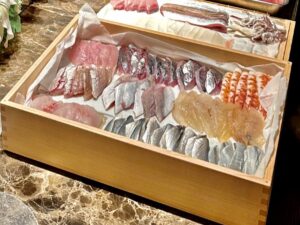
Alongside the rice, the apprentice gradually learns to prepare fish. Curing kohada (gizzard shad) in salt and vinegar, simmering anago (conger eel) and reducing its cooking liquid into tsume, a sweet glaze, marinating tuna as zuke. Edomae work is less a matter of fixed measures than of judgement. A chef may adjust the salting time by a few minutes according to the richness of the fish or the thickness of the fillet.
Sharpening knives is another essential skill acquired during these years. Tamagoyaki (the sweet layered omelette) tends to reveal a restaurant’s character, and the image of the master tasting an omelette made by a young apprentice is one of the scenes most often recalled from training.
Nigiri: the road to the counter
Nigiri practice usually happens after service or on days off, and many chefs recall learning the shape of the hand and the right pressure by working with okara (soy pulp) or a folded cloth. Keeping each portion of rice consistent, and shaping it lightly enough to come apart gently in the mouth, means paying attention even to the warmth of one’s hands and the number of movements.
Once behind the counter, technique is joined by other demands: sensing each guest’s pace so the next piece arrives at the right moment, and guiding the conversation with ease. The eight years of nigiri may well include the time it takes to grow into this way of being at the counter.
How training has changed
In recent years, more people study at a sushi school for anywhere from a few months to a year and take their place at the counter earlier. Where apprentices were once expected to learn simply by watching, many restaurants now explain each step in words.
| Aspect | Training in a restaurant | Sushi school |
|---|---|---|
| Typical length | Traditionally spoken of as around ten years | Most courses run from a few months to a year |
| How it is learned | By watching the master and learning through the hands | Through explanation and hands-on practice |
| What it builds best | The house style, seasonal judgement and timing | A broad grounding in core technique, in a short time |
Even so, many still feel that some instincts come only with years. Increasingly, the question is less how long someone stayed and more which tasks they have repeated with their own hands, and how often. With more chances to learn techniques such as ageing fish outside a single restaurant, training no longer begins and ends under one roof.
Traces of training, seen from the counter
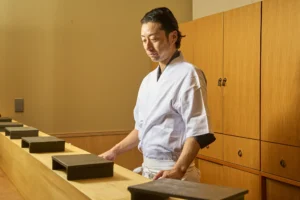
From a seat at the counter, years of training reveal themselves in small gestures. The sweep of the cloth across the tsukedai (the ledge where sushi is served), the economy of movement from taking up the rice to setting down the finished piece, the single stroke of the knife through the fish. Look a little more closely, and the long hours behind each piece begin to come into view.
In Oku-Akasaka, Sushi Tanji works from the belief that craft has no finishing line, and that there is always more to learn from growers, artisans and sake brewers. Training does not close neatly after ten years. It carries on long after a chef first stands at the counter.
Frequently asked questions
How long does it take to become a sushi chef?
The old saying was “three years for the rice, eight for nigiri”, and around ten years has long been treated as a natural measure. Today many people learn the basics at a sushi school before joining a restaurant, so the time it takes to be trusted with nigiri varies greatly from place to place.
What does "oimawashi" mean in sushi training?
It is the first stage of training, covering the work behind the scenes: cleaning, washing up, deliveries and cooking the staff meal. There may be little time spent handling fish, but it is a period for watching the master closely and learning how the restaurant flows.
How does a sushi school differ from training in a restaurant?
A sushi school typically offers a broad grounding in core technique over a few months to a year, taught through explanation and practice. Training in a restaurant builds, slowly and through daily work, an understanding of that restaurant’s style, seasonal judgement and the timing of service at the counter.
Why is cooking the rice said to take three years?
Because the rice changes from day to day with the season, the humidity and the variety. New rice in autumn, for example, holds more moisture, so it is usually cooked with a little less water. Even with the same method the result shifts, and developing a feel for those differences takes time.
From the guide to the counter
Taste it at our eight-seat counter in Oku-Akasaka.
Classic Edomae craft with careful modern aging – served piece by piece, with English guidance for overseas guests.
Reserve at Sushi Tanji Explore The Tokyo Sushi Guide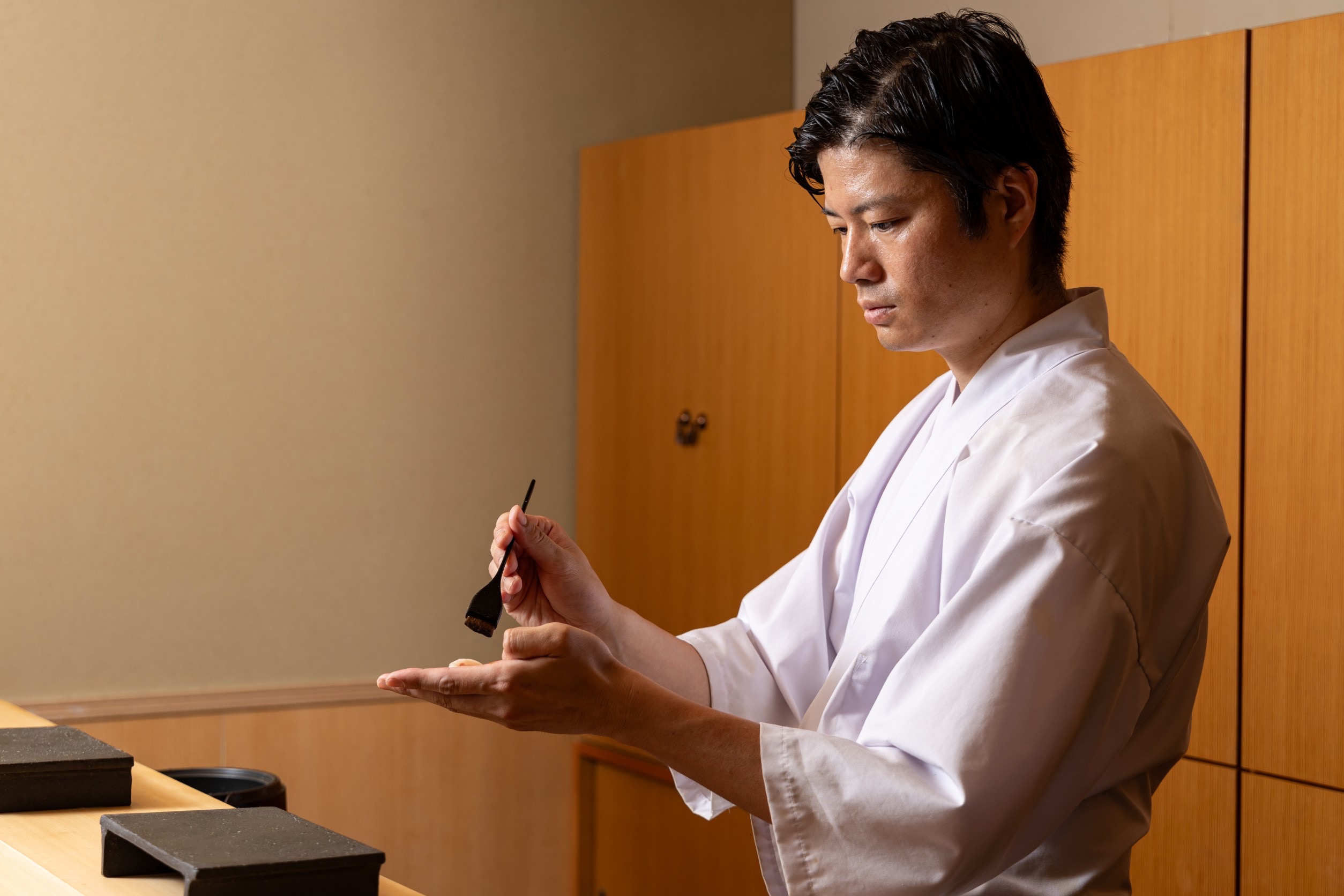
Reviewed by
Tatsuo TakadaOwner of Sushi Tanji. Trained in the Edomae tradition and rooted in Kyushu, he leads the eight-seat omakase counter in Oku-Akasaka, Tokyo, and reviews The Tokyo Sushi Guide.