

Reviewed by Tatsuo Takada (owner-chef, Oku-Akasaka Sushi Tanji)
Part of The Tokyo Sushi Guide Updated Reading time about 6 minutes See the menu →
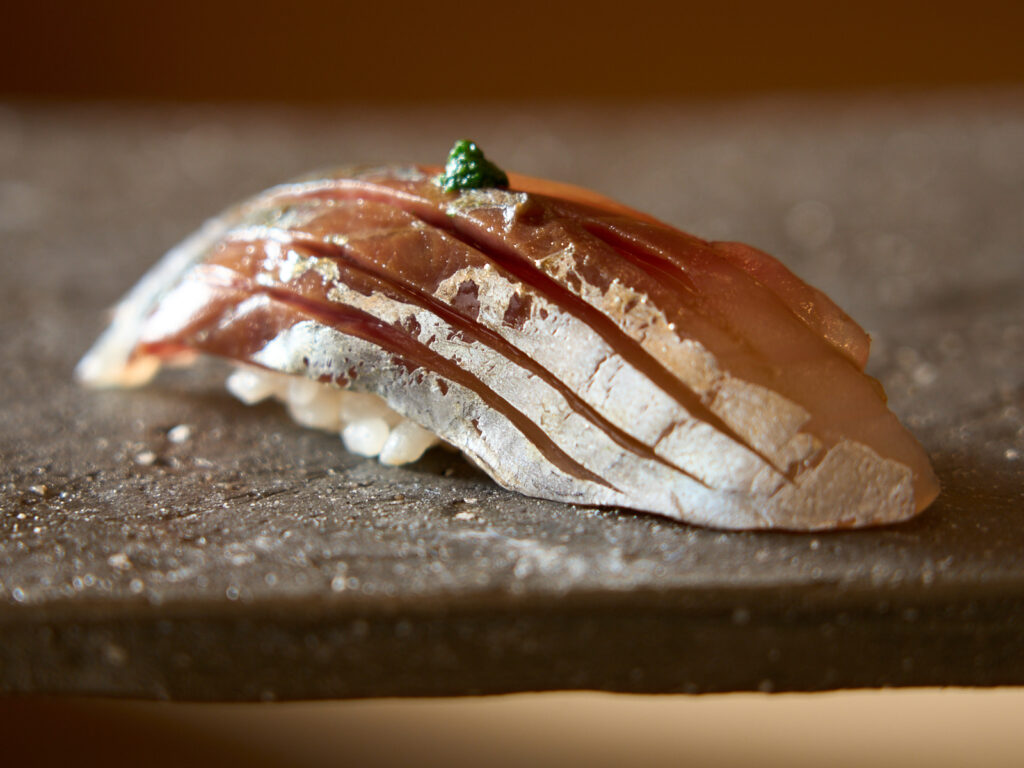
Hikarimono, the “shining things”, is the name given to fish such as horse mackerel, sardine, mackerel and gizzard shad, which are served as sushi with their silvery skin left on. All four are rich in oil and quick to lose their freshness, so the chef’s decision about how far to cure them with salt and vinegar shows directly in the flavour. Here we arrange the four fish from the lightest cure to the deepest, and look at the work each one asks for and how each tastes in October.
In short
Hikarimono is the collective name for fish such as aji, iwashi, saba and kohada, served with their silver skin intact. Aji and iwashi are served raw or only lightly cured, kohada is cured in salt and vinegar, and saba is salted firmly before its vinegar cure. Each fish calls for a different depth of cure, and the chef’s judgement lives in that balance.
What you will learn
- Which fish count as hikarimono, and how the term differs from "blue-backed fish"
- Aji, iwashi, kohada and saba arranged by depth of cure
- Why the salting and vinegar times for kohada change with every fish
- The craft of shime saba, and why October is when autumn mackerel grows rich
- A relaxed approach to enjoying hikarimono at the counter
What are hikarimono?
Hikarimono is a collective name for fish served with the blue and silver sheen of their skin still showing. The four classic examples are aji (horse mackerel), iwashi (sardine), saba (mackerel) and kohada (gizzard shad), and some counters also include sanma (Pacific saury) or sayori (halfbeak). The group overlaps with what Japanese cooks call blue-backed fish, but hikarimono is a word born at the sushi counter, describing how the fish is presented rather than what it is.
All four have soft, oily flesh, and their aroma grows more pronounced as the hours pass after landing. A small shift in salt or vinegar can change the finished piece considerably, which is why hikarimono has long been said to reveal a chef’s skill.
Four fish, arranged by depth of cure
Lined up from the lightest cure to the deepest, the differences between the four fish come into focus. Methods vary from counter to counter, so what follows describes the approach most often seen at Edomae sushi bars.
| Fish | Depth of cure | Main preparation | In October |
|---|---|---|---|
| Aji (horse mackerel) | Light (often served raw) | Skinned and topped with grated ginger or chives | Its peak is summer, though many autumn fish still carry good oil |
| Iwashi (sardine) | Light (raw, or rinsed briefly in vinegar) | Delicate flesh that is prepared swiftly | Best known as the rainy-season nyubai iwashi, with well-fattened fish also appearing in autumn |
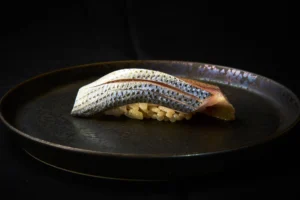
| Kohada (gizzard shad) | Medium (cured with salt and vinegar) | Salt and vinegar times adjusted to each fish’s size and oil | Past the shinko season, the flesh begins to fill out |
| Saba (mackerel) | Deep (salted firmly, then cured in vinegar) | Made into shime saba, its thin outer skin peeled to reveal the silver | Autumn mackerel starts to grow rich |
Aji and iwashi: served on freshness alone
Aji and iwashi are usually served raw, without a cure. With so little vinegar involved, the freshness of the catch and the speed between filleting and shaping are what you taste.
Aji is often finished with a touch of grated ginger or asatsuki (fine chives), which sharpens the fragrance of its oil. Iwashi is fragile, so some chefs pass it quickly through vinegar to firm only the surface.
Kohada: a cure judged one fish at a time
Kohada is salted to draw out moisture and any excess aroma, rinsed, and then steeped in vinegar. Even fish bought on the same morning vary in size and richness, so the chef usually adjusts the salting and vinegar times for each one.
Once the summer season of shinko, the tiny young kohada, has passed, October kohada gains a fuller, thicker body. Vinegar-cured fish are thought to pair beautifully with shari (seasoned rice) made with red vinegar. At Sushi Tanji, for instance, the shari blends red and rice vinegars, seasoned with two salts of distinctly different character.
Saba: firmly salted, finished in vinegar
Of the four, saba is usually given the deepest cure. It is salted generously to draw water from the flesh, then cured in vinegar until the surface turns white. This is shime saba. When the fine outer skin is peeled away by hand at the end, the silver beneath appears in clean, bright lines.
How far to take the cure differs from counter to counter. Some chefs prefer a lighter touch that leaves a blush of raw colour at the centre, while others layer in kombu (kelp) for added savoury depth. True to the name autumn mackerel, October is when saba begins to grow rich.
Enjoying hikarimono at the counter
Hikarimono tends to arrive in the middle of a course, often between the white-fleshed fish and the red. It is usually served already brushed with nikiri (a light soy glaze) and finished with its garnish, so most guests simply enjoy it as it comes.
If the aroma of oily fish is not quite to your taste, a word when booking helps the counter shape your menu. There is no need to feel any hesitation about it. Many guests also find that a sake with some acidity brings out the clear outline of vinegar-cured fish.
At Tanji, techniques such as bleeding the fish and preparing it are seen as means rather than ends: each fish receives the care that suits it, and the aim is to recognise the moment when it tastes its best. Balancing salt and vinegar for hikarimono is exactly this kind of work, judged fish by fish.
Frequently asked questions
Which fish are considered hikarimono?
Hikarimono is the collective name for fish served with their silver skin intact, with aji, iwashi, saba and kohada as the classic examples. Some counters also include sanma or sayori.
Why can hikarimono taste fishy?
These fish are rich in oil, and their aroma becomes stronger with time. Freshness and the balance of the salt and vinegar cure make a great difference to the impression they leave. If you would prefer to avoid them, simply mention it when booking.
Is shime saba the same as saba nigiri?
At Edomae sushi counters, saba nigiri is usually made with shime saba, mackerel cured in salt and vinegar. The depth of the cure, and whether kombu is used, varies from counter to counter.
When are hikarimono in season?
It depends on the fish. Aji is at its best in summer, and iwashi is celebrated in the rainy season as nyubai iwashi. Kohada fills out in autumn after the summer shinko, and saba grows rich from autumn into winter.
From the guide to the counter
Taste it at our eight-seat counter in Oku-Akasaka.
Classic Edomae craft with careful modern aging – served piece by piece, with English guidance for overseas guests.
Reserve at Sushi Tanji Explore The Tokyo Sushi Guide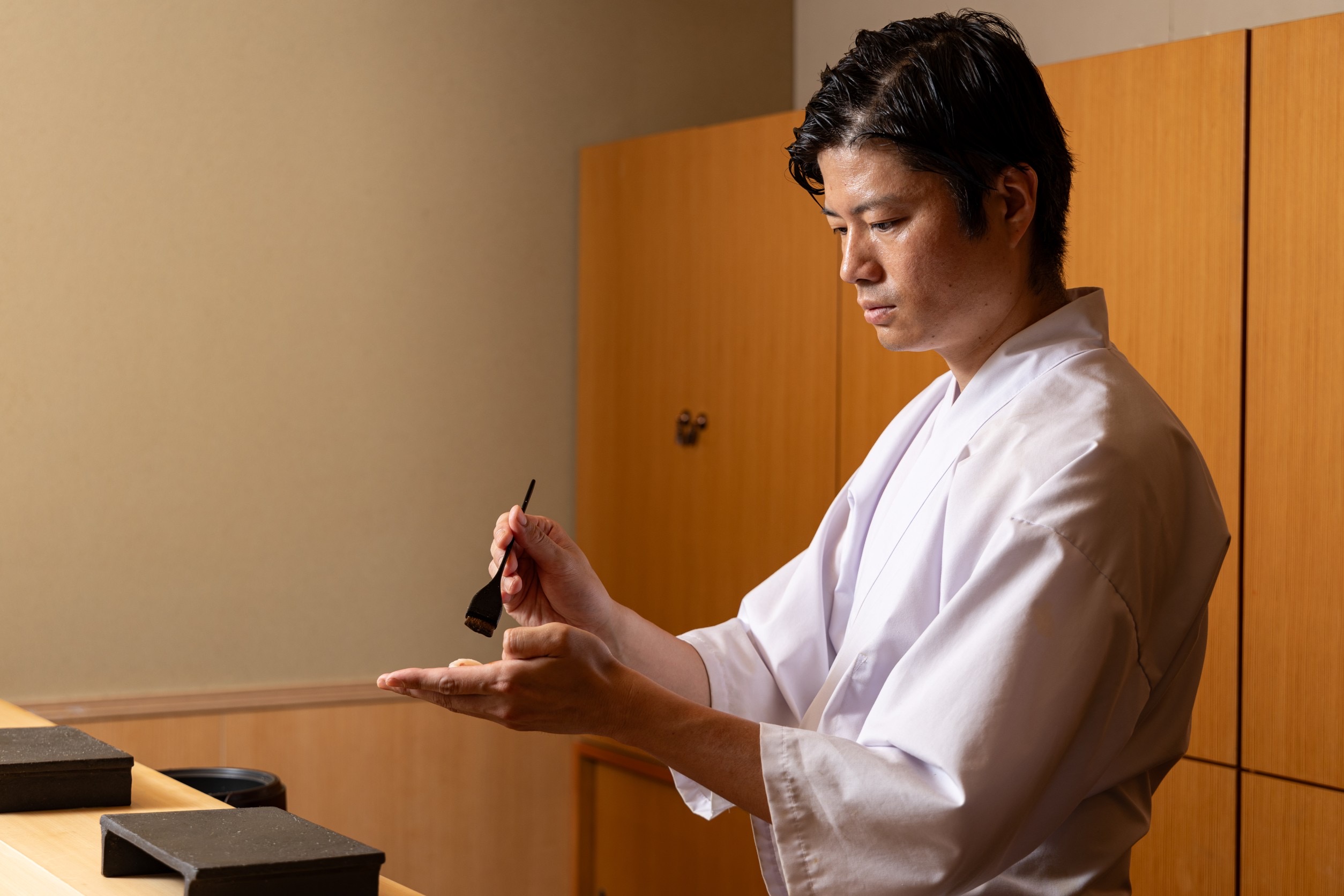
Reviewed by
Tatsuo TakadaHead chef and owner of Sushi Tanji. Trained in the Edomae tradition and rooted in Kyushu, he leads the eight-seat omakase counter in Oku-Akasaka, Tokyo, and reviews The Tokyo Sushi Guide.