

Reviewed by Tatsuo Takada (owner-chef, Oku-Akasaka Sushi Tanji)
Part of The Tokyo Sushi Guide Updated Reading time about 7 minutes See the menu →

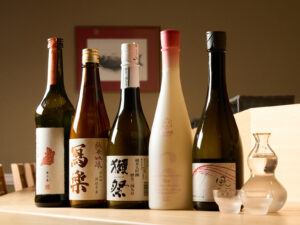
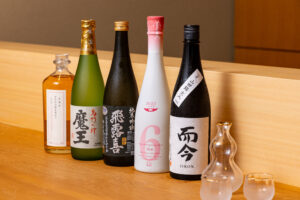
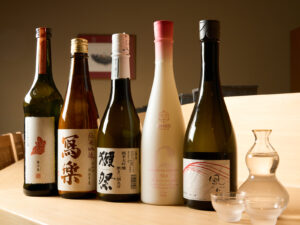
Aramasa, Juyondai and Hiroki each find their natural partner in a different piece. One cuts with acidity. One wraps with sweetness. One receives with umami. With these three as our guide, this piece sets out how we think about pairing sake with sushi. It covers the order in which to move between bottles as the meal unfolds, as well as how temperature shapes what is in the glass. This is about how to choose, not about famous labels.
In short
Aramasa lifts white fish and silver-skinned fish with its bright acidity. Juyondai wraps the saltiness of zuke (soy-marinated tuna) and nikiri (a light soy glaze) in a sweet, fruity perfume. Hiroki receives the fish with umami then closes cleanly. Choosing by whether a piece wants cutting or receiving, rather than by the name on the label, is what tends to work at the counter.
What you will learn
- Two ways of judging: sake that cuts with acidity versus sake that receives with umami
- The character of Aramasa, Juyondai and Hiroki with the pieces each suits best
- Why pairings shift across white fish, silver-skinned fish, zuke and simmered anago
- The order for changing sake as the omakase unfolds
- Serving sake not too cold, plus the size of the cup
- Choosing labels after visiting the breweries themselves
Choose by Cutting or Receiving, Not by Label
When pairing sake with sushi, there are really two questions. Does the sake cut through fat and salt with acidity? Or does it receive them with umami? Even well-known names such as Aramasa, Juyondai and Hiroki take their role from which way they lean.
There is no need to change sake with every piece. Still, a delicate white fish eaten with salt leaves something quite different on the palate from zuke (soy-marinated lean tuna) or anago (sea eel) brushed with nitsume, a sweet reduced sauce. Fish that have been worked with vinegar and salt are brought back to lightness by a sake with acidity. Fat and the sweetness of nitsume are more easily met by a sake with generous umami. Rather than memorising labels, it is more useful to ask whether the glass in front of you cuts or receives.
| Sake | Flavour profile | Natural partners |
|---|---|---|
| Aramasa | Bright acidity with a light touch on the palate | White fish eaten with salt, plus silver-skinned fish such as kisu (Japanese whiting) and shinko (young gizzard shad) |
| Juyondai | Fruity aromas with a rounded sweetness | Zuke lean tuna, pieces brushed with nikiri (a light soy glaze), tamago (sweet omelette) |
| Hiroki | Generous umami with a firm, clean finish | Chutoro (medium-fatty tuna), simmered anago, aged white fish |
Aramasa Refreshes with Acidity
Aramasa comes from a brewery in Akita and is known for working with Kyokai No. 6 yeast. With kimoto (a traditional natural starter) and wooden vats also part of its approach, its character tends to show most clearly in its acidity. On the palate, a bright acidity arrives before any sweetness then falls away cleanly without lingering.
That profile comes alive with pieces that carry the work of vinegar or salt. In August, that means shinko. Several tiny fillets are layered onto a single piece, prized for the tang of the vinegar cure with the fragrance of the skin. A sake with acidity laid over it keeps every flavour clear so that their outlines align. The same holds for kisu cured in kelp as well as white fish eaten with salt. Beside sweet, nitsume-glazed anago, by contrast, the sake alone can feel a little thin.
Juyondai Wraps Salt in Sweetness
Juyondai comes from a brewery in Yamagata. It is prized for fruity aromas that rise on the palate with a rounded, generous sweetness. This is a sake that wraps rather than cuts.
Its natural partners are pieces seasoned with soy. Zuke lean tuna or chutoro brushed with nikiri leaves an impression of salt with an iron-like finish. A sweeter sake rarely clashes with that salt. It softens the edges then carries you on to the next piece. It also sits well with pieces near the close of the meal such as tamago or kanpyo maki (dried gourd roll). With a delicate white fish eaten only with salt, though, its aroma can step in front of the fish.
Hiroki Receives with Umami and Finishes Clean
Hiroki comes from a brewery in Fukushima that made its name with muroka nama genshu, sake left unfiltered, unpasteurised and undiluted. It carries plenty of umami yet finishes as cleanly as water. Its charm lies in sitting between the sake that cuts and the sake that receives.
That quality comes into its own with aged fish. White fish that has slowly shed moisture and lean tuna that has been rested press forward with umami rather than fat. A sake built only on acidity can leave the umami of the fish hanging in mid-air. A sake that meets that umami then rinses the finish makes the next piece feel new again. At Sushi Tanji, each piece is shaped by Edomae curing and marinating paired with careful ageing. The sake is chosen to answer that depth.
Order and Temperature Change the Sake
The same sake works differently depending on where it falls in the meal. Omakase usually moves from delicate to rich, so changing bottles along that arc feels entirely natural.
- Begin with something lightOpening with a sake of deep umami leaves it nowhere to go later on. Starting with a glass that has some acidity makes the rest easier to build.
- Layer acidity over silver-skinned fishWhen cured fish follow one another, the role of acidity is at its clearest.
- Lean towards sweetness with lean tuna and zukeOnce soy seasoning comes in, move to a sake that wraps.
- Meet simmered pieces and the finale with umamiThe sweetness of simmered anago or tamago pairs easily with a sake that closes cleanly.
Temperature matters too. Chilled too far, sake tends to close up in both aroma and umami. Left for a moment after pouring, it opens gradually, first in sweetness then in umami. There is no hurry to finish a glass. Letting it rest between one piece and the next is often just right. At the counter, trying several sakes in small cups is more usual than ordering a large pour.
Choosing with the Brewery in Mind
A sake’s character grows out of the thinking of those who make it. Two breweries using the same rice from the same prefecture will place their acidity differently depending on what each is aiming for, with finishes that differ as well. How well the person choosing understands a brewery’s intentions translates directly into how precise the choice can be.
At our eight-seat counter in Oku-Akasaka, the owner visits sake breweries across Japan, choosing each label only after coming to know the makers’ thinking as well as the character of their land. Sake is treated not as a supporting player but as something that completes each piece.
The August menu brings pieces cured with vinegar and salt such as shinko and kisu alongside pieces that press forward with umami such as anago and abalone. Light sake alone is not quite enough at this time of year. Nor is rich sake alone. Keeping one bottle that cuts plus one that receives close at hand lets you follow the rhythm of the season with ease.
Frequently asked questions
Do Aramasa and Juyondai go well with sushi?
They do, though each suits different pieces. Aramasa’s bright acidity leans towards cured silver-skinned fish as well as white fish eaten with salt. Juyondai’s sweetness tends to sit well with zuke plus pieces brushed with nikiri. Moving from one to the other partway through the meal shows the difference more clearly than staying with a single bottle.
What if I don't know any sake names?
Simply asking for “something light with acidity” or “something with umami” is quite enough. You might also point to the piece in front of you and ask for “something to go with this”. There is no need to learn any labels beforehand, so please feel entirely at ease.
When is a good moment to order sake at a sushi counter?
Some guests drink sake from the very first glass. Others keep to a single light glass early on then change when the lean tuna arrives. Omakase usually moves from delicate to rich, so switching at that turning point makes it easy to follow the flow.
Are these three always available?
Sake selections shift with each delivery in both label and style, so a particular bottle may not always be on hand. At Sushi Tanji, too, sake is chosen from breweries across Japan to suit the season. The surest approach is to ask what is open that day then choose by the direction of flavour.
Is it fine to drink the same sake all the way through?
Of course. If you enjoy pairing, moving between two sakes brings some variety, but staying with one bottle you love is a perfectly good way to drink too. In that case, a sake sitting between cutting and receiving tends to be the easiest companion: generous in umami with a clean finish.
From the guide to the counter
Taste it at our eight-seat counter in Oku-Akasaka.
Classic Edomae craft with careful modern aging – served piece by piece, with English guidance for overseas guests.
Reserve at Sushi Tanji Explore The Tokyo Sushi Guide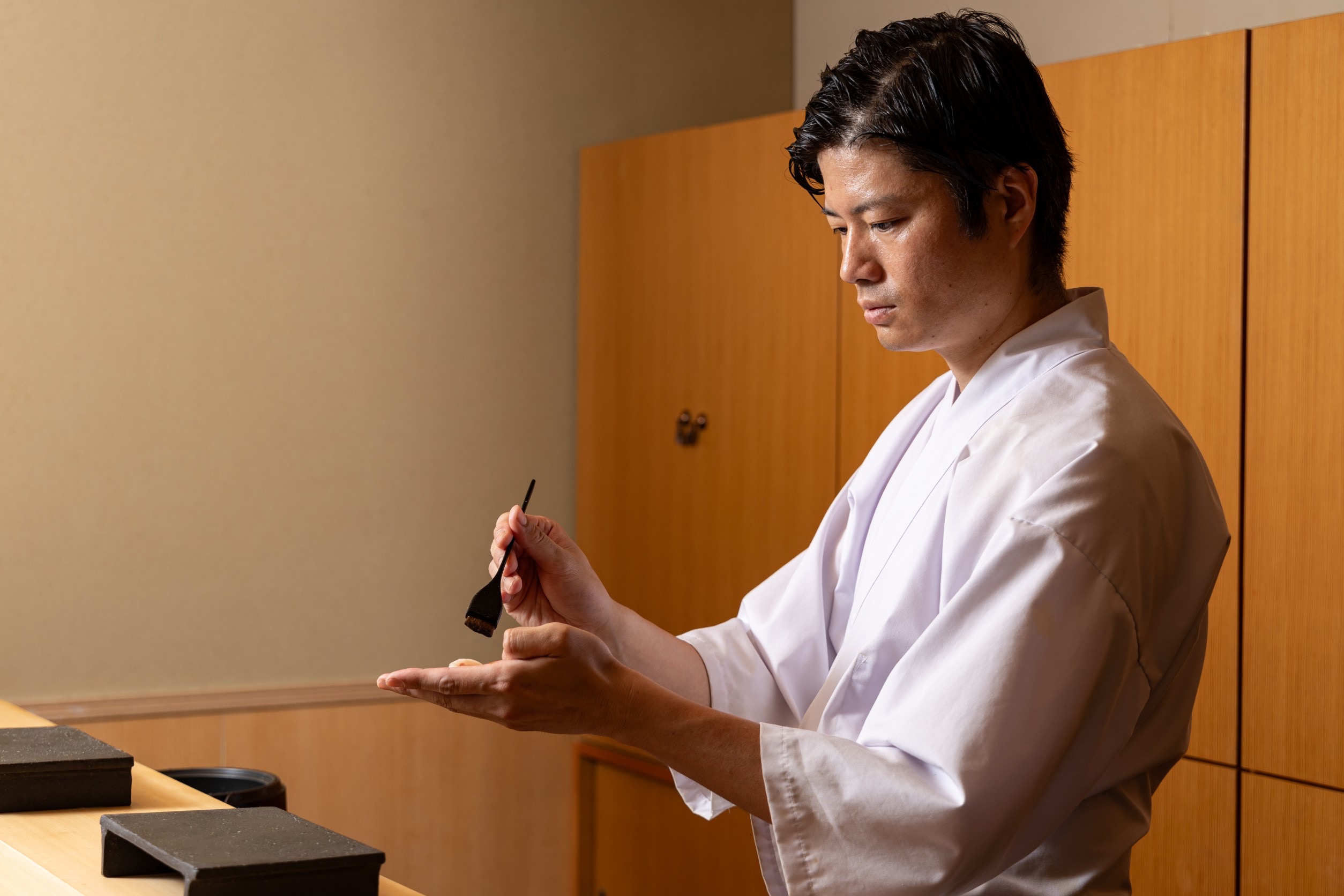
Reviewed by
Tatsuo TakadaHead chef and owner of Sushi Tanji. Trained in the Edomae tradition and rooted in Kyushu, he leads the eight-seat omakase counter in Oku-Akasaka, Tokyo, and reviews The Tokyo Sushi Guide.