The tea that closes a sushi meal comes in two forms: agari, the konacha or fine-leaf green tea poured at the counter, plus matcha whisked in a tea room. The first refreshes the palate so the meal can carry on. The second brings the meal to an end. Different roles ask for different settings as well as a different pace of time. The words ma and yoin offer a way to read what a tea room adds to an omakase.
In short
Matcha in a tea room is an ending that draws out the resonance of the sushi rather than rinsing it away. The few steps from counter to tea room create ma, a pause; the gentle bitterness of the tea with a seasonal sweet gives the last piece a clear outline in memory.
What you will learn
- Why agari at the counter and the matcha of a tea room do almost opposite work
- That ma is not blankness but time in which you know nothing more will follow
- How a few steps between rooms becomes a way of closing a meal
- September wagashi designs (kisewata, chrysanthemum, chestnut) alongside early-autumn sushi
- How to think about etiquette such as turning the bowl, which you can enjoy without memorising
- The idea of designing an evening all the way through to its last bowl of tea
Ma and Yoin Are Questions of How Time Is Used
Ma is not simply time in which nothing happens. It is time in which you know nothing more is coming. At an omakase counter a small gap opens between one piece of sushi and the next: ten or fifteen seconds while the chef reaches for the next neta (topping), draws the knife through it, then takes up the shari (seasoned rice). In that brief gap the flavour of the piece just eaten finally settles into shape.
Yoin is what remains in that gap. The speed at which the sweetness of fat recedes, the scent of rice left once the vinegar’s edge has gone, the few seconds wasabi takes to clear the nose. Edo-mae technique such as curing with salt, marinating in soy or brushing with nikiri (a sweetened soy glaze) is not only about force at the first moment. It is designed for what stays behind after swallowing.
A sushi meal often ends with tamago (sweet omelette) or a rolled piece. If you stand up at that moment to step outside, the resonance that should have lingered dissolves into the air of the street. Placing a bowl of tea at the close of the meal is a way of giving that dissolving time a vessel of its own.
Agari and Tea Room Matcha Do Different Work
Both are green tea, yet the agari poured at the counter faces almost the opposite direction from the matcha whisked in a tea room.
| Agari (konacha) | Matcha in the tea room | |
|---|---|---|
| Where it is served | At the counter, between pieces as well as after the meal | After the meal, in a room you move to |
| Role | Clears fat plus saltiness to ready the palate | Closes the meal, turning attention back over it |
| How it tends to be prepared | Hot water, brewed strong, astringency to the fore | Slightly cooler water, drawing the sweetness out from behind the bitterness |
| Direction it faces | Forward. More is coming | Backward. Nothing more follows |
Konacha is served hot and strong so that it cuts the fat left on the tongue and returns the palate to neutral. The firmer the astringency, the more the next piece arrives as something new. Matcha does not come to erase. Because the leaf itself is drunk, its layers of aroma with sweetness sit thickly, settling over the memory of the sushi rather than quarrelling with it. A strong konacha here would carry the resonance away along with everything else. That is the reasoning behind matcha as the closing tea.
Change the Room and the Pace of Time Changes
A counter is built for facing the chef. The eye gathers at the hands in front of you; between the brightness of pale wood and the anticipation of the next piece, time runs a little quickly. A tea room does the opposite. You sit on tatami, the light drops a level, sound is absorbed by walls with matting. The scroll and the flower in the tokonoma (alcove) name one thing only, the season of that day. Everything else has been taken away.
The Few Steps You Walk Become the Ma
The act of moving seats works as punctuation in itself. You stand, change your footwear, walk a short corridor, sit down again. For that minute or so the resonance of the last piece is still moving in your mouth. Nothing feels hurried away, yet there is no empty waiting either. Whether or not this short walk is included changes the ending of a meal considerably.
If tea rooms are unfamiliar territory, there is no need to brace yourself. Such a room is usually set aside for a single bowl at the close of a meal rather than for the full course of a tea gathering.
What Is Set Out in the Tea Room in September
Seasonal wagashi (traditional confectionery) carry the clearest statement of season anywhere in the room. In September the designs turn towards the threshold of autumn: kisewata, the cotton-covered chrysanthemum of the Chrysanthemum Festival, nerikiri shaped as chrysanthemum blooms, sweets made with chestnut. It is also the moment when the translucent agar sweets of summer give way to the deeper colour of bean paste.
Around the same time the sushi of Tokyo changes too. Autumn fish appear more often: returning bonito, saury, mackerel beginning to take on fat. The centre of gravity of each piece, light throughout the summer, settles a little lower. Confectionery and sushi are saying the same season in two different languages. When the two follow one another within a single evening, the outline of that season stays with you.
With usucha (thin matcha) the sweet usually comes first, the tea after. Sweetness still in the mouth meets bitterness, so each brings out the other. Reversed, the aroma of the matcha would disappear beneath the sugar. The order itself is part of the design of the flavour.
There Is No Need to Worry About Etiquette
Turn the bowl a couple of times to avoid drinking from its front; wipe the rim lightly with your fingers where your lips touched. These gestures are well known, yet forgetting them causes no offence. Hold the bowl in both hands, drink while it is warm. That is quite enough. What the host watches is not the accuracy of the sequence but how the guest received that bowl.
- Take your seatA glance at the scroll with the flower in the alcove tells you the season of the day.
- Eat the sweetBefore the matcha. Cut it with the kuromoji (spicewood pick), letting sweetness stay in the mouth.
- Receive the matchaHold the bowl in both hands. Two or three mouthfuls is the usual measure.
- Look at the bowlOnce you have finished, you may be invited to hold the bowl close to admire it.
Asking on the spot seems to be the quickest way through anything unclear. Hosts are glad to be asked about the maker of a bowl or the words on a scroll. It is closer to the truth to say that such pieces were chosen for exactly that exchange.
Designing the Ending as Part of the Meal
Some houses decline to let the design of a meal finish with the final piece. Where that view holds, the closing bowl is treated as part of the menu. Sushi Tanji, in Oku-Akasaka, Tokyo, offers matcha with a seasonal sweet in a full tea room at the close of the meal. The thinking there is that the food with the sake, the vessels with the space, then the last bowl of tea, all overlap into an evening you would want to return to.
Sushi and the way of tea did not grow from a single root. Yet three things overlap deeply: each is served a mouthful at a time, each asks you to take a vessel in your hands, each names one season only. Set side by side they sit easily together, so that one can hold the resonance of the other.
The truth is that how the ten or fifteen minutes after eating are handled stays in the memory as firmly as the design of the flavours. What you ate fades in its details. How the evening ended lasts a good deal longer.
Frequently asked questions
Is the matcha after sushi separate from the agari at the counter?
They are two different things. Agari, the konacha poured at the counter, clears the fat in readiness for the next piece. The matcha of the tea room comes once the meal is over, in a room you move to. The preparation, the setting, the role each one plays are all distinct.
Is it all right if I do not know the tea ceremony?
It is. A bowl offered at the close of a meal is rarely the place for the full sequence of a tea gathering. Holding the bowl in both hands, drinking while it is warm: that is enough for the occasion to work. Anything you wonder about can simply be asked there.
How long does a bowl of tea in the tea room take?
It varies by house, though a single bowl of usucha often comes to something like ten or fifteen minutes from the moment you sit. If closing time or a later engagement is on your mind, a word before you take your seat makes it easier to arrange.
Can I enjoy it if I am not fond of matcha?
Most people find that they can. The usucha used for a closing bowl varies a good deal in bitterness depending on how it is whisked, plus the sweetness of the wagashi taken first softens whatever bitterness remains. If it still concerns you, saying so often brings an alternative.
What sweets appear in the tea room in September?
September brings kisewata for the Chrysanthemum Festival, nerikiri shaped as chrysanthemums, sweets made with chestnut: designs that mark the threshold of autumn. It is the turn from summer’s agar sweets to bean paste, the same weeks in which sushi moves towards returning bonito with saury.
From the guide to the counter
Taste it at our eight-seat counter in Oku-Akasaka.
Classic Edomae craft with careful modern aging – served piece by piece, with English guidance for overseas guests.
Reserve at Sushi Tanji Explore The Tokyo Sushi Guide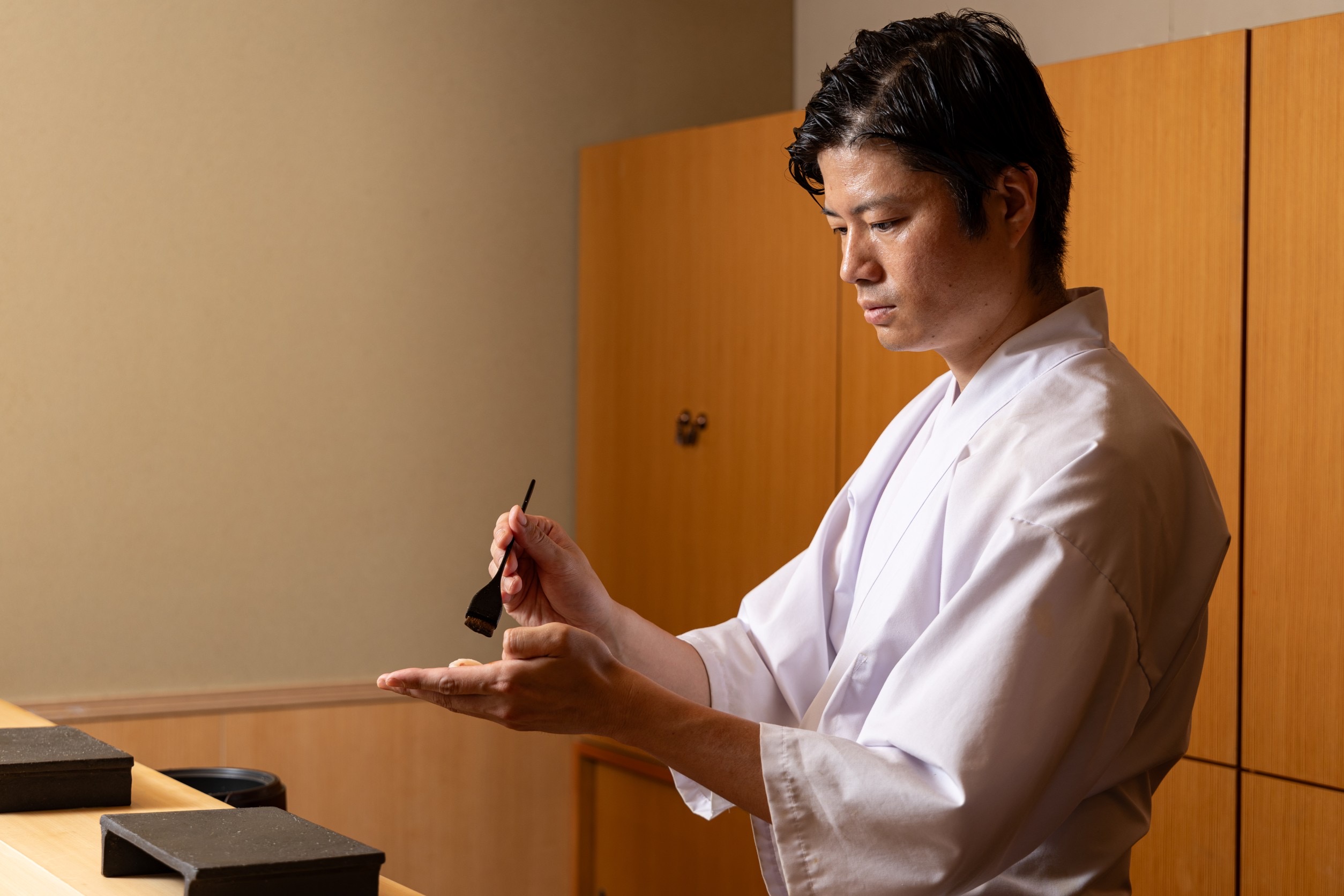
Reviewed by
Tatsuo TakadaHead chef and owner of Sushi Tanji. Trained in the Edomae tradition and rooted in Kyushu, he leads the eight-seat omakase counter in Oku-Akasaka, Tokyo, and reviews The Tokyo Sushi Guide.