
Wasabi is inseparable from sushi, yet much of what we eat under that name is not the real thing. This article untangles the difference between hon-wasabi (true wasabi) and its processed counterpart, explains the sharkskin grater you may spot on the counter, then reveals why a chef tucks wasabi inside each piece. By the last line, the aroma of your next piece should feel a little deeper.
What you will learn
- Why true wasabi needs cold running water plus years of patience
- The main ingredients of processed wasabi, plus how to read the fine print on the label
- Why sharkskin graters are prized, along with the brief window when the aroma peaks
- Why the chef tucks wasabi between the fish and the rice
- Clues for recognising real wasabi at the counter
- How wasabi pairs with the lighter sushi of July
True Wasabi, a Plant of Cold Mountain Water
Hon-wasabi (true wasabi) is a member of the brassica family native to Japan. The finest plants are raised in cold, clear water flowing through mountain valleys, where the temperature stays steady all year; regions such as Shizuoka and Nagano are known for it. A root typically needs eighteen months to two years to reach harvest, a patience you can taste in its scarcity. Curiously, that vivid aroma lies dormant while the plant sits in the stream. Only when the cells are broken by grating do the fragrance and the heat come to life.
What Processed Wasabi Is Made Of
Most of the wasabi we meet in tubes or sachets is a processed blend built mainly on horseradish. Horseradish is naturally an almost white root, sharply hot but modest in aroma. That familiar green is often added colouring. Under the industry’s voluntary standard, a product may be labelled “made with hon-wasabi” when true wasabi makes up half or more of the blend; below that, the label reads “contains hon-wasabi”. The small print on the packet turns out to be a surprisingly honest guide. None of this is to say processed wasabi is bad. It is simply that the aroma behaves in an entirely different way.
| True wasabi | Processed wasabi | |
|---|---|---|
| Main ingredient | The rhizome of wasabi native to Japan | Mostly horseradish |
| Aroma | Rises the moment it is grated, then softens within minutes | Uniform, with little change |
| Heat | Arrives cleanly, then fades just as fast | Strong, tending to linger |
The Sharkskin Grater
At a sushi counter where the work is careful, you may notice a small grater known as samegawa oroshi, a piece of sharkskin stretched over a wooden board. Its surface is like the finest sandpaper, grating the root more finely than metal ever could. The paste comes out even in texture, smooth on the tongue, fuller in fragrance. The traditional way is to grate slowly in gentle circles, as if tracing a soft spiral. The cells break quietly, giving the aroma time to develop in full.
For the Aroma, Not for Hygiene
When sushi was sold from street stalls in old Edo, wasabi was often described as a way of taming the smell of the fish. In an age of reliable refrigeration, the chef’s real reason for tucking wasabi between the neta (the topping) and the shari (the seasoned rice) is harmony of aroma. Many chefs adjust the amount piece by piece: a little more under rich chūtoro (medium fatty tuna), a lighter touch under delicate white fish. Wasabi is not the star. It is the supporting player that sharpens the outline of the fish. That is why, at an Edomae counter, it usually arrives already worked into the piece itself rather than sitting on the table.
Recognising the Real Thing at the Counter
A few clues will tell you whether the real thing is in front of you. The colour is not a bright, uniform green but a pale one, faintly mottled. On the palate the aroma arrives first; the heat drifts up through the nose, then slips away. Above all, watch whether it is grated before your eyes. At an intimate eight-seat counter such as Sushi Tanji in Oku-Akasaka, the chef’s hands are in plain view: the material of the grater, even how much wasabi goes into each piece. Watching these small gestures is one of the quiet pleasures of taking a seat at the counter.
July's Sushi and the Scent of Wasabi
July brings lighter fish to the counter: suzuki (sea bass), aji (horse mackerel), flavours that ask for a gentle hand. Where winter’s rich fish call for wasabi to stand up to them, summer gives it a quieter role, lifting the fragrance of delicate white fish. If you find yourself at a counter this season, try following the wasabi’s aroma alone through a piece of white fish. A faint sweetness, then the scent rising through the nose before it vanishes. That vanishing is the true signature of hon-wasabi. There is no need to concentrate too hard. The difference is clearer than you might expect.
Frequently asked questions
What is the difference between tube wasabi and true wasabi?
The biggest difference is the ingredient. Most tube products are processed blends built on horseradish, with the green often coming from added colouring. True wasabi is the rhizome itself, freshly grated: the aroma leads, then the heat withdraws cleanly. The heat of a processed blend is stronger, tending to linger.
Is it rude to ask for sushi without wasabi?
Not at all. Say “sabi-nuki” (without wasabi) at the start of the meal and the chef will adjust every piece accordingly. Guests who prefer less heat ask for this all the time, as do families with children. There is nothing to feel awkward about.
Is it wrong to stir wasabi into the soy sauce?
Not wrong, though stirring does scatter the aroma. At an Edomae counter the wasabi is usually already worked into each piece, so try one bite just as it comes. If you would like a little more, a small touch placed on top of the fish keeps the fragrance far better.
Why is true wasabi so expensive?
Because it takes time as well as care to grow. Fine hon-wasabi is raised in cold running water, typically needing eighteen months to two years before harvest. It is particular about its land, particular about its water, nearly impossible to grow at scale. That rarity shows in the price.
From the guide to the counter
Taste it at our eight-seat counter in Oku-Akasaka.
Classic Edomae craft with careful modern aging – served piece by piece, with English guidance for overseas guests.
Reserve at Sushi Tanji Explore The Tokyo Sushi Guide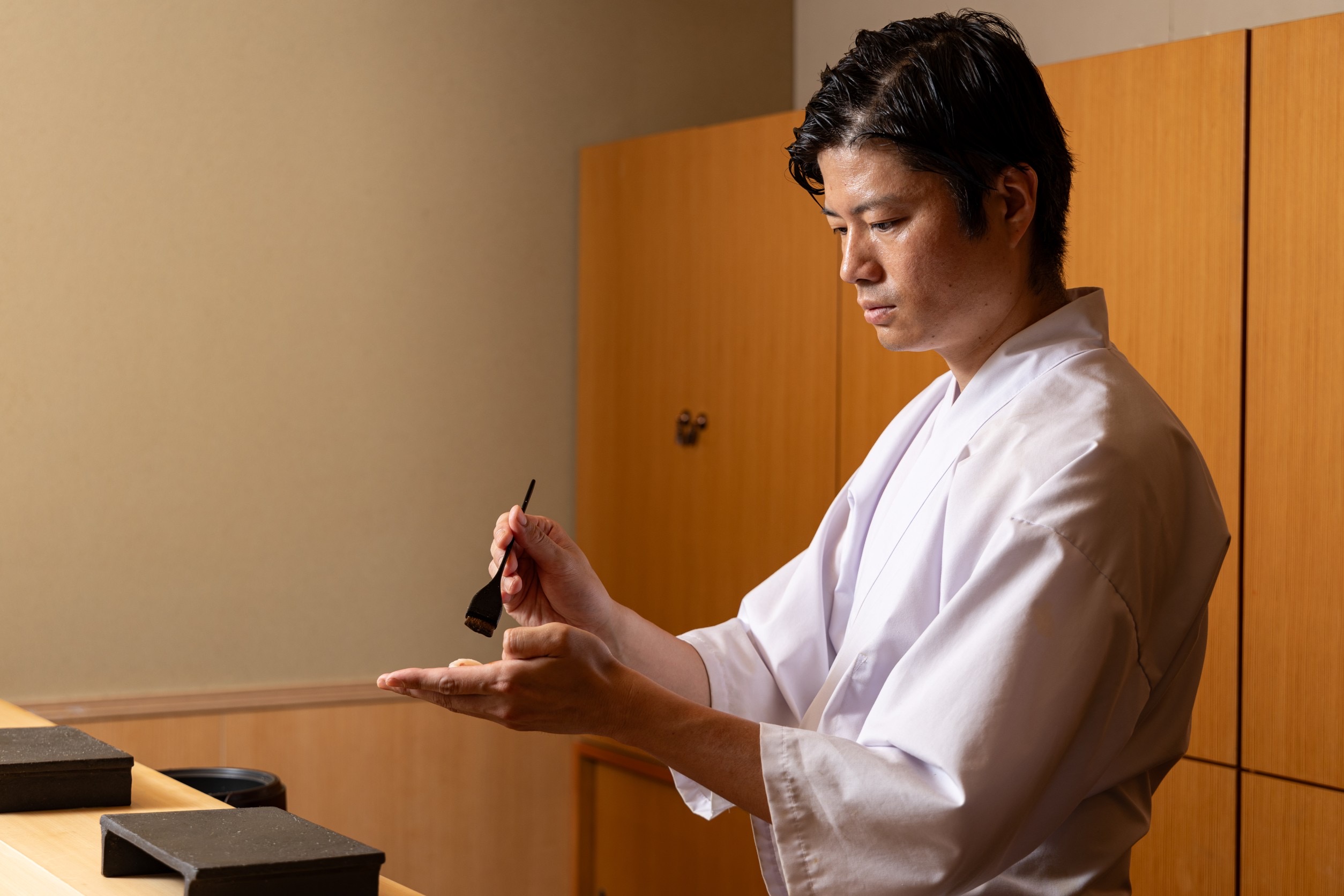
Reviewed by
Tatsuo TakadaHead chef and owner of Sushi Tanji. Trained in the Edomae tradition and rooted in Kyushu, he leads the eight-seat omakase counter in Oku-Akasaka, Tokyo, and reviews The Tokyo Sushi Guide.